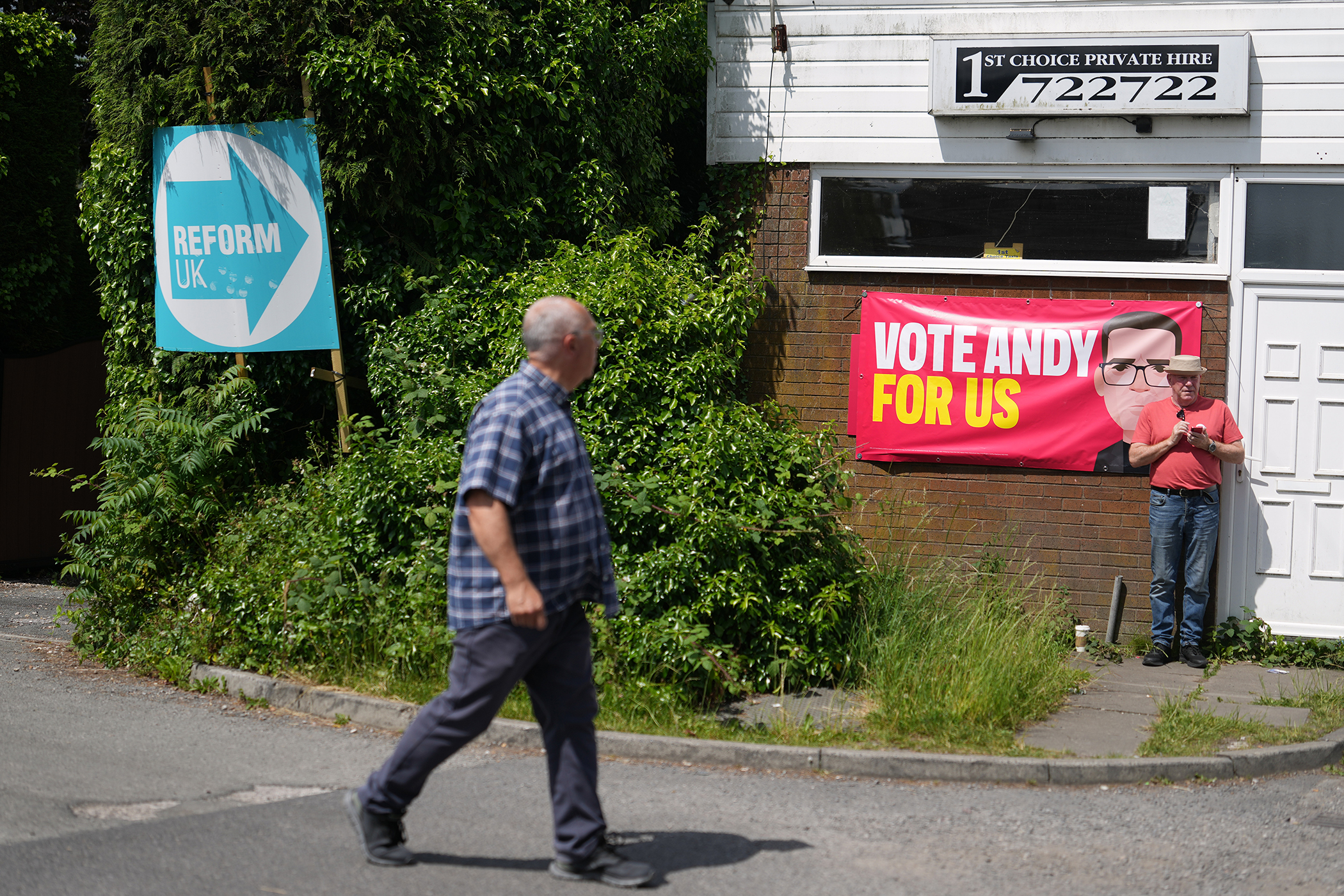

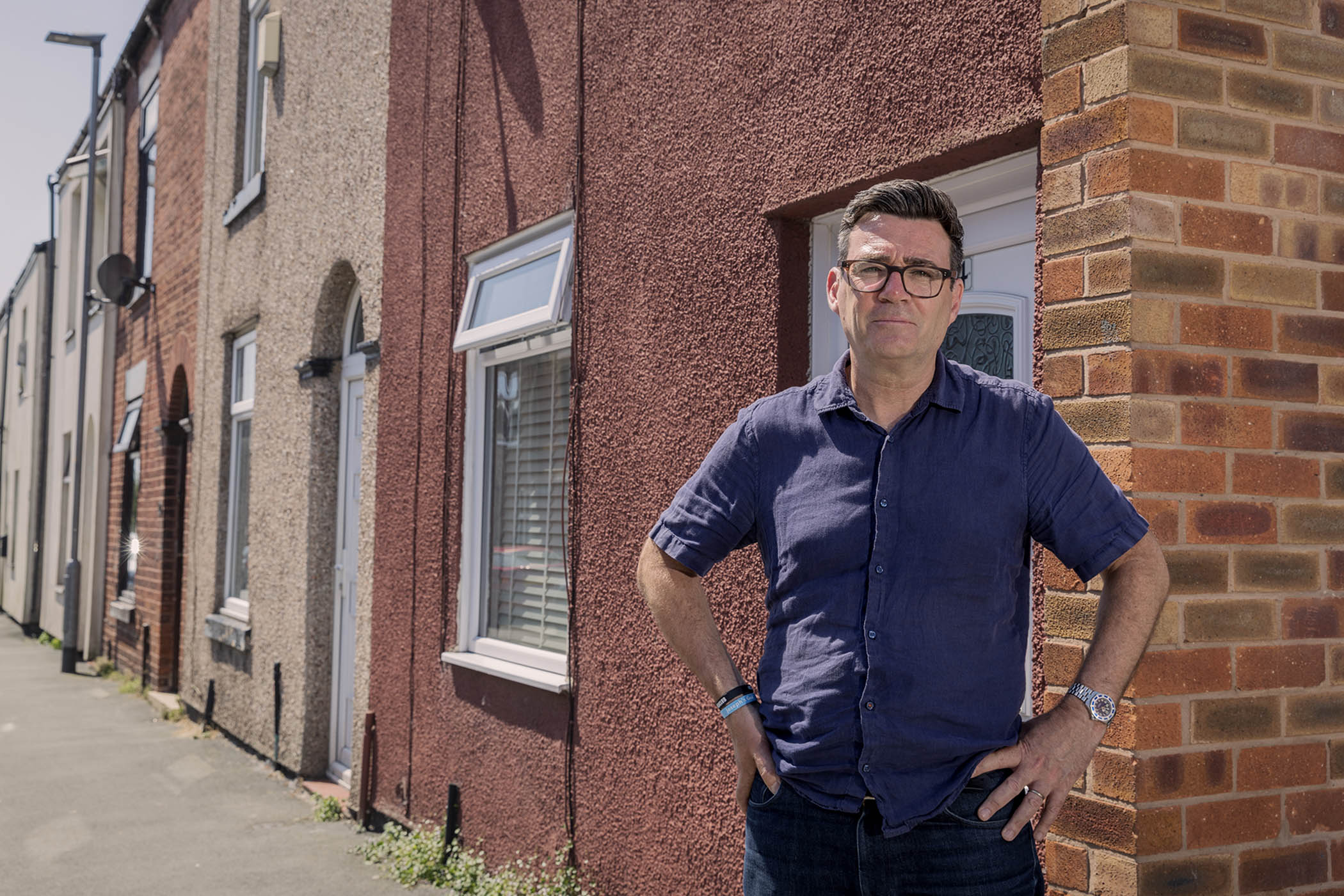
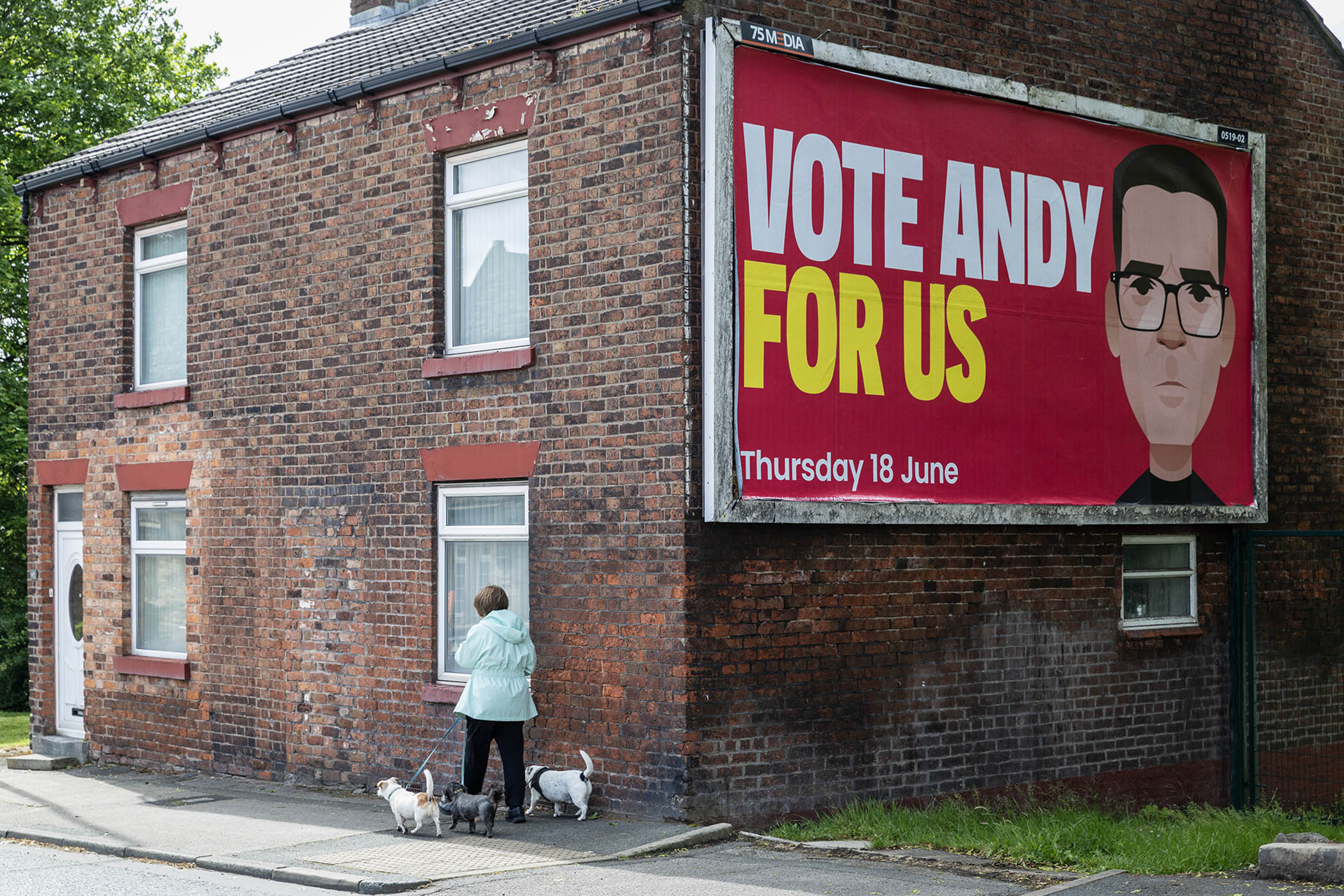
There is a passion for the past in this part of what was once south Lancashire. You can feel it in the lovingly cared-for archives of photographs and artefacts that pay homage to long-gone mining communities, and the bustle of history groups in even the smallest towns.
So when the world comes to visit, as it has during the Makerfield byelection, there are enough local historians to see a pattern being repeated of first neglect and then abuse: a long lack of interest followed by a burst of something that might look like interest but actually is only an attempt to use the area to make a point. Twice in the past 90 years, it has been asked to step forward as a mascot to represent something bigger, and both times it has squirmed uncomfortably in the role.
In 1937, when George Orwell published The Road to Wigan Pier, the opening chapters of the book fixed on Wigan and the mining areas around it as the heart of the desperate hardships of industrial life in the north-west of England. Now, the southern fringes of the town and the old pit towns and villages just beyond it – the small constellation of places that make up Makerfield – are being summoned into service to embody the whole of deindustrialised England, and the Labour party’s struggles to hold on to it.
Orwell’s efforts get a poor review on the Wigan Building Preservation Trust website: “The book has done untold damage to the town since its publication … He claimed to like the people of Wigan, God knows what he would have written if he hadn’t. The book will hang like an albatross round Wigan’s neck for decades if not centuries to come.”
Political journalists today would receive equally damning testimonials, particularly any foolish enough to claim a straight read-across from Makerfield to a great swathe of the country. But even some of the people here who chafe at being invaded by what seems like every Labour MP in the country and half the world’s media take cold comfort in an upside. It is a chance to be heard, and they do believe that what they say should be listened to beyond the boundaries of this place.
After weeks of almost-rolling news coverage, you might close your eyes and think you can see Makerfield. Do you picture working farms and green hilltops with views that stretch to Liverpool and Manchester? Does your mind’s eye see the occasional centuries-old cottage and broad streets of impeccably respectable red-brick villas? They are all here, alongside – yes – the litter, the gap-toothed high streets and the frightening young men in balaclavas on electric motorbikes. It is a place that defies lazy categorisation. In that sense, perhaps it is England.
On the doorsteps, canvassers from all parties feed back the same information to their campaign organisers: the two topics that come up relentlessly are immigration and the cost of living. Harry Smedley could have guessed as much after knocking on hundreds of doors near his home in Ashton-in-Makerfield on behalf of Reform UK for the local elections last month. Retired now after more than 40 years’ combined service in the RAF and the reservists, he cuts a neat, relaxed figure and chats easily about his wife, who came to this country from abroad, his teenage children, his demanding dog. The British Legion and other veterans’ charities take up hours of his time each week, and it was at one of their events where he became friends with his fellow reservist, Reform’s candidate in Makerfield, Robert Kenyon.
Smedley is, by his own account, a serial roller of the political dice. An early supporter of the SDP, which broke away from Labour in 1981 in protest at its drift to the left, by 2016 he was an enthusiastic Brexiteer, then a believer in Boris Johnson before, finally, he threw in his lot with Nigel Farage.
What captivates him about Reform, and seems to enthuse so many others in the party, is the feeling of a movement, and talk of a rebel army – like the one in his favourite Star Wars films. “These are working-class people who never in a million years thought of themselves as right wing, and now not left wing – just the quiet majority who have been ignored for decades, and are standing up and want to be heard.”
“This rebellion’s building up. It’s, ‘For goodness’ sake, let’s have a commonsense approach to this kind of thing.’ We all know the answer, but we’re afraid to say what it is because somebody’ll say, ‘You’re a sexist, you’re a homophobe,’ when we’re not. We want the norm, the true values of this country.”
Newsletters
Choose the newsletters you want to receive
View more
For information about how The Observer protects your data, read our Privacy Policy
When were the true values of the country last shared as widely as they ought to be? You would have to go back to the 1980s, Smedley says, and when he talks about the status quo since then, it is with a disdain that overrides any caution about the wisdom of rolling the dice yet again. He met Makerfield’s last MP – Josh Simons, who stood down to make way for Andy Burnham – and admired him enormously: “Really, really nice. Strong values, great work ethic. You know, he couldn’t do enough for anybody, and if he saw a wrong he’d try to right it.”
Was that not enough to deserve Smedley’s vote? Absolutely not, because Simons was a creature of the system, albeit a good one, and – in words that Smedley emphatically did not direct at Robert Kenyon, although others have – he preferred any alternative to that.
“I’d rather have a clown in there that pushes our values and our standards and our beliefs than a really great bloke who just toes the party line.
“May the force be with you,” he added in a text.
The Road To Wigan Pier is, famously, a book of two halves. Victor Gollancz, the leftwing publisher who commissioned it, loved the first and hated the second, which was a brutal attack by Orwell on bourgeois socialism. A rant, really.
“One sometimes gets the impression that the mere words socialism and communism draw towards them with magnetic force every fruit-juice drinker, nudist, sandal wearer, sex maniac, Quaker, ‘nature cure’ quack, pacifist and feminist in England,” Orwell wrote. In the north of England, he thought he had discovered the antidote to all of that; a socialism of “elementary common sense” in which “all the nonsense is stripped off”. Harry Smedley might approve.
There is very little “nonsense” in the Makerfield byelection, if nonsense means ideology. Without it, and without the wheelbarrow-loads of votes that used to go, unhindered, from working-class communities to the Labour party, the battle here is for hearts more than minds; a scrap over values rather than policies. In poorer parts of the constituency such as Platt Bridge it can feel like a straight fight between hope and fear.
On the face of it, Dawn Royds has plenty to fear. The victim of two serious floods in Platt Bridge 10 years apart – the last one on New Year’s Day 2025 – her confidence in the authorities fell victim to the fact that they told her after the first one that there would never be a second.
Unlike Smedley, she is not scarred by a lifetime dreaming the latest political dream and then waking up. She has never been politically engaged, although the beliefs she talks about, on the rare occasions she talks about them, are on the progressive side of the fence. “I’m a people person more than anything,” she says.
But she is younger than Smedley and less comfortably off. And perhaps living on a flood plain brings a precariousness to life that is bound to make a person pragmatic, inclined to trust the powers that be even if they have been a sorry letdown in the past. For whatever bundle of reasons, Royds lives in hope: “I want to believe. I’ve never believed in what anybody’s said, because once they get into government, it all goes up the wall. But I want to believe.”
She, too, has met Josh Simons, been mightily impressed, and learned different lessons to Smedley from the experience: she will be voting Labour. She can see the fear in people all around her, driven, she says, by scaremongering from Reform and the further-right spinoff Restore Britain. And she is prepared to contemplate radical measures – ones that do not sit naturally with her values – to draw the poison.
“I’ll be totally honest with you: I would close our borders now, and that is my honest opinion. I would grow our country back up into the place it needs to be – the NHS system, the policing – and put more money back into the armed forces. I would get our country back to the place of opulence where it used to be, and then nobody can complain.”
The challenge for hope-mongers in Makerfield and beyond is that you can always complain, and fear is a moving target. In 10 years it has shapeshifted from Europe, to mass migration, to small boats and houses in multiple occupation for refugees in places like this, where property is cheap. And as migration and the number of small boat crossings fall away, the outline of a new shape is already forming; something more explicitly race-based and cultural.
There is only one problem in truth, and it is not immigration: the past in Makerfield feels like a wealthier country. In that sense, too, perhaps it is England.
Harry Smedley is an armed forces veteran, so perhaps it’s understandable that he invokes military glories to capture a feeling he would like to experience again. “I fought in the Falklands conflict in 1982 and after that Britain couldn’t do anything wrong. It was the place that everybody wanted to follow,” he says. It is striking how many non-veterans in Reform reach reflexively for the same moments.
For Smedley, the memory of a school trip from Peterlee in County Durham in the early 1970s still captures a vivid feeling of something slow and deep that would be widely shared by his fellow rebels: a belief that, for a very long time, people like him have been losing the peace.
“We were twinned with a town called Baesweiler in Germany, and we did this exchange. And considering we’d thrashed the Germans in the second world war, I expected to find totally demoralised cities and beggars everywhere. You know, a right mess.”
“But I found a modern city with modern infrastructure, modern bus networks, rail networks, everything. Everybody worked. Everybody was busy. And it was amazing to come back to Peterlee in the north-east, which was one of those new towns. It was struggling, and nobody had any money, and all the pits were closing in the 70s because we’d relied on those old-fashioned industries to carry us on.”
In Makerfield now, for Germany you could read London or even central Manchester. The rebellion here, like nearly all rebellions, is about relatives rather than absolutes – feeling relatively worse off, relatively overlooked, relatively fearful.
Like other rebellions it is not standing still. Nostalgia loses its warmth and common sense becomes a weapon in the wrong hands. And the longer demands go unmet, no matter if they are unrealistic, the more extreme a movement becomes. There are Restore Britain placards outside prim, middle-class homes here in places where, 10 years ago, the views they represent would not have found house-room, still less been advertised.
Restore might amount to an alarm call about what happens to a rebellion like Reform’s once it becomes mainstream, as it has in Makerfield. It is tempting to think of this as a place that has got desperate and is willing, like Harry Smedley, to roll the dice – recklessly, if that is what it takes. But the truth is, it has already rolled them, for the time being at least.
Even if Andy Burnham wins here, as most people are expecting, the larger lesson of Makerfield is that the extremes are winning. Occasionally, a charismatic one-off in a unique set of circumstances might hold out against the tide, but if this constituency stands for anything beyond itself, it should be a warning that the centre is not holding.
Photograph by Jon Super/AP Photo