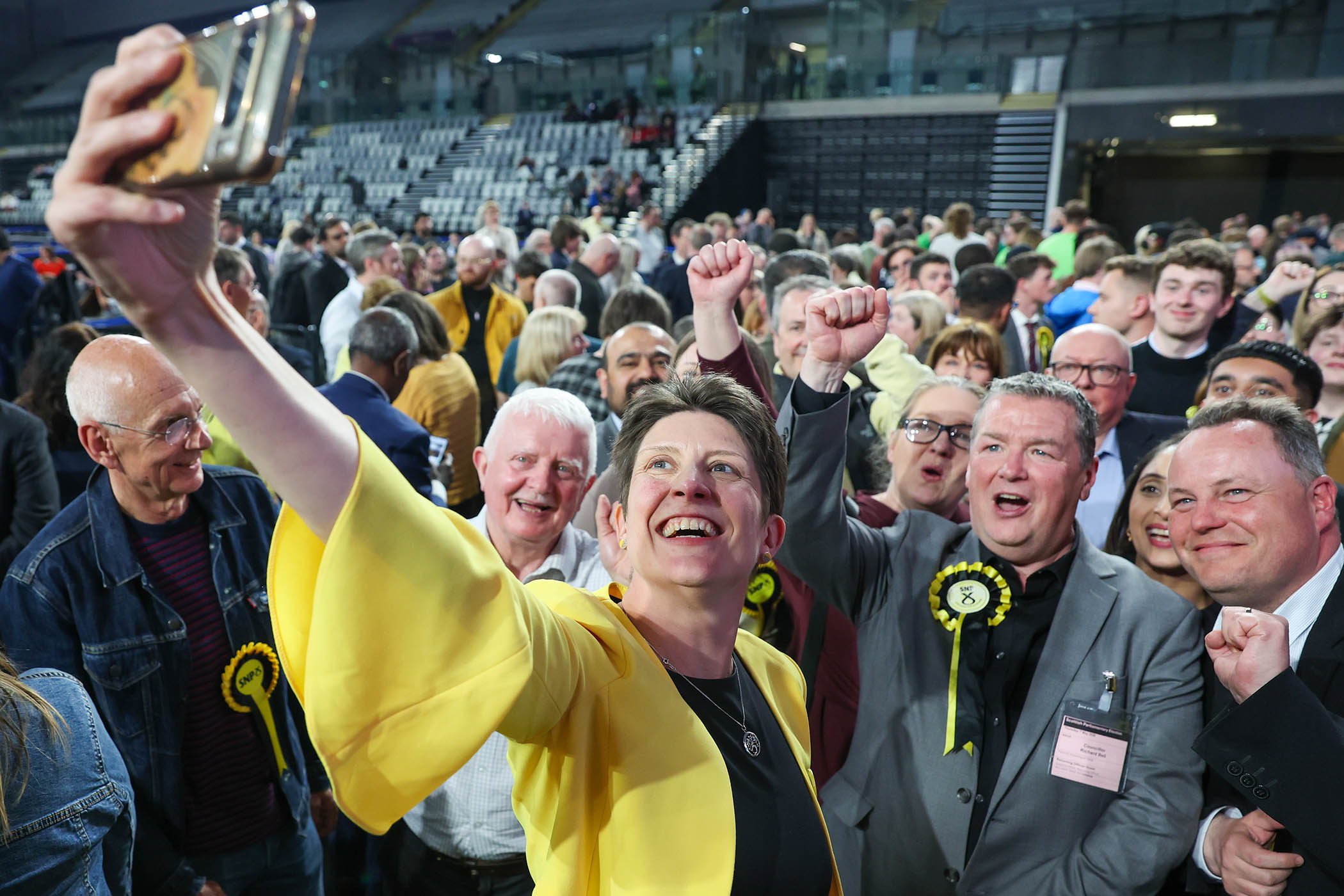

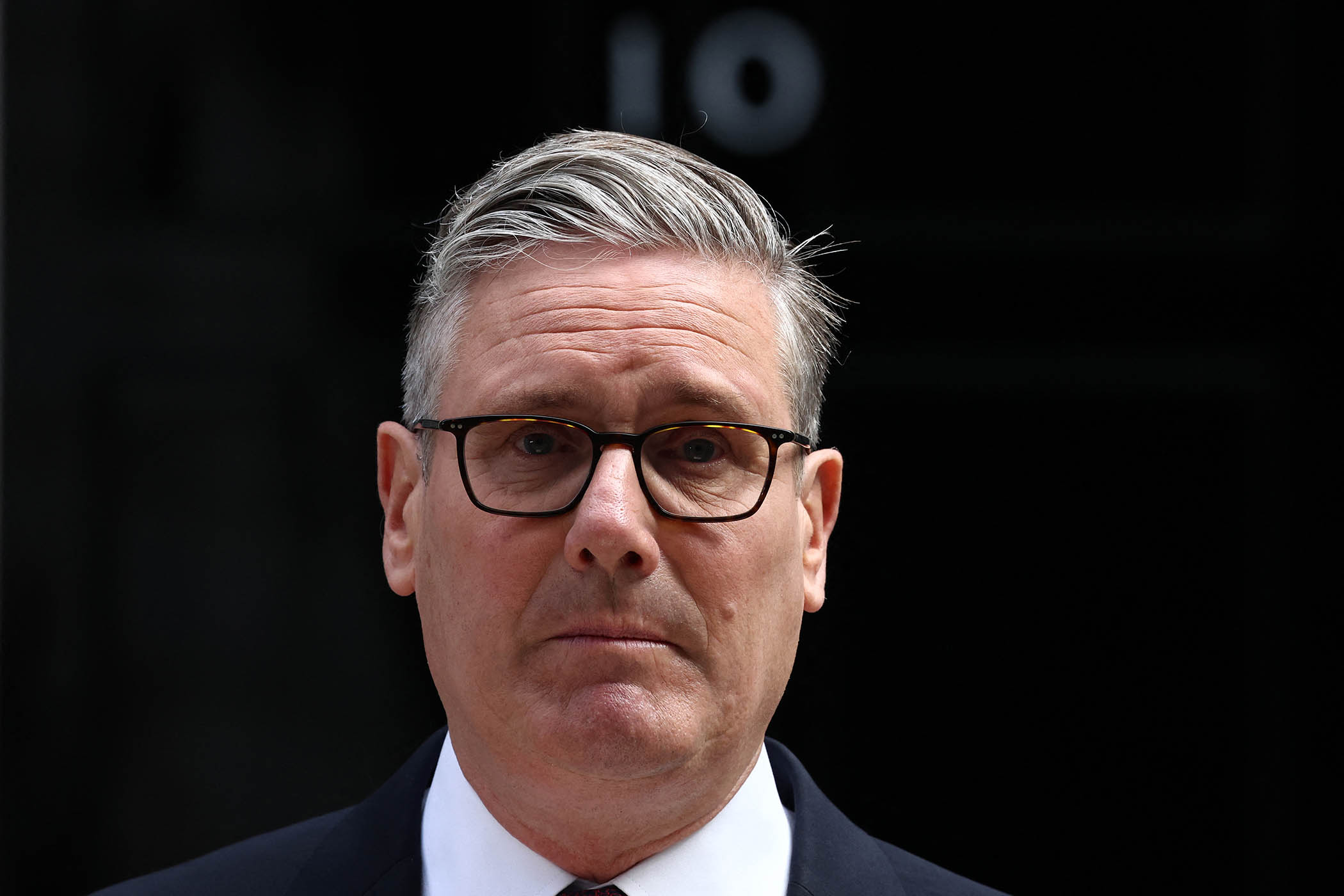
It was less the May election than the “meh” election. Gone were the occasions when women – Nicola Sturgeon, Ruth Davidson and Kezia Dugdale – were in charge, the union was still threatened, Davidson was photographed astride water buffalo and Sturgeon was tipped for the UN.
But no more. The SNP broke Britain’s two-party hegemony nearly 20 years ago and will continue in power for five more, their fifth term in office, albeit with near double-digit losses in vote share. Seismic it wasn’t.
The only brief approximation to a cliffhanger was whether the nationalists could reach the 65 seats needed for a majority (in 2021 they had 64), but that was ruled out by a surge in Green votes and the rise of Reform, which split the unionist vote.
A total of 129 seats were at stake – 73 first-past-the-post constituency seats and eight electoral regions, each sending seven members to Holyrood based on a form of proportional voting.
The SNP won its fifth consecutive election on 58 seats. Scottish Labour and Reform tied on 17 seats and the Green party won 15 seats. The Lib Dems returned 10 MSPs.
This time the pro-independence Green party won two constituency seats for the first time, one in Sturgeon’s old seat in Glasgow, the other in Edinburgh where they dethroned SNP grandee Angus Robertson. Their vote share was up across the board, their supporters not put off by one candidates stated aim to close all prisons and ban horse racing. Their MSPs include Holyrood’s first trans identifying member, Q Manivannan. Greens form a pro-independence majority in Holyrood and wield real muscle.
Scottish Greens co-leader Ross Greer claimed a moment in history, saying everybody in Scotland for the first time would have a Green MSP by virtue of the number elected on regional lists. He said the result was “definitely better than expected” and made them one of the bigger parties.
The Labour vote share did not collapse, unlike the Conservatives, who like the SNP saw their percentage fall by nearly double digits. But Labour leader Anas Sarwar lost his constituency seat to the SNP in 2015 and is waiting to see if he gets back in on the Glasgow regional list.
Sarwar – who in February had called on Keir Starmer to step down – was downcast: “We made an argument for change and, ultimately, it’s an argument we lost.” He said he tried to make his party’s campaign about Scotland but there was “a national wave of disappointment”.
The underlying tale was voter apathy. Turnout in most seats was down by more than 10 percentage points, and could end up below 50%, the lowest it has been since 2003.
Newsletters
Choose the newsletters you want to receive
View more
For information about how The Observer protects your data, read our Privacy Policy
Notable were Reform’s results. They secured their first Holyrood seats as regional list results – ending up with 10. They gaily plundered the Conservative vote, leaving them with a dismal showing. The party had one almost-sensational result: in the pro-Brexit fishing stronghold of Banffshire and Buchan Coast, Farage’s party came within 364 votes of beating the SNP. Conservatives were pushed into third.
Worse still, perhaps, the so-called “shy” Tory transformed into the shy Reformer, and Tories were quick to blame Reform for splitting the unionist vote and letting the SNP back in.
A lack of voter enthusiasm was obvious to all parties. “If there was a ‘scunnered party’, it would win a landslide,” one weary Conservative candidate said. It is an unwritten law that Conservatives flourish in Scotland when the union is most under threat, but independence now falls far below the cost of living as a priority, and Westminster parties are unlikely to grant another referendum in the foreseeable future.
It was interesting that the SNP leader John Swinney, expected to step back into the role of first minister, sounded almost emollient when speaking to the BBC about his plans. He wanted “to bring Scotland together” and make it as successful as possible. He sought “a more cooperative relationship with Westminster”.
Pitfalls await over the fate of North Sea oil and gas. Swinney’s potential successor, the abrasive Stephen Flynn, head of the SNP in Westminster, won a seat for a constituency in the Aberdeen area with fiery words of independence. And Lorna Slater for the Greens made clear last night that any condition of working with the SNP will be a moratorium on North Sea development.
In the Inverness and Nairn constituency, where Fergus Ewing, the former SNP minister turned party rebel and fierce critic, was standing as an independent, the nationalists only held onto their seat by 427 votes from the Lib Dems.
This election was a moment of generational change. A record number of MSPs, including a raft of big names, retired. New faces then, but plus ça change. The nationalists, albeit diminished, remain the majority party and must now wangle a working coalition, most probably with the Greens.
Photograph by Robert Perry/Getty Images