
If he is going be the next tenant of Number 10, even his most ardent supporters accept that it is legitimate to ask: “Which Andy Burnham will turn up?”
During the New Labour years, he was known as an “amphibian” because he was one of the rare ministers who managed to keep a foot in both the Blairite camp and the Brownite one. When most of the shadow cabinet resigned in disgust with Jeremy Corbyn in 2016, he agonised before deciding to stay put. This history of zigzaggery is encapsulated in the most famous gag about him. A Blairite, a Brownite and a Corbynite walk into a bar in Manchester. The barman asks: “What can I get you, Andy?” Sir Keir Starmer so likes this crack at the expense of the mayor of Greater Manchester that the prime minister has been heard to tell it more than once.
A minister when Tony Blair and Gordon Brown were in their pomp, the former health secretary now blames our national ills on “40 years of neoliberalism”. This is the leftwing version of Nigel Farage’s claim that Britain has not had a decent government since the 1980s.
The case against Mr Burnham is that he is an opportunistic chameleon who adjusts his identity to the prevailing wind. The case for him is paradoxically much the same. Such is the dire plight of Labour, perhaps what it needs is a fluid pragmatist with a proven capacity for reinvention and salesmanship.
It is to his advantage that “our Andy”, who says he likes gravy with his chips, is a professional northerner
It is to his advantage that “our Andy”, who says he likes gravy with his chips, is a professional northerner
He is currently the hot favourite to become Labour’s next leader. So long as the people of Makerfield are obliging enough to send him back to Westminster, some of the cabinet predict he will be crowned prime minister without even a contest. “I wouldn’t rule out him and Wes [Streeting] ultimately coming to some kind of deal,” says one senior minister.
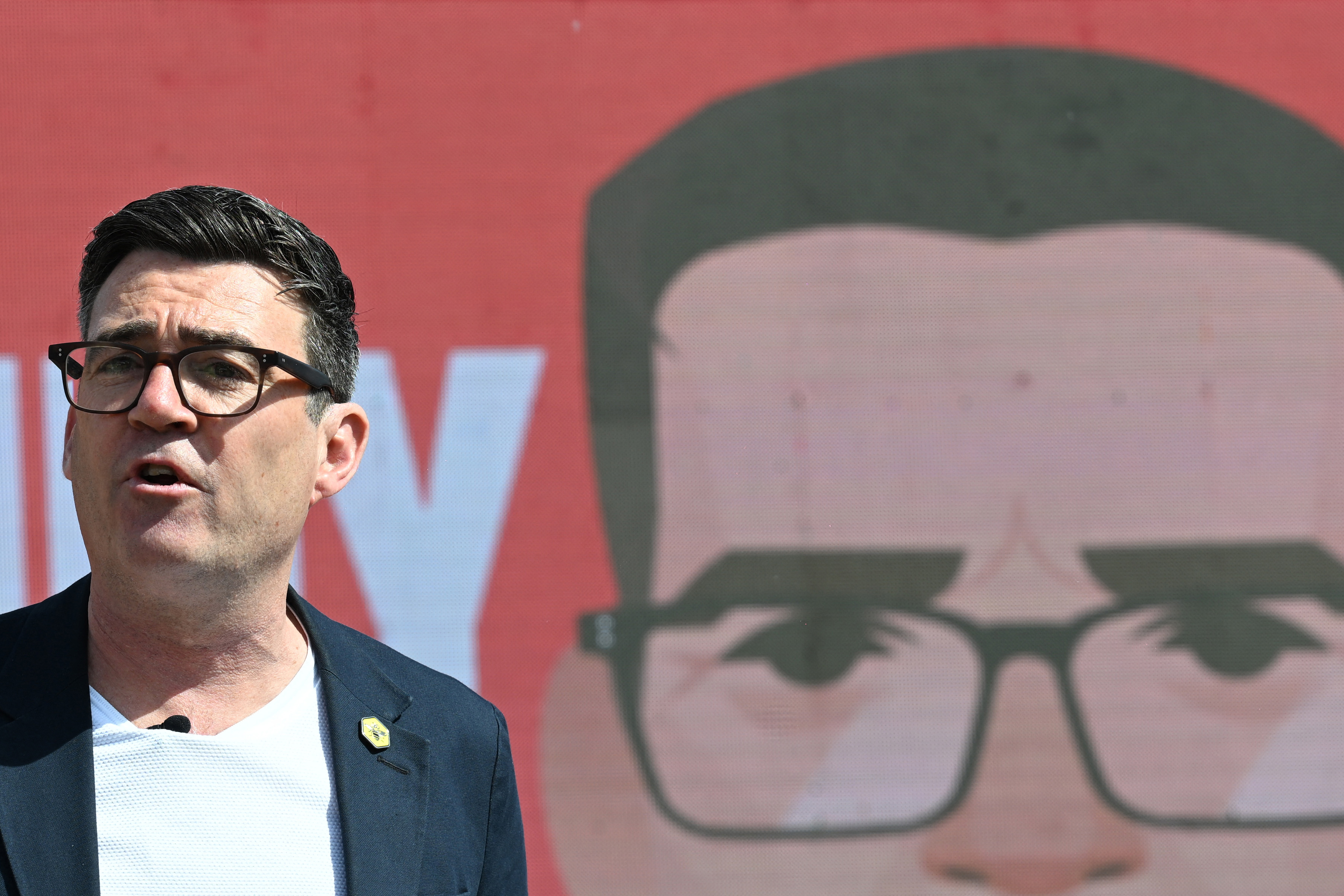
The mayor is a skilled communicator, as demonstrated by his byelection campaign video with an upbeat anthem provided by Elbow’s One Day Like This. It is further to his advantage that “our Andy”, who says he likes gravy with his chips, is a professional northerner. Labour – and I write as someone born in Yorkshire – always gets a bit misty about the north. Being absent from parliament for nearly a decade would once have been a massive handicap for someone with leadership ambitions; his lack of any recent ministerial experience is now considered helpful. He is untainted by all the grotty compromises and grim disappointments that come with being a member of the government. He is the screen on which everyone can project their dream of what the ideal Labour government would be.
These fantasies will be deflated on collision with reality. Some already have been, as the fight for Makerfield forces more definition out of him. Rightly so, when the voters there may be picking not just their next MP but deciding the identity of Britain’s future prime minister. Mr Streeting made a splash by advocating rejoining the EU, as did Mr Burnham in remarks at last year’s Labour conference, during which he said he hoped it would happen “in my lifetime”. The snag is that Makerfield is predominantly made up of older, white, working-class voters, and a hefty majority of the constituency voted for Brexit. Mr Burnham has performed a reverse ferret and now says he “respects” the outcome of the 2016 referendum and won’t seek to rejoin if elected. So, on a key geopolitical issue facing the UK, his position is hard to distinguish from Sir Keir’s.
On core issues of economic management, a Burnham government doesn’t sound like a change from the Starmer one
On core issues of economic management, a Burnham government doesn’t sound like a change from the Starmer one
A lot of Labour people chafe against what they see as the stifling economic orthodoxy of Rachel Reeves. They yearn for the government to borrow and spend more, and to hell with the consequences. Past remarks – most notoriously when he complained that Britain was too “in hock” to the bond markets – have encouraged the thought that Mr Burnham would scratch that itch. But the closer he has got to Downing Street, the jumpier the bond market has become. And the twitchiness of Britain’s creditors is making his supporters nervous. In a bid to reassure the markets, he now declares he’d stick to Ms Reeves’s fiscal rules. He’s also committed to the manifesto promise not to raise the main rates of income tax, national insurance and VAT. So, on core issues of economic management, a Burnham government doesn’t sound like a change from the Starmer one. It sounds pretty much the same.
There’s more potential for differentiation when he says he wants “more things back under stronger public control”, citing energy, water and housing as prime candidates. His signature success as mayor has been placing the city’s buses under public control, though they are still operated by private companies under contract. What’s unclear is precisely how he’d pay to turn his much-vaunted “Manchesterism” into a national programme.
A lot of Labour people balk at the tougher approach to migration being pushed by Shabana Mahmood. If they assumed that Mr Burnham was also opposed, they know different now, as he seeks the support of Reform-curious Makerfield. His people have let it be known that he’s supportive of the home secretary. “Meet the new boss, same as the old boss,” sneers Diane Abbott.
He would disrupt the status quo if he delivered on his promise to give much more devolution of power to localities. He would also be the first Labour leader since 1945 to unequivocally advocate the replacement of the first-past-the-post electoral system with proportional representation. But this couldn’t happen without a referendum and that wasn’t in the manifesto on which this government was elected.
Mr Burnham is a lot more popular than the man he seeks to supplant, but he’d inherit the same daunting dilemmas upon which Sir Keir’s prime ministership has been impaled. What do we do about the unsustainable pensioners’ triple-lock? How do we reform welfare? Where do we find more resources for defence? Is there an affordable fix for social care? And for youth unemployment? How do you make the economy more productive? Is it possible to raise more from tax without suffocating growth? The times demand a leader prepared to grapple with tough trade-offs and sell difficult-to-swallow choices to both party and electorate.
As mayor, he’s been known to backtrack when he’s encountered opposition. Talking to people, perhaps the most troubling observation about Andy Burnham is that he “likes to be liked”. If he does get to be prime minister, and if he is going to be any good at making decisions, he will have to cope with being hated.
Photograph by Paul Ellis / AFP via Getty Images
Newsletters
Choose the newsletters you want to receive
View more
For information about how The Observer protects your data, read our Privacy Policy