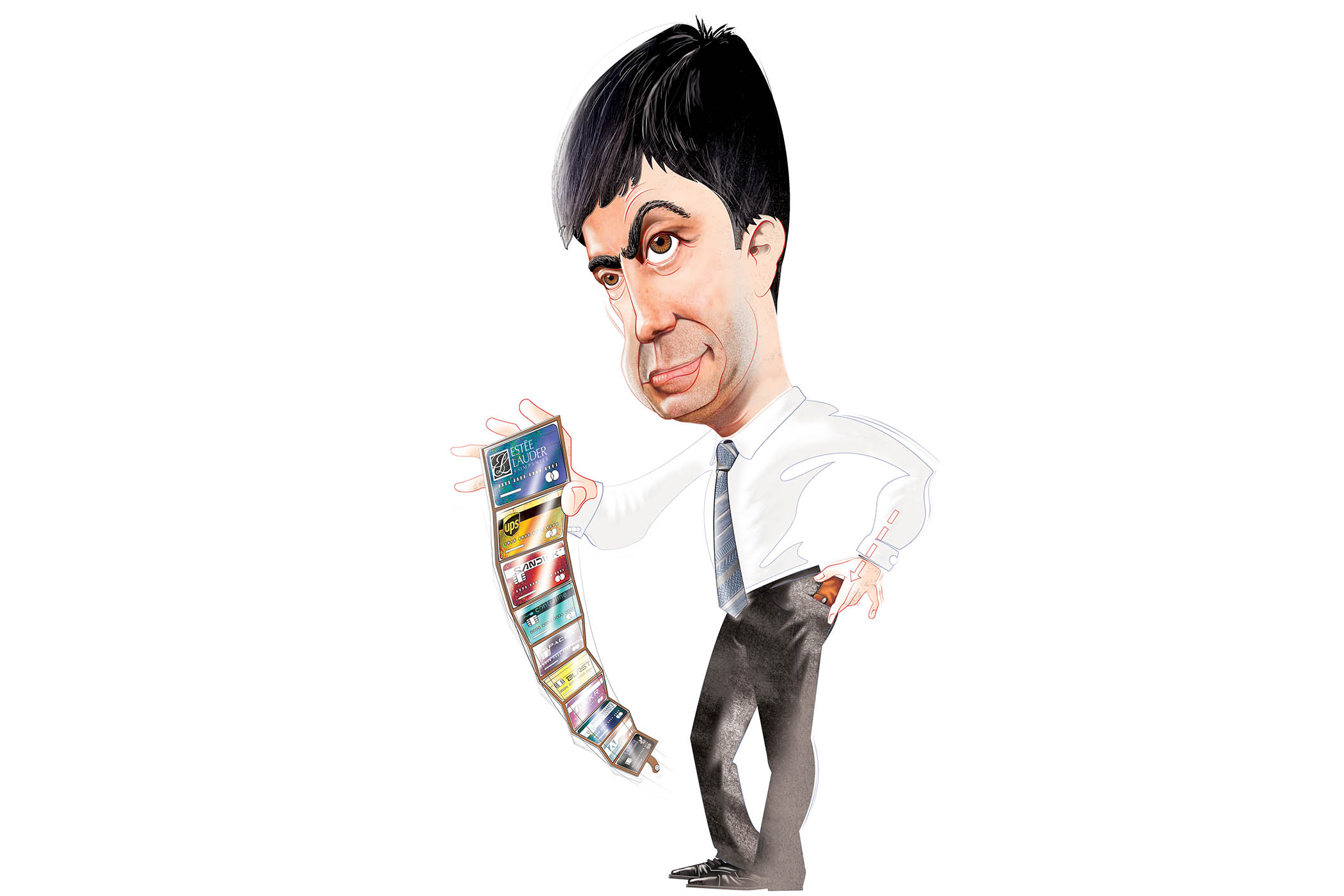
Being tall, dark and handsome isn’t typically a job requirement for a central banker. Anyone who spends time at global economic conferences can attest to that. But it may be what clinched it for Kevin Warsh, Donald Trump’s pick to be the next chair of the US Federal Reserve.
Aside from his good looks (Trump described Warsh as “central casting” when announcing his nomination), Warsh provides experience as a governor at the Federal Reserve between 2006 and 2011, where he put his extensive Wall Street contacts book to use in the heat of the financial crisis. He’s widely seen as a credible choice, especially in comparison with some of the other names who were purportedly considered for the most important role in global finance.
He might also be thought of as an instrumental choice for the White House. For Warsh is a candidate who brings sufficient experience and credibility to satisfy financial markets, but also an intellectual justification for what the president wants most of all: lower interest rates.
As Trump’s pick, Warsh will undoubtedly come under pressure to adhere to his wishes
As Trump’s pick, Warsh will undoubtedly come under pressure to adhere to his wishes
The federal funds rate currently has a target range of between 3.5% and 3.75%. Trump wants this to be more like 1%, to lower debt-servicing costs for the government, boost the stock market and juice the economy. Many economists fear that this would lead to higher inflation and a weaker dollar, with knock-on consequences for the rest of the world.
Warsh, on the other hand, believes that productivity gains from artificial intelligence can, by expanding the capacity of the economy, allow for lower interest rates without the risk of stoking inflation. And he’s known to think that the Federal Reserve need not wait for firm evidence of a productivity boom before cutting rates: he doesn’t believe in “data dependence”. Dario Perkins, an economist at TS Lombard, describes Warsh as a “firm believer in the productivity fairy”. And therein lies his attraction to Trump.
The president has grown increasingly frustrated with the current chair, Jerome Powell, over his refusal to support rate cuts. Powell, who was originally nominated by Trump in 2018, is regularly on the receiving end of capitalised tirades on Trump’s Truth Social platform (he’s been variously called a “knucklehead”, a “moron” and a “stubborn mule”), and is the subject of a criminal investigation over his handling of renovations of the central bank’s headquarters, widely perceived as an attempt to force him to bend to the president’s will. Powell has stood up to Trump and refused to resign early.
It is against this tense backdrop that Warsh’s nomination to be Powell’s replacement is working its way through the US Senate, with a hearing scheduled for Tuesday.
Warsh was born in Albany, New York, and is the youngest of three children; his father was a businessman and his mother a journalist. Tennis was his high-school sport – he was good enough to play in the state championships. His trajectory follows the pattern for the men and women in his world: a bachelor’s degree at Stanford, followed by Harvard Law School. Yet he likes to say he’s stuck close to his roots, having remarked that “I learned much of what I need to know about the real economy in my first 18 years”.
He is a wealthy man. Ahead of his all-important hearing before the Senate banking committee this Tuesday, he filed a 69-page disclosure document that described a dizzying array of financial assets, investments, income sources and advisory positions. Confidentiality clauses make it difficult to pin down a precise number (and have triggered the ire of members of the committee), but his wealth was estimated by the Financial Times to be well in excess of $100m.
In 2002 he married Jane Lauder, heiress to Estée Lauder and a senior figure within the family’s beauty empire. She is considerably wealthier than her husband, with a net worth of around $1.9bn, according to Forbes. The couple reside primarily in Manhattan and maintain a rigorously private family life.
Newsletters
Choose the newsletters you want to receive
View more
For information about how The Observer protects your data, read our Privacy Policy
Warsh’s ties to Wall Street and corporate America are certain to come under scrutiny in the Senate, but much of the focus is expected to be on Senator Thom Tillis of North Carolina – a Republican – who has repeatedly stated his intention to block the nomination of Warsh (or anyone else) until the investigation into Powell is dropped. Trump has so far stubbornly refused to shelve the probe, telling Fox Business: “Don’t you think we have to find out what happened there? I have to find out.”
If he is confirmed, Warsh will take the helm of the Fed at a difficult moment for central bankers worldwide. Soaring energy prices and wider supply chain disruption from Trump’s war in the Middle East are expected to reduce economic growth and push up inflation, even in a world where a lasting ceasefire can be agreed. Meanwhile, the appropriate monetary policy response to a global shortage of oil, gas and fertiliser is far from clear.
Layered on top of this short-term conundrum is the bigger issue of Federal Reserve credibility and independence, given Trump’s attempts to oust Powell and Lisa Cook, another rate setter.
There will no doubt be a lively debate among economists about whether AI really does allow for faster growth without the risk of the economy overheating. Warsh may want to prosecute that case. He might also make a technical argument that lower interest rates could be justified, if only the Fed sold off some of the bonds on its balance sheet.
But there’s surely a risk for Warsh that he comes to be seen as a stooge, delivering on whatever promises he made to the president in order to secure the nomination, rather than following the economic fundamentals. Warsh will no doubt want to avoid this: he’s a serious person and a credible candidate. Yet he will also wish to avoid incurring the wrath of the man who nominated him.
Speaking at the Semafor World Economy summit in Washington DC, Austan Goolsbee, a member of the Federal Reserve’s rate-setting committee, described the prospect of “stagflation” – economists’ term for a combination of inflation and economic stagnation – as “the worst environment a central bank can face”. No pressure.
Kevin Maxwell Warsh
Born 1970
Alma mater Stanford, Harvard Law School
Work Nominee for chair of the Federal Reserve
Family Married to Jane Lauder, heiress