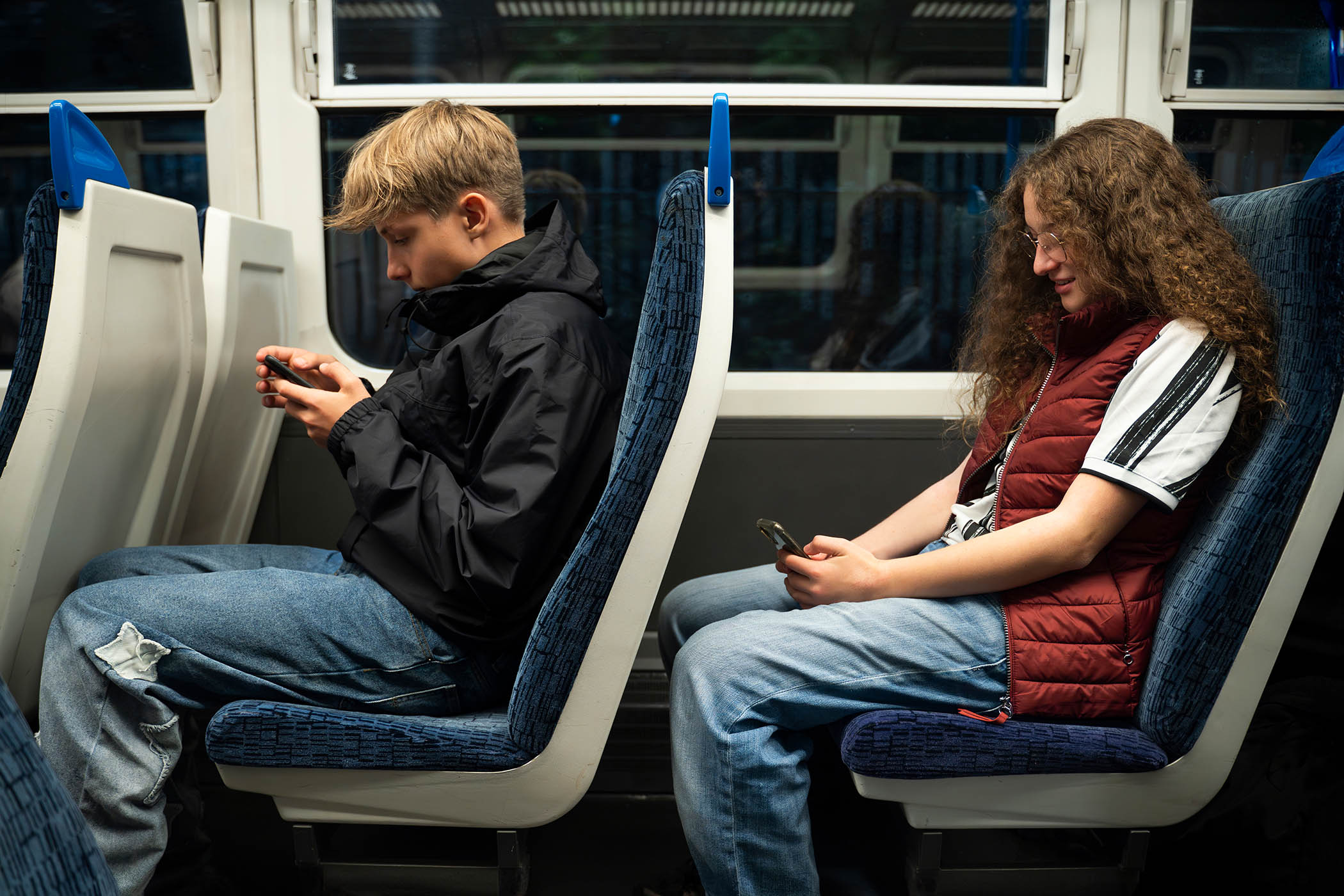


Hofstadter’s law says that everything takes longer than you think, even when you take into account Hofstadter’s law. Take online safety, especially for children. We’ve been (rightly) fretting about this ever since social media appeared in the mid-2000s. Every parent I’ve ever spoken to knows that smartphone addiction is a real problem for many children. And every tech business has found ways to pooh-pooh the concerns, even though their internal data has confirmed them – a playbook they had learned from tobacco companies discounting fears about smoking and cancer.
In 2020, for example, Meta ran an internal study in conjunction with the audience researcher Nielsen to measure the effects of taking a one-week break from Facebook and Instagram. The results showed that users who stepped away for a week reported lower levels of depression, anxiety, loneliness and social comparison. Were these findings published? You can guess the answer. The company internally dismissed the results, citing “a negative media narrative”.
So the tech industry has known for years what every parent knew. And yet it has taken 20 years for a government, anywhere, to take action. In December 2025, Australia became the first administration to ban under-16s from Instagram, Facebook, TikTok, X, Snapchat, YouTube, Reddit, Twitch and other services. And now the idea seems – finally – to be catching on: a handful of other countries have passed (or are planning to pass) legislation, and perhaps a dozen more (including the UK) are in various stages of proposal or consultation.
In Britain, the problem has even reached Keir Starmer’s inbox. Last Monday, in parliament, one of his junior ministers, responding to a question from an MP, declared that “this government will take decisive action to strengthen children’s online safety, including new expectations on technology companies to introduce crucial safety measures on children’s phones”. It has set out “expectations that technology companies introduce device-level protections for children”. And it has made it clear that “if industry does not meet our high expectations, we will not hesitate to legislate”.
Is this fighting talk, or performative bluster? A bit of both, I’d say. A cynical explanation for governments’ renewed interest in online safety is that politicians are simply reacting to increasing public hostility towards tech companies and want to be seen to be “doing something” about it. Whether they have the political will needed to crack the problem of online safety, however, remains to be seen.
This is because there are two dimensions to the issue. One is technical: how to build a robust and reliable age-verification system that doesn’t also create horrendous security and privacy problems, and how to counter the use of circumvention tools such as VPNs – virtual private networks – that enable users to spoof their geographical location.
These technical issues are formidable, but they are dwarfed by the political and procedural challenges that confront any liberal democracy that dares to take on the tech giants. Just consider the advantages these behemoths enjoy over governments and regulators. They have vastly more technical knowledge than any government agency about how their systems work, and – unlike pharmaceutical companies – are allowed to plead commercial secrecy in order to avoid regulation.
They possess the financial resources to litigate indefinitely. They operate across jurisdictions in ways that allow regulatory arbitrage, so if one country tightens rules, they can shift their activity elsewhere. And the pace of tech product development routinely outruns the legislative cycle: by the time a law is drafted to address a specific harm, the platform has already pivoted to something new. Stable door securely locked; horse now in the next country.
Then there’s the awkward fact that the products of tech giants are genuinely popular with the people ostensibly being protected, which creates political friction that doesn’t exist with, say, regulating industrial pollution. In that context, the story of TikTok’s brief shutdown in the US in January 2025 (and its “rescue” by Donald Trump) would make sobering reading for any European politician contemplating banning a popular social media platform.
The bottom line is that there’s no purely technical solution to the problem of protecting young people from online harms. Social media platforms don’t just exist in a democratic environment; they also shape it. They’re the infrastructure through which political opinion forms and mobilises. So regulating them involves regulating the medium through which regulation itself is debated and contested. That’s a genuinely novel situation with no good historical parallel, and it creates a kind of recursive difficulty that traditional regulatory theory wasn’t built to handle.
Newsletters
Choose the newsletters you want to receive
View more
For information about how The Observer protects your data, read our Privacy Policy
As the US writer HL Mencken, that growly curmudgeon, once put it: for every problem there is a solution that is neat, plausible – and wrong.
What I’m reading
On the same page
How to Read a Novel is a really thoughtful essay by Steven Johnson, the writer who led the development of NotebookLM.
There’s the rub
A lovely article by Lisa Herzog on the Crooked Timber blog is Everyday Friction, about the little moments of interpersonal connection when something doesn’t go according to plan.
Stranger than fiction
The Five Books That Could Save America is a salutary reading list by Lawrence Lessig.
Photograph by Getty Images