
Well, we’ll always have Boston. For the third major tournament in the space of five years, Scotland arrived at this World Cup expecting little and still disappointed. They might have eked out their first win in that period, but even that depended on a double deflection, the perfect encapsulation of a team that really only felt they might score by accident, of a system with no obvious aims or ambitions. As the dire Brazil defeat proved, they were neurotically conservative without being defensively sound, resting on foundations which buckled under a light breeze. Each of Brazil’s goals told their own chapter of this grim story, slipshod and apathetic and weak.
Perhaps most disappointing is the sense of wasted goodwill, that in the heady wake of the Denmark match, that swirling, swashbuckling thing, they were quite so tepid and timid. They went almost 180 minutes without a shot on target throughout the groups and scored just once. Lawrence Shankland might only have had four touches in the Brazilian penalty area on Wednesday, but that was more touches in the box than Ché Adams managed across the first two games. Producing football this unambitious and unmemorable is actually quite hard, a little achievement in itself.
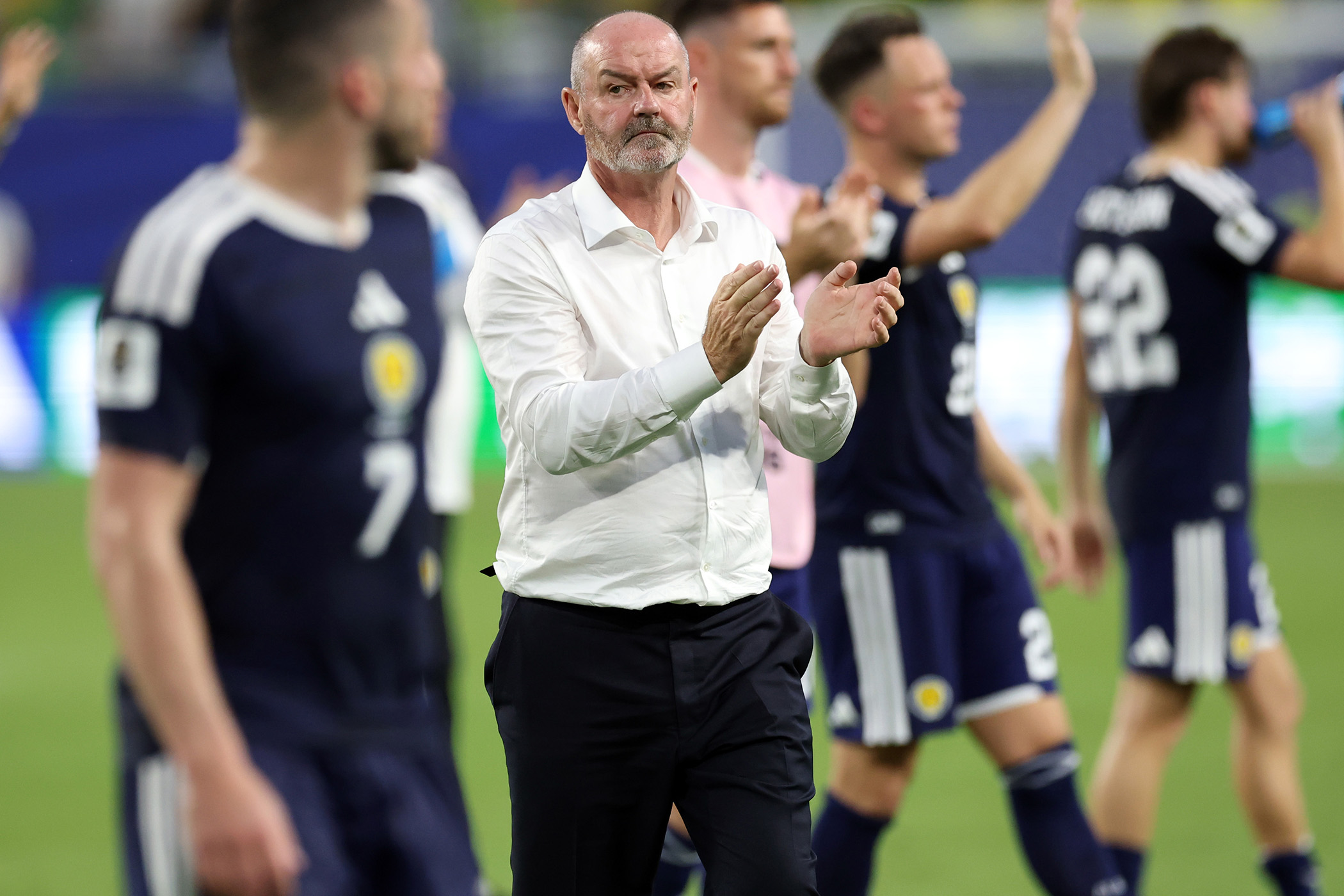
This team is stagnating under Steve Clarke, and as after Euro 2024, there are reasonable calls for his departure. Seven years is a long time in management, especially when there has been such little sign of reinvention or development in that period. It is hard to imagine his next trick will not look suspiciously like the last one. And yet the Scottish FA extended Clarke’s contract a month ago, an act of wanton optimism, with chief executive Ian Maxwell saying: “Why would we not want to have someone like him at the helm for the next four years?” Anyone who has watched them play over the past fortnight can think of a few reasons. He is Scotland’s most successful manager, but has also benefitted from tournament formats expanding during his tenure, guided them to three major tournaments and then failed to deliver at any of them.
There are legitimate questions here about Scotland’s ability to develop elite talent, their best player born and raised in Lancashire. Last October, the Scottish FA announced an overhaul of its youth development approach and structure, attempting to better spend available resources and identify players younger, potentially pre-empting what was to come. SFA chief football officer Andy Gould spoke about the “importance of looking beyond formal, organised, structured football, and looking at a holistic approach in the early years, with emphasis on mastery of the ball and love of the game: founded on a freedom of expression and increasing free-to-play environments”.
But however much it might have looked like it, this squad does not lack talent or experience. There are nine Premier League players, another the darling of Napoli, the captain of an Aston Villa side that won the Europa League barely a month ago. Ben Gannon-Doak is fizzy and exciting. To say they are not good enough lets Clarke off too easily, excuses a lack of ambition and dire execution, somehow makes it seem that this was inevitable. More than anything, this is his failure.
Photograph by Ian MacNicol/Getty Images
Newsletters
Choose the newsletters you want to receive
View more
For information about how The Observer protects your data, read our Privacy Policy