
The most important thing, when it comes down to it, is that Gianni Infantino has been having a nice time. This World Cup is his creation, his baby, his magnum opus. He has spent years manifesting it, plugging it, selling it, making it the “biggest and most inclusive and best” – his words – in history.
It is only right, then, that the Fifa president should have had the chance to bask in a glory all of his own making, to revel in what he has built. The 56-year-old has, at times, appeared to be omnipresent over the course of the tournament’s first couple of weeks; his Gulfstream G650ER, loaned to him by Qatar, has barely been out of the air.
Thus far, he has taken in games in 15 of the World Cup’s host cities – at the time of writing only Dallas is missing; we can presume he will be landing near some grassy knoll imminently – sometimes attending two in the same day. He has clocked up so many air miles in the course of doing so, he has already travelled far enough to have circumnavigated the globe.
And what is particularly sweet is that he has done so in the company of so many of his close personal friends. As well as a glittering array of former players, he has spent time with the actress Salma Hayek, the singer Justin Bieber, the politician Marco Rubio and whatever IShowSpeed is. Say what you like about Giannipalooza, but it has quite the starry cast list.
Of course, the bilious and the embittered and the English – anyone who has not followed Infantino’s explicit eve-of-the-tournament instruction to “chill” – might suggest that turning the world’s greatest sporting event, the last bastion of our shredded collective culture, into a chance for a middle-aged Swiss lawyer to cosplay as an influencer is less than ideal.
But even they would have to admit, if not that Infantino was right, then that he has got away with it. The concerns before the World Cup were, and are, legitimate. It is too bloated. It is a crime against the ongoing climate emergency (something to which Infantino’s personal carbon footprint has contributed substantially.)
It is so expensive as to be downright offensive, even by the standards of the United States, where gleaming Cybertrucks slide past sprawling encampments of the disregarded and the destitute. The hydration breaks, brought to you by Powerade, are a potent example of the tendency of commercialisation to eat away at the game itself, the sponsored cart being put before the horse.
And the cult of personality that Infantino has stoked – as Xavier Greenwood wrote in The Observer last week, the Swiss seems to be the one character anyone has spent any time rendering in the shoddy video game Fifa released for the tournament – is gauche and nauseating. The television cameras pick him out in the crowd so reliably that it starts to feel like it might be compulsory, the beneficent Emperor of Soccer watching the game that is both his gift and his possession.
No matter how much nose-holding and teeth-clenching it has required, though, the whole thing has worked. The expansion to 48 teams has, by and large, been justified. The group stages have brought only a handful of blowouts. Only one of those – Germany’s steamrolling of Curaçao – has involved one of the obvious beneficiaries of the larger format, and Curaçao duly responded by earning a point against Ecuador.
The bigger disappointments have been the sort of sides who might have been expected to be here anyway: South Korea, Tunisia, the Czechs. The World Cup has always grown to represent the planet it reflects; nobody seriously thinks it should contain 13 teams because that is how it was in 1930.
Newsletters
Choose the newsletters you want to receive
View more
For information about how The Observer protects your data, read our Privacy Policy
It would be disingenuous to pretend that the move to 48 was rooted in historical literacy or moral purity, that the effect of shoring up Infantino’s powerbase and increasing Fifa’s revenues by an order of magnitude was just a happy coincidence. But likewise: it would be intellectually dishonest to suggest that the world does not now have 48 teams worthy of a place.
As ugly and as asymmetrical as the model is – with eight third-placed teams qualifying – it has had the effect of keeping teams engaged; the final instalment of the group phase has featured only a couple of dead rubbers, games in which there is nothing on the line. It should be remembered, too, that there is no format in which that can be avoided entirely.
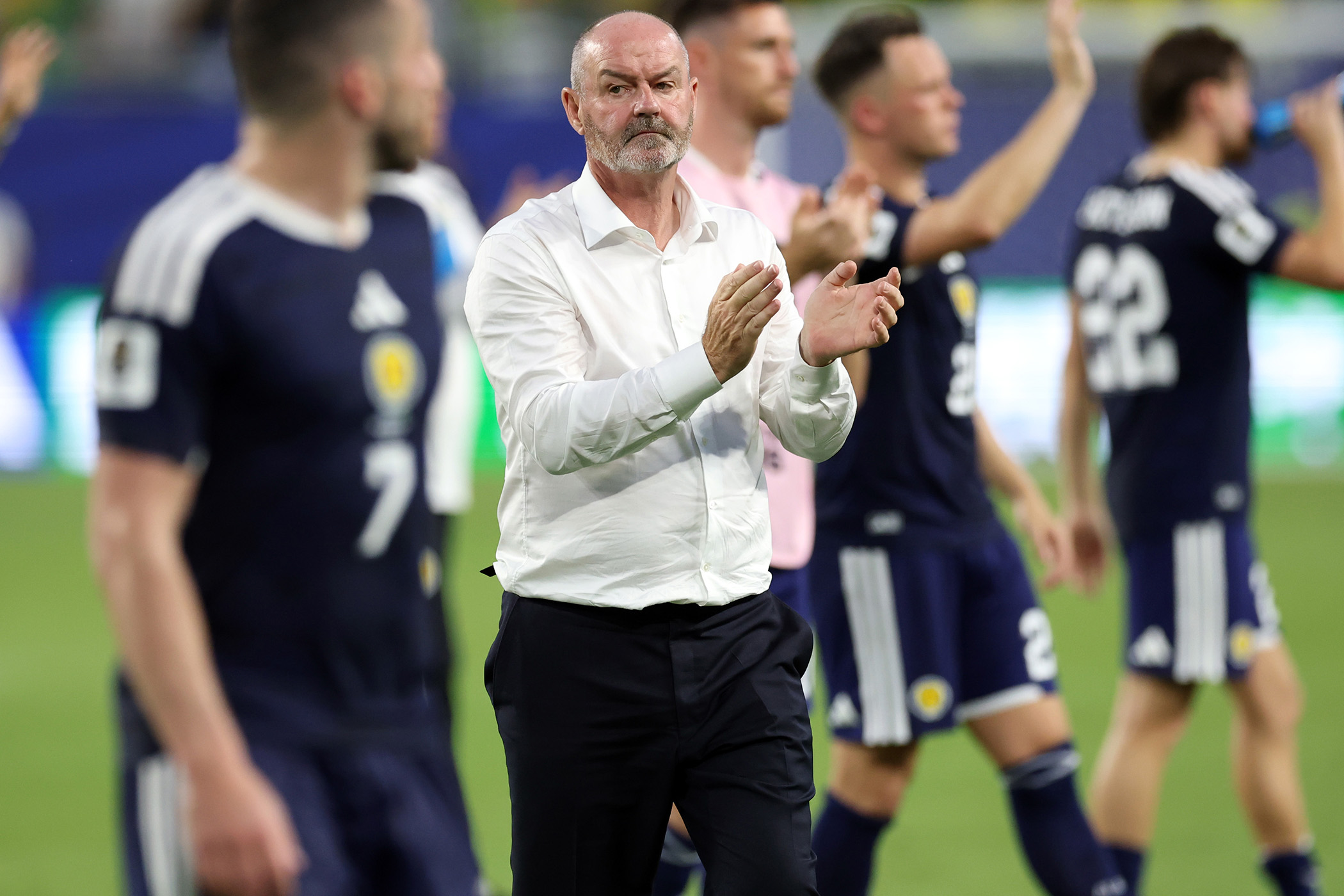
That is not to say there are no drawbacks. Scotland and South Korea knew on Wednesday night local time that they had finished third in their groups. They may not know for certain until Saturday local time what that means for them. That is tough for the players: to train or not to train? It is even tougher on the fans, who must decide whether to roll the dice and stay or to head home, their hearts only slightly heavier than their heads.
More troublingly, this format has the effect of disincentivising victory in some games. American fans less familiar with the game’s rich and varied history of malleable integrity, and long conditioned by the idea that sports exist to service the needs of television, have been baffled by the fact that the groups conclude simultaneously.
More than once, it has been necessary to explain the Disgrace of Gijón – what used to be called the Anschluss game at the Spain World Cup in 1982, when West Germany and Austria nakedly contrived a result that sent both through at the expense of Algeria – and why teams cannot be trusted not to arrange marriages of convenience.
There is a deep irony in the fact that, on Sunday, when Austria and Algeria face each other in Kansas City, not only would a draw almost certainly send both teams through, but that a loss might even be more appealing than a win: the team that finishes second behind Argentina would have to play Spain; the team that finishes third would likely run into Switzerland.
Infantino is not stupid. He will know that is not ideal. But he will also feel that the benefits have outweighed the costs, even when his personal and Fifa’s financial interests are taken out of the equation.
The clinching evidence for that is what has been broadcast around the globe: not just the games played out in surprisingly full stadiums – although whether everyone inside has paid quite as much as Fifa might have hoped is a very different and much more complex question – but the torrent of content that has consumed TikTok and Instagram.
The fear beforehand that this would be the moment the World Cup jumped the shark, that the game grew so fat and self-satisfied that it began to eat itself, that this would mark the end of football’s imperial phase, has not materialised. If anything, it has proved the opposite: the World Cup can still compel the planet in a way nothing else can match.
It is just a shame that quite why that is will be entirely lost on a Fifa president who seems to believe that what he finds appealing about the World Cup is representative of the public at large. It is not the glamour, the stardust, the celebrity-spotting, the stuff that seems to matter so much to Infantino. It is not even the scale and the grandeur: the colossal stadiums, the helicopter fly-bys, the endless succession of numbers with which we are pounded over the head.
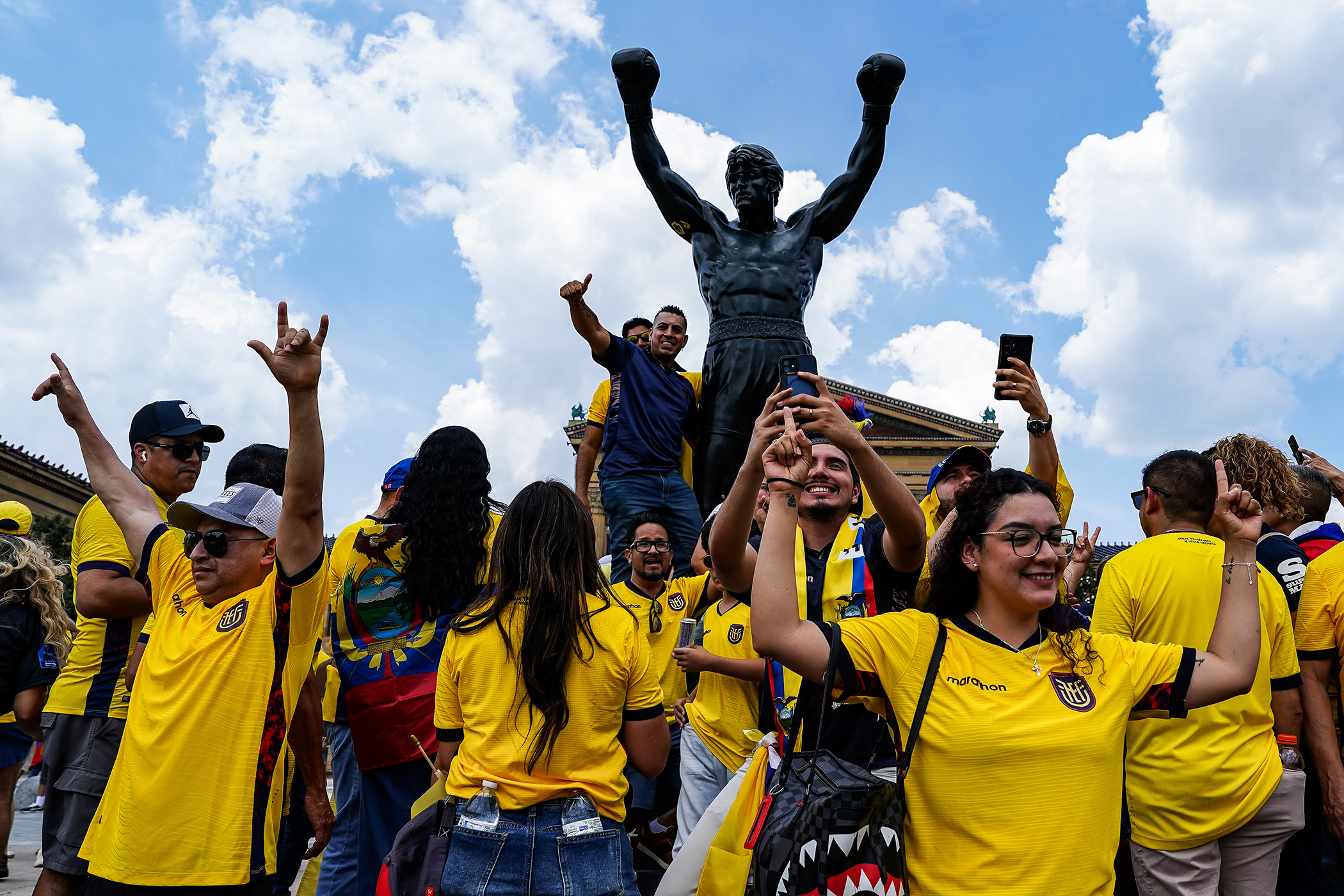
No, what makes the World Cup is the human element. It is Ecuadorians taking the Rocky Steps in Philadelphia. It is Vozinha, the 40-year-old Cape Verde goalkeeper, defying Spain. It is the bond between Mexican and South Korean fans. It is the German tourists lost in Americana; it is Americans discovering the joys of placing a traffic cone on the head of a statue as bagpipes blare in the background.
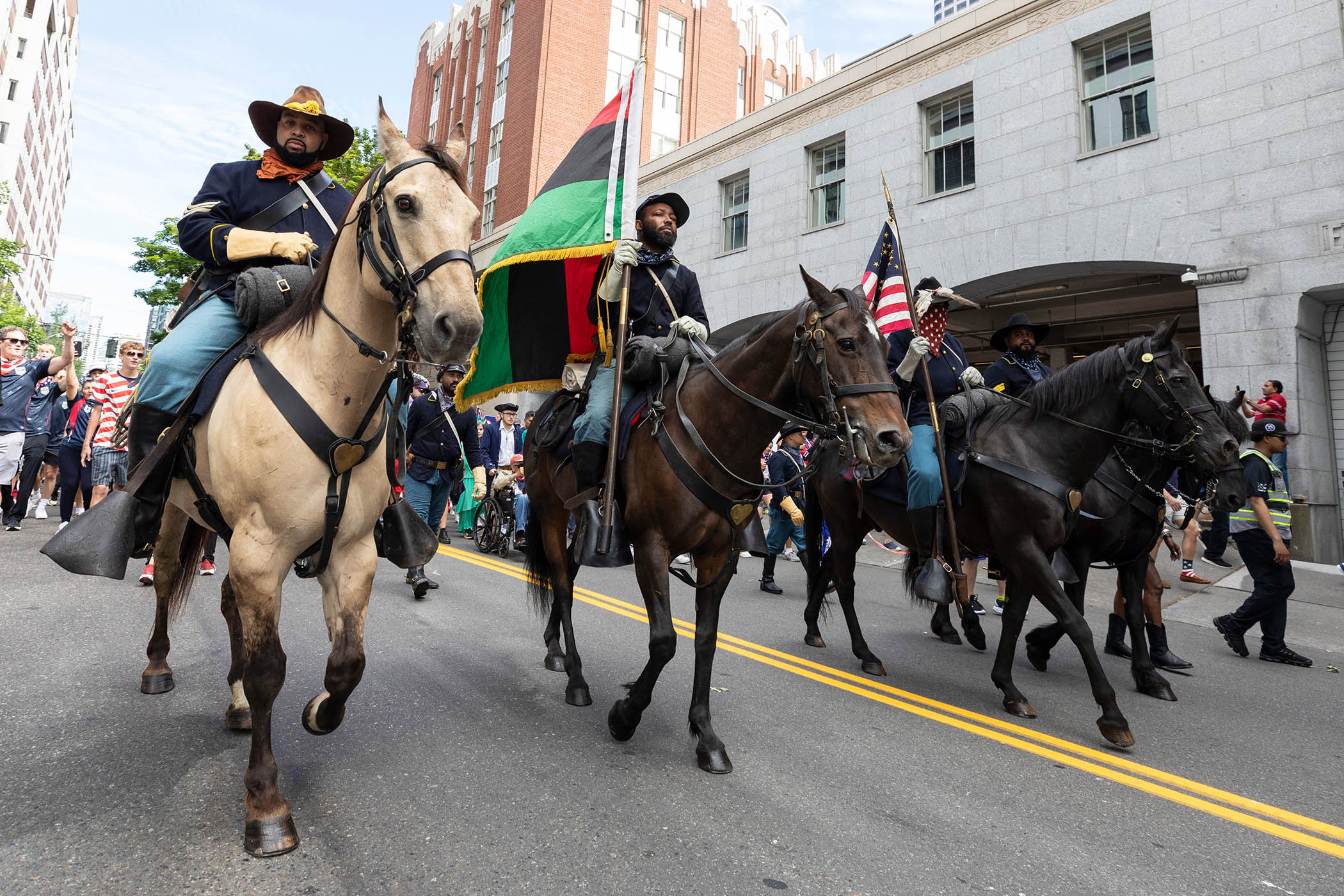
The World Cup, in effect, has two separate forms. At first, it is a global cultural festival, one in which fans perform, adapt and reclaim their national identities. Once that has finished, it morphs into an elite sporting competition. As a rule, the former is both the more joyous and the more influential; it is that which defines how the tournament exists in our memory.
And that is, ultimately, the part that Fifa cannot touch, cannot shape, cannot undermine. It is the part which takes place outside the stadiums, on the streets, away from the price-gouging and the luxury and the artifice. It is the part of the World Cup that belongs to the fans, the part of the World Cup that they cannot spoil, that they cannot exploit, that they cannot take away from us.
Thank you for reading. Tell us what you think by writing to letters@observer.co.uk
Photograph by Daniela Porcelli/Getty Images