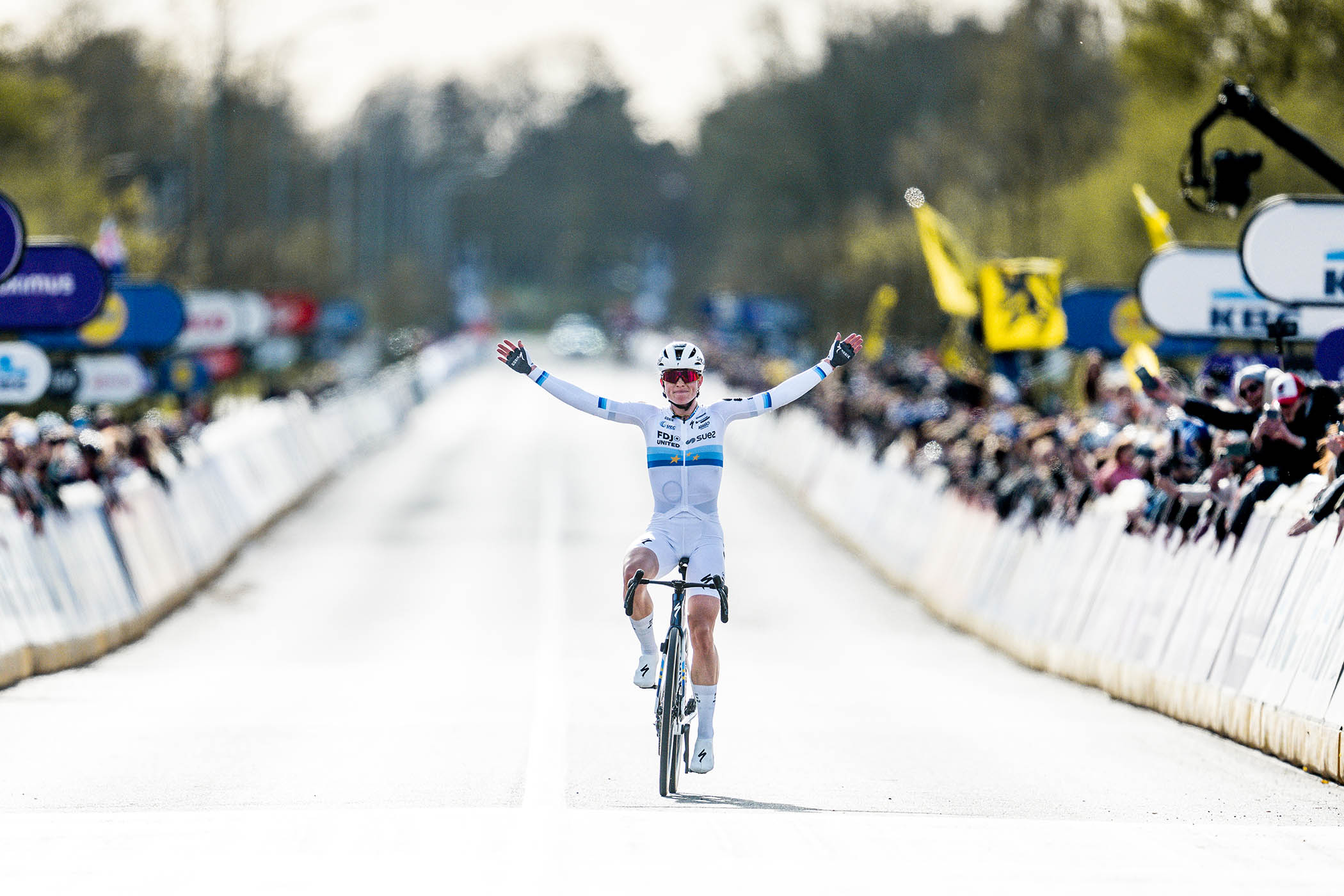

Demi Vollering’s first experience of Mont Ventoux came as a teenager, when she was an amateur cyclist, working as a florist in the family business.
“It was my first time in the mountains,” she says, “because my parents didn’t go much further during the holidays than the Netherlands or Belgium.”
This summer, the 29-year-old Dutch rider will return to the vertiginous “Giant of Provence”, as the highest-paid rider in the women’s peloton, seeking a second win in the Tour de France Femmes.
In the past five years or so, women’s cycling has exploded in popularity and Vollering has been at the heart of it.
She has finished on the podium of every edition of the Tour de France Femmes since the race was reinvented by French promoters, ASO, in 2022. She also has a “personal partnership” with Nike and is believed to be the first “million-euro” athlete in women’s cycling.
As winner of the 2023 Tour de France and 2024 and 2025 Vuelta Feminina, she starts this year’s women’s Giro d’Italia pursuing a career grand slam.
The Giro women begins next Saturday on the Adriatic coast and, even if the performance levels among her rivals are constantly improving, Vollering will be the outstanding favourite for a race which, like the Tour de France Femmes, is growing fast in importance.
She made an immediate impression when she turned professional in 2019. Back then, women’s bike racing was an under-funded fringe sport, given lip service by cycling’s male-dominated establishment. Tales of bullying, harassment and exploitation were commonplace. She acknowledges that things have recently improved.
“I think probably it’s still mostly men who follow our sport, but I feel like it’s changing slowly, especially with women’s sport growing more,” Vollering says. “For me, this is a really positive change.”
In a world of bland soundbites, Vollering stands out. Mental health, menstruation and extreme dieting are not often topics in many post-race press conferences, but for the Dutchwoman nothing is off limits.
Newsletters
Choose the newsletters you want to receive
View more
For information about how The Observer protects your data, read our Privacy Policy
“I’m an open book,” she says in clipped English as she talks to The Observer from a high-altitude training camp at Sierra Nevada, in southern Spain.
“I think often in the Netherlands they maybe find me too much. It’s not always what they expect or want to see.”
Since she first came to prominence, winning races such as Liège-Bastogne-Liège and the Tour of Britain, she has used her platform to speak out. Asked about one race in which she had not been at her best, she said: “I am a woman, and we deal with a monthly issue.”
She has also been very clear about the drastic weight-loss programmes adopted by some rivals.
“I will make every decision in my career by putting my health first. Young girls are watching us. They notice what we say – and what we don’t. We, as high-performance athletes, teams, and a sport, have a responsibility.”
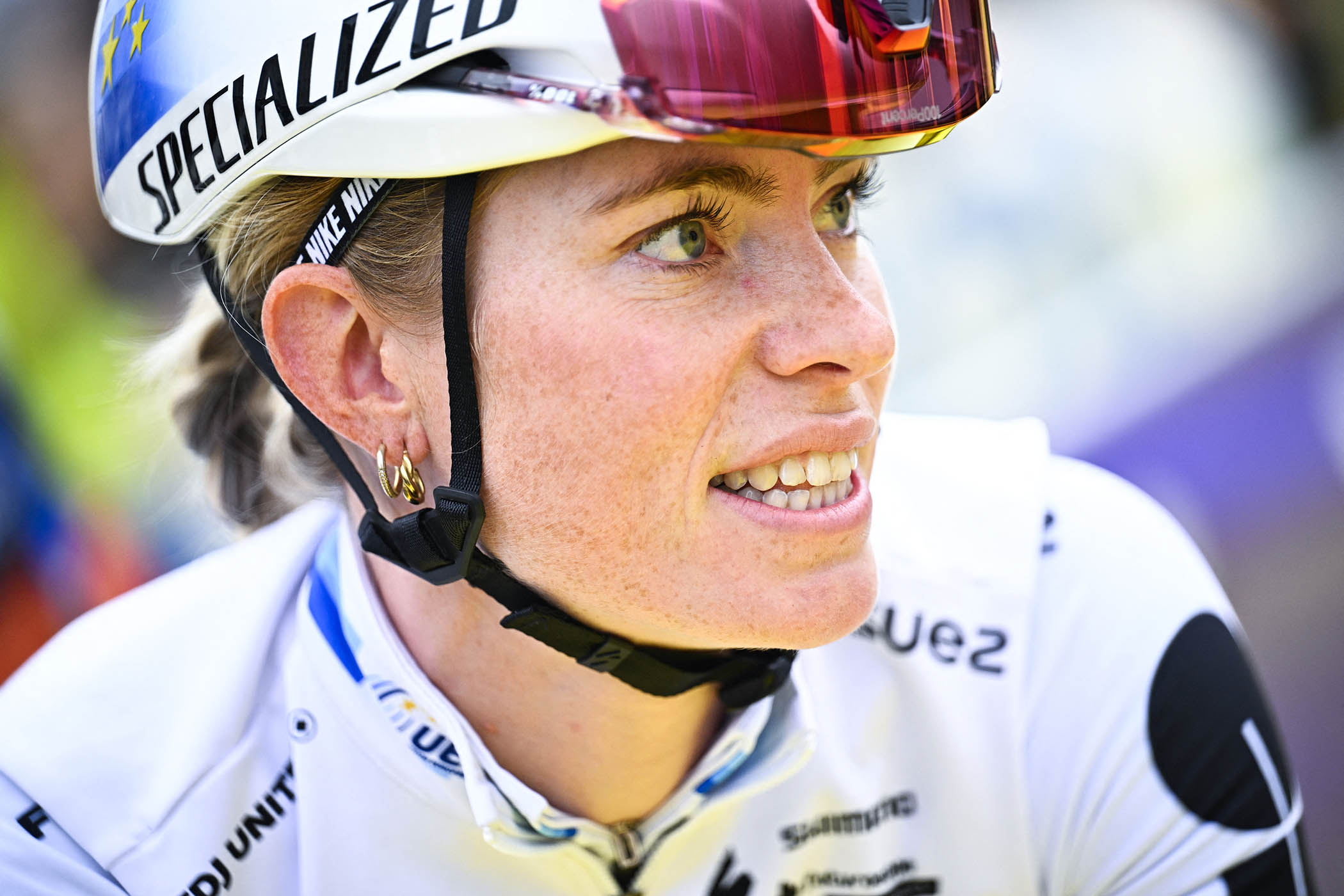
More recently, she has talked about mental health, wellbeing and mindfulness.
“As athletes, we often talk about how mindset makes the difference,” she wrote on social media. “But for many people – especially young people – the mind becomes too strong in the wrong way. It overwhelms, it isolates, it wins quietly.”
That empathy comes, she says, from the experiences of “somebody really close to me”.
“I never want to say who it is,” she says. “I’ve seen it my whole life from super-close. I have experienced it myself, even though it was not me.”
The experience, she says, “formed me through my life”.
“Everything I did, I always had in mind, ‘Maybe this is helpful for this person’. For example, meditation, I picked it up almost as an experiment, to see what it does.
“All the things I do about lifestyle, mindfulness – it’s always with a thought for a person close to me: ‘Would that be helpful for them as well?’”
As last year’s Tour de France Femmes ended, Vollering, beaten to the final yellow jersey by a dramatically slimmed-down Pauline Ferrand-Prévot, was quizzed by the Dutch media about her own weight, the implication being that she too needed to get leaner.
“I knew this question was coming,” she says. “I was like, ‘OK, I need to be very careful with my words now’, because I know if I say something, maybe they’ll write it down out of context or ‘hear’ it differently than I meant it.”
Her response was dignified, even if she found the question upsetting.
“I was super-aware of the words I was choosing. But still, I was not happy about a lot of articles, or some subtitles, that were used, just for the clicks. It was also difficult because, of course, I never wanted to undermine Pauline’s performance.”
Vollering’s consistency has made her a household name in the Netherlands. “These days I can’t go anywhere any more without being recognised. Sometimes it’s a bit overwhelming.
“I think being in [the cycling bubble] you almost don’t realise it. But on the moments that you’re somewhere, walking around, in your shitty outfit, and then you walk through a village and suddenly you hear some people screaming your name…”
She knows too that as the level of competition in women’s racing increases, particularly in the three Grand Tours, there will be new rivals.
“Everybody is stepping up more and more. Everything needs to go perfectly,” she says. “Every year, it’s harder and harder.”
Photographs by Billy Ceusters/Getty, Jasper Jacobs/AFP