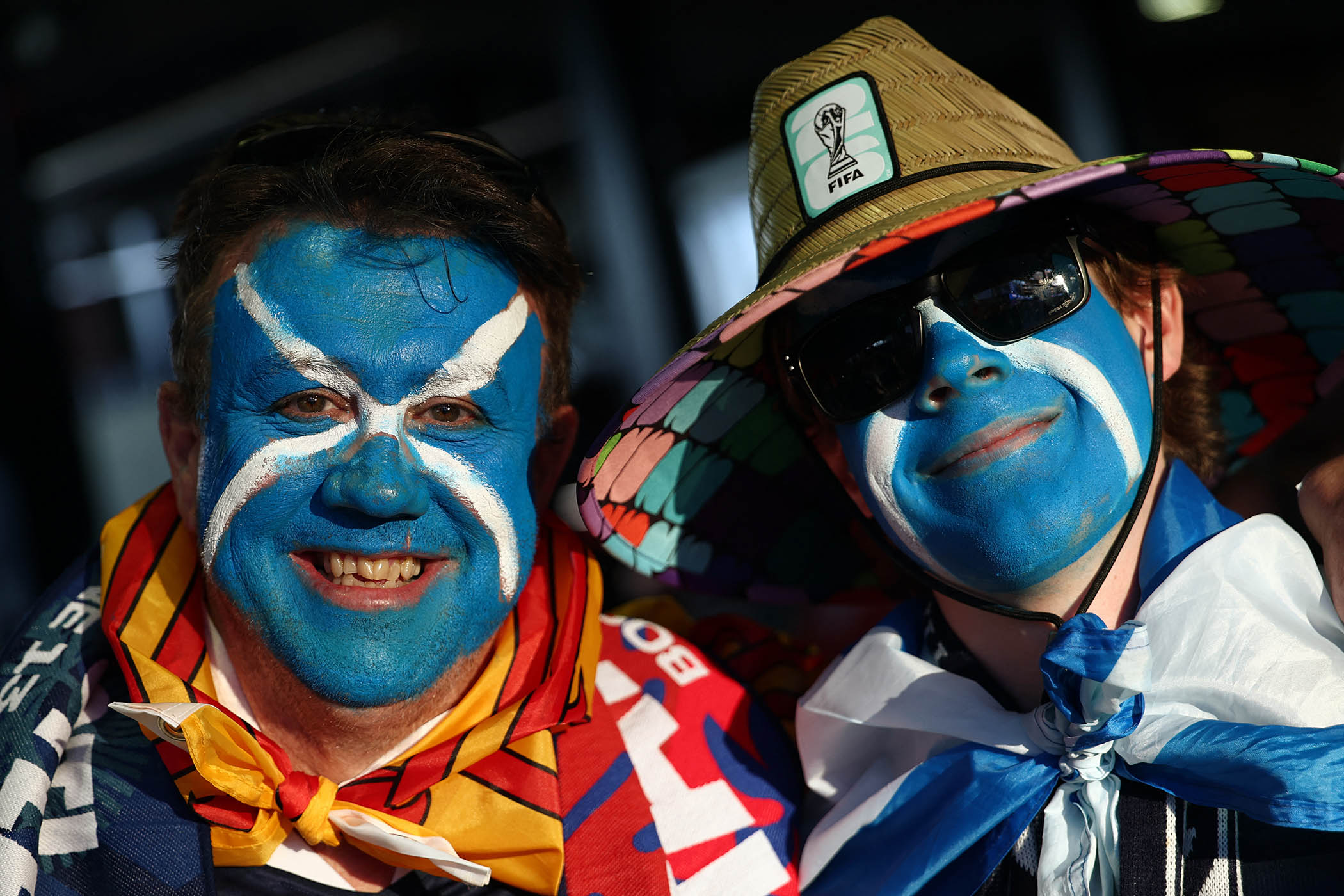


It’s 4am on Sunday morning in Edinburgh. The sun is beginning to rise over the castle, but the city is not preparing to wake up. It hasn’t yet gone to bed. The streets are littered with abandoned plastic pint cups, being stepped over by Scotland fans making their way home after watching their team win a World Cup match for the first time since 1990. The fact it was a 1-0 win against Haiti felt like a footnote. Men and women in kilts, with smudged Saltire face paint and flags draped over their shoulders, are singing their way down the cobbled streets as the local high-end hotels welcome their breakfast deliveries.
Nobody stays awake for a 2am kick-off to watch a predictable outcome. It’s the tension that grips us, and unites nations, in a way that is unique to big tournament football. Sport would be far less interesting if it, or we, behaved sensibly.
Brendon McCullum has famously told England’s cricketers that nothing good happens after midnight. Scotland’s first World Cup win in 36 years arrived at 4am, so there is at least one exception. Good decisions rarely happen after midnight, but good stories do.
Scotland had waited 28 years since their last World Cup appearance. A whole generation of Scots, including eight members of Steve Clarke’s squad, were not alive when Scotland last played at the World Cup in 1998. According to ESPN, their pundit Craig Burley, who was the fifth-youngest member of the Scotland squad that year, now has multiple grandchildren.
Perhaps the best place to understand the meaning of the occasion was not in Boston Stadium, but 3,000 miles away in the pubs of Scotland’s capital. They began filling up by 11am on Saturday, and many had reached capacity by midnight, two hours before the match kicked off. Scottish football is often defined by the intense, almost Shakespearean rivalries which separate its supporters. But here in The Three Sisters, a pub in the heart of the city’s old town, rival fans watched the match together. “I’m a Celtic fan, my best mate is a Hearts fan, but we are all having a great time. We all love the national team,” one fan said. “Everyone is supporting the one team, it’s lovely,” another said. “There’s no arguing and fighting, like you would usually get.”
The result itself was not straightforward. The scoreline will record three points and a clean sheet against Haiti, but the performance was considerably messier than many expected. Perhaps that should not have been surprising. Scotland entered the tournament carrying the weight of nearly three decades of absence. In that time there have been six failed qualification campaigns and enough near misses to make even the most optimistic supporter wary of getting carried away.
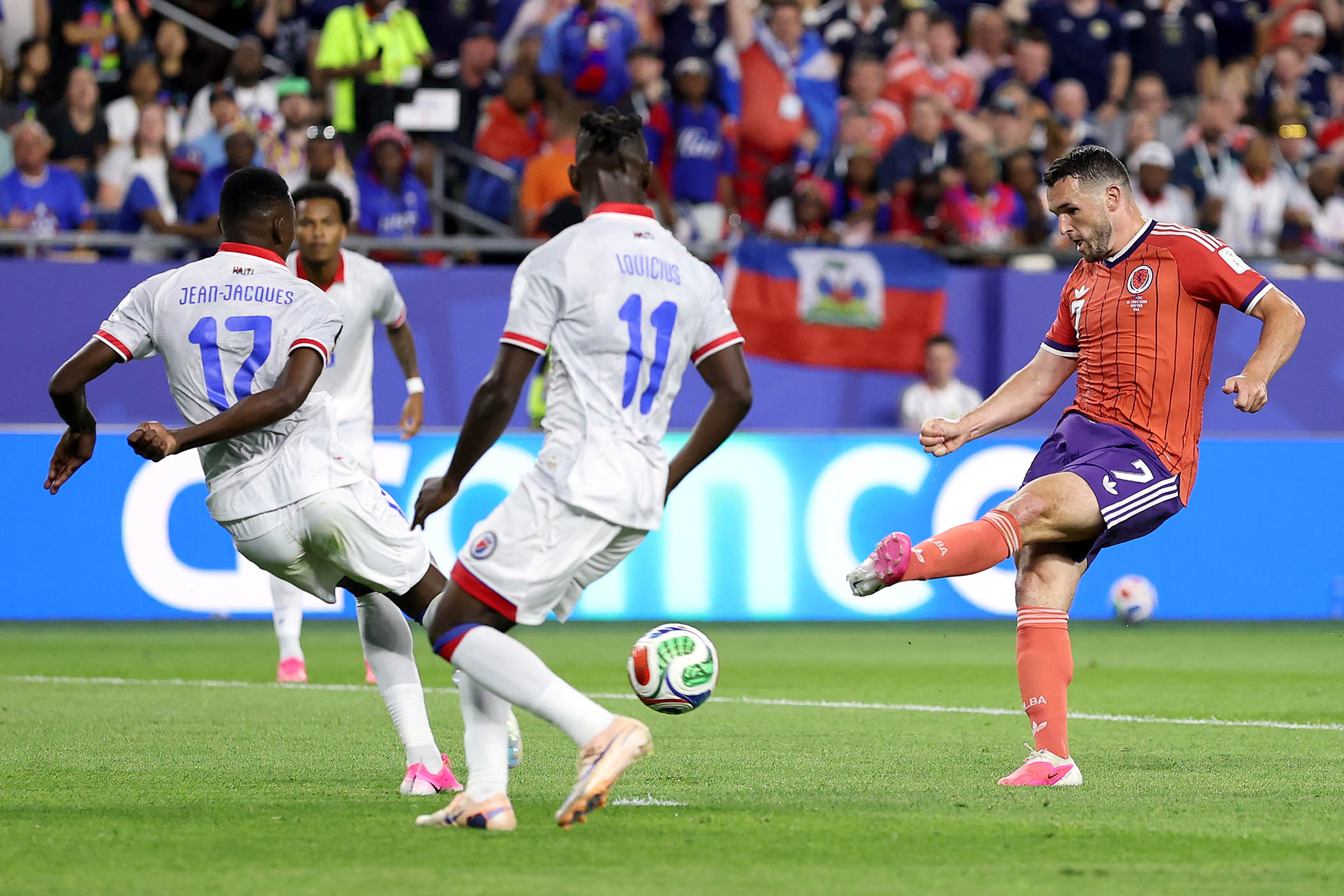
The only goal of the match came off the boot of John McGinn; the man the fans call “the Meatball”. It was not a beautiful goal and this was not a beautiful performance, not that anyone here would, or should, care. Even that raucous goal celebration was accompanied by the nagging suspicion that something deeply Scottish could happen at any moment. But it is the lead-up to that goal that will please Clarke. Scotland often found themselves losing possession and falling foul to Haiti’s intensity, but they looked best when they found Ben Gannon-Doak, the precocious Bournemouth man, on the right wing. His cross to Ché Adams, which rebounded to the boot of McGinn for Scotland’s goal, was a template of how this team should play.
The tension in the air during the final quarter was palpable. Fans who had predicted before the match that Scotland would go on to win the whole tournament had changed their tune considerably by the 70th minute. Relaxed smiles were replaced by anxious stares; the crowd stroked their cheeks nervously in unison every time the ball went out for a corner.
Clarke will know there is plenty to improve before they face Morocco and Brazil. Earlier in the evening, those two sides cancelled each other out in a 1-1 draw, a result that leaves Group C intriguingly balanced but also underlines the challenge ahead.
For now, Scotland sit atop the group on three points, celebrated by fans as if they were sitting on a throne. Their World Cup campaign is alive and, perhaps more importantly, their players and supporters have finally experienced something some feared they never would. They are here, at the World Cup, and they have won their first match. As the early morning light hit the city, it welcomed a new dawn for Scottish football. It turns out that if you stay awake long enough, good things can happen after midnight after all.
Newsletters
Choose the newsletters you want to receive
View more
For information about how The Observer protects your data, read our Privacy Policy
Photographs by Franck Fife/AFP, Justin Setterfield/Getty Images