

The morning after the night before, the queue snaked down North Venice Boulevard, all the way back to Abbot Kinney. Ordinarily, this is high-priced athleisure country, all upscale smoothie shops, achingly trendy boutiques and Instagram-ready golden retrievers. By Saturday lunchtime, though, it had been almost completely colonised by United States replica shirts.
World Cups, as we have previously established, tend to be slow burns on a sort of conceptual level. The start never quite lives up to the billing; in anticipation, they loom so large in our imaginations that they can only ever seem surprisingly small when we see them in the flesh.
That effect has been especially pronounced this year. Admittedly that is partly because the first three days of the World Cup have been spent constantly taking the pulse of the World Cup, forever examining every minute detail to establish whether America does, or does not, like football at any given moment.
In this, at least, there is an element of hands-across-the-Atlantic unity. The only people who are apparently more obsessed than gatekeeping Europeans with figuring out the precise health of America’s relationship with football is the country’s football public itself.
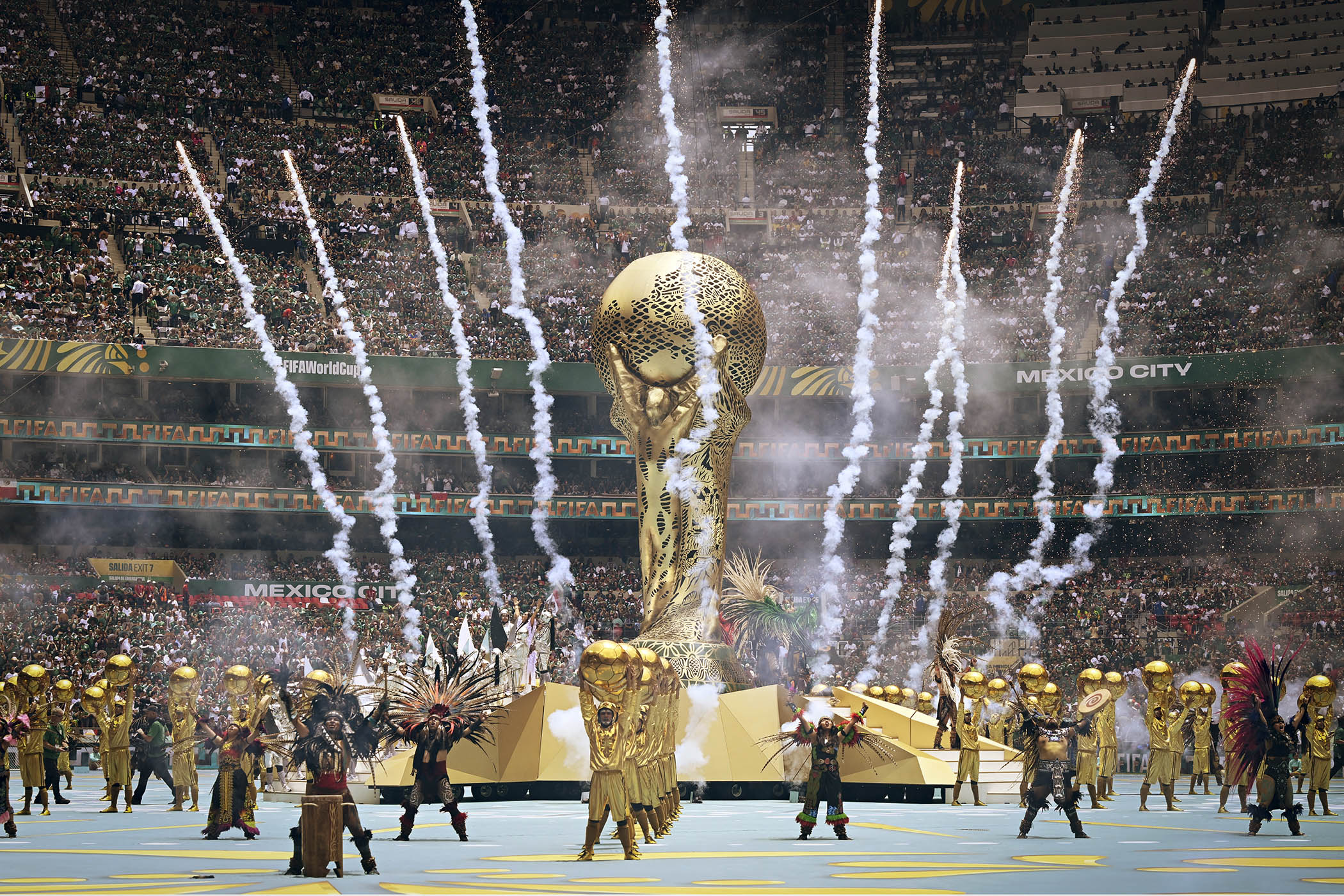
But it is also connected to the structure of the past three days. Fifa tends to bristle if you describe World Cup: Giannipalooza Edition as bloated. They seem to think it is a little pejorative. But it doesn’t feel wholly irrelevant that it featured three separate opening ceremonies: one in Mexico City, one in Toronto, one in Los Angeles. That is, at a rough estimate, two more than you would normally get.
The effect was not to build the excitement but to parcel it out. Thursday was the day the World Cup began, of course, but it did not begin everywhere. Canada had to wait until Friday afternoon. The United States, the principal host, got underway a few hours later. And it was not until yesterday, 48 hours later, that one of the tournament’s traditional powers played.
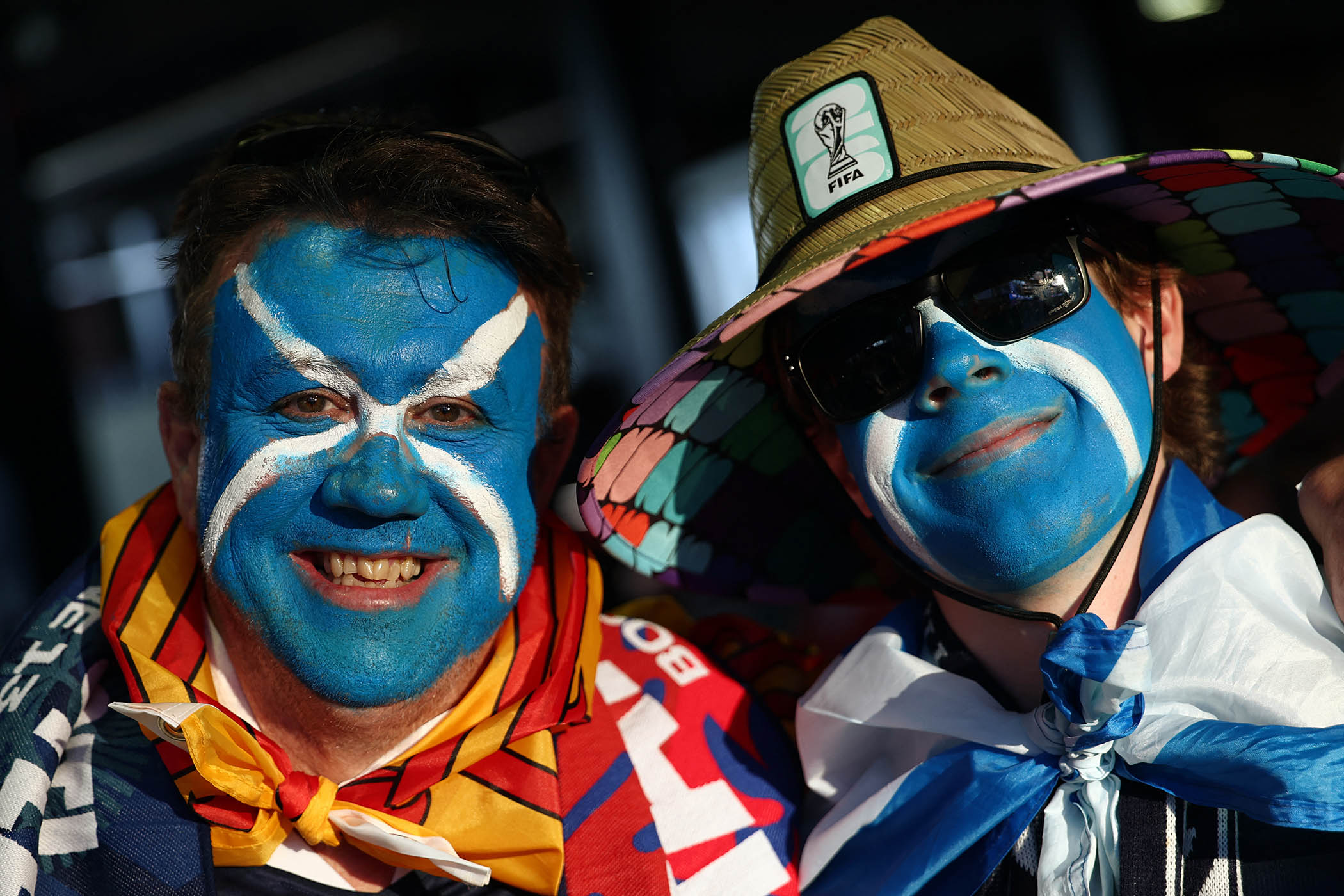
Brazil’s debut – a 1-1 draw with Morocco – was not Saturday’s best game; that honour fell to Scotland’s nervy, absorbing win against Haiti. But it was the first glimpse we have had of a side that has a realistic ambition of remaining here until the very end. Let’s do the cheap but not completely unwarranted joke: they were the team playing Brazil.
World Cups serve a dual purpose. One is as a global carnival: a chance for countries to express themselves on the greatest stage the planet has to offer. This one is always celebrated first, both as we marvel at the resilience of Haiti and the pride of Bosnia & Herzegovina and as we use the tournament as a chance to understand the hosts.
The other is as a sporting competition, an attempt – a flawed one, yes, but the best we can do – to find the best football team on the planet. That one can only begin when the great powers are in play. Brazil’s role, in effect, was to lift the curtain. Their rivals will follow in short order: the Germans and the Dutch today, Spain on Monday, then France and Argentina and finally, on Wednesday, Portugal and England. The World Cup, in both its forms, has started.
And it has done so at a point when it is possible to say with some certainty that all of its hosts are fully engaged. Mexico and Canada had already proved their credentials; if there was any doubt about the US, it was obliterated by their performance on Friday evening. Between Fox and Telemundo – the Spanish language broadcaster – almost 25 million watched a portion of the game. (More depressingly, the inexplicable online streamer iShowSpeed attracted twice that to his stream from SoFi.)
Newsletters
Choose the newsletters you want to receive
View more
For information about how The Observer protects your data, read our Privacy Policy
That is more than tuned into any of the first five games of the NBA finals – it’s possible that the New York Knicks’ clinching victory on Saturday evening will have exceeded it – and it is five times as many as have been watching the Stanley Cup, the conclusion to the NHL season. We can probably stop asking the question now. The United States is into the World Cup. We have ignition.
More from Observer Sport
Does this World Cup kind of make the idea of “countries” look outdated?
Haiti – the miracle nation
England’s other No 10 conundrum
Photograph by Alfredo Estrella/AFP via Getty Images