
This article is part of the Rory Smith on Football newsletter – a guide to help understand what is happening on the pitch, off the pitch, and why all of it matters.
Throughout the tournament, Rory will be travelling across America, delivering daily commentary on the biggest World Cup ever direct to subscribers. Never miss a newsletter, subscribe now here.
Seeing it close up, again and again and again, there is only really one way to explain it. Maybe the mistake that so much of football’s commentariat made was refusing to see that. As they sat in their airspace television studios and podcast caves, they tried to assess Argentina by using science, and data, and reason.
They talked about fitness and conditioning, and determined that Argentina did not have enough of either. They compared tactics and strategy; the world champions were lacking there, too. They pointed to the areas behind the full-backs. They adopted their best Thinker poses, Rodin brought to you by Axel Arigato, and deployed the word “transition” with self-conscious gravity.
These are, increasingly, the terms of engagement when we think, and talk, about football. More and more we interpret it as a programme that can be broken down into code, a clash of two competing algorithms. Whichever one generates the better numbers wins. We have taken a vital and dynamic game, our greatest cultural form, and reduced it to a mere equation.
And that is, for the most part, fine. The numbers are helpful. The numbers can be fun. Most of the time the numbers are relevant, too, a way to understand what actually happened on the pitch. It is just that none of this really works for Argentina, because what Argentina do – what Argentina are – is actually a type of magic.
Not sleight of hand magic, the sort that underpins card tricks and street hustle. And not grand, showy magic, either, the kind that might be wielded by some sequinned illusionist. No, Argentina’s magic is more organic, more earthy: the magic that fills the gaps still left unexplained by science, the magic that takes the universe and bends it, on some molecular level, to its own liking.
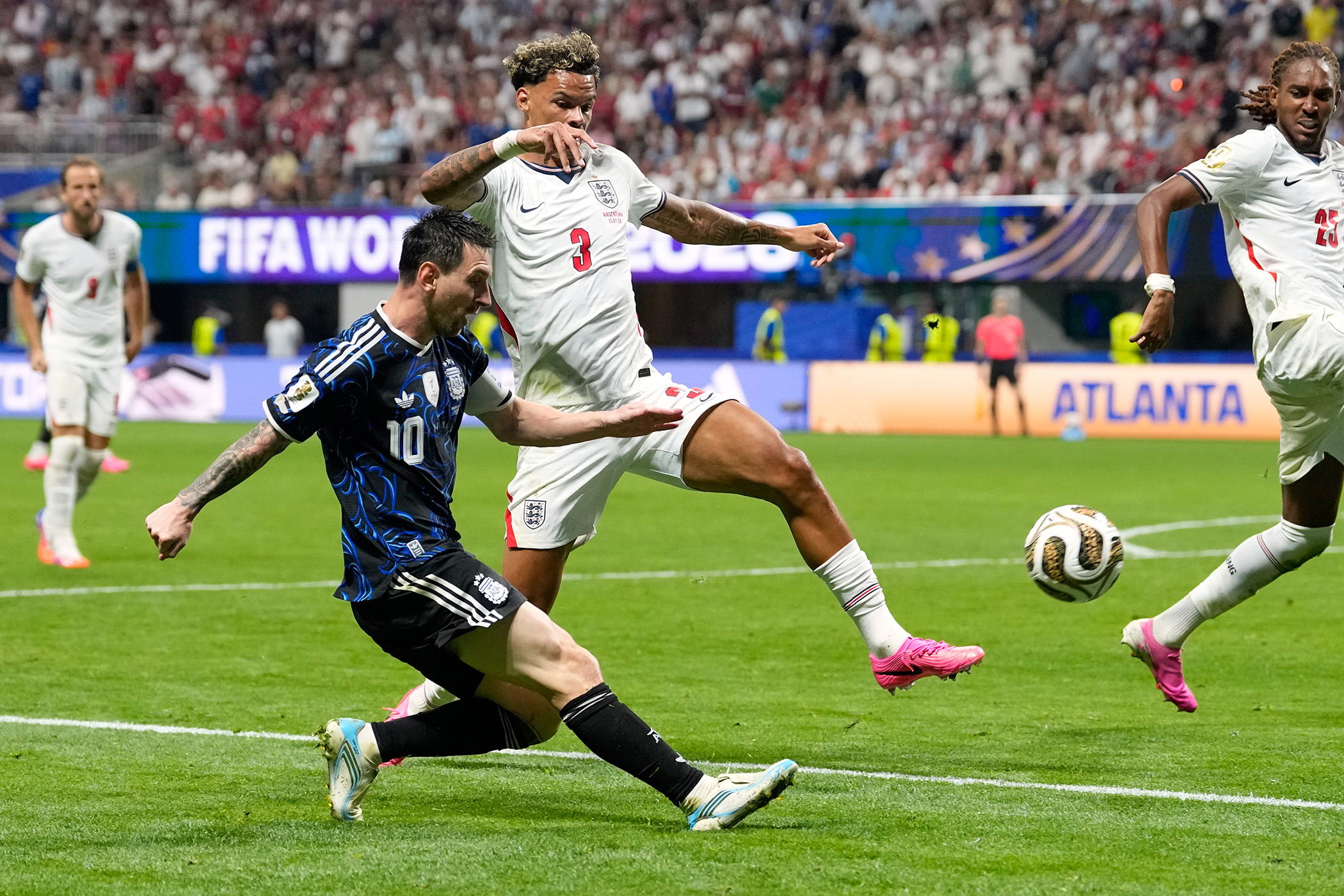
That should not be considered an attempt to diminish the scale of England’s complicity in their own demise in Atlanta yesterday. Between the 53rd minute, when Anthony Gordon gave Thomas Tuchel’s side the lead, and the 93rd, when Lautaro Martínez scored Argentina’s winner, England managed just 12 percent possession. That may well have been less than the ballboys.
From high in the airless dome of the Mercedes-Benz Stadium, it looked very much like this was deliberate. England dropped to the edge of their own box almost as soon as Argentina kicked off; they seemed to be inviting a team containing the greatest footballer of all time to spend the next 40 minutes or so playing 20 yards from their goal.
The extent to which England were outplayed in that period may well be overshadowed by the drama of their late goals; it should not be. This was no smash and grab. Alexis Mac Allister hit the post twice. Nico González drew an outstanding save from Jordan Pickford. There were countless shots blocked, crosses narrowly missed.
Newsletters
Choose the newsletters you want to receive
View more
For information about how The Observer protects your data, read our Privacy Policy
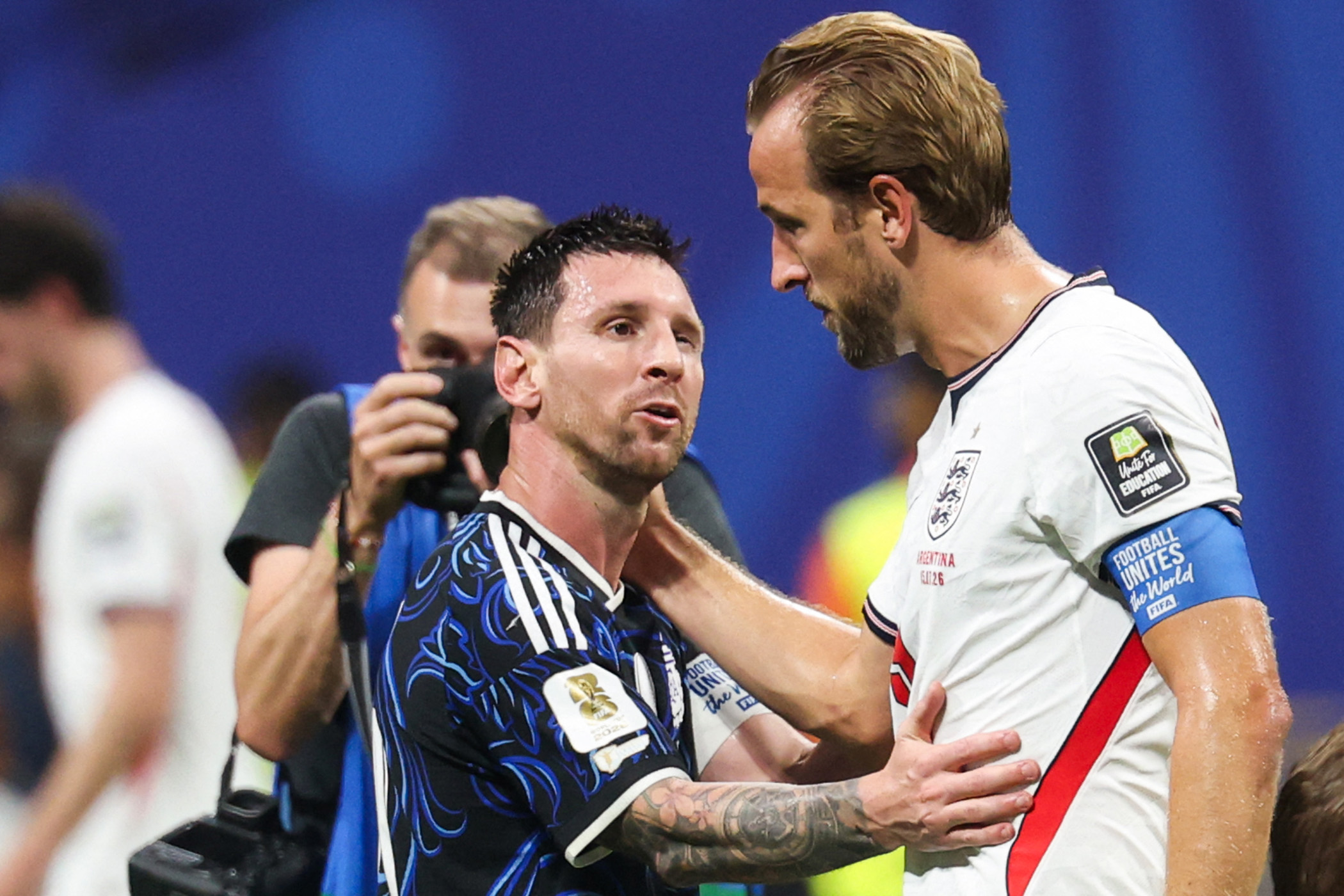
There will be no surprise at the identity of the player who orchestrated all of it. If Jude Bellingham continues on his extraordinary rate of development, he will surely one day produce a display as jaw-dropping as the one Messi, at the age of 39, mustered in the second half of the World Cup semi-final. It’s just that by Messi’s standards, this was very much a Wednesday afternoon.
But that England encouraged him, played into his hands, is not really in question. Not all of it can be pinned on Tuchel – he was not, presumably, instructing his players to treat the ball like it was a hand grenade, booting it clear at any given opportunity – but most of it probably can. He was the one who switched to three at the back, and then went full Pulis: four central defenders, arrayed across Pickford’s box.
In those last desperate minutes, as England searched for sudden salvation, it seemed fairly apparent that it could only be temporary. The team Tuchel had on the pitch made absolutely no sense. How he was planning on reordering it to get through extra time is anyone’s guess.
But then maybe that is the magic, too, or one of its side effects: maybe it is so potent, so otherworldly that mere exposure to it can scramble the brain and frazzle the senses of even the coolest, sharpest thinker. Or, at least, maybe the magic is such that nothing Tuchel might have done could have worked. Maybe there is no counter-spell.
Over the last four years, I have seen Argentina play, in the flesh, seven World Cup games. I was at Lusail when they lost to Saudi Arabia in 2022, a day that ended with Messi trudging from the field, disconsolate, seemingly condemned to yet another humiliation on the stage he values more than any other.
I was back when they beat Mexico, a week or so later, to keep their hopes alive. I saw them beat Australia in the last 16 and the extraordinary thriller with the Netherlands in the quarter final and the surprisingly breezy win against Croatia in the semi. And, of course, there was the final itself, a game that Argentina won three times, an evening that should very clearly go down as the greatest game of them all, football in its highest form.
And then, this time around, I was in Kansas City for Messi’s hat-trick against Algeria, and in Atlanta to watch his floods of tears after coming so close to falling to Egypt, and then back again to see him – just a year shy of his forties – make his debut against England. He had, he said, played almost everyone else. It was obviously their turn.
What has been inescapable, throughout it all, is the sense that it does not really matter how good Argentina are; or, at least, how good they are in the dictionary definition of the term, how good they are in the way that we judge other teams. This is because their defining characteristic is a belief in their ultimate destiny that is so absolute that it is, after a while, contagious.
But it is also partly because of what happened in Atlanta yesterday, what happened in Atlanta last week, what happened in Kansas City, what swept them to glory in Qatar: all those times when they have snatched victory from the ravenous maw of defeat, when it has looked like Messi is fading from view only for him to burst into our consciousness once again.
There is, probably, boringly, a logical explanation for that habit, that refusal to accept that it is over, that there is any outcome other than triumph. It is likely to do with Messi, and Lionel Scaloni’s astute management, and his judicious (and unorthodox) use of his substitutes. There will, somewhere down the line, be some data and science. It is just that, seeing it close up again and again and again, it really does look an awful lot like magic.
Photograph by AP Photo/Rebecca Blackwell