

By the standards of the last few days, the World Cup’s first encounter with the snickometer barely registered as controversial. No lawyers were engaged. The referee’s integrity was not impugned. Nobody suggested that events were being manipulated by some shadowy hidden hand. Not a single President got involved.
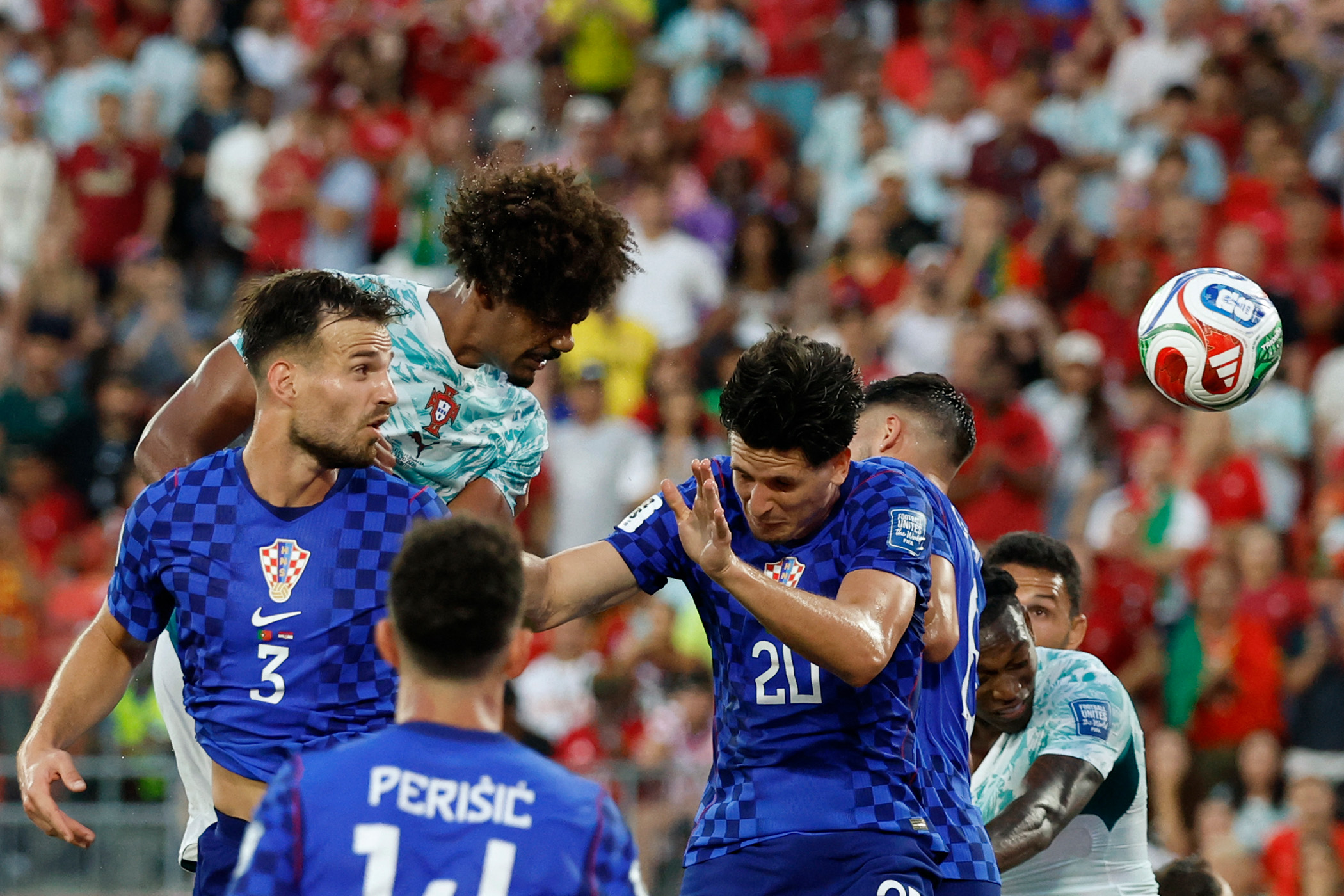
To recap: Croatia were trailing Portugal by a single goal in their round of 32 meeting in Toronto when, in the 13th minute of injury time, the striker Igor Matanović jumped to head on a hopeful cross inside Portugal’s box. The ball reached Petar Sučić, who bundled it towards goal. Joško Gvardiol turned it in. Croatia had stayed alive at the last; they had forced extra time.
Or maybe they hadn’t. In the Video Assistant Referee’s secret lair, they established that Sučić would have been offside when he came into possession of the ball if – and only if – Matanović had touched it. The replays were unclear. It may or may not have skimmed his head. The ball’s trajectory, certainly, did not change.
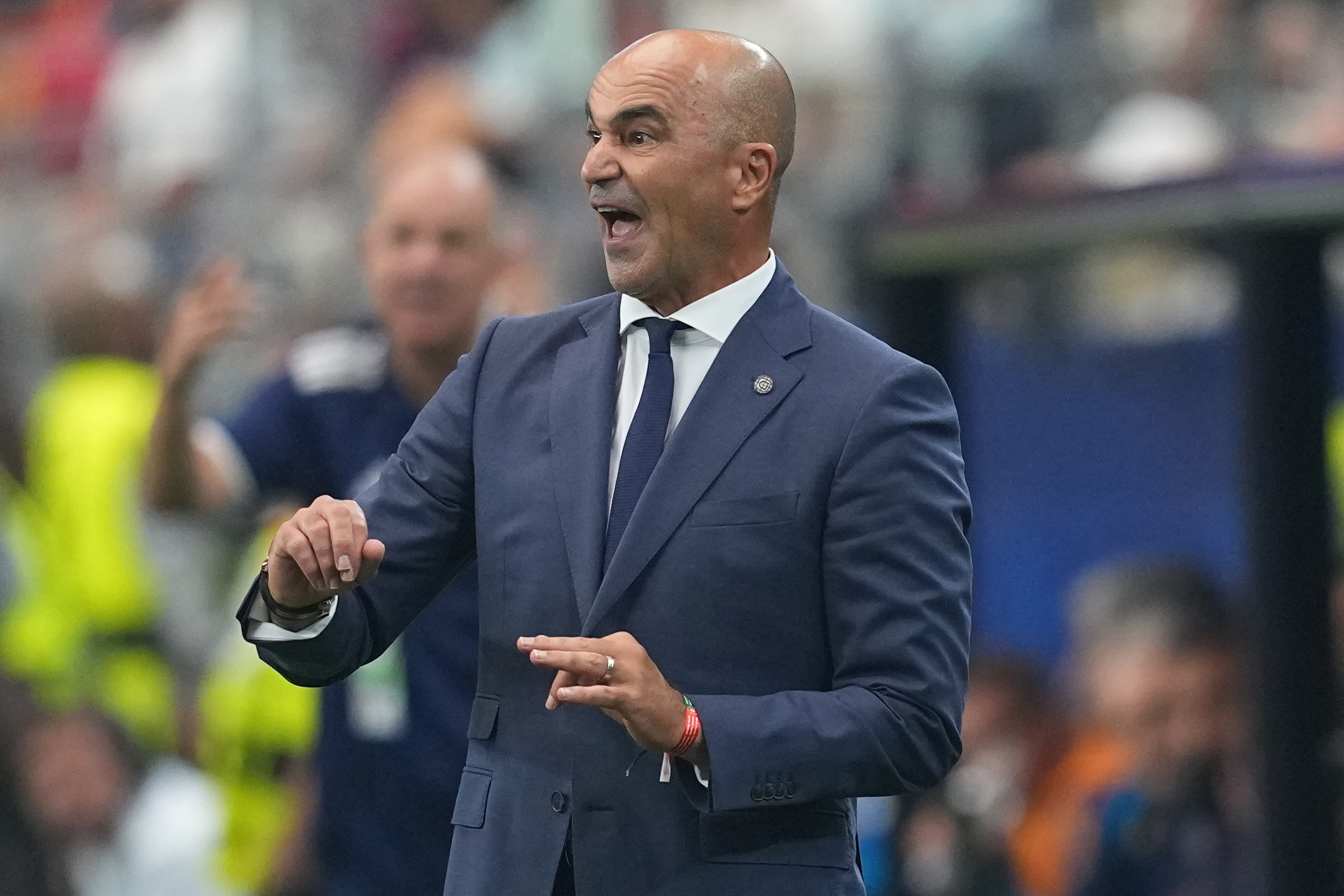
But, as the referee Espen Eskas explained to Croatia’s confused, furious players, a microchip inside the ball had detected contact. “The referee said he didn’t see anyone touch the ball,” Sučić said. “He said that he had a sensor in the ball.” Roberto Martínez, then the Portugal manager, claimed it was “very clear why the VAR intervened. It’s not a subjective opinion.”
Well, Roberto, it is and it isn’t. Fans watching on television were treated to a line graph, a little like a cardiogram, which “showed” that Matanović had, however gently and delicately and insignificantly, made contact with the ball. The fact it appeared to make no difference at all is immaterial. The graph was presented as incontrovertible proof.
Except, of course, none of us have the slightest idea whether the sensor is accurate, how it works, or even – at this juncture please don your tinfoil hats and start to unspool your red string – if the graph was real. What if someone altered it when they realised the referee had made an error? What if there was a deep state conspiracy to get Cristiano Ronaldo to the last 16 of the World Cup? That would, when you think about it, explain quite a lot.
There was a brief furore over the incident, but only brief. Croatia’s fans and players loudly made their dissatisfaction plain, but for the most part the verdict of the sensor was assumed to be essentially infallible. That can be attributed to some extent to football’s growing traffic warden mindset, its technocratic tendency, the tedious and officious reverence for the letter of its capital-L Laws and its total ignorance of the spirit of them.
But it also felt like an encapsulation of the rules of engagement for modern life. We are conditioned if not to trust technology implicitly then to accept its primacy unchallenged: to function in the world is to hand control of our information to algorithms, to outsource our learning to AI, to treat more advanced and better as synonyms. Ours is a Waymo culture, a world of driverless cars.
For that to work, though, for us to trust that the sensor in the ball is objective and neutral, we have to trust the authorities that oversee the technology. A few days after the Matanović incident, there was substantially more outcry over another disputable intervention: the decision to rule out the Mostafa Ziko goal that would have doubled Egypt’s lead against Argentina in Atlanta on Tuesday.
This one was, at least, visible. Sort of, anyway. François Letexier, the French referee, had been advised to look again at a foul allegedly committed right at the start of the move that led to the goal. The alleged offence had taken place half a minute or so before and 100 yards away, but still, he determined there had been an infringement.
Newsletters
Choose the newsletters you want to receive
View more
For information about how The Observer protects your data, read our Privacy Policy
Egypt had, as it turned out, scored a second goal – one that did stand – pretty soon afterwards, anyway, but that did not dampen the outcry. Ziko himself said the game had been fixed. His coach, Hossam Hassan, claimed outright that Fifa wanted to keep Lionel Messi and Argentina in the tournament.
The difference in the scale of Egypt’s outrage, compared to Croatia’s, can be traced to what happened in between. On Sunday, it emerged that Fifa’s independent disciplinary committee had suspended the red card shown to Folarin Balogun, the United States striker, in their round of 32 game, allowing him to take part in their last 16 meeting with Belgium.
This was, they assured us, absolutely nothing to do with the fact that President Trump had called his close personal friend Gianni Infantino – “my boy Johnny,” as he calls him – immediately after Balogun’s sending off. Well, almost immediately: Trump acknowledged that someone had needed to explain to him what a red card was first.
Quite what had led to this sudden outburst of clemency, if it had not been Trump’s intervention, was not made clear. Both Infantino and the curiously anonymous head of the disciplinary committee released statements patiently explaining that all of this was above board, all included in the statutes, but they did not explain how they actually had reached the decision. Sure, it might look like homerism at best and horse-trading at worst, they said. But it’s not. Trust us.
That, though, is impossible. It is impossible because Infantino has spent years ingratiating himself with Trump, going so far as to attend his second inauguration while wearing a signature red tie, taking out office space in Trump Tower, handing him an invented Peace Prize simply to placate his ego.
And it is impossible because he has also shown a consistent willingness to bend his rules to get what he wants. Fifa found a way to parachute Inter Miami into the Club World Cup last year, apparently simply to ensure that Messi was present. Its last opaque disciplinary ruling just so happened to commute a ban that would have ruled Cristiano Ronaldo out of Portugal’s first two games here. In that context, Egypt’s allegations are not exactly Roswell-sized.
The likelihood, of course, is that both they and Croatia were victims of nothing more than bad luck and poor judgment. Matanović probably did touch the ball. Letexier was probably correct, at least technically, to rule out Ziko’s goal, as absurd and as pedantic as doing so seemed. That they had reason to believe otherwise does not reflect badly on them but on Fifa, on the institution that Infantino has created, which demands our unquestioning trust but seems so determined not to justify it.
Photograph by Kamil Krzaczynski/AFP via Getty Images