

This article first appeared as part of the Rory Smith on Football newsletter – a guide to help understand what is happening on the pitch, off the pitch, and why all of it matters. To receive it in your inbox, sign up here.
The problem, really, is that it can be tricky to separate fault and responsibility. Take, for example, Liam Rosenior. All things considered, it is not really the Chelsea manager’s fault that Robert Sánchez became momentarily permeable an hour or so into his team’s visit to Everton on Saturday evening. That his goalkeeper’s error contributed to a fourth straight defeat, though, is very much his responsibility.
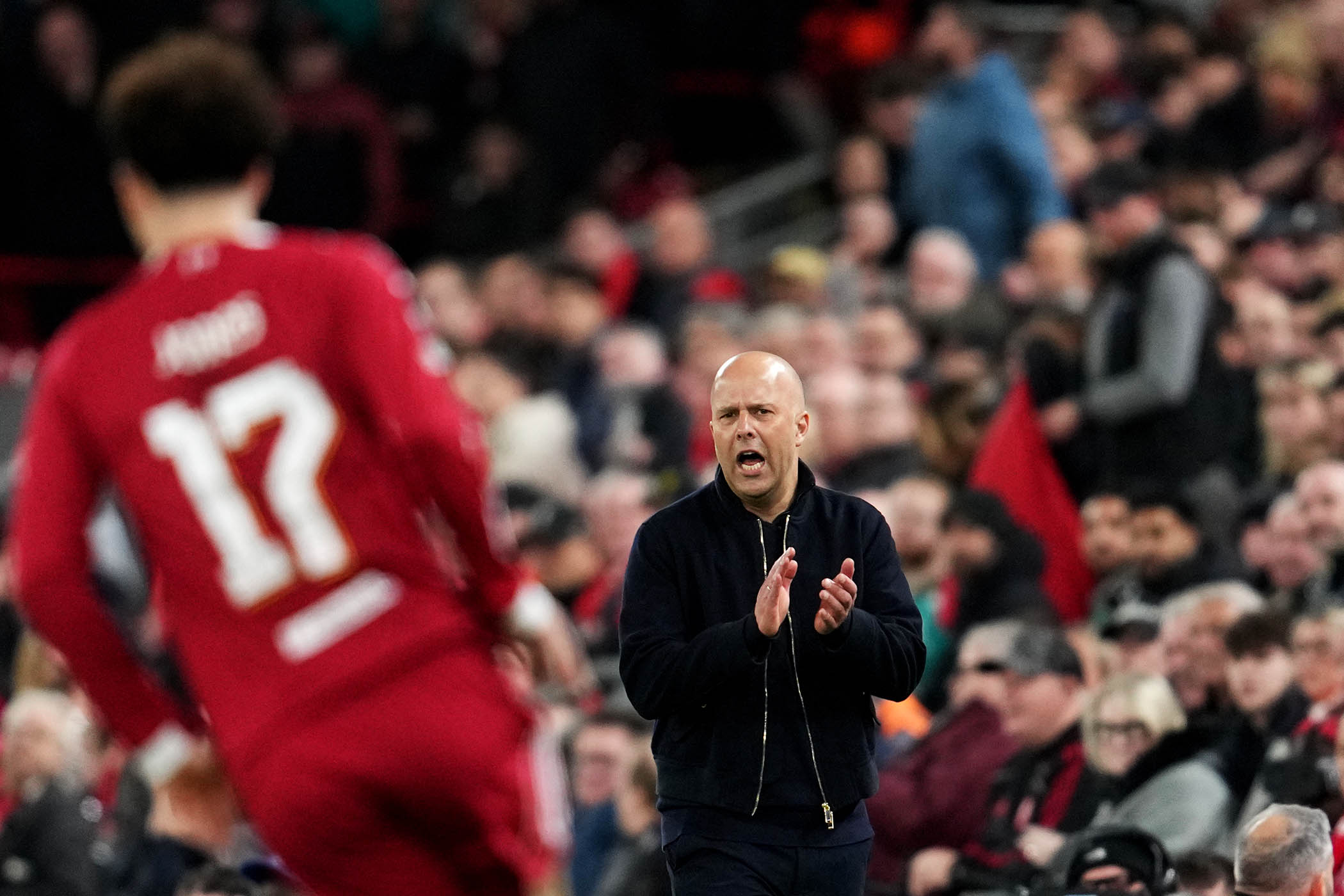
The same can be said for Arne Slot. It is not, strictly speaking, his fault that Liverpool tried to defend their Premier League title with a squad that was reassuringly expensive but also very obviously chronically imbalanced. The Dutchman does not, after all, do the recruitment at Anfield. That Liverpool have duly lost a third of their league games this season is, ultimately, his responsibility.
English football has always been home to what is probably best thought of as a cult of the manager; it has, as a position, traditionally been held in rather higher esteem here than elsewhere. Most teams have one club-building titan, a sort of father figure for the institution itself; in many cases, their names have outlasted most of the beloved players they coached: Chapman, Busby, Shankly, Revie, Clough.
There is a reason that England fell so fast, and so hard, for José Mourinho when he first appeared on these shores in 2004: the swagger, the charisma and the rapier one-liners all carried with them distinct echoes of Brian Clough; Mourinho was effectively (and possibly knowingly) the English ideal of what a manager should be, with the added bonus that he looked good in a peacoat. As a culture, we have long since believed in what is basically the Great Man Theory of Football.
In recent years, the game itself seems to have decided this was all a bit old-fashioned. Or, more likely: as the great floods of money sloshing about English football have attracted a rather less indulgent class of owners, the idea that the long-term health of a multi-billion pound asset should be entirely entrusted to one guy in a tracksuit has come to seem just a tiny bit insane.
And so the power of the manager has, slowly but surely, been eroded. Most clubs now employ at least one sporting director, technical director or Director of Football, as has been standard on the continent – where the manager has always been just a little bit more disposable – for some time. There are distinct recruitment staff, analysis staff, nutrition staff, sports science staff. There are complex organisational hierarchy diagrams, with multiple reporting lines and professionally-taken headshots.
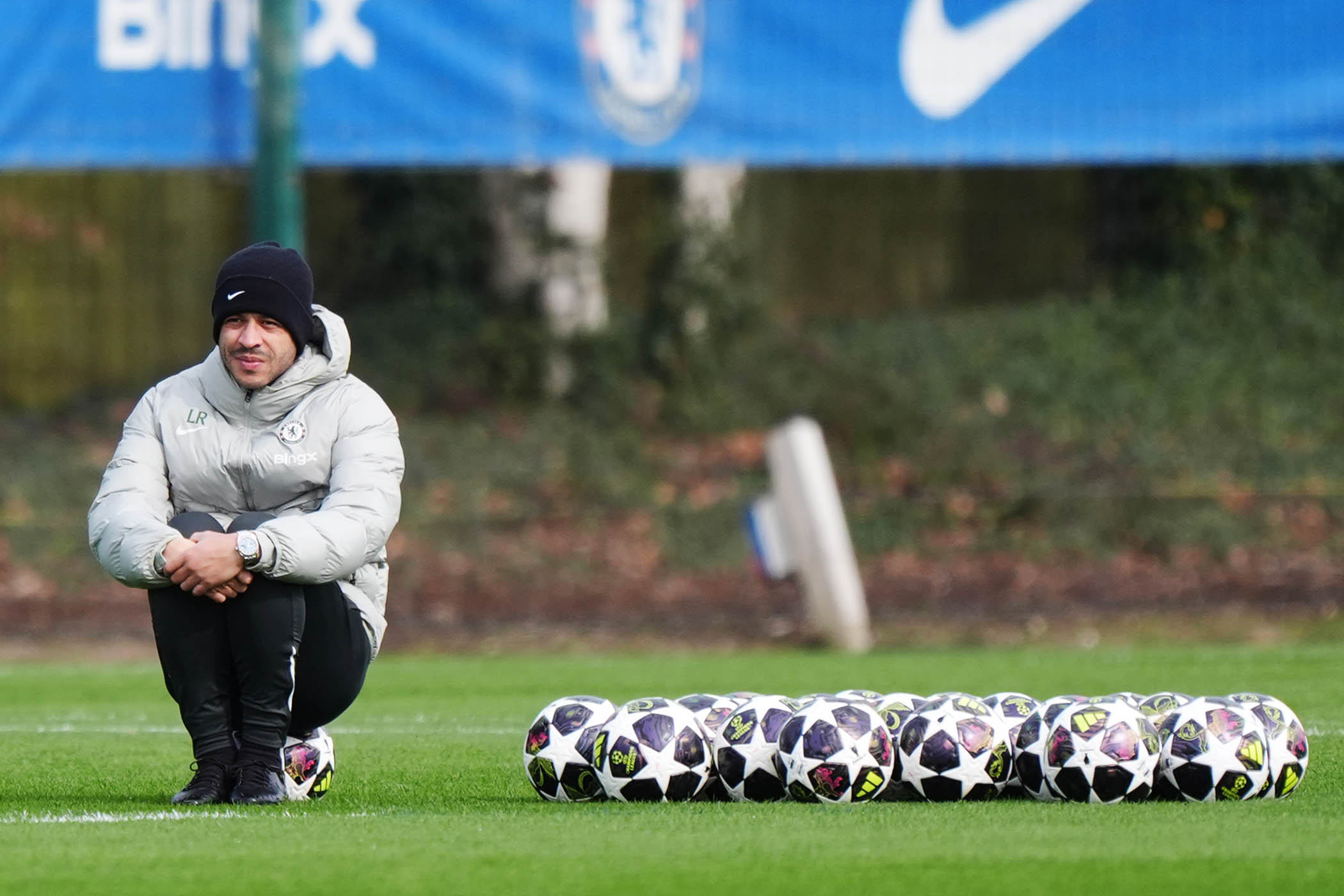
Chelsea manager Liam Rosenior during a training session at Cobham Training Ground, Surrey
In this model, the manager is no longer really a manager, not as Clough would recognise it: an all-powerful tyrant who could shape a club in their image. Rosenior and Slot and an ever-growing number of others are, instead, mere Head Coaches. They are just another cog in an intricate wheel. They are the person in charge of the tactics vertical.
And that, in turn, has been reflected in the way we think about them. It feels, at times, as though the progressive stance on managers is that maybe they do not matter all that much, if at all. They are, as Jonathan Liew wrote in The Guardian last week, “a reset button to press when things get sticky, a meat sacrifice that allows everyone to indulge the illusion of renewal.” Managers, in this analysis, are there to lay out cones in training, take press conferences and then get sacked when things go wrong: the Premier League’s equivalent of Voltaire’s observation about admirals in the British navy – that it is good to kill one from time to time, in order to encourage the others. They’re mascots. They are there to make fans think that clubs are doing something.
Newsletters
Choose the newsletters you want to receive
View more
For information about how The Observer protects your data, read our Privacy Policy
What else would they do? We all know that a club’s league finish correlates with their wage bill 92% of the time, don’t we? We’ve all read Soccernomics. We all know that even the very best managers only account for a tiny percentage of performance; it was in The Numbers Game. They don’t sign the players, they don’t do the contracts, they don’t do the analysis. Alex Ferguson, at times, would massage his players. His spiritual heirs have outsourced their entire conditioning programmes.
More damning still, the one part of the job that still lies entirely in their own purview – tactics, coaching, philosophy, style – is less and less relevant. Liverpool, by Slot’s own estimation, were expecting “15 or 20 minutes” of training before what turned out to be their defeat at Brighton, given the short turnaround from their Champions League game against Galatasaray.
Head coaches do not have any real time any more to do any coaching, head or not. The game is, instead, decided by which side has the better individual players and, at times, who has the more effective set-piece routines. What used to be the office of manager has been stripped of all responsibility. It exists now purely because someone has to be at fault.
It is a tempting line of thinking – maybe football is moving to a post-manager paradigm! – and it is largely rooted in truth. But it ignores one very valuable piece of context. Elite football is a sport of the finest of margins. That has been the story of the Premier League this season: it is a competition in which the vast majority of teams have barely a cigarette paper between them. That is why set-pieces have become such a contested battleground; any advantage whatsoever can prove a valuable one.
Managers – whatever we want to call them – should be regarded in much the same way. Ian Graham, the founder of Ludonautics and the data guru who contributed so much to Liverpool’s modern success, once told me that finding a metric that would allow him to predict managerial success was the “holy grail” of football’s data industry.
A really good manager, he said, might be worth half a dozen or so points a season, perhaps a little more. That does not sound like much. But in a sport of fine margins, it is potentially enormous; it is the same sort of impact that having a player of generational ability might have. Getting the right manager in place is the biggest of all the small things that account for success.
Rosenior and, this season, Slot serve as a case in point. Much of what has gone wrong with their teams over the last few months is not, technically, their fault. But nor is there any reason to believe that either of them is causing their team to win more points than they might otherwise be; they are not, whatever the issues, elevating those around them. And that, for all that football has changed, remains their responsibility.
Photographs by Jon Super/AP, Ben Whitley/PA