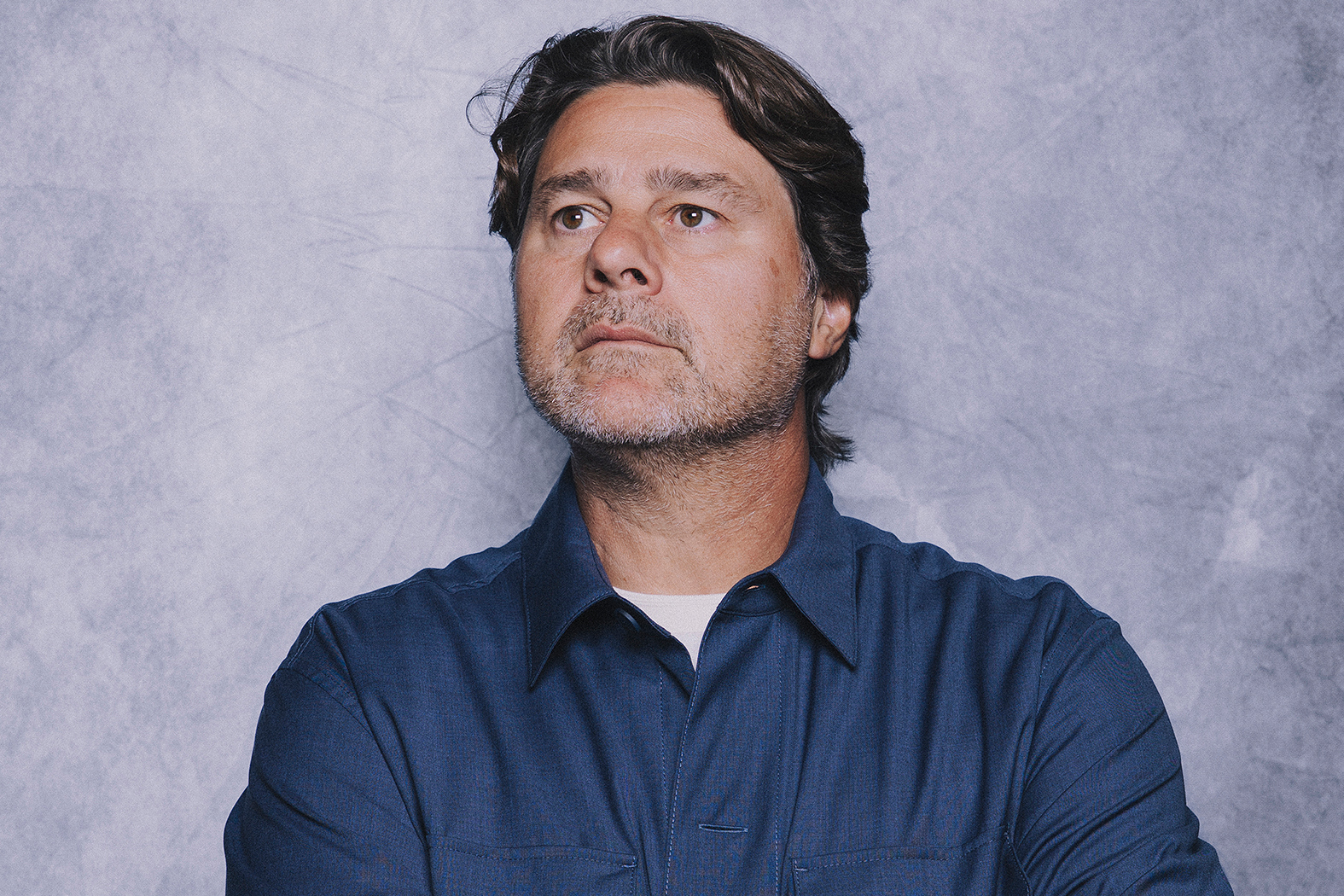


The backdrop felt familiar. Gazing out of the floor-to-ceiling glass expanse at an undulating tapestry of green, Mauricio Pochettino teleported from a meeting room at the first-ever home of US Soccer just south of Atlanta, to a table at Jean-Georges in New York with its vista of Central Park.
It was during dinner at the haute French eatery that the Argentine finally had a read on how the United States Soccer Federation felt about his 20 months in charge of the men’s national team.
On the evening of May 24, 19 days prior to the co-hosts kicking off their World Cup campaign against Paraguay and with Pochettino’s contract expiring at the end of the tournament, CEO JT Batson enquired if he would be open to staying beyond the competition.
The answer was affirmative, but until that point, he “didn’t have an idea if the federation was happy with us, not happy or wanted us for the future.”
Pochettino shared the vignette with journalists in the glass-encased National Training Centre to cut through attempts to “create a problem by questioning my commitment.”
Reports had circulated that there was contact with AC Milan over their managerial vacancy and he could feel the appetite for controversy in the line of questioning.
“Do you think it’s not normal,” Pochettino asked, “that in very short time, we go out of contract and our representative is not listening to other people that call because it’s public that we finish here after the World Cup?”
It felt a futile task, which took just shy of 15 minutes, explaining this standard process. Pochettino knows if the US do not meet expectations at the showpiece, which The Observer discovers at the facility, ranges from “reaching the semi-finals” to a more opaque “make us believe we really can win the World Cup in the near future,” the interest from Milan will be used to attack his focus.
When the news broke of his dialogue with the Serie A side late last Wednesday, Pochettino had not long left the training centre, where he was locked in a strategy session with Batson and Dan Halfrich, US Soccer’s chief operating officer. The former revealed it “was all about the Olympics, our youth teams, about coaching education.”
The pair found it laughable that the 54-year-old’s commitment could be questioned given Pochettino has been spending extra hours helping them build a long-term future that falls outside his contractual obligation.
Newsletters
Choose the newsletters you want to receive
View more
For information about how The Observer protects your data, read our Privacy Policy
Plus, as Batson pointed out due to their transparent relationship, the federation know of “a longer list of club interest than what has even been reported.” Ahead of Pochettino’s appointment in September 2024, “there were lots of other people interested in having Mauricio join. He had standing offers from other places to come, and he wanted to be here.”
A senior US Soccer source told The Observer one of the proposals was from the English FA before they plumped for Thomas Tuchel – “and it was more lucrative than what we put on the table but Mauricio did not break his decision to be with us.”
In keeping with football’s nature, while Pochettino’s dedication to US Soccer was being debated, Batson was non-committal on whether there have been attempts to recruit Jurgen Klopp or Pep Guardiola to the job after the tournament. “We’ve just got to focus on this summer,” he said.
The line was similar to what was fed back from the Pochettino end to Milan. He is the leading candidate to become their new manager, but The Observer understands it was made clear to the Serie A side his focus is squarely on the World Cup, which has shot the readily available Oliver Glasner into view.
It was also spelled out that a decision would be influenced by the structure the club plan to implement after cleaning house following the “unequivocal failure” of not securing a Champions League spot.
In addition, the idea of handing Ralf Rangnick, who is leading Austria at the World Cup, full control of a sporting rebuild in which he intends to create at least two roles that siphon power away from the manager understandably does not appeal to someone who endured the chaotic division of duties at Chelsea.
Pochettino walked away – contrary to the reporting of mutual separation – from Stamford Bridge where there were two co-owners, the same amount of minority investors on the board, a pair of sporting directors, and two more recruitment and talent specialists directly involved in squad matters.
If the assumption had been that managing the egos of Kylian Mbappé, Lionel Messi, Neymar and co during Paris Saint-Germain’s dysfunctional diva era was an unworkable job, the Chelsea experience ranked it smooth in comparison.
If Milan want to follow a similar template with multiple splits of control, Pochettino should not repeat his mistake.
The problem, however, is there are not many attractive options on offer and clubs are increasingly enthral to finding the next best mind rather than trusting those proven to be rebuilders.
Most have also manoeuvred away from managers to head coaches, including Manchester United – who twice concretely tried to appoint Pochettino – and Liverpool, where his name featured on a succession plan if anything were to happen to Klopp while at Tottenham Hotspur’s helm.
If it wasn’t apparent back then, it is crystalline now that Pochettino pulled off the implausible at Spurs by turning them into title contenders and Champions League finalists through limited resources and the upheaval of building a new stadium.
The club-high haul of 86 points in 2016-17 would have been enough to win the league in the past two seasons. Instead they barely staved off relegation.
From his first stint in the dugout at Espanyol, whom he had to save from the drop and financial ruin, Pochettino has been a magnet for the impossible job.
Leading a USMNT that lives on a collision course of expectation and reality is thus a neat fit.
Pochettino has been atypically spiky with the press since taking charge, which some at US Soccer say is a consequence of not fully comprehending the cultural reset he had to undertake.
At the onset of his tenure, players were communicating which call-ups they would honour, and which they had zero interest in.
Agents were firing in messages to complain about the inconvenience of the location of some friendlies that were too far away from preferred holiday spots.
The federation wanted the complacency that had coloured the latter part of the Gregg Berhalter era removed, and believe that has been achieved through Pochettino having to make strong, unpopular decisions.
Captain Tim Ream credited him for instilling belief and fearlessness into the way the USMNT play, but also in how they see themselves.
While the March reality check against Portugal and Belgium provided a brutal but important lesson, Pochettino’s men have beaten taxing opponents in Japan, Uruguay, Paraguay, Australia and Senegal.
They drew against Ecuador, who finished second in CONMEBOL qualifying behind world champions Argentina.
Around the National Training Centre, some want Pochettino to channel the spirit of his homeland and take the team to unchartered territory.
He has tried to find a balance between belief and pragmatism. Before the World Cup has kicked off, the vibes are denoting another impossible job.
Photograph by Richard Heathcote/Fifa via Getty Images