It was a sultry Sunday evening in Miami, and I had big plans. I was hitting the town. First paddleboarding with dolphins, then to this Cuban place someone cooler than me said I just had to try, then a stroll down South Beach, a margarita, maybe three.
And so I ordered a chain pizza and something masquerading as chicken (and a litre of Sprite I forgot to drink) and vacantly watched five hours of an American sitcom that told me when to laugh. Somewhere in here, backed by the strains of an atomic violin, is the reality of covering my first World Cup, first major tournament, five weeks of holding myself together with sticky tape and insatiable narcissism. It seems to be an overwhelming privilege you are too exhausted to ever really take advantage of, constantly coupled with a lingering guilt that you could always be doing more, seeing more, enjoying more.
It has also been the most fun and kaleidoscopic and adrenaline-fuelled experience of my life. I’ve danced with Norwegians and Croatians and Knicks fans in New York, been given a free tour of pre-Hispanic pyramids by a Mexican family who adopted me for the afternoon, caught my first baseball game in Boston, witnessed football so all-consuming and bewitching it could be classified as a drug. I’ve watched the US catch World Cup fever gradually, then suddenly, seen Mexico unleash a communal, primal love. Now I’m scared what happens when I stop being dragged forward by events beyond my control, when everything stops being so fizzy and exciting, back to being a twentysomething in London needing to move flat and restructure my life once again.
“World Cups are really bad for you,” our esteemed football correspondent told me a week in. And after more than a month of 7am flights and trains, of waking up wondering whether that sore throat is because of air-con or allergies or something terminal, of writing through the night and then writing through the day, I get it. I’ve carried dangerously expensive running trainers across five states and two countries and only used them to store my contact lenses in, haven’t deliberately exercised since leaving London. My plans to stretch every day and stay off my phone in the mornings and evenings proved somewhere between fantastical and farcical. I packed two weighty World Cup histories and, with apologies to Messrs Wilson and Kuper, donated them to a Boston hotel unread while attempting to repack my bag in a rush.
An industry veteran told me before leaving to always eat when the opportunity arises, to which I would add always sleep when possible, whether on public transport or in airports or in your hands between, or sometimes during, press conferences. The food Fifa flogged in the media centre was barely fit for animal consumption, $35 for a reheatable tray of beige with no obvious method of reheating it. Maybe this contributes to the unique madness World Cups seem to trigger in journalists, worsened by the very realistic threat that the industry might have failed by the next one. This especially seems to apply to the England pack, run like the world’s least powerful and most dysfunctional mafia.
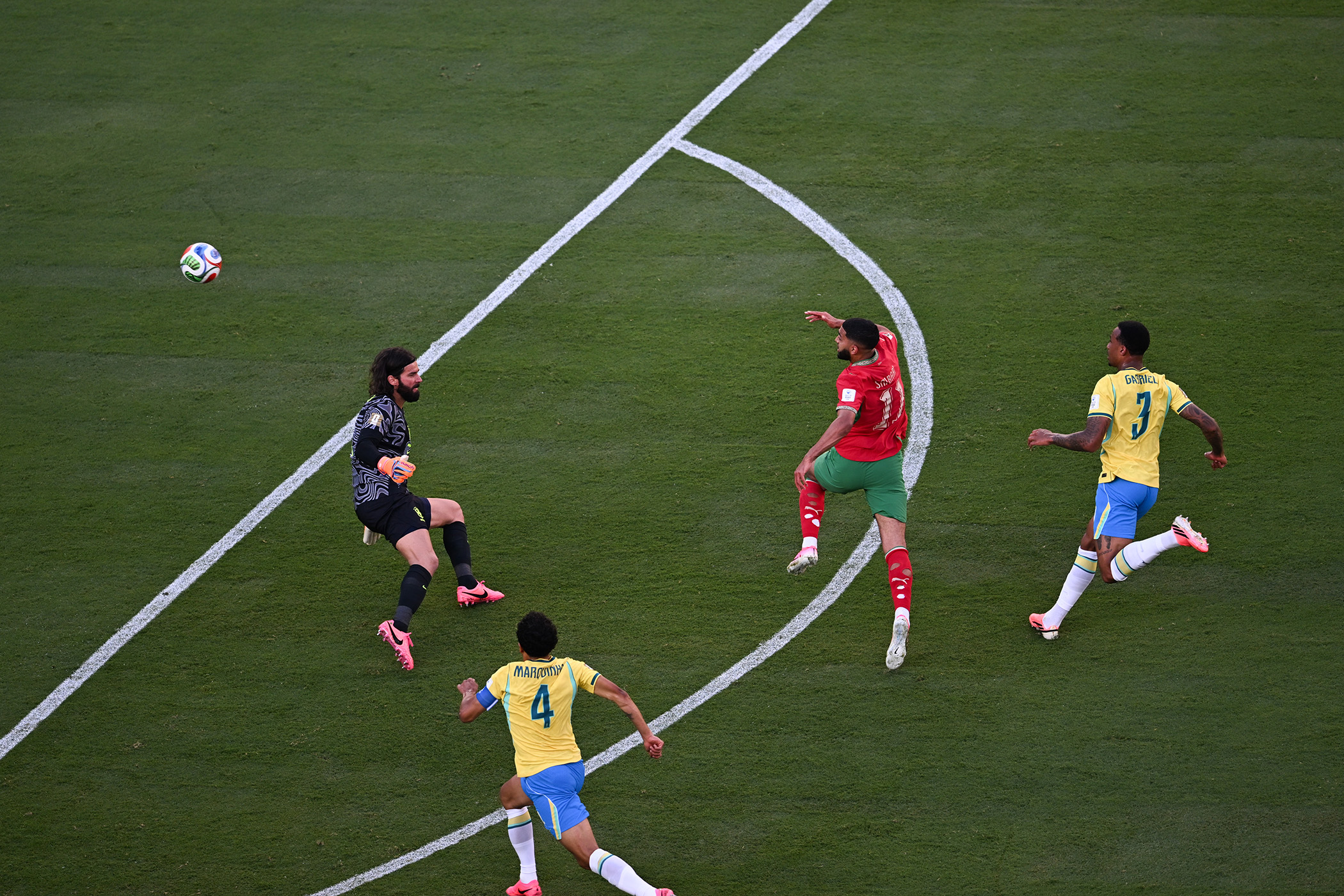
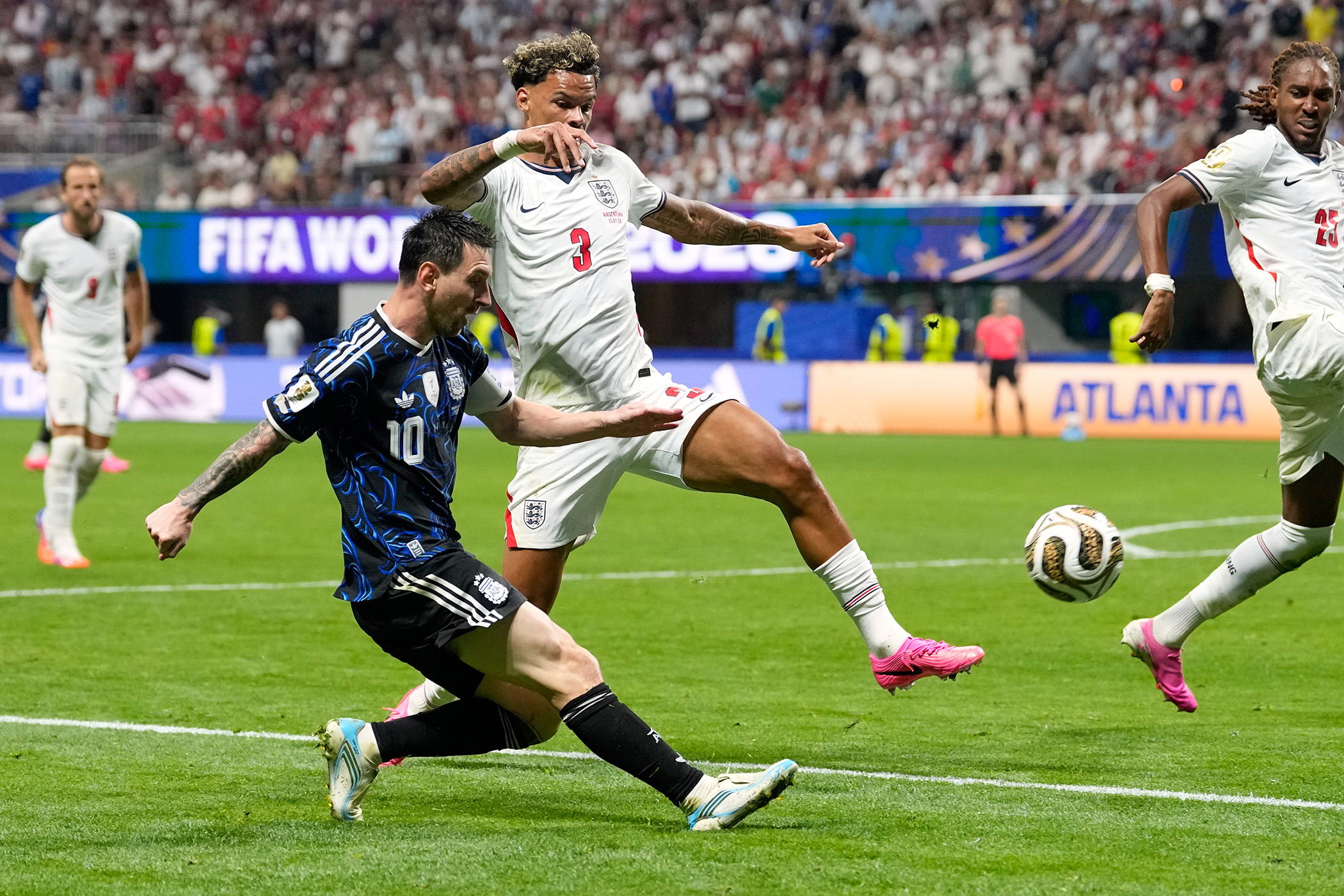
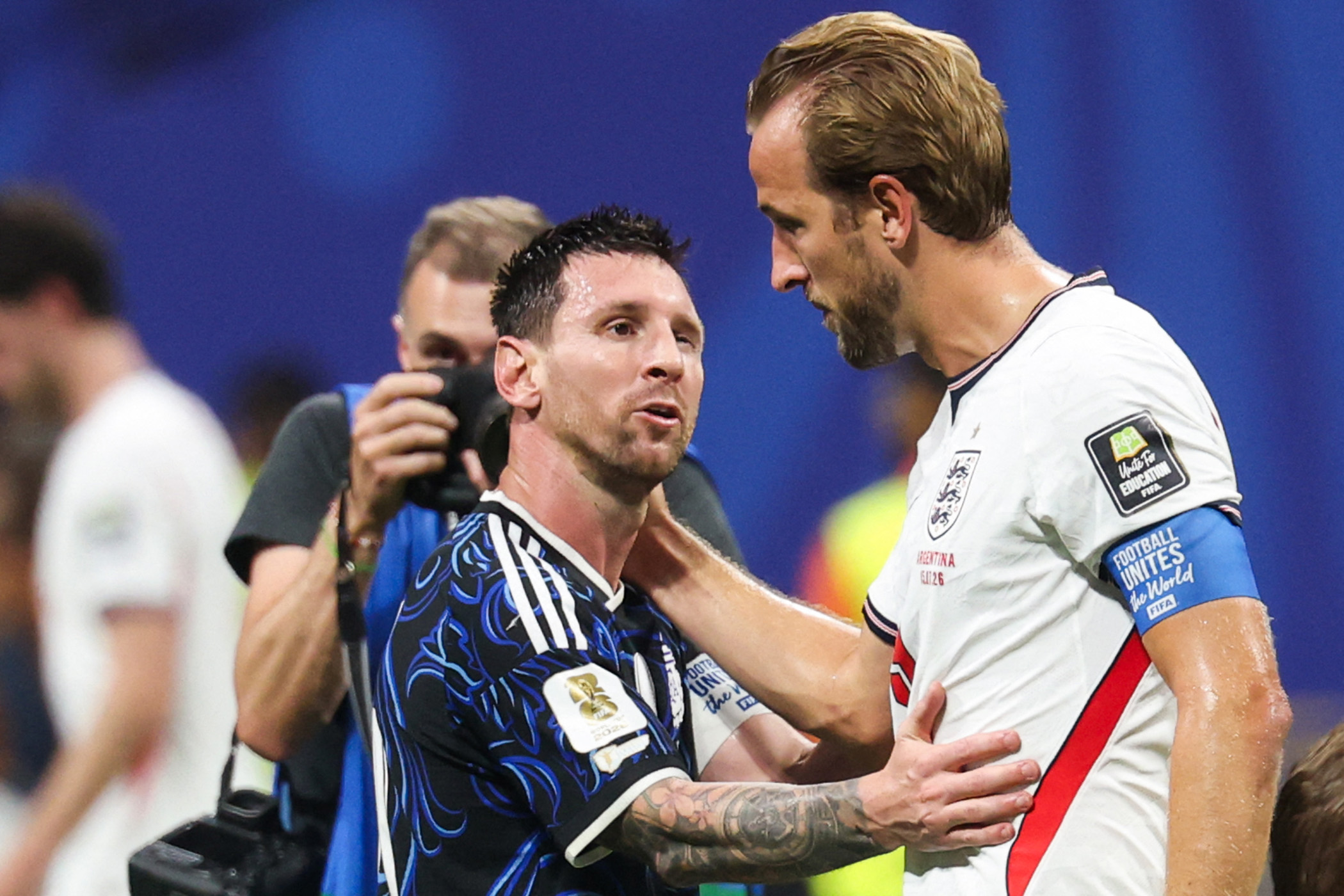
There seem few less efficient ways to follow the World Cup than to be there, particularly while also trying to work, constantly trying to find a TV showing the Curaçao game. Of course watching live football on a flight still feels like magic, catching the first half of France vs Morocco while flying from Mexico City to Miami a genuinely infeasible phenomenon to your childhood self. What you get to witness in-stadium is luck as much as planning, being in the right place at the right time. Although I’ve mainly covered England, I watched Ismael Saibari’s chip against Brazil and Erling Haaland score twice against Senegal in New Jersey, spent 48 hours in Boston to rubberneck at Germany collapsing in on themselves like a dying star. Particularly following England, there’s an odd sensation of being both insider and outsider, able to look but not touch or feel.
Any discussion of how good the sport has been still feels like it should come with a content warning, a reminder that this was still organised by Gianni Infantino, influenced by Donald Trump, that there is no ethical consumption of football under Fifa. You couldn’t look around the red and white surf around Atlanta in the round of 32 without realising why so few DR Congo fans were there. A Norway fan in Miami told me he had paid $1,650 for his ticket and felt he’d got off lightly. I remember where I was first reading the phrase “Folarin Balogun’s suspension has been suspended”. This stuff was still everywhere if you chose to look.
Telling myself I wanted to see the real North America and mainly stay with a close friend following a similar route, we eschewed hotels for an array of Airbnbs, half-hearted impressions of homes with sagging floorboards and “Live Laugh Love” signboards and desks that were neither use nor ornament. In Mexico City turning on the shower was akin to bomb disposal, a minor problem when I attempted to pack up again and discovered an ant colony had moved into my underwear. But surviving the past five weeks without an outlet and support system, someone to ensure neither falls asleep while writing increasingly incoherent copy into the wee hours, a witness to the surreality, would have been unimaginable.
Maybe this is the closest I will get to understanding what it is to be an elite athlete, constantly moving without reprieve, pushing yourself past what you considered breaking point, while working a job that many would lose digits to take. One of this job’s great privileges is sitting in empty stadiums post-match, vast pitches bathed in this post-coital glow, pregnant with memories and possibilities. And so on Wednesday I looked over the Mercedes-Benz Stadium and tried to reflect, but just found myself falling asleep. There will be time for that when this is all over. But not yet.
Photograph by Stephen Nadler/ISI Photos via Getty Images
Newsletters
Choose the newsletters you want to receive
View more
For information about how The Observer protects your data, read our Privacy Policy