The annus mirabilis was 60 years ago this summer, but another British passion besides football keeps it visible. Music is one of the few surviving links between England then and England now.
Mick Jagger, 82, was a star by 1966. This July, he and the Rolling Stones will send out studio album No 25. With the Beatles, Paul McCartney released the seminal Revolver the week after England men’s one and only major tournament victory. McCartney, 83, has just launched his 20th solo studio album.
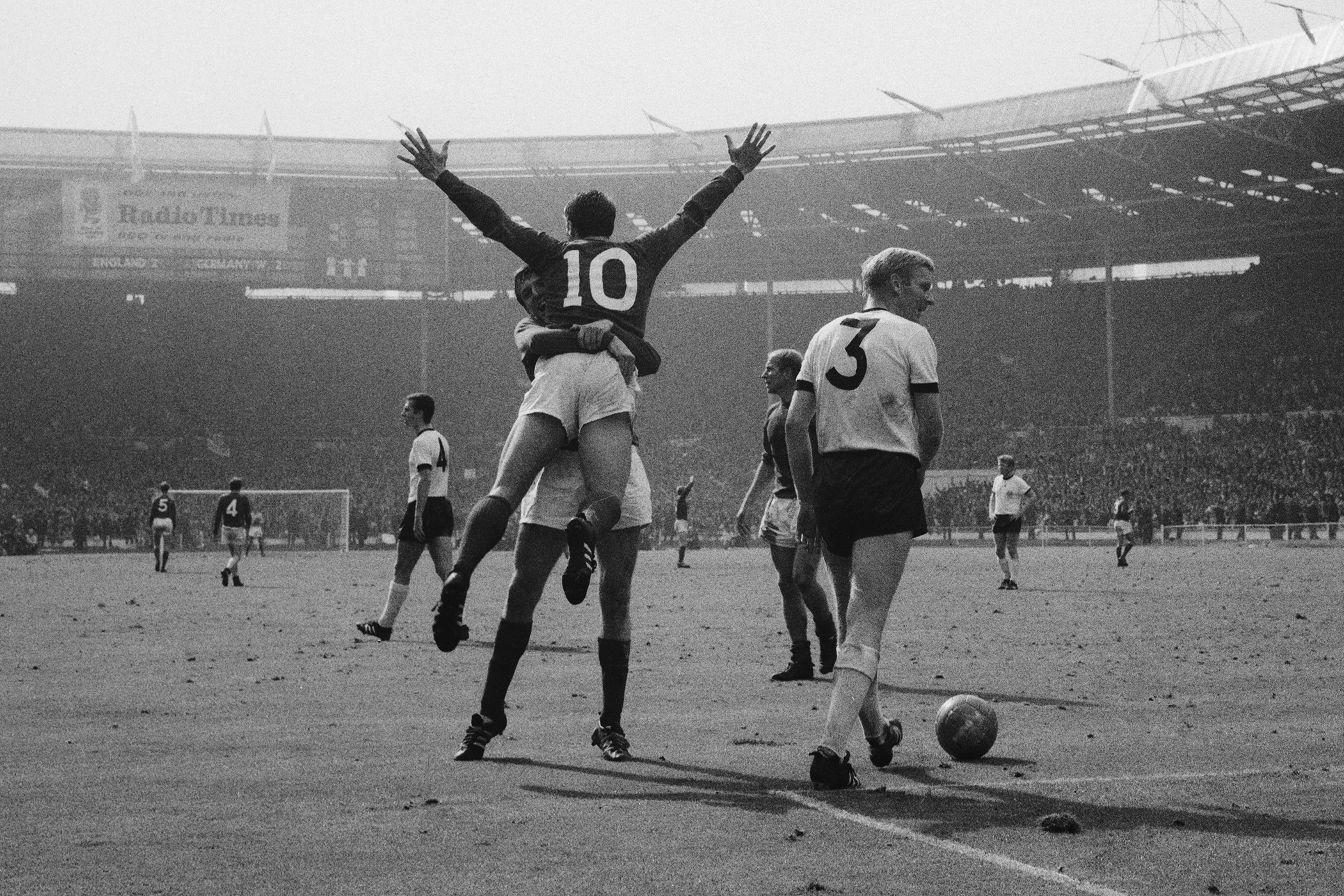
The two old knights are still standing – while only one from Alf Ramsey’s winning side has survived the full six decades: Sir Geoff Hurst, who was alone upfield when he smashed England’s fourth against West Germany in a 4-2 extra-time win and is alone in living history now.
Music can play another card. A No 1 in July 1966 was Sunny Afternoon by the Kinks and its author, Sir Ray Davies, remains productive at 81. In almost all other respects, English football, and the England of 1966, is another world, curated to protect national pride from serial disappointment, but simultaneously a void.
England’s 1966 triumph is commonly pinned to Swinging London and the social liberation of the 60s. But it’s more precise to think of Ramsey’s team rising out of the 20-year period from the second world war, from small-c conservatism, communal humility and ingrained patriotism. They were the Beatles of suits and ties, not Sgt Pepper gear.
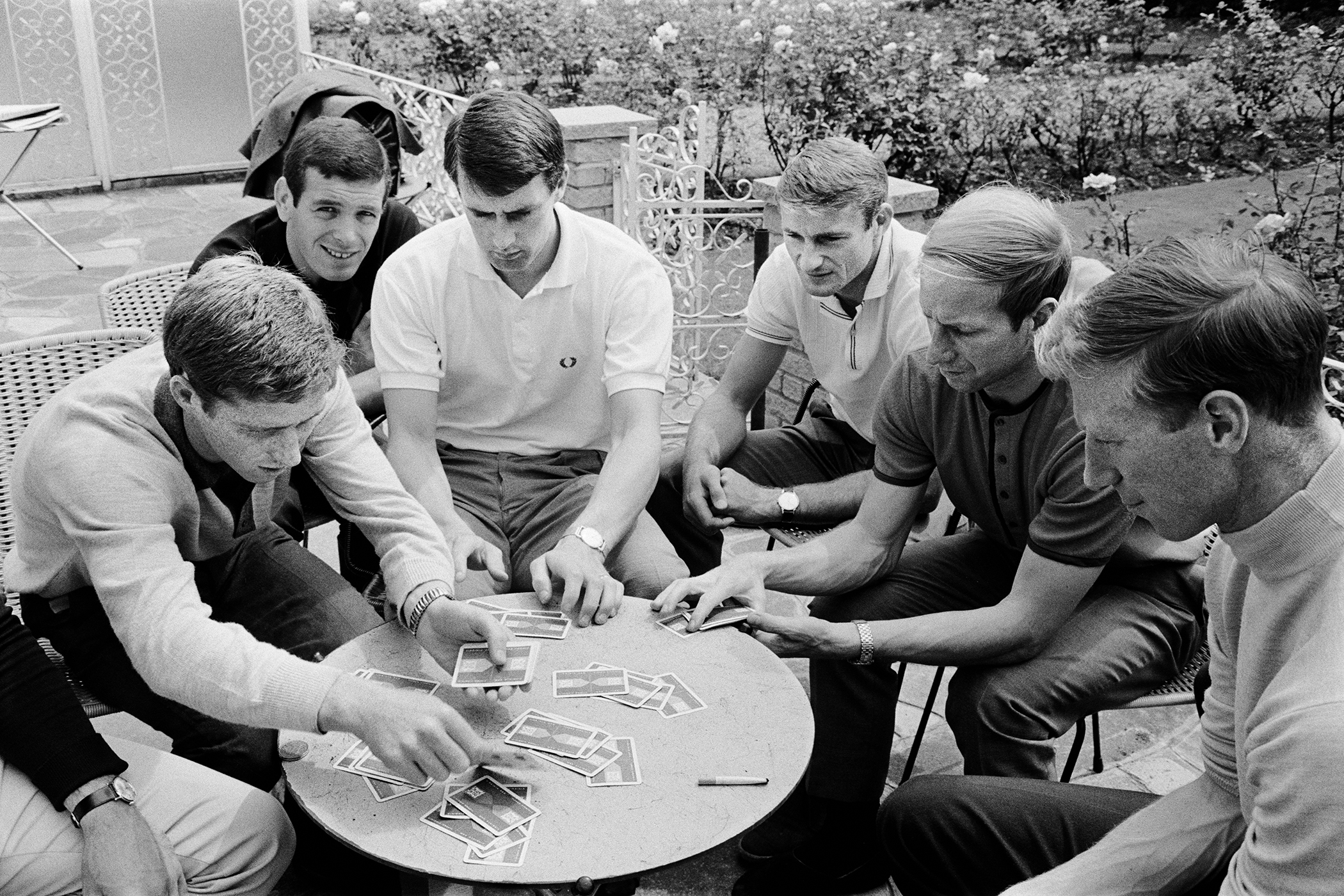
The cool photo of them sipping lager at Pinewood Studios with Sean Connery, Yul Brynner and Viviane Ventura after the turgid Uruguay game may look like an influencer’s fantasy, but England weren’t there to build their brand. Ramsey could feel the home pressure building and thought it could be diluted by small talk and beer.
Ramsey and 10 of his 11 starters are gone. But the landmarks remain. To fully reawaken ’66, you would need to visit the Ashington of Bobby and Jack Charlton, the Manchester of Nobby Stiles and most of all the Dagenham and East End of Ramsey, Bobby Moore, Hurst, Martin Peters and Jimmy Greaves, always the first to tease his manager for having elocution lessons and craving social status.
For that World Cup, the victorious campaign followed a half-arc round London from Roehampton to Hendon to Wembley and on again, east, to the working-class heartlands where West Ham erected a statue to Moore, Hurst and Peters. Further east still, in Ipswich Old Cemetery, sits a memorial stone notable for being much smaller and harder to find than those around it: that of Ramsey, the only one of 16 permanent England managers since 1946 to win a trophy.
The base: Hendon Hall hotel
Poignantly, given the wave of dementia that afflicted England’s heroes, Hendon Hall is now a “luxurious” care home with dementia high on its menu of services. Parts of the former hotel where England stayed were bulldozed in the conversion.
Newsletters
Choose the newsletters you want to receive
View more
For information about how The Observer protects your data, read our Privacy Policy
Ramsey’s team could wander round Hendon’s nondescript suburban centre without being pestered by fans, though they would wait until the lights had dimmed in the Hendon Odeon before slipping in to watch films with tickets bought by Ramsey.
The night before the final they saw Those Magnificent Men in Their Flying Machines, the rambunctious fictional story of an air race from London to Paris. Ramsey thought it would amuse and relax his players before they took on West Germany.
The training ground: Bank of England sports ground, Roehampton
Perhaps the clue to England travelling an hour each way from Hendon near Wembley to Roehampton, south of the Thames, was the “Bank of England” in the ground’s title. Ramsey, a determined social climber, would have approved of the connection as well as the facilities. He rejected all his team’s requests to move the training base closer to Hendon.
A 28-acre “country club and sports ground” in 1966, the Bank of England ground was sold after pressure from MPs about its running costs and is now managed by the All England Lawn Tennis Club, which uses it for Wimbledon qualifying and community sport. It has passed from public ownership to manicured private wealth.
Photos of England at Roehampton capture an idyll. Games of cricket would conclude sessions (Hurst played one first-class game for Essex against Lancashire in 1962) and there is no sense of public pressure on the team or besiegement by the media. Arriving in a coach they might have borrowed from the holiday camp sitcom Hi-de-Hi!, Ramsey’s men resemble a group of mates on a private quest.
At their Kansas City base this summer, Thomas Tuchel’s squad will move around in cavalcade and cordon, secured and scrutinised to a suffocating degree.
The stage: Wembley
Not today’s entertainment mini-city, but the old Twin-Towered Empire Stadium, built to project imperial might but never capable of doing so until 1966 gifted the hosts a run of six games in their own national stadium.
There was no “dynamic pricing”. Tickets could still be bought at the gate for England’s opening match against Uruguay. The great Arthur Hopcraft thought 1966 showed “the true England of the industrial provinces, of blood-black brick and scurrying wind and workers’ faces clenched against the adversity of short-time working and the memory of last month’s narrow miss on the pools”.
But less so in the final, where Hopcraft observed the first gentrification of a major British sporting event: men “in rugby club blazers” with “home counties accents”. People who “might as well have been at Wimbledon”.
The BBC’s Kenneth Wolstenholme recalled: “If you notice there were no fences. No segregation. Germans stood next to Englishmen. Banners were waved and hunting horns were blown. But nobody fought anybody.”
The next time the England men’s team reached a final (Euro 2020), more than 2,000 ticketless England fans stormed the Wembley barriers on what an independent review called a day of “national shame” , on which one fan impersonated a steward and hijacked a disabled child in a wheelchair to trick his way in.
Not that the England of 1966 was entirely a Shangri-la of tolerance, manners and consideration. The age of mass football hooliganism was only a handful of years away.
The nursery: London’s East End
The distance from Alf Ramsey’s childhood home in Dagenham to that of Bobby Moore is 3.6 miles.
In any other side, the Charlton brothers of Ashington in Northumberland would take some shifting as the heart of the story. But with Hurst, Moore and Peters, West Ham could say they had supplied more than a quarter of England’s only World Cup-winning team. Add “The General” Ramsey, and another Dagenham boy, Greaves – left out for the final – and the part of London that now shades noisily into Essex is secure as the breeding ground for England’s brief supremacy.
In club football, 60 years on, West Ham are a Championship team in a stadium nobody likes being taught lessons in how to run a club by Brentford on the Roehampton side of town.
England now
In the pre-digital age, before smartphones, analogue trolling was commonplace. Ramsey’s postbag was received with trepidation. He told Hopcraft that letters to him would frequently begin “Dear Stupid” or “Dear Big Head” or even “Dear Alfie Boy”.
Distance of time breeds nostalgia and simplifies a complex world into a place “better than now”, more innocent, purer. Often that lens is unreliable. Consider, for example, the wives and girlfriends of Ramsey’s team being refused entry to the post-match banquet and made to dine in a side room.
Making that journey from Roehampton to Dagenham and beyond to Ramsey’s resting place, a nagging embarrassment attaches itself to the very act of raising 1966 all over again. It’s now “60 years of Hurst”, to borrow a joke from the football writer Richard Jolly. It’s also the only international trophy the England men have ever won. It stands isolated and unique, demanding attention, refusing to sleep.
And even with the Stones, McCartney and Ray Davies still banging it out, with each step along the path back through it you feel: it was so long ago. It was way too long ago.
Photographs by Mirrorpix & Getty Images