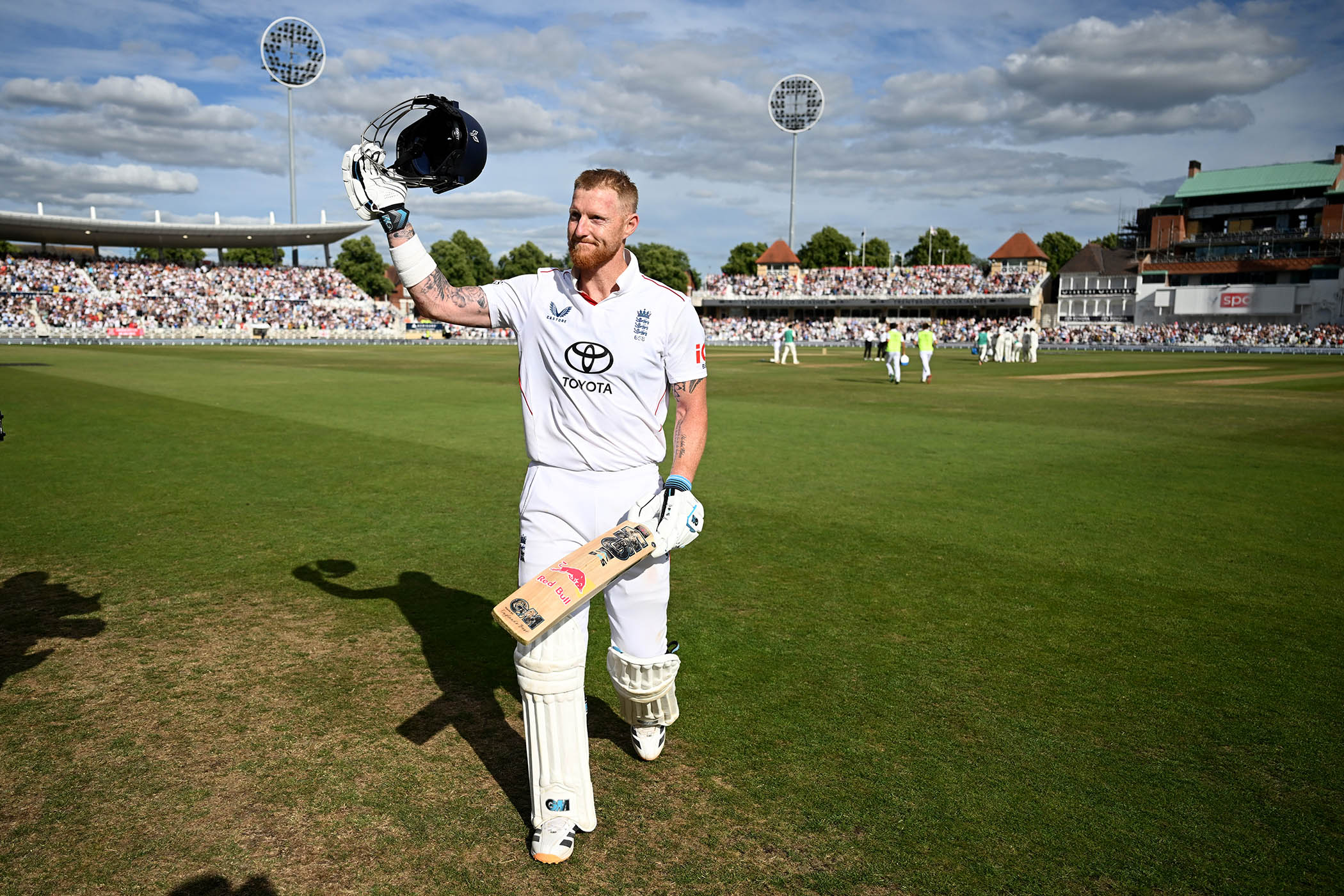

For a while English cricket succeeded in turning the enfant terrible into an Establishment figure. Ben Stokes was captain, game-changer and darling of the crowd - but the conversion to statesman was never secure.
Stokes didn’t so much leave the stage as hijack it, announcing his retirement from international cricket four days into a Test match England desperately needed to win, promoting himself to opener and swinging his bat as if in a T20 run-chase.
“I’m done, mate,” he said when it was over, in theory ruling himself out of a comeback under new management for next year’s Ashes. We’ll see about that. Why return to county cricket with Durham if all ambition has gone?
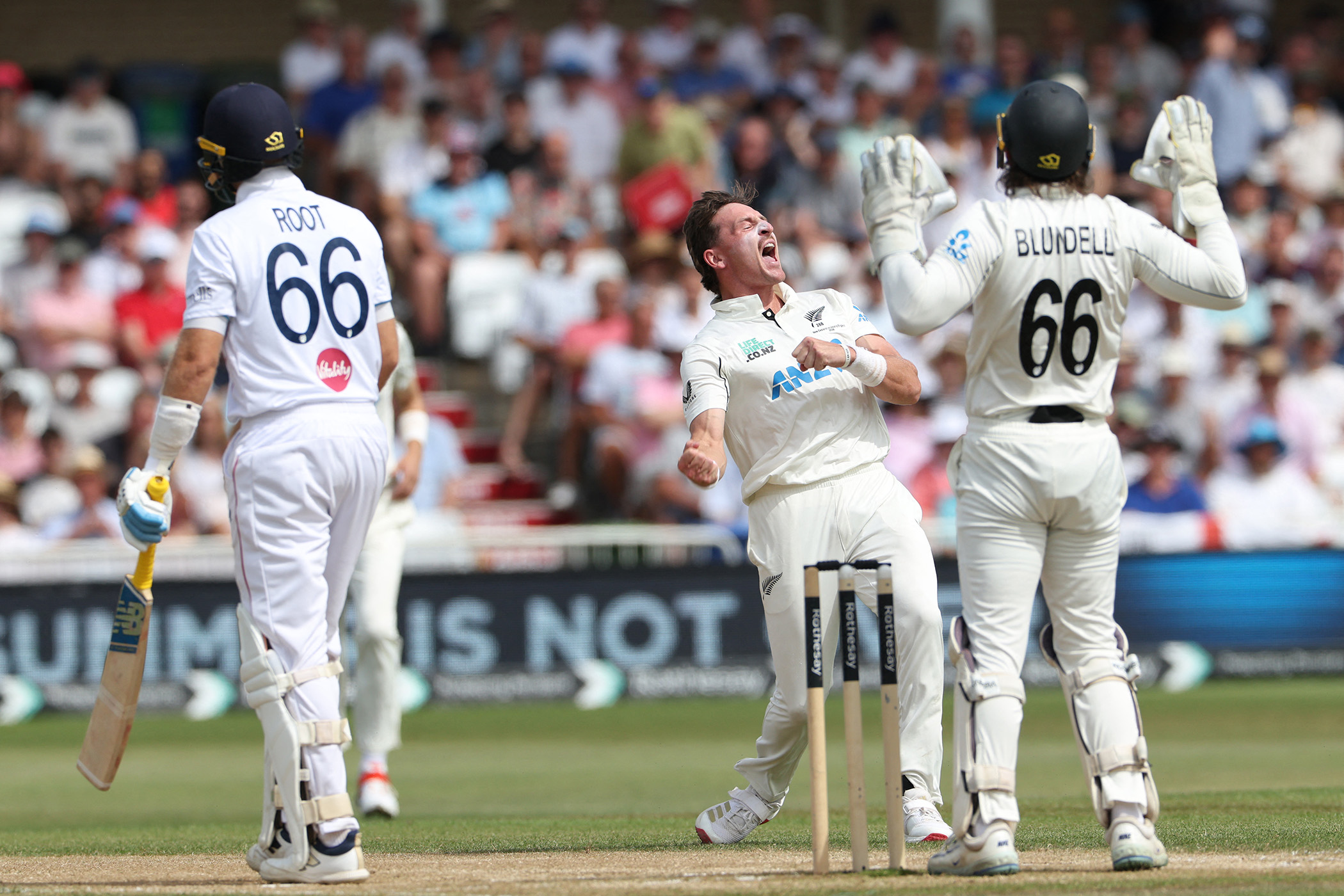
Superstars go. Teams fall apart. But it’s rare for teams and the management behind them to implode all at once, as England’s have. A 160-run defeat at Trent Bridge to New Zealand, whose bowling attack was depleted by injury, completed a 2-1 series defeat. England’s summer reset needs a reset, and so on and so on. The positions of head coach Brendon McCullum and managing director Rob Key appear untenable.
Stokes’s bravado on Sunday, which passed through England’s batting line-up like a fever, was an unappealing final image of his captaincy. His international career has stopped at 7,273 runs and 252 wickets. Only South Africa’s Jacques Kallis can beat that combination of numbers.
Memories of Stokes’s match-winning flourishes are indelible. But the sage who compared his exit to the final scene in Butch Cassidy and the Sundance Kid was on to something. It didn’t need to end like this.
Stokes departs a scene of ruination. England’s reckless batting on days four and five at Trent Bridge handed a crushing victory to New Zealand, who were the better team anyway. The genesis of England’s batting capitulation was Stokes charging down the pitch to the first delivery he faced after his retirement was announced - then trying to reverse ramp the next ball that came his way.
The timing of the talisman’s exit, at a perilous moment for his team, and the way he behaved subsequently at the crease, was political theatre. It had all the makings of a revenge attack on the England and Wales Cricket Board (ECB) for slights either real or imagined.
On paper it was Stokes’s duty to protect his team as far as he could from further recrimination, six months after a shambolic Ashes tour. Rescuing England team management jobs was the last thing on his mind as he turned Sunday afternoon into a farewell party.
“You alright?” McCullum seemed to say to him as he returned after scoring a madcap 30 in England’s second innings. Both were grinning. But it’s pretty far from alright for English cricket.
Newsletters
Choose the newsletters you want to receive
View more
For information about how The Observer protects your data, read our Privacy Policy
The greatest all-rounder since Ian Botham has gone. The Ashes fiasco has morphed into yet another disciplinary saga, with Stokes and the bowler Gus Atkinson dropped for the second Test at the Oval for breaking a curfew after the match at Lord’s.
Stokes’s deputy Harry Brook is entirely unsuited to lead the team out of this morass. Punched by a bouncer in Wellington in November, the night before England played New Zealand in a white ball game, Stokes’s No 2 fell below the threshold of appointable replacements when the ECB needed a stand-in at the Oval. Joe Root had to be recalled from the mists of time. Brook is no closer now to radiating authority.
To doubts about Brook’s temperament can be added a wicketkeeper dilemma, uncertainty around the bowling line-up and the loss of one of the great all-rounders. England have reached one of the bigger junctions in their history of boom and bust.
Dominating every discussion since the Ashes fiasco has been whether the ECB were right to leave McCullum and Key in place. Any assurances that Bazball would be diluted or that the team would play more responsibly have failed the New Zealand stress test. It wasn’t all bad, but Trent Bridge was a reversion to type, with wickets tossed away.
In Nottingham, Stokes was asserting his anger – and his independence. England needed to bat patiently – and long. Instead, after the captain’s retirement had been packaged by the ECB in video form for social media feasting, they indulged themselves with one last Bazball fling when they had four and a half sessions to at least try to play for a draw.
The crowd loved it. And then they didn’t. It began to dawn that England were having some sort of wild send-off for the hero of the 2019 World Cup. While the match was still going on. To call it a mutiny might be too strong but unmistakably a middle-finger had been raised.
Friction in the England set-up from this winter’s Ashes tour has spread through spring and summer to render the current management structure not only culpable but non-viable.
Andrew Strauss, who captained England to Ashes wins at home and in Australia, was the first to break ranks. Praising Stokes as “one of England’s genuine greats,” Strauss wrote on Linkedin: “I hesitate to say this but I’m not convinced that the whole thing was orchestrated the right way yesterday – it seems like a huge distraction to a team that was battling to avoid a series defeat and the cricket in the last session very much had an ‘end of term’ feel to it.”
Perhaps an England captain who brawled on the streets of Bristol, broke his hand punching a locker and was relatable to England fans as a man of the people was always going to collide fatally with ECB politics and English cricket’s social code.
In the first Test at Lord’s, Stokes says he felt “strange.” Reports spread of him being tetchy. When former England captains called England’s preparations for The Ashes inadequate he had called them “has-beens” (he later apologised).
And after Stokes broke a curfew that has since been described as “ambiguous,” in a late-night Chelsea watering hole, McCullum said he was “concerned” for his captain, which at least ties in with Stokes telling his wife Clare: “I don’t actually think I have any more fight left in me to get over this.”
What he meant by “this” was evidently his disconnect with management, his indignation at being shamed for staying out late. At Trent Bridge when his England career was over Jonathan Agnew on Test Match Special pressed him on whether the Rex Rooms reverberations had influenced his decision.
“Has it contributed? Maybe,” Stokes replied. He also said: “There’s been a series of unfortunate events.” There could be no finer euphemism for the mess English cricket is in.
Photograph by Gareth Copley/Getty Images