
This article is part of the Rory Smith on Football newsletter – a guide to help understand what is happening on the pitch, off the pitch, and why all of it matters.
Throughout the tournament, Rory will be travelling across America, delivering daily commentary on the biggest World Cup ever direct to subscribers. Never miss a newsletter, subscribe now here.
The only drawback with the World Cup producing a pair of semi-finals quite as heavyweight, quite as box office as France against Spain and England against Argentina is that there is a very good chance it will compound the misguided American belief that Fifa’s world rankings are to be taken seriously.
Throughout the tournament, Fox have insisted on telling their viewers exactly where every team in every game sits in the chart that Fifa publishes every month. Brazil’s group stage game with Morocco, for example, was framed less as the game’s great power against its rising force, but as the only opening phase match between two teams in the Fifa top 10.
Admittedly, this is probably understandable: Fox has had to appeal to an audience not just of devoted fans but casual viewers, too, many of whom may tune into the sport as a whole only once every four years and at least some of whom – if those occasional graphics that float around social media are to be believed – may not be entirely sure where, or what, “Czechia” is.
The BBC do this during Wimbledon, too; we’re not as different as we might think. It is only a problem because Fifa’s rankings are basically meaningless. This is not anyone’s fault. It is merely a reflection of the fact that it is essentially impossible to compare teams who play only a handful of significant games a year, all of them in different competitions and against different opponents. As an illustration: Norway came into this tournament ranked lower than Canada. Why? No idea.
Fifa, then, will be delighted that the four semi-finalists are also the four top-ranked teams in their list. This has never happened before, but it is not entirely coincidental. Fifa did not just borrow dynamic pricing from their American hosts for this tournament; they also seeded it like a college basketball bracket. As long as the four highest teams in their rankings won their groups, they would be kept apart until this point. This is what was meant to happen.
And, they would probably say, with good reason. A World Cup that had been bloated, expanded and diluted, one that seemed, at times, on the verge of heralding a complete reordering of the game’s hierarchy of power has contrived to produce two absolute weapons-grade semifinals.
The first, France against Spain, is the rational one. These are, in their own distinct ways, the two best teams in this competition, two sides that encapsulate what football should be. France are a brilliant monument to individual talent, an immaculately-constructed platform on which four of the world’s most ingenious and compelling virtuosos can shine.
Spain, a little less thrilling, maybe a touch harder to love, are a testimony to the power of the collective, of unity, of what can be achieved when not just 26 players but an entire nation shares the same basic ideas of how the game should be played. They have been dismissed, just lightly, for their failure to take the breath away. This ignores the fact that their aim is to constrict the air.
Newsletters
Choose the newsletters you want to receive
View more
For information about how The Observer protects your data, read our Privacy Policy
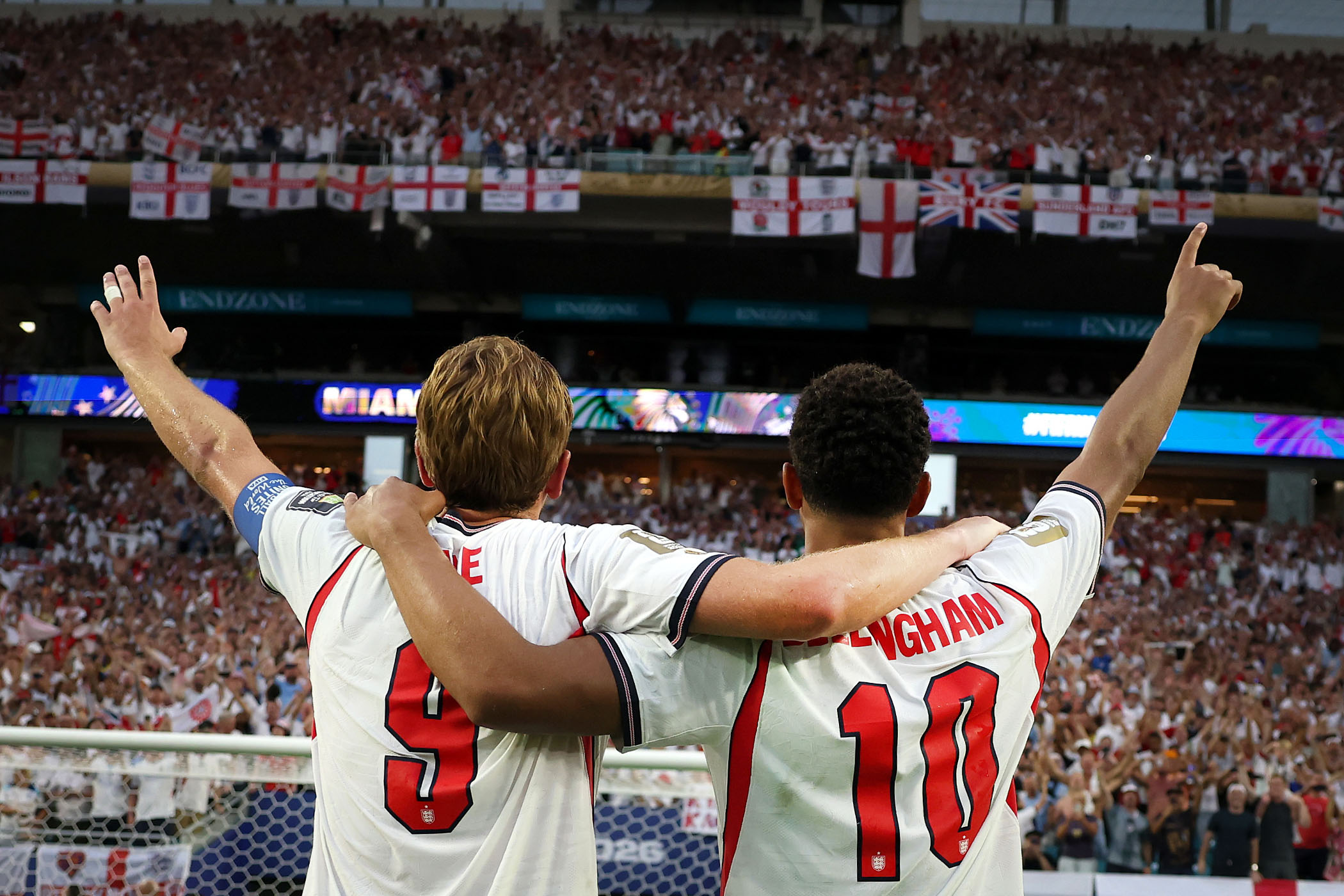
And then there is England against Argentina, two teams that encapsulate exactly what football is: entirely irrational, a beautiful and inexplicable chaos, defined not by strategy or tactics or even necessarily talent but driven by a self-belief so deep-seated it borders on delusion, an iron refusal even to countenance defeat, and a sense of destiny so potent that it could be used to start whole religions.
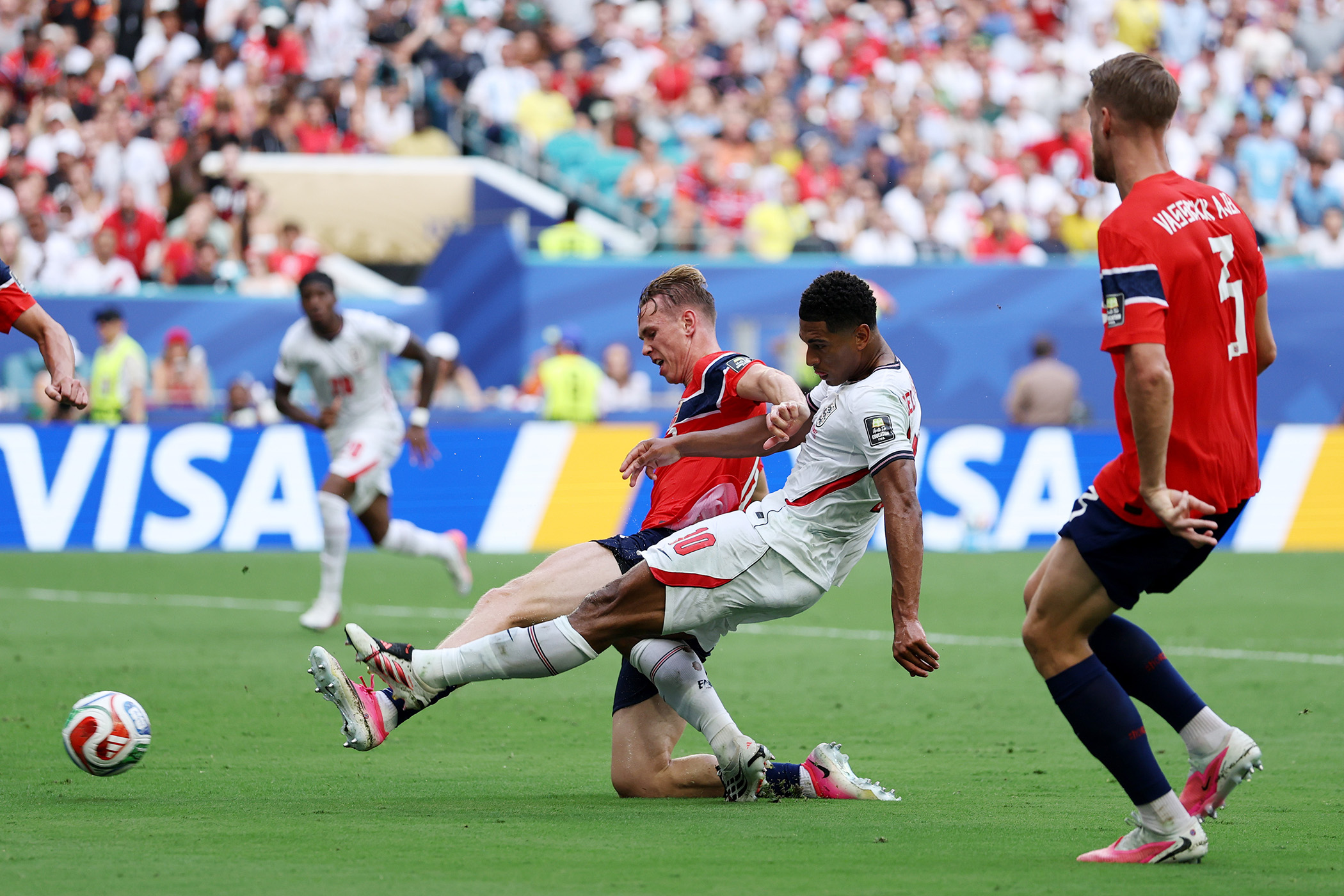
It is no good trying to work out which of these teams is favourite: an Argentina side that seems to need to stand on the edge of the abyss simply to feel alive or an England team that has played what you would call well for precisely 75 minutes in this whole tournament and that is now held together by sticky-tape, fumes and Jude Bellingham’s bottomless Madridismo.
At a guess, Argentina have the higher ceiling but England the sturdier floor: the emotional weight of wanting, of needing to deliver Lionel Messi a second World Cup means that the reigning world champions are playing under a pressure that is just as likely to break them as drive them on; Thomas Tuchel’s team appear more controlled but perhaps less wild-eyed with a sense of mission.
But none of that matters, really, not in a game that will run – as a friend of mine put it – on nothing but vibes and spite. England survived the Azteca by fighting tooth and claw; the Battle of South Atlanta will require much, much more of the same. Argentina, and Argentina alone, have shown an ability to turn the gleaming stadiums of the NFL into writhing, seething, growling cauldrons; against Egypt, one end of the Mercedes-Benz Stadium looked like a Peach State Bombonera.
That brings with it a risk, of course. In its modern incarnation as a global carnival, the tournament has become sanitised, family-friendly; there have been no major flashpoints since 1998. This has uniformly been a good-humoured, intensely friendly World Cup. Fifa have started treating it as an entertainment event: there has been little or no segregation among fans here. Everyone will have done very well if that still feels like a good idea by Thursday.
Anticipation, though, overrides even that caveat. These are the four best – or at least the four most compelling – teams in the world. How could they not be? They’re the top four in the very important and serious Fifaworld rankings. This is how it was meant to end.
Photograph by Patrick Smith/Fifa via Getty Images