
This article is part of the Rory Smith on Football newsletter – a guide to help understand what is happening on the pitch, off the pitch, and why all of it matters.
Throughout the tournament, Rory will be travelling across America, delivering daily commentary on the biggest World Cup ever direct to subscribers. Never miss a newsletter, subscribe now here.
In the sudden silence, the memories come pouring back. They emerge through the morning-after-the-month before haze not as facts but as questions, forlorn attempts to find the threshold between lucid dream and concrete reality. Did Scotland hook up with Boston? Have thousands of Norwegians been wandering around pretending to be on a Viking longboat?
Yesterday, for the first time in 27 days, there was no World Cup. Not a single minute. There wasn’t even South Africa against Canada, which is as close as you can get to football without actually being football, the game’s equivalent to methadone. Very briefly, the greatest show on earth loosened its grip on the planet’s imagination.
Inevitably, as it does every four years, that brought with it what we might think of as Rest Day Syndrome: all that dopamine and adrenaline and cortisol – so much cortisol – rushing from the body all at once, replaced by a sensation not just of calm and of relief but of loss, too, the emotional equivalent of turning the lights on and the music off.
Unusually, this time around it was possible to pinpoint that exact moment with some degree of accuracy. On Tuesday, Enzo Fernández scored Argentina’s winner – the final great flourish of a World Cup that had got quite out of control – a little before 2pm, local time. Two hours later, Colombia against Switzerland started, and the universe announced that the fun was now over.
Left alone with our thoughts, no longer distracted by the constant flow of football and incident and discourse, the natural response is to start to wonder not just where the last month has gone (did you know that Wimbledon has almost finished? That we’re already on Day Six of the Tour de France? Have you heard about Sir Keir Starmer?) but to wonder if we might, maybe, have gone a bit overboard.
This World Cup has been glorious on the pitch – the majesty of Lionel Messi and the courage of Cape Verde, England’s grit in the Azteca and France’s grace against hostility and a million other things beside – and it has been wondrously joyous off it, a giddy and silly and welcoming Saturnalia, a deliriously camp inversion of national identity.
In the middle of the cold turkey detox of Rest Day, it can be hard to retain that feeling. There has been an awful lot of dancing in the street. Maybe too much? Remind me: why did Mexico and South Korea decide they should buy a house together? A lot of the Dutch fans doing Links, Rechts look like they have quite serious jobs, don’t they? What have we all been doing?
There are two ways of answering that question. The first arrived in its most eloquent form in Atlanta, when Lautaro Martínez crossed the ball and Fernández leapt and one end of the Mercedes-Benz Stadium melted into ecstasy. Football’s triumph and its weakness is that it always delivers. Nothing else makes you feel that way.
Newsletters
Choose the newsletters you want to receive
View more
For information about how The Observer protects your data, read our Privacy Policy
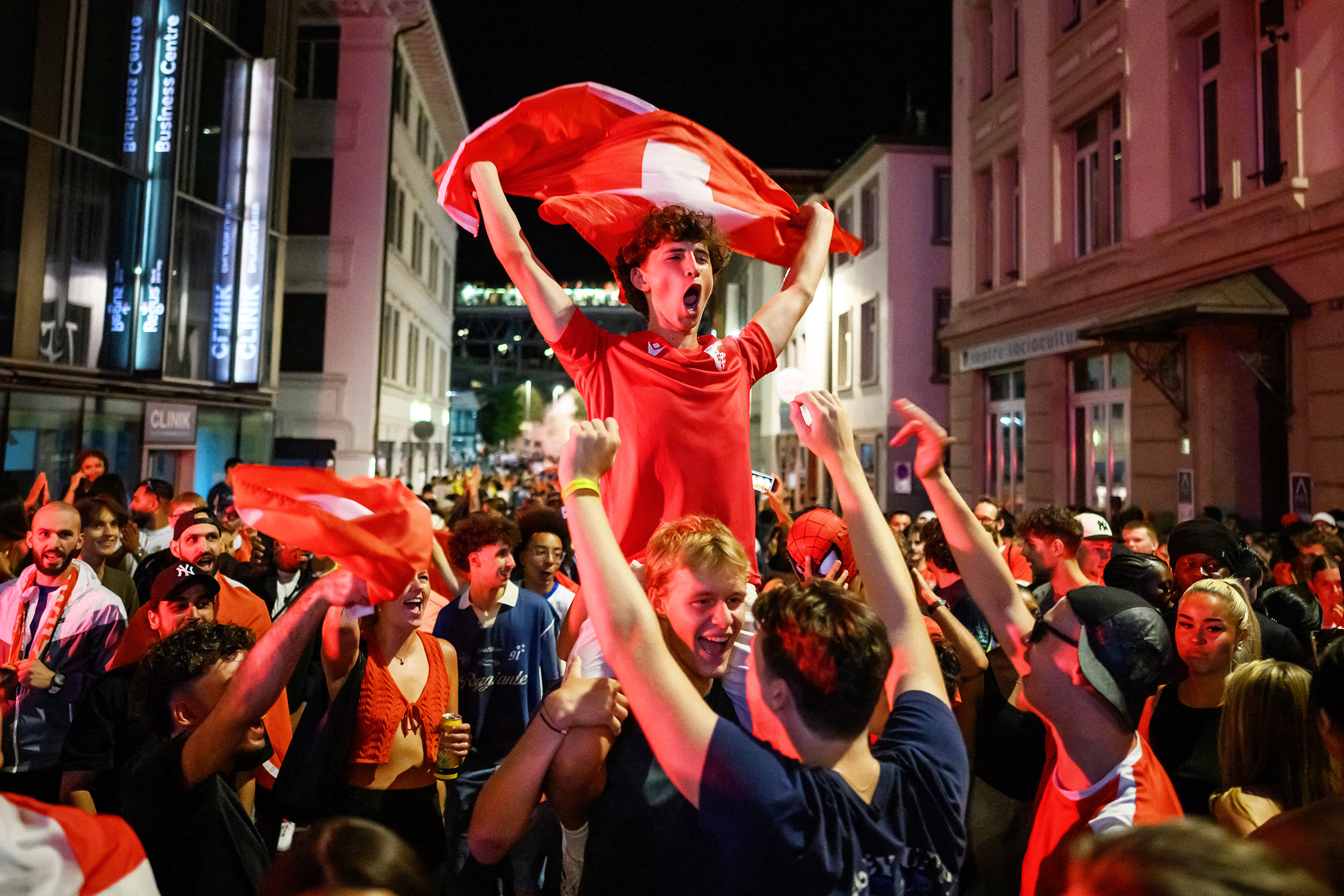
The second has played out not just across the United States, Mexico and Canada, but around the world over the last month or so. No sooner had Norway beaten Brazil a few days ago than tens of thousands of people had flooded the streets of Oslo to celebrate. Bosnia’s qualification from the group stage brought similar numbers out in Sarajevo. In Ecuador, where tanks patrol streets under threat from surging cartels, soldiers draped themselves in flags to celebrate beating Germany.
It is worth considering what this means. Our lives, across the planet, are increasingly atomised. Technology has created a society in which we have been able to construct and inhabit our own worlds, adjacent to but frequently disconnected from those of our neighbours. First our shared culture, and then our shared truth, have been fragmented and fractured. Our friends live in our phones. Increasingly we mediate our emotional responses through the reactions of others.
That has been true of this World Cup, too, a month in which the narrative parabola of FreddyLA7 cast its light and its shadow on how we live; a month in which everything has been filmed and packaged and curated for our consumption; a month in which the football itself has, at times, played second fiddle to the “shoulder content” that surrounds it.
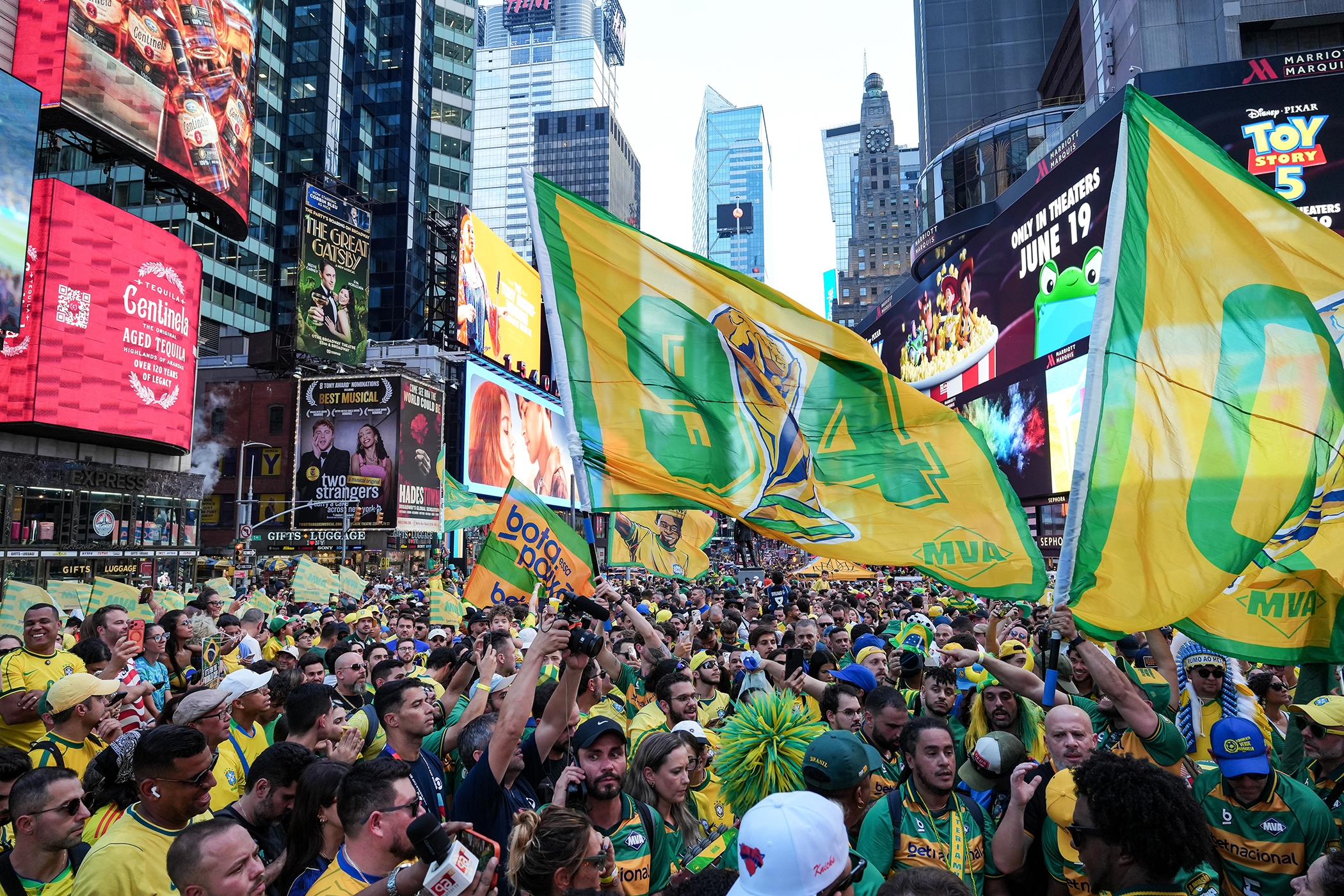
And yet, at the same time, it has also been experienced as it is meant to be experienced: in the analogue, in the flesh. It has drawn hundreds of thousands onto the streets not just in North America but in Willemstad and Praia and Dhaka and Kerala and basically any city you care to name.
Each one of those people has taken the decision to leave their home, to put down at least some of their screens, to go out into the world and to be with others; they have felt that pull, that draw to be around others, that sense that to feel that connection in these moments heightens the pleasure and dulls the pain. They have felt that deeply human urge to share.
That is what the World Cup does, of course, and has done for some time. It is not new to this tournament, to this year. But that does not mean we should take it for granted, overlook the miracle that it represents, the power it displays. Of course, over the last month, we have all gone too far. It has all been exaggerated and excessive and faintly ridiculous. And it has all been entirely, absolutely, wholly justified.