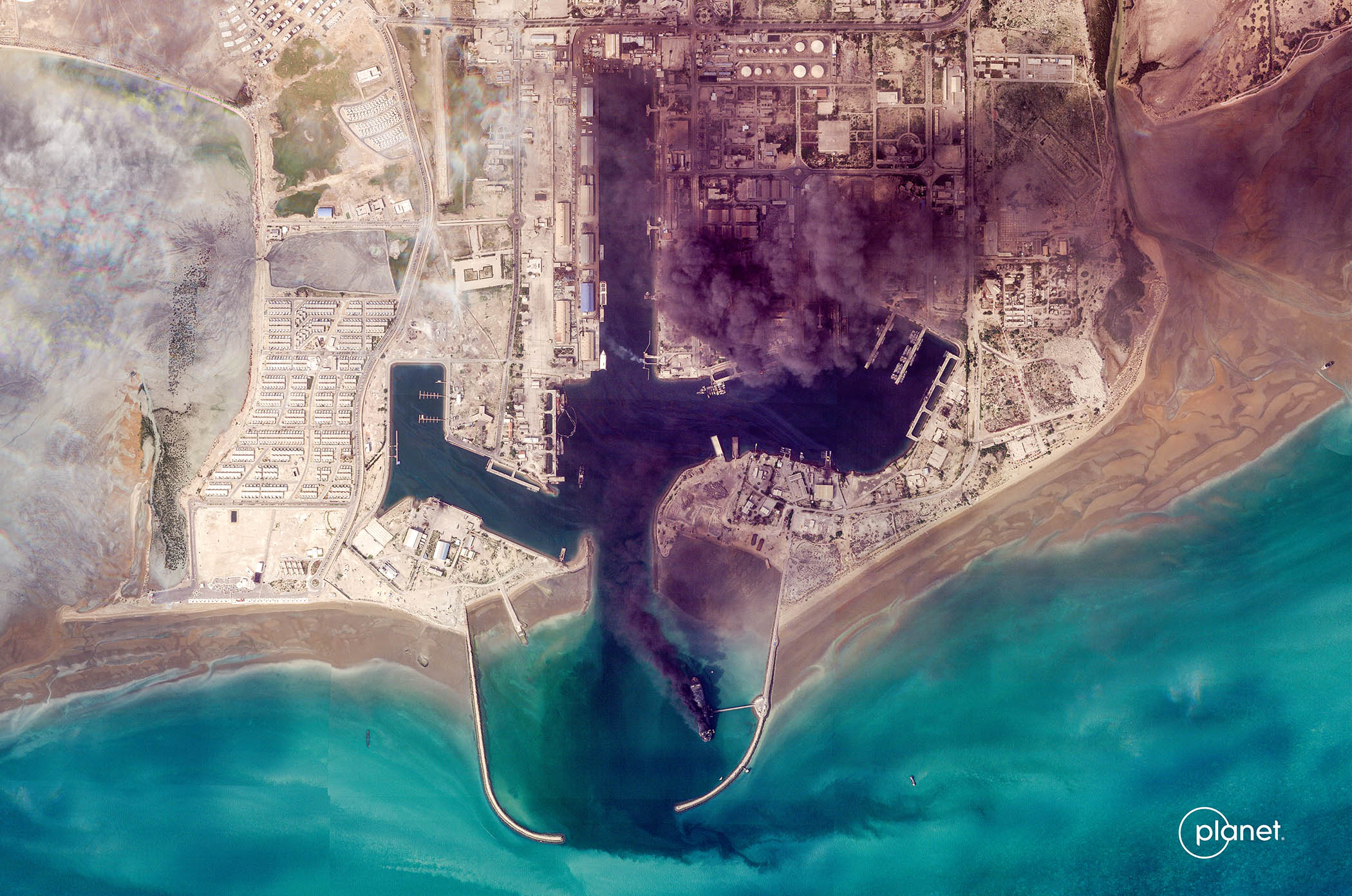


Two Iranian missiles hit one of the world’s biggest liquefied natural gas plants in Qatar last week, causing damage that the CEO of QatarEnergy said could take five years to repair.
So what?
That’s not the half of it. The Iran war has acted like a heart attack on the global energy system, blocking its busiest artery, eating into reserves and driving up energy bills, inflation and pressure on interest rates. The short-term disruption that was a worst-case scenario has turned into the best that governments can hope for. Whatever happens next, the medium and long-term effects of this crisis will include:
• a hit to growth in the UK and globally
• a sharp slowdown in petrochemical industries reliant on oil and gas
• renewed pressure on the UK government to reopen the North Sea to oil and gas exploration, and
• a strengthened case for renewables and nuclear energy.
Strait and narrow
On 2 March, two days into the war, Qatar shut down its Ras Laffan industrial complex – a city-sized plant 100 miles across the Persian Gulf from Iran. Gas-importing countries braced for disruption, but that doesn’t describe what has unfolded since:
• By 4 March Iran’s Islamic Revolutionary Guard Corps claimed to have taken control of the Strait of Hormuz and effectively closed it to shipping that in normal times carries a fifth of the world’s oil and liquefied natural gas (LNG).
• Last Wednesday and Thursday missiles struck two LNG-producing sites at Ras Laffan, which produces 13m tonnes a year, or 17% of Qatar’s output.
• Tehran’s retaliation against Israeli attacks on its gas facilities has forced the shutdown of gas processing facilities in the UAE, and it has targeted a Saudi oil refinery on the Red Sea.
Even if the war now ends swiftly, the stage is set for a planet-wide scramble for alternative sources of energy that could reshape economies, energy security and the world’s approach to tackling the climate emergency.
Crude awakening
Since the closure of Hormuz, world oil prices have surged close to $120 a barrel from pre-war forecasts of a yearly average of $63 before falling back slightly. Analysts at Fitch project that Brent crude could average $120 a barrel this year if the strait is closed for six months, or $100 if it reopens after three.
That is still a huge increase on forecasts, which could create a political crisis for the US in an election year by heightening anxiety about living costs. Petrol prices at the pumps in the US are close to $4 a gallon, the highest since 2023.
Casting around for measures to control prices, the Trump administration has:
•
loosened restrictions on Russian oil exports;
•
considered easing sanctions on Iranian oil that is already at sea, reversing years of efforts to blockade the Islamic Republic; and
•
tapped into strategic petroleum reserves held in salt caverns along the Texas and Louisiana coasts.
The 32 member countries of the International Energy Agency (IEA) have all agreed to release reserves, but the 400m barrels this adds to the market is small-scale relative to the disruption: last year 20m barrels of crude oil and oil products transited the Strait of Hormuz daily.
The high oil price will be watched with anxiety by Gulf producers, and Saudi Arabia in particular.
“They need to keep the price high enough to make a bunch of cash, but not so high that the rest of the world decides to decarbonise,” says Adam Bell, a partner at Stonehaven and former head of energy strategy for the UK government. “This is a clear demonstration to global economies that they cannot rely on oil and gas.”
There is a precedent for this “demand destruction”. The embargo imposed on the US and other countries that backed Israel in its 1973 war with Egypt and Syria resulted in shifts in oil demand, some temporary – such that caused by lower speed limits on UK roads – and others enduring, including the French switch away from oil dependency to atomic power, under the slogan: “Tout électrique, tout nucléaire.”
‘If the conflict goes on another three or four months we might need to getinto rationing’
‘If the conflict goes on another three or four months we might need to getinto rationing’
Adam Bell, energy strategist
Bills, bills, bills
British households will be shielded from the immediate effects of the energy shock because of the government’s energy price cap, and the time of year.
“Going into spring means people are going to be using less gas, and most people’s prices are fixed at the moment, which protects them somewhat from this,” says Richard Lowes, an energy policy expert at the Regulatory Assistance Project. And yet…
That cap The cap on bills is expected to rise from £1,641 in April to £1,973 a year by July, according to the consultancy Cornwall Insight. A universal support package such as the price freeze introduced by Liz Truss in 2022 is seen as unaffordable – Rachel Reeves, the chancellor, is drawing up “targeted” support plans for poorer households instead. The Treasury has set up an “Iran board” of ministers and officials to examine the options and consider the scale and beneficiaries of any bailout.
Gas Two-thirds of the UK’s electricity now comes from renewables. The rest is powered by gas, much of it imported from Norway. Britain’s reliance on the Gulf for gas is minimal – close to 2% of the UK’s gas was shipped from Qatar in 2024. But wholesale electricity prices are set by world gas prices, so the price shock will drive up power costs. “When prices are stable that system is OK, but it wasn't designed for a world in which energy prices are chaotic,” Lowes says.
Petrol The most immediate pain will come on forecourts. “Petrol prices are going to go up a lot in the long run, and if the conflict goes on another three to four months, we might need to get into rationing,” Bell says. “But that depends on the course of war and America’s appetite for higher gas prices.”
Inflation Just when the government thought inflation might come down, it looks like it’s going back up. It says plans to raise fuel duty – frozen since 2011-2012 – are “under review”. Opinium polling shows that for the vast majority of the UK population the cost of daily essentials including energy has noticeably gone up in the last 12 months.
Before the war, the Bank of England projected inflation would fall to 2.1% by April. Economists now say annual UK inflation will rise to 2.6% by the fourth quarter. That gives the central bank less room to cut interest rates – the Bank held steady at 3.75% on Thursday. Mortgage lenders pulled the last fixed-rate deals below 4% off the market this week.
Costing the earth
The effect of the energy shock is being felt most acutely in Asia, where 90% of Qatar’s LNG was exported before the war:
• Bangladesh has closed university campuses early and imposed temporary blackouts.
• Sri Lanka and the Philippines have introduced four-day working weeks.
• In China and Japan petrochemical businesses dependent on hydrocarbons have cut production or closed facilities
• Choking off supplies, if sustained, could lead to a broad economic slowdown. In a report on Friday, the International Energy Agency set out measures to curb energy demand, including working from home to avoid commuting, reducing business flights and lowering speed limits by 10mph.
Licence to drill?
There’s growing clamour for the government to scrap its ban on new North Sea oil exploration licenses and to abolish the windfall tax on oil and gas companies, which was inherited from the Conservatives. But it’s not just Tories who are speaking up:
•
Tony Blair’s thinktank called in a report in February for an “investment-friendly” approach to the North Sea which it said would enhance Britain’s resilience to geopolitical shocks. “Most of our gas comes from Norway, which is fortunate because that is relatively stable, but we are still reliant on LNG and increasingly reliant on American and Qatari LNG,” says Tone Langengen of the Tony Blair Institute for Global Change. “That is a risk in the world we see right now. That will mean people give it to highest bidders and we could end up seeing huge disruptions and delays.”
•
Octopus Energy’s CEO Greg Jackson ha also come out in support of more drilling.
Some in the renewables sector see the fight over the North Sea’s resources as an unwelcome distraction that could further poison the net zero debate. “The only sustainable solution for greater energy security and lower bills is electrification, – more heat pumps, more electric vehicles, more electrified manufacturing – but while we still use gas it’s better from an emissions point of view to use what’s in the North Sea rather than ship in imports,” says Clem Cowton, director of external affairs at Octopus Energy. “Taking a pragmatic, balanced approach avoids unnecessary fights and allays fears that net zero is some kind of ideological master plan.”
That said, production from the UK’s North Sea basin is in terminal decline. Domestic oil and gas is costly to extract as reserves are low, requiring more energy to pump it out, and wages are high relative to other parts of the world.
Gilty as charged
Expectations that the war will ignite inflation have pushed up pressure on interest rates and exposed the vulnerability of Britain’s bond market, as government borrowing costs hit their highest since 2008.
Yields on 10-year gilts crossed the important psychological threshold of 5% on Friday, following the Bank of England’s unanimous decision to hold rates the day before. Since February 27, the surge in yields on British bonds was nearly double the average across the rest of the G7.
This is estimated to have wiped out £3bn of the chancellor’s £22bn in fiscal headroom, raising the spectre of tax increases in her autumn budget and a watering down of her fiscal rules. This week Lisa Nandy, the culture secretary, made the case in cabinet for them to be relaxed in order to fund cost-of-living support.
But the UK is not the only country hit by investors seeking a higher premium to hold government debt. Yields, which move inversely to bond prices, have risen 0.38% on 10-year German Bunds and 0.41% on US Treasuries since the start of the war.
What’s more…
When Middle Eastern energy supplies grind to a halt the ripple effect is hard to dodge. The UK Treasury has a rule of thumb: a 20% rise in the price of oil means half a percentage point more inflation and a full point cut to growth.
This article has been amended since publication, removing a reference to green entrepreneur Dale Vince that suggested he supported drilling.
Newsletters
Choose the newsletters you want to receive
View more
For information about how The Observer protects your data, read our Privacy Policy
Photograph by 2026 Planet Labs PBC / AFP via Getty Images