

This article first appeared as part of the Daily Sensemaker newsletter – one story a day to make sense of the world. To receive it in your inbox, featuring content exclusive to the newsletter, sign up for free here.
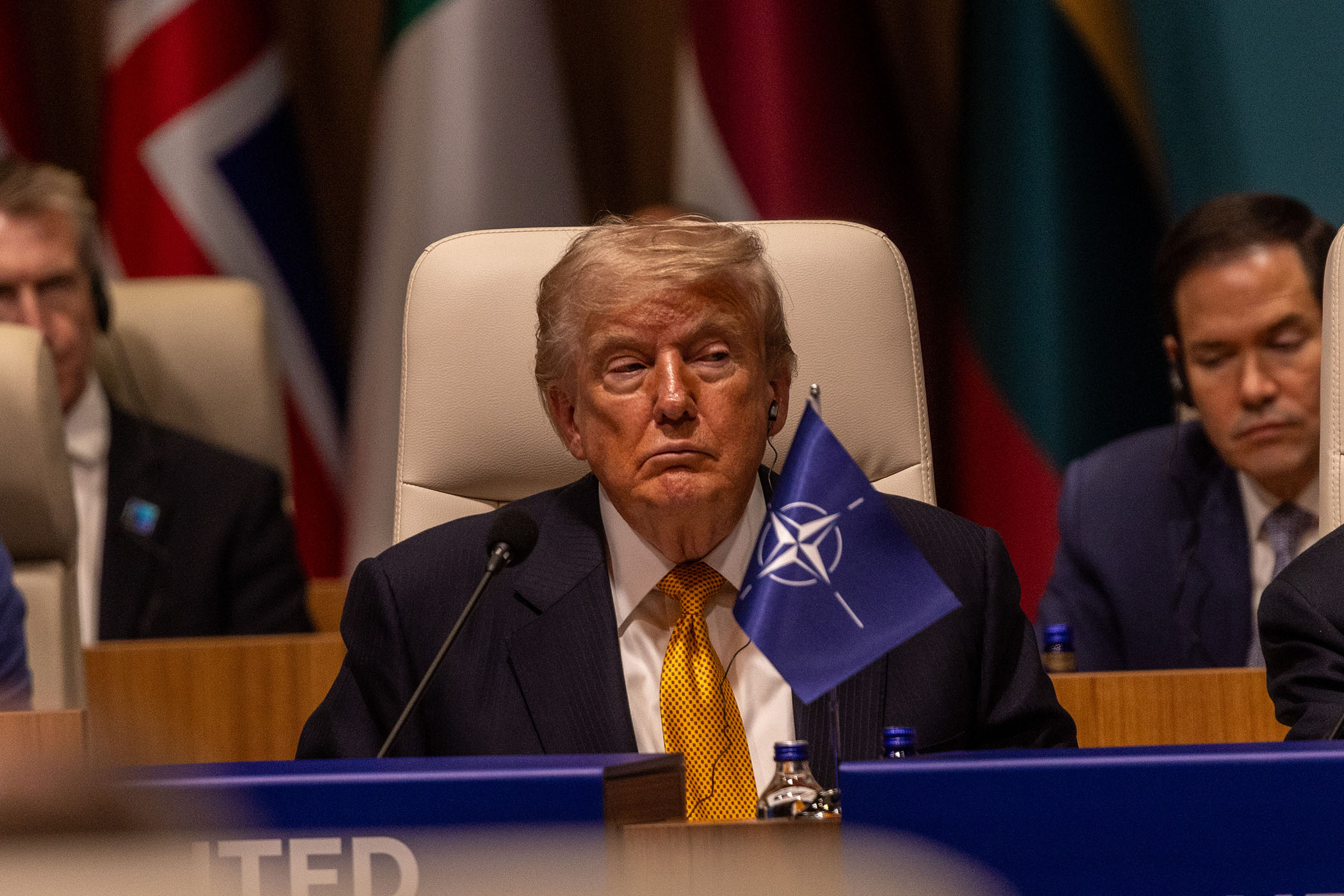
Donald Trump has ordered a halt to US trade with Spain over its refusal to increase defence spending. At Nato’s annual summit in Ankara, he called the country a “terrible partner”.
So what? There had been faint hopes that Trump would arrive at the meeting in a conciliatory mood, after extracting a pledge last year for alliance members to boost their military spending to 5% of GDP. Instead he has refused to let go of old grievances that include Europe’s
•
refusal to participate in his war of choice against Iran;
•
resistance to a US takeover of Greenland; and
•
policies on immigration and clean energy.
The context. This should come as no great surprise. Earlier this year, in retaliation for Europe’s lack of support on Iran, the Trump administration launched a review of US forces on the continent, cancelled troop deployments and scaled back its commitments to Nato.
If necessary, alone. European leaders are now thinking the unthinkable: that the continent could face a Russian attack without the American muscle that has guaranteed its security since the end of the Second World War.
Case in point. Ahead of a meeting with Ukrainian president Volodymyr Zelensky yesterday, Trump said that the war between Moscow and Kyiv “doesn’t concern us”.
What is at stake? Arguably, the future of western liberal democracy. With autocracy on a global march, there aren’t that many true democracies left outside Europe – and the continent is currently ill-equipped to look after itself in a new era of geopolitical upheaval.
What to do? There have been calls to create a single European army. But these plans remain vague, and there is now a broad agreement that the solution lies in building a “stronger, more European Nato”, as British prime minister Keir Starmer put it yesterday.
How to get there? The first step is increasing defence budgets, which is already happening. Nato’s non-American members have ramped up military spending by a third since 2024, led by Germany, Poland and Baltic countries that feel threatened by Russia. But others are struggling to muster enough cash. This includes France and the UK, Europe’s two nuclear powers.
Step two. This money must be spent on the right kit. There has been much recent talk about AI targeting systems, low-cost drones and electronic jammers. But according to Nato’s deputy supreme allied commander for Europe, the alliance is still equipped to fight the first Gulf War.
Newsletters
Choose the newsletters you want to receive
View more
For information about how The Observer protects your data, read our Privacy Policy
Step three. Europe badly needs to streamline and join up its procurement processes so that it can benefit from economies of scale. Currently its militaries have 12 types of battle tank, each of which has tens of thousands of parts. The US, by contrast, has one main model.
Step four. Nato needs to rethink its command structures. At American insistence, it currently has two strategic commands that are both led by US officers – a model that will make no sense if Trump really does pull back from the alliance. The European Council on Foreign Relations argues its current command system should be “reorganised into sub-regional coalitions of European countries” to allow more flexibility and collaboration.
Step five. The alliance should leverage the strengths of its members and allies. These include Turkey, which has Nato’s second-biggest land force and excels in making drones, and Ukraine, which has deep, hard-earned institutional knowledge about the new face of war.
What’s more… Mark Rutte, the Nato general secretary who has called Trump “Daddy”, says Europe can’t defend itself without the US. He could be right. But it needs to try.
Photograph by Burak Kara/Getty Images