
In the week that the US celebrated the 250th anniversary of its independence from British rule, the supreme court issued its own opinion on what it is to be an American in 2026.
At this perilous moment in the nation’s history, civil rights groups and legal scholars had hoped for an emphatic message from America’s highest court that the foundations of the republic are still sound.
Instead, the landmark ruling on birthright citizenship again laid bare the partisan rancour and anti-immigrant fury that has consumed America’s political right since Donald Trump first swept to power almost a decade ago.
The court did vote to uphold the 14th amendment of the constitution – which confers American citizenship on all children born in the US – but only just.
Rather than a resounding 9-0 rebuttal of Trump, the justices rejected the president’s bid to strip the right to citizenship from the children of undocumented migrants by 6-3, and were split by 5-4 on whether to cast off the 14th amendment.
One of America’s fundamental ideals, that anyone born in the country is equally deserving of citizenship, is now left hanging by a thread. Even on the bench of the supreme court, the European-style blood and soil nationalism that the US was founded to reject is now gaining ground.
The reaction from the White House to the court’s ruling was vicious. Stephen Miller, the chief architect of Trump’s mass deportation programme, decried the ruling as “destructive and outrageous”, suggesting the administration would take a “hard look” at banning pregnant migrants from entering America.
Some Maga loyalists went even further. Sean Davis, head of rightwing news site the Federalist, called for all foreign visitors to be sterilised before entry.
The conservative justices who sided with the Trump administration agreed. Clarence Thomas, only the second African American to serve on the court, issued a 91-page dissenting opinion, claiming the ruling “devalues” US citizenship and the 14th amendment, which was passed to protect the rights of freed slaves after the civil war.
“I am not sure that today’s opinion will stand the test of time,” Thomas warned.
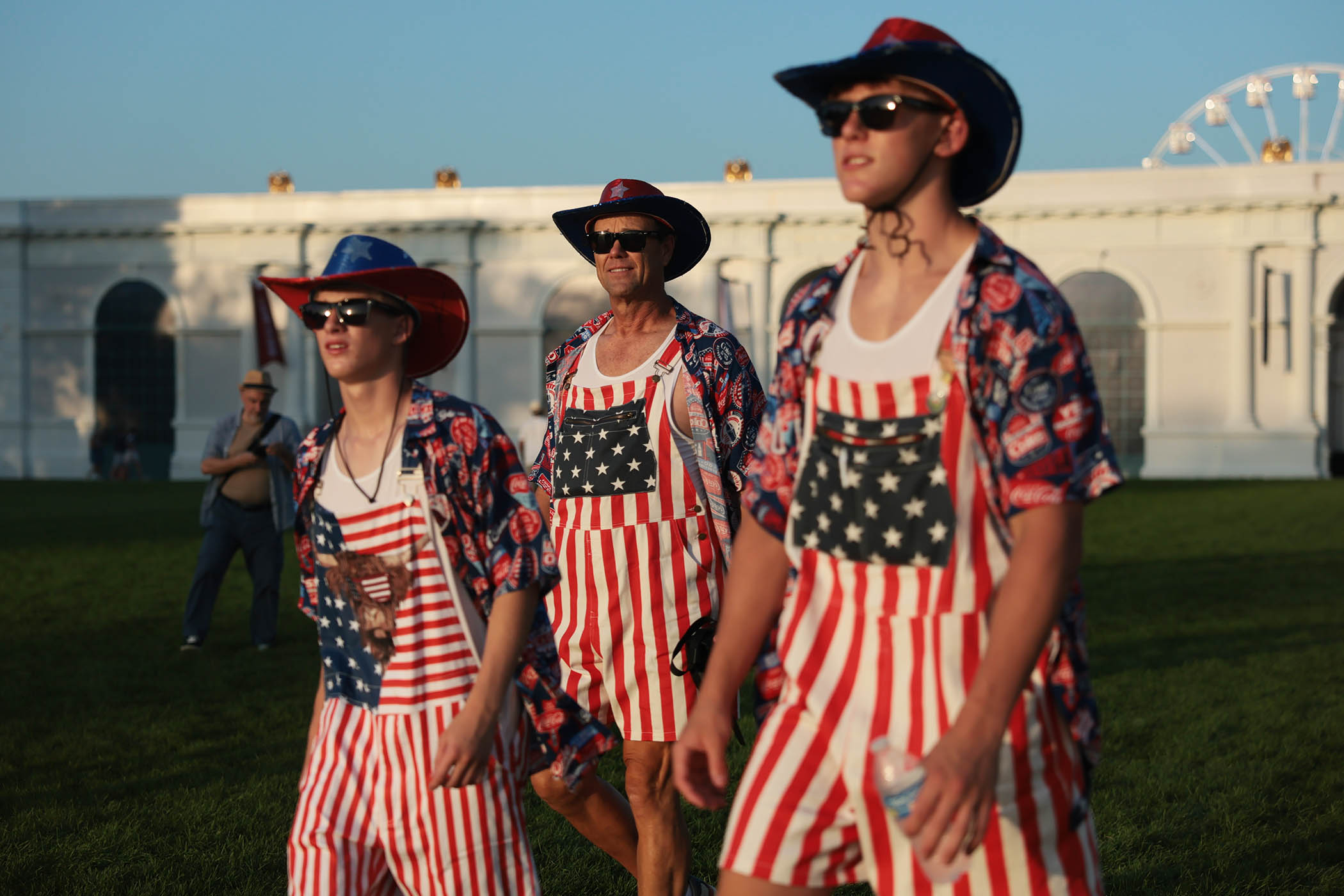
Haiden Otto, Logan Otto, and Dakoda Otto, from Cool Junction, Nebraska, attend The Great American State Fair in Washington, DC
Many Americans agree. A poll ahead of the 4 July celebrations found that almost 40% do not believe the US will survive as a single, united country for another 250 years. Two-thirds feared that American democracy is in danger of failing.
“We’re on a razor’s edge. There’s just no doubt about that,” Jeremy Paul, a constitutional law professor at Northeastern University, said of the ruling. “In the end, the court followed the constitution. Yes, it was 5-4, but at least it was five.”
While the courts debate the survival of the republic, Trump has hijacked America’s birthday bash, turning America’s 250th anniversary into an orgy of self-glorification.
At a cage fight on the White House lawn to celebrate Trump’s birthday last month, cabinet secretaries mocked their opponents as “libtards” and declared Trump “the greatest president… since George Washington”.
While Washington resigned his command before seeking the presidency after the revolutionary war, Trump has amassed extraordinary power since taking back the White House.
The first American president to be convicted of a crime, Trump has bulldozed the White House and dismantled the federal government. He ignored Congress when he launched war with Iran and kept lawmakers in the dark when he ordered a daring raid to snatch Venezuelan despot Nicolás Maduro in January.
During his Trump 250 tour in recent days, he unveiled the new Air Force One, a $400m Boeing 747 gift from the Gulf state of Qatar, refitted at the taxpayer’s expense and painted in a new livery picked by Trump himself. His personal wealth has rocketed. In a recent interview, he claimed there were “no limits” on his power.
But Trump does face limits on his popularity. The president’s approval ratings are at historic lows. His near-deserted Great American State Fair on the National Mall was an embarrassing failure, capped by the arrest of a Maga influencer dressed as Uncle Sam, accused of masturbating in front of a troupe of acrobats.
When a desultory lineup of musical “icons” backed out of Trump’s party, he scrapped the event entirely and arranged a Maga rally in its place. It can only have rankled that an array of stars – including Bruce Springsteen, Stevie Wonder and U2’s Bono and The Edge – appeared at the opening of Barack Obama’s presidential library in Chicago last month, while Trump was snubbed by the surviving member of 80s pop duo Milli Vanilli.
In private, Trump is said to be furious at the debacle. In public, he remains impervious to embarrassment. After all, who better to headline America’s birthday party than Trump himself.
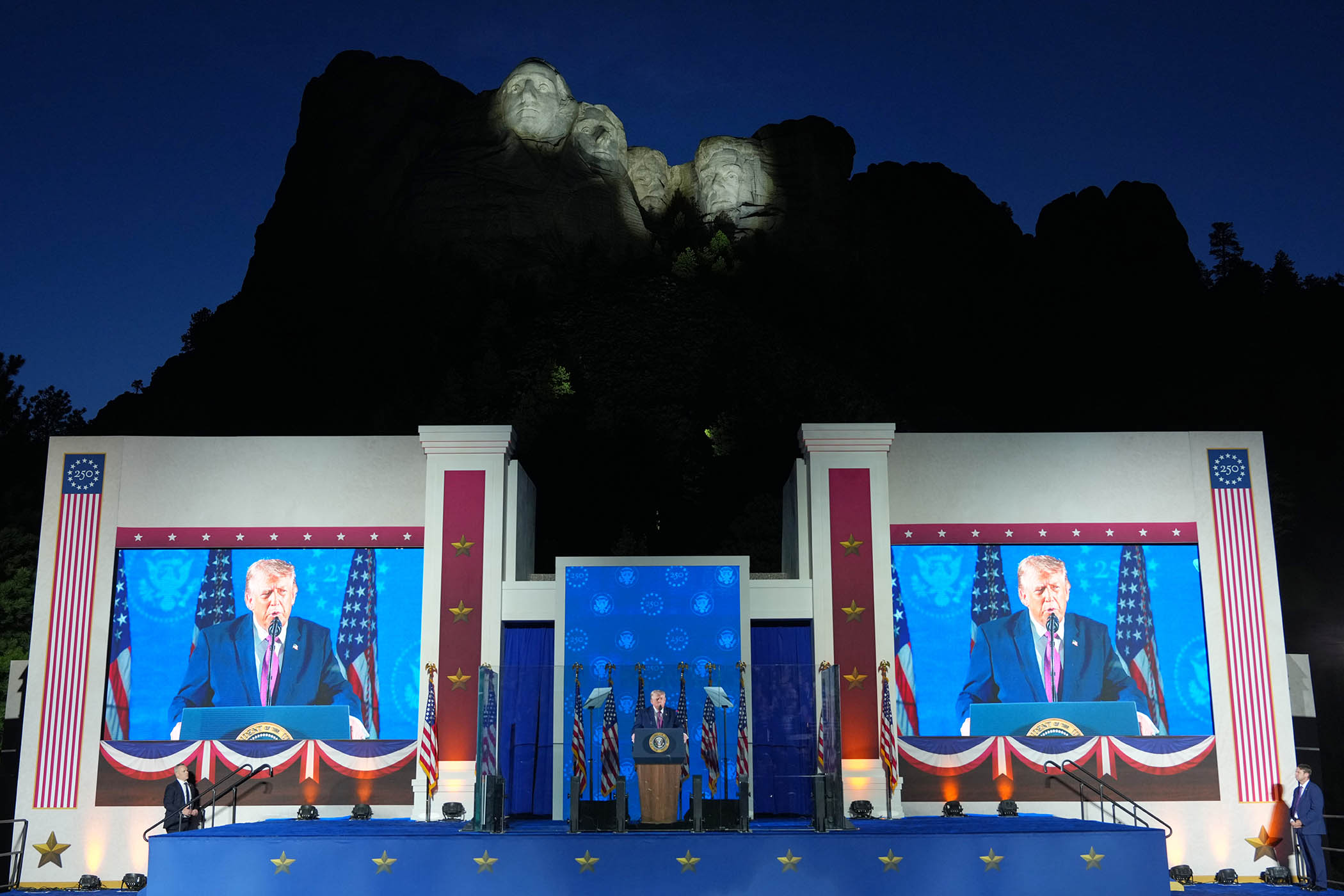
Speaking from Mount Rushmore on Friday evening, Trump veered from an upbeat tribute to American exceptionalism into an attack on his “godless” political enemies and the “mortal threat” of mass immigration. Evoking the Red Scare of the 1950s, he warned that American liberty was under “renewed attack” from the “menace of Communism”.
With an eye on November’s midterm elections, he urged Republican lawmakers to pass a bill that would make it harder to vote, promising that the GOP “will not lose an election for 100 years”.
Trump was set to speak again in Washington on Saturday before the celebrations climax in a huge fireworks display, a shock and awe show of force to the nation’s capital, where Trump won less than 7% of the vote at the 2024 election.
During his first term, Trump staffers made little imprint on Washington. But the naked grift of his second term has seen an army of lobbyists and hangers-on descend on the capital, while tech billionaires and oil tycoons beat a path to America’s new royal court.
“You didn’t much see them in the first term,” one career civil servant said. “Now, they’re everywhere – at the best tables in the best restaurants. They’re very visible, and they act like they own the place. Because, right now, they do.”
Photographs by Alex Brandon/AP, Joe Raedle/Getty Images
Newsletters
Choose the newsletters you want to receive
View more
For information about how The Observer protects your data, read our Privacy Policy
Photograph by Joe Raedle/Getty Images