
Photograph by Per-Anders Pettersson/Getty Images
This article first appeared as part of the Daily Sensemaker newsletter – one story a day to make sense of the world. To receive it in your inbox, featuring content exclusive to the newsletter, sign up for free here.
Cities were shut down across South Africa yesterday, the unofficial “deadline” set by xenophobic groups for undocumented migrants to leave the country.
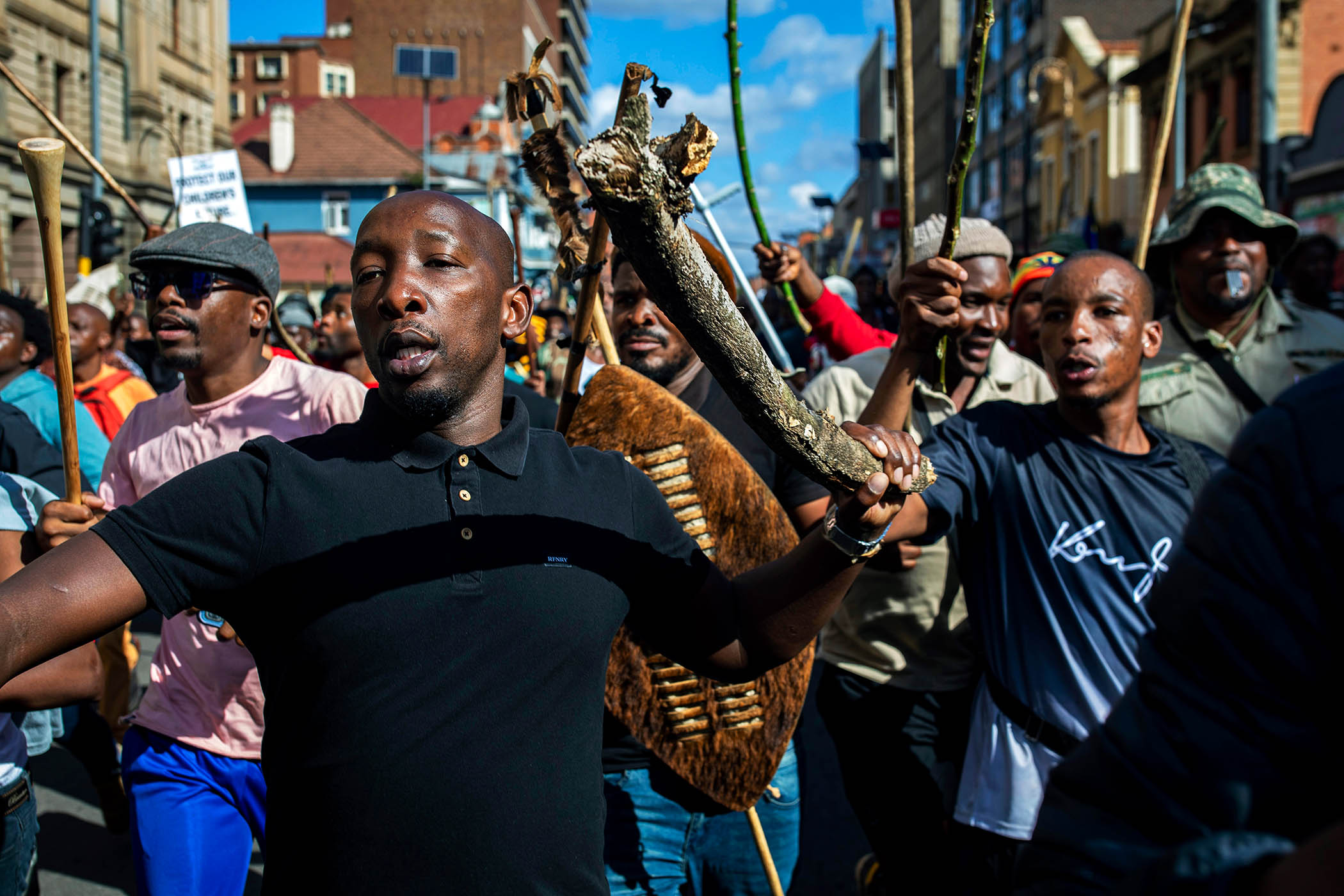
So what? The “rainbow nation” is fraying at its seams. Thousands of protestors marched across the country to mark the deadline, although a heavy police presence meant instances of violence were sporadic. The demonstrations were the culmination of months of unrest that have
•
created an atmosphere of terror;
•
caused at least 25,000 migrants to flee the country; and
•
tarnished South Africa’s international reputation.
The coal train to Johannesburg. Immigrants have been going to South Africa, the continent’s wealthiest country, for over a century. During apartheid, most came from neighbouring countries to work as cheap labour on mines and farms. Today, people travel from as far as east and west Africa for employment, education and to claim asylum.
Toxic mix. This is a source of longstanding tension in a deeply unequal country where 40% of the population subsists on less than $3.65 a day and a third of people are unemployed.
New dynamic. Over the past three decades, there have been several rounds of unrest. The deadliest was in 2008, when 62 people were killed. Recent years have witnessed the rise of vigilante groups such as Operation Dudula (“force out” in Zulu) and March and March.
Bandwagon. These organisations are now spearheading the mobilisation of anti-foreigner sentiment, blaming newcomers for joblessness, crime and housing shortages. Politicians are also scapegoating migrants as they try to drum up votes ahead of local elections in November.
Peaking. Conflict monitor Acled predicts that South Africa is set for more anti-immigration protests in 2026 than any year this decade. In recent months, stick-wielding crowds have marched in the streets of Pretoria, Johannesburg and other cities to demand that foreigners leave. Schools and hospitals have been picketed to prevent migrants from accessing them, foreign-owned businesses have been vandalised, and people have been attacked in the streets.
Fearful. The violence has forced thousands of migrants to seek shelter in makeshift camps. Yesterday, Nigeria repatriated 269 of its citizens as part of its efforts to bring 1,000 home. Ghana, Mozambique and Zimbabwe have also put on rescue flights in recent months.
Dodgy data. It is difficult to know how many migrants there are in South Africa, which struggles to collect reliable statistics. Claims by anti-immigration activists of up to 30m are an overestimate in a country of 65m. But the official tally of 2.4m is probably too low.
For example, although government statistics put the number of Nigerian migrants at 25,000, Nigeria’s ambassador to South Africa said in 2023 that there were 500,000 undocumented Nigerians in the country.
Meanwhile, there is an ongoing investigation into the immigration ministry, where civil servants are accused of selling fraudulent visas. This has further eroded trust.
Rearguard action. To avoid losing support, President Cyril Ramaphosa has been forced to announce a five-point strategy to address illegal migration that includes
•
stronger border controls;
•
anti-corruption measures; and
•
deportation courts.
In denial. He insists that “South Africans are not xenophobic” and retain their commitment to the Pan-African cause that sustained the liberation struggle against apartheid.
The numbers don’t back him up. The proportion of South Africans who say they welcome “no migrants” rose from 28% in 2020 to 42% in 2025. This sentiment is particularly pronounced in KwaZulu-Natal, the heartland of the Zulu population.
What’s more… One of the largest migrant groups comes from the UK, but white Europeans have not been the focus of vigilantes. This has prompted accusations of “Afrophobia”.
Newsletters
Choose the newsletters you want to receive
View more
For information about how The Observer protects your data, read our Privacy Policy