


The air is thick with gleeful rightwing warnings of doom. Prime minister-in-waiting Andy Burnham’s can-do optimism, aiming to offer growth in every postcode, will soon be buried. Whether providing stronger direction of Britain’s utilities or implementing the underfunded defence investment plan (DIP), he will be overwhelmed. Failure is inevitable.
But it is not. In both those areas, there is a smart resolution that will enhance Britain’s sovereign capabilities, whose direct cost need be no more than £100. The principle is known to the outgoing Labour leadership, but its irresolution and lack of political compass prevented the opportunity from being exploited – even though it was the Thatcher government that invented it.
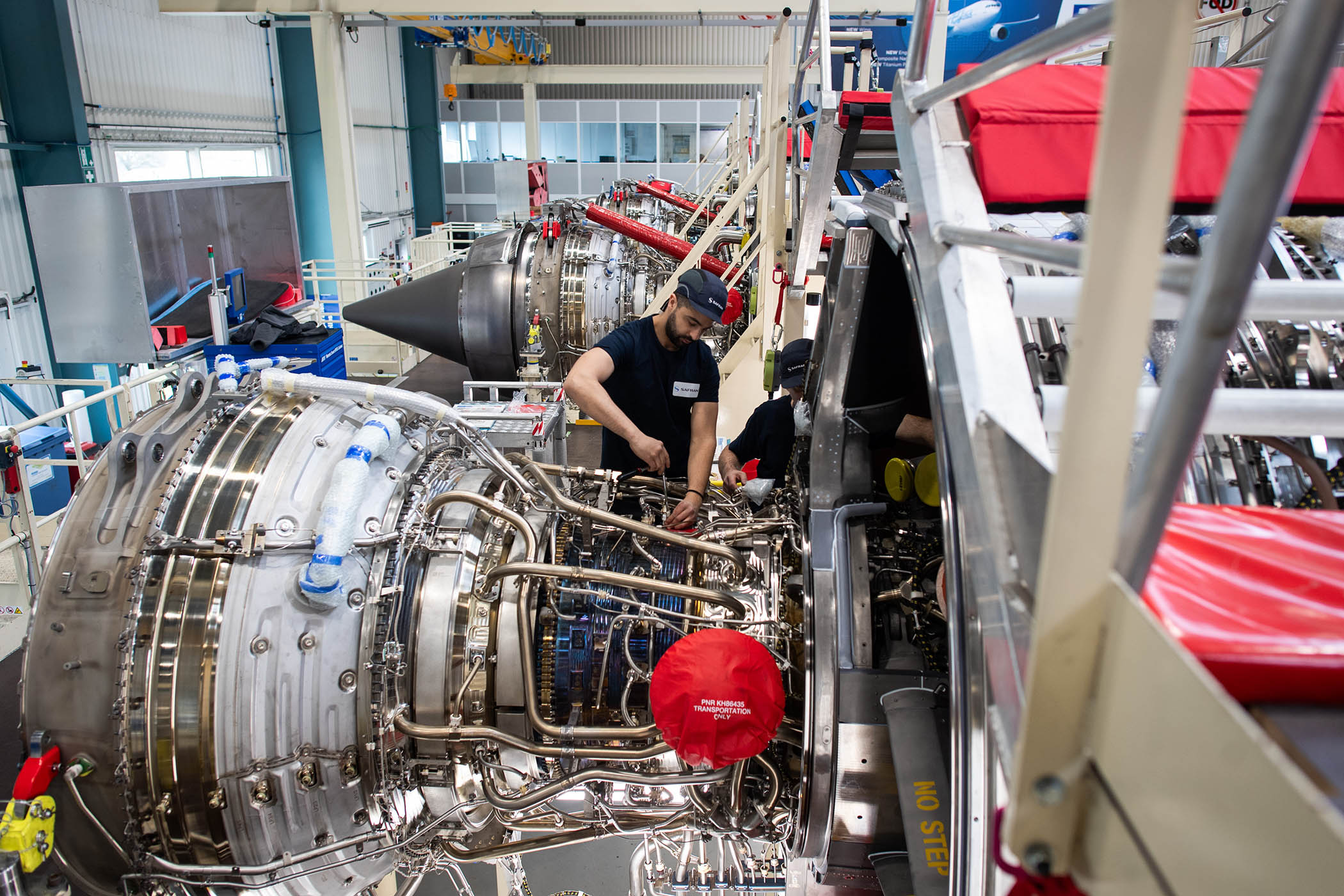
When, first, British Aerospace, and then Rolls-Royce, were privatised in the 1980s, the state took a special or “golden” share in both to protect national security. This decisively blocked foreign takeover by providing that no one shareholder could hold more than 15% of the shares or change the articles of association without the consent of the state. It is now the chief reason why the UK still retains a halfway useful defence industrial base. Without the golden share, these now thriving companies would be owned by American private equity, dismembered and their smart operations shipped to the US.
Around them and their supply chains has developed one of the most dynamic tech defence complexes in the world. Speaking to me on a We Society podcast, Michael Kofman, lead Russo-Ukraine analyst at Washington’s Carnegie Endowment for International Peace, says that our technological defence sophistication has meant the UK’s support for Ukraine has been more important to its emergent defence strength than any other country’s – including the US.
Extending the golden share principle is Burnham’s get-out-of-jail-free card if he chooses to play it. The original sin of privatisation was to suppose that self-interest alone, plus the lightest regulation possible, would make profit-maximising private utilities anxious to deliver public benefit. Wrong. But Clement Attlee-style nationalisation is not the only solution to create instead a public interest corporation.
The alternative, no less effective means, is for the state to take £1 foundation shares in each utility (analogous to special or golden shares but with greater powers) at the same time as requiring every utility to reincorporate as a public benefit corporation. This would put the delivery of public benefit – whether cheap, clean water or electricity – as their overriding purpose.
It is building on trends that are already in place. A number – Severn Trent in water, Octopus in electricity, the National Grid – already have made commitments to make the delivery of public benefit their prime business purpose. Yet the commitments are drowned by too much disgraceful behaviour by others over the last 30 years, with Thames Water the talismanic example. The public has rightly lost trust.
The foundation share would allow the government to generalise and harden the public benefit commitment to every utility. It would empower it to appoint non-executive directors as guarantors that boards would hold fast to their public benefit commitments with honest conversations with their regulators – not, for example, establishing tax avoidance schemes as Thames Water did when owned by a private consortium or offering ludicrous executive pay.
It could override majority private equity control – the real villains of privatisation – and demand at least a quarter of every utility’s shares should be publicly quoted to ensure a transparent, level playing field.
Some shareholders will grumble, but they will continue to receive dividends even if growing less rapidly; what else did they expect as owners of genuine public interest utilities? For no more than £50 – the cost of up to 50 £1 foundation shares – Burnham could achieve the capacity to direct that he wants.
Newsletters
Choose the newsletters you want to receive
View more
For information about how The Observer protects your data, read our Privacy Policy
The same principle should be extended to the DIP; indeed, it would have offered its strategic intent real spine, together with a useful answer to the perennial question of how it was to be paid for. Despite criticism, the DIP is the beginning of an intelligent, pioneering transformation of our armed services, informed by what we have learned first-hand from Ukraine. Future military conflict on land, air and sea will be through autonomous, largely unmanned weapons systems, of which drones are the exemplar.
There is also a grey area “between peace and war”, where frontier technology is no less important. But because technology moves so fast, designing weapons systems in volume and stockpiling what will be necessarily redundant, sometimes within months, is stupid – and builds inherent cost overruns into the process through constant respecification. The Treasury is not wrong to regard this as financial incontinence; the Ministry of Defence (MoD) is not wrong to argue that it simply doesn’t understand modern warfare.
The answer, as the DIP openly argues, is to build up a British hi-tech defence industrial base with UK supply chains that have the capacity to scale production of continually updated weapons systems within months rather than decades. Thus, fewer obsolete stockpiles, more state-of-the-art weaponry and less wasteful recommissioning.
But while the DIP advocates this, it refuses to confront the “how”. Within the last six years, we have allowed key defence companies such as Cobham, Ultra and Meggitt to fall into US ownership. The Treasury doctrine was that Britain is so “open for business”, it is indifferent to who owns our companies.
Always specious, this is now a redundant argument. UK tech companies in receipt of large procurement orders from the MoD or investments by the British Business Bank must accept a golden share protecting them from US takeover as a quid pro quo. Hi-tech defence production and control must remain in the UK. On top of these benefits, it would be a big step to reindustrialisation.
Special shares are Thatcher’s gift to 21st-century social democrats, offering Burnham ultra cheap, proven means to achieve his radical ends. He only has to have the chutzpah to use them.
Photograph by Matthieu Rondel/Bloomberg via Getty Images