

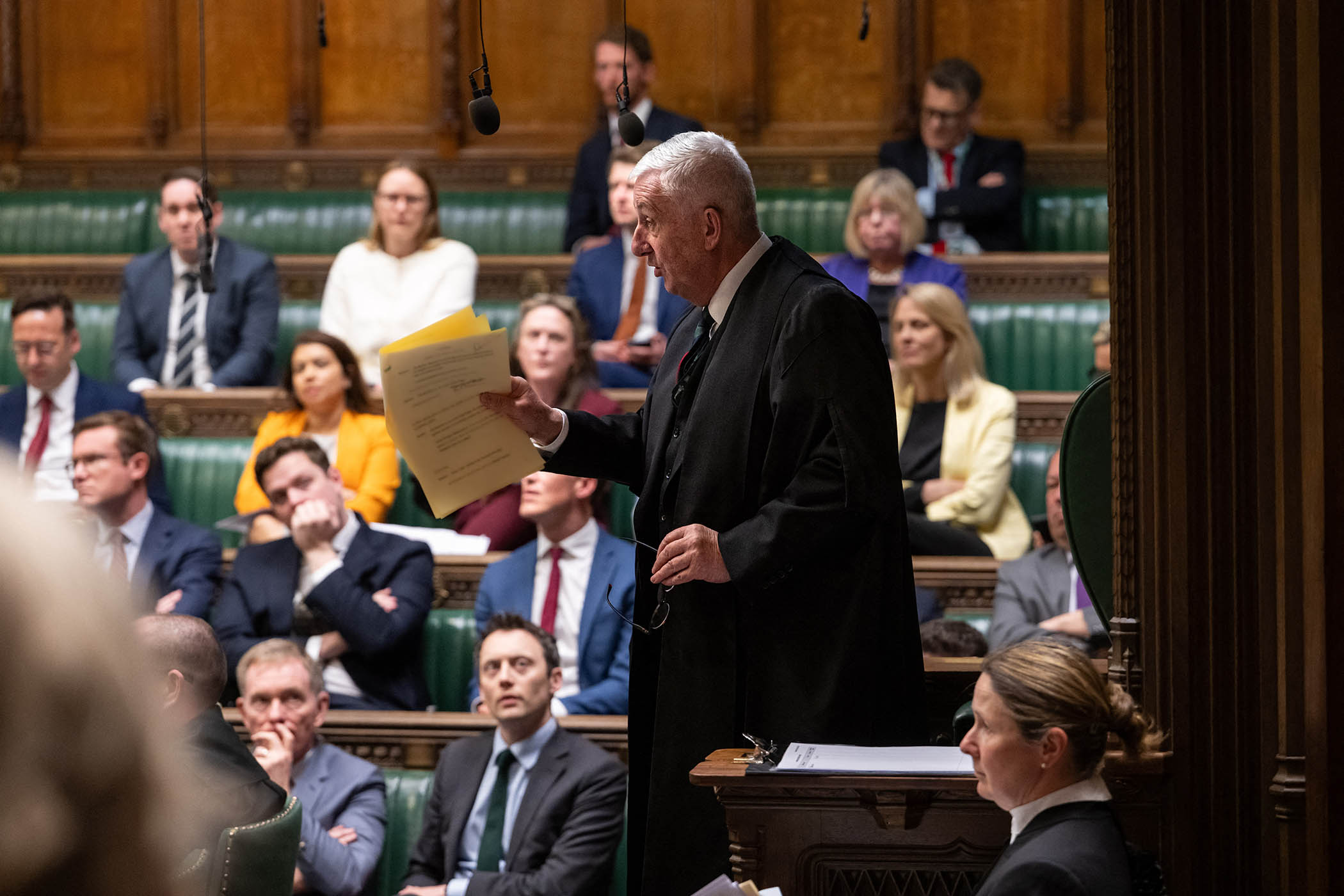
Baroness Burt of Solihull
Like many peers I’m angry at the manoeuvring of some “noble” colleagues who play with the rules of the House to get the result they wish for by “talking out” private members bills.
The irony is they may thwart themselves through reintroduction of the bill in the next parliament as it was originally presented to us, and all the improvements we have made will be lost and taken away.
Meanwhile those suffering terrible pain and wishing for death continue to suffer.
Wrong, wrong, wrong.
Viscount Younger of Leckie
I comment from a genuinely neutral position on the bill. I have been in the House for nearly 16 years; I know well how the House works, as a peer with considerable experience – and this is my only role.
I wish to comment on the second question that you pose, and it picks up on your leading headline: “The plot against democracy. Inside the campaign to kill off the asssisted dying bill”. On procedure.
I can be clear that there has been no filibustering on this bill that I have observed. There has been, and there continues to be, including today, very serious scrutiny of all aspects of this bill. The Commons has clearly, with the best will in the world, not properly scrutinised the bill. It is our job to do this. If we undertake our job properly, it does require time.

Baroness Bakewell of Stockport
Newsletters
Choose the newsletters you want to receive
View more
For information about how The Observer protects your data, read our Privacy Policy
I will support the end of life bill in the House of Lords for the following reasons:
1) the proposed bill applies to those who are already dying and offers them an informed choice as to the manner of their death
2) the substance that would end a person’s life would be self-administered at the very end of that life, and not be confused with any form of medical treatment.
Lord Campbell-Savours
I refer you to my amendments to the bill, numbers 866 and 906. Crucially, they place a requirement on parliament to annually approve provisions in the legislation over a three-year period. Which, whilst placing the legislation at risk of termination at the end of each of three years, will concentrate the minds of those in favour of the legislation to make sure that an annual review will by way of statutory instrument deal with deficiencies as and when they arise. Without my amendment or something similar I will not be supporting the bill. I support assisted dying but only with the annual review safeguards I am proposing.
Lord Cruddas
I am not against the basic principle behind the terminally ill adults (end of life) bill currently in the House of Lords.
That is adults with a full mental capacity who, in spite of palliative care, are unequivocally suffering greatly. I think they should be allowed to end their life in a medically assisted way.
But I am concerned about its proposed scope and processes being expanded. That is in terms of the accepted identifiable class, the “medical” conditions being covered and the approval process being bureaucratised, as we have seen in countries such as Belgium, the Netherlands and Canada.
This is a very real and present danger in the United Kingdom. My concern is oversight and language.
Language here, in particular abstract nouns, is being used in recent times in a disingenuous way by public bodies in their guidance/interpretation and in legislation affecting other aspects of political and social life in the United Kingdom.
The arguments will sound ostensibly reasonable on their face but actually open up a very broad spectrum of opinion as to what is compassion or an act of humanity?
As I said in the beginning I don’t disagree with the principle and the sentiment behind it.
To me it is about how to avoid its subsequent expansion and dispersing into unaccountable corners of the state.
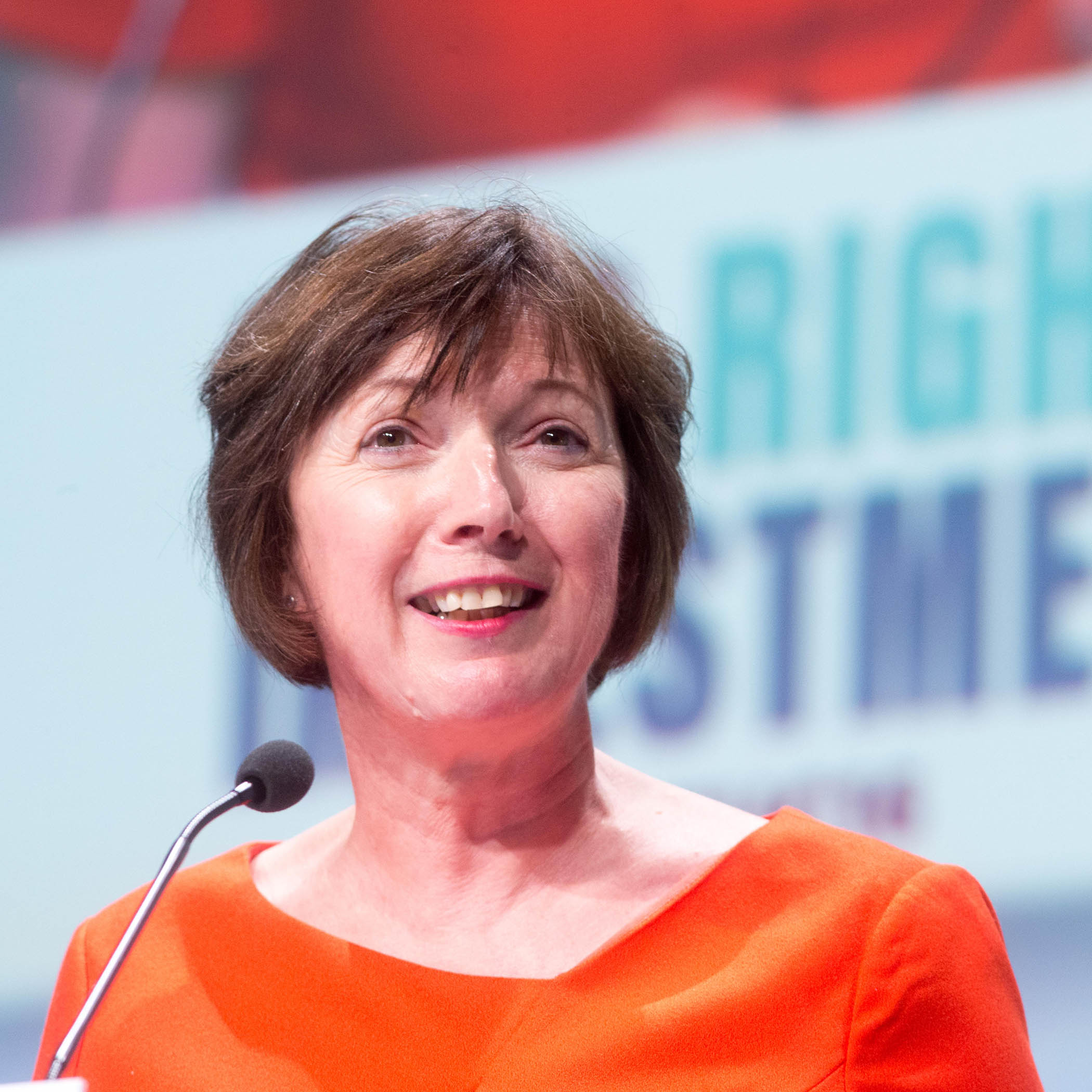
Frances O’Grady, Labour peer
If there is one good thing to come out of the scandalous efforts to scupper the terminally ill adults bill it will be stronger popular resolve to see reform of the House of Lords.
For many voters the efforts of some peers to block progress on this bill is intensely personal. Some of us have close friends or family who suffered prolonged pain before death and wanted their voice to be heard. At some point, all of us contemplate our own mortality and the way we will die. Fundamentally, this debate is about who has the power to decide.
The right of peers to debate assisted dying is not in question, and there are nuanced arguments on both sides. While backing the bill, I remain cautious about how “freedom of choice” plays out in a society as profoundly unequal as ours. But the job of a second chamber is to seek to improve legislation, not to wreck it. And for all their professed innocence, it is plain to see that half a dozen peers submitting hundreds of amendments between them is a bid to talk out this bill.
It used to be argued that a democratically elected Lords would undermine the supremacy of the Commons and risk a constitutional stand-off. But, against wise advice, including from some on their own side of the argument, a handful of peers have seized supremacy for an unelected Lords over the elected Commons. In a democracy that simply isn’t tenable. Change cannot come soon enough.
Lord Cashman
The House of Lords has a proud history as a revising chamber, using the expertise available to advise government and indeed private members bills. However, the tactics adopted by those opposing the terminally ill adults (end of life) bill risk accelerating the Lord’s own terminal decline.
As a supporter of this bill we are witnessing filibustering from some members of the House who, even if the amendments that they are proposing were accepted, would still vote against this bill. They are opposed in principle to free choice. There is amongst them a large opposition based on religious beliefs, and the bishops have stated that they intend to vote against at third reading – if we get that far! This imposition of religious beliefs on the population of this country is entirely unacceptable and serves no one well.
For the most part, those of us in support have to sit in silence knowing that we are being goaded into debate around the filibuster. It is as infuriating as it is shameful.
The tactics used by those opposing this bill are in direct conflict with the democratically elected House of Commons and the people of this country. It is morally and constitutionally indefensible and it will cause unimaginable misery to those who wish nothing more than to choose how they die.
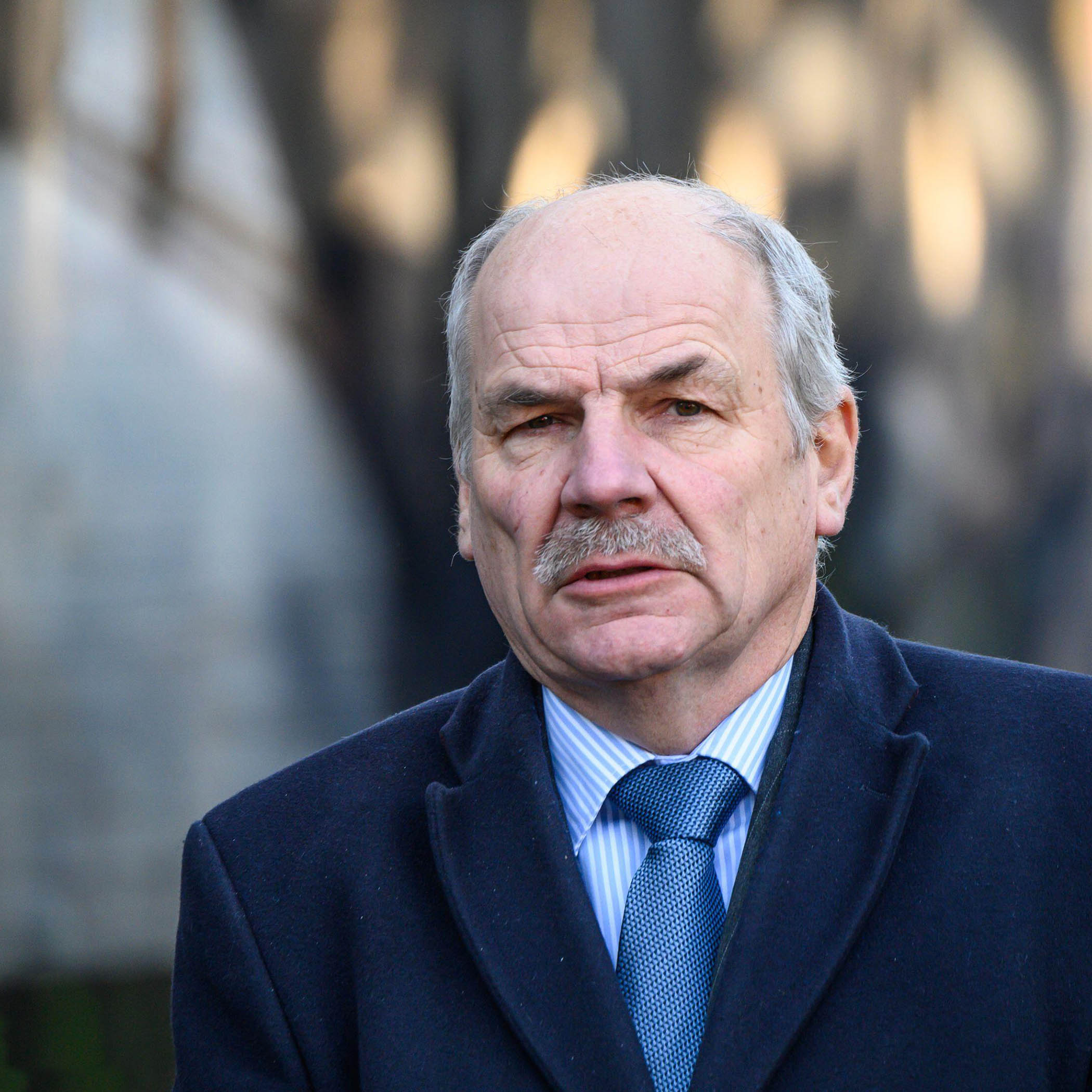
Earl Attlee
I strongly support the bill but, as I told Lord Falconer, it does not go far enough.
However, the vote in the Commons was a decision to cross the Rubicon knowing full well that it is a slippery slope on the other side.
I think that the British people are foolishly failing to consider end of life issues. The NHS devotes huge resources to the last two years of people’s life (on average). No one is prepared to recognise that we will only live a finite length of time.
Turning to procedure. There are shades of the Grocott bill(s) to stop the byelection for hereditary peers. In that case the bills were talked out by their opponents. The opponents could not seek to kill the bill at second reading because they would probably lose the vote. We have now seen a government bill come along which goes further, and it is expected to pass without any great difficulty. That is because it is a government bill fulfilling a manifesto commitment.
What are we to do or what should we have done? I think that far too many private members’ bills get passed in the Lords, safe in the knowledge that they will never get though the Commons. The Lords should be far more willing to vote down an undesirable bill at second reading.
Turning to the use of the Parliaments Acts. These provide the constitutional solution sought by many. However, I think that it is very doubtful that the Commons would vote to usethem. If the opponents of the bill in the Lords thought the Commons would successfully use the acts, they would surely have used their time to genuinely revise the bill. I suspect that they see no need to do so, and therefore all they need to do is run the bill out of time. I also think it is fair to say that the opponents of the bill are far more passionate about it than the proponents.
Other letters
‘Concerns go to the heart of safety, equity and ethics’
‘Concerns go to the heart of safety, equity and ethics’
The sudden fanfare surrounding the creation of yet another all‑party parliamentary group to examine House of Lords reform is puzzling. All four MPs involved are supporters or sponsors of the assisted dying bill, and the timing feels less like constitutional concern and more like a diversion from the bill’s unresolved problems. It is also a campaign far removed from the daily realities faced by frontline clinicians.
Those realities are stark. The NHS and social care system are under extreme pressure, with “corridor care” now routine. Half of specialist cancer centres have frozen recruitment – a clear sign of the depth of the funding crisis. Years of underinvestment mean palliative care is patchy or absent, and many hospices are cutting services. In some areas, there are no district nurses available overnight to support people at the end of life in the community.
Against this backdrop, it is unsurprising that 74% of the public believe the NHS is not in a fit state to deliver an assisted dying service. The British Geriatrics Society has warned that such a service could inadvertently create pressure for assisted dying to become a means of reducing demand on health and social care. Lord Stevens, former NHS chief executive, has said that without guarantees on palliative care the bill carries a “substantial risk”. These are not fringe concerns; they go to the heart of safety, equity and ethics. Yet the House of Commons barely engaged with them.
The bill passed the Commons by just 23 votes, with many MPs reassured that the Lords would provide the detailed scrutiny the Commons did not. That scrutiny is now under way. If it proves unable to address the bill’s structural problems, that reflects not on the scrutiny but on the bill itself – and on the way it has been driven forward.
It’s clear that campaigning and legislating with care require two very different skill sets.
Professor Mark Taubert, Palliative Medicine Consultant, Cardiff; Pippa Johnson, Acting Mental Capacity Act Lead, Mental Capacity Team, Cardiff; Dr Sarah Davies, Consultant Physician, Conwy; Dr Helen Davies, Respiratory Consultant, Penarth; Dr Elise Lang, General Practitioner, Cardiff; Dr Victoria Wheatley, Palliative Medicine Consultant, Withybush; Dr Nicky Leopold, Consultant Geriatrician, Swansea; Helen Way, Advanced Nurse Practitioner, Cardiff; Dr Paul Shaw, Consultant Oncologist, Cardiff; Dr Siwan Seaman, Palliative Medicine Consultant, Penarth; Dr Margred Capel, Community Palliative Care Consultant, Cardiff; Dr Gwen Davies, Palliative Medicine Consultant, Swansea; Dr Tim Hamilton, Palliative Medicine Consultant, Newport
‘Will of the Scottish people clearly demonstrated’
‘Will of the Scottish people clearly demonstrated’
A recent British Social Attitudes survey shows that 81% of Scots support making assisted dying legal for someone with a terminal illness.
This is sustained and overwhelming public backing for a safeguarded legal choice at the end of life. Liam McArthur’s assisted dying for terminally ill adults (Scotland) bill has been scrutinised for years and is among the most carefully considered and tightly regulated bills the Scottish parliament has examined in its entire history.
This level of support represents a settled and considered view among the Scottish public that terminally ill adults should have access to a safeguarded and regulated choice at the end of life, if this is what they wish.
The will of the Scottish people has been clearly demonstrated. MSPs now face a straightforward responsibility: to reflect that majority view and vote accordingly, rather than allow a small number of loud, misrepresentative voices to shape the debate.
MSPs must represent the opinion of the people they serve. When public opinion is this clear, the Scottish parliament should act. Terminally ill people and their families deserve clarity, compassion and the reassurance of a lawful, safeguarded choice.
Seumas Skinner, Trustee, Friends at the EndEdinburgh
Photographs UK Parliament, Getty Images, Iona Wolff/BAFTA via Getty Images, Alamy