

This story begins on 26 October 1962, when a young man called Mike loses his pregnant wife, Dorothy, and two-year-old son, Michael, in a car accident. Six months later, Mike meets a woman named Maggie, who leaves behind her husband and their daughter, Toni, to be with him. Soon, Mike and Maggie have a son. They call him Neil.
Neil Griffiths is brought up in a house of loss and rejection. His mother wanted him to be a replacement son for her new husband. His father comes to see him as a symbol of his bereavement, and the boy he lost. As a young child, Griffiths does not know about the accident that led to his birth, even as he suffers in its wake. Mike and Maggie never engage with the idea that their unwillingness to let their son be his own person could damage him. But, inevitably, it does.
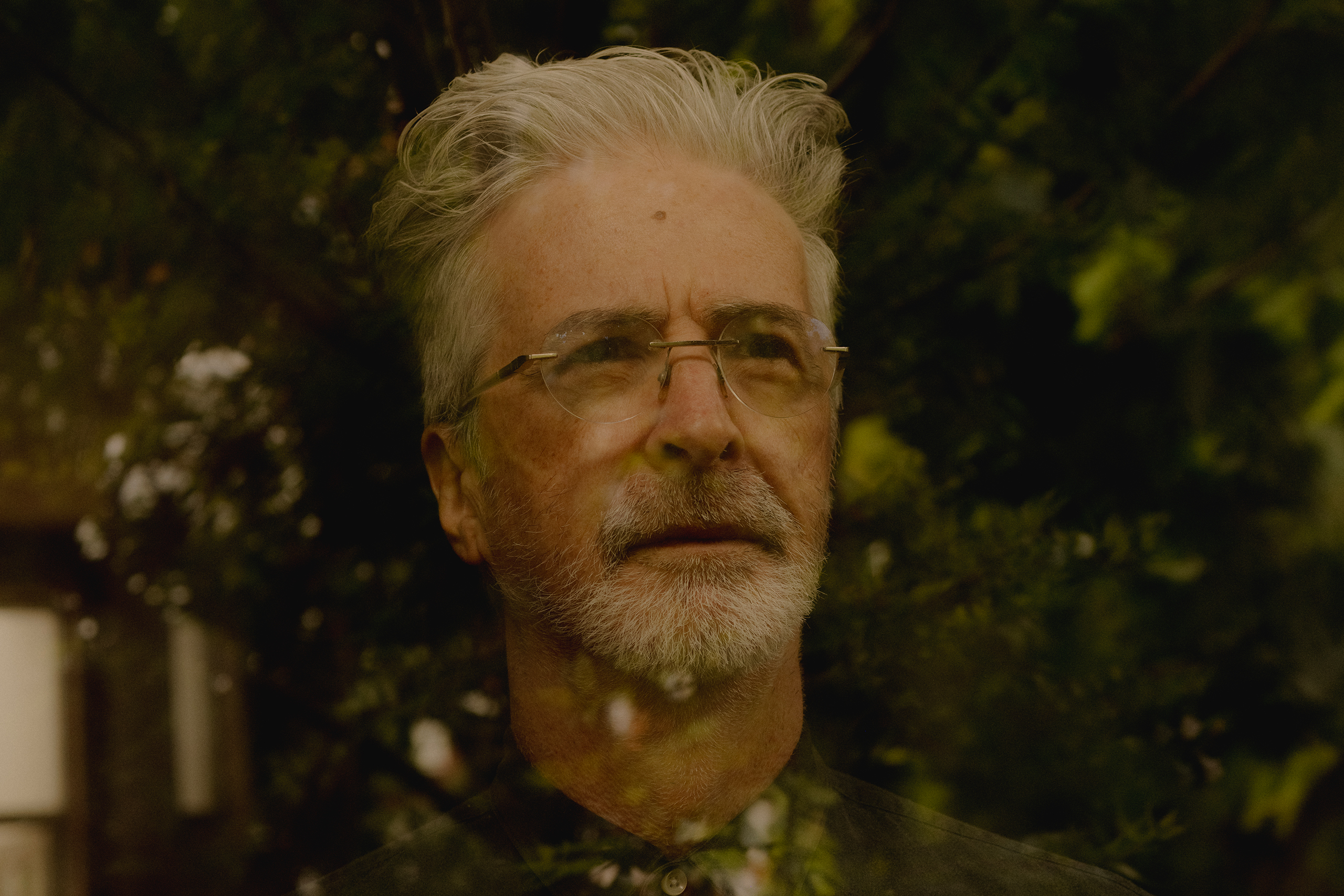
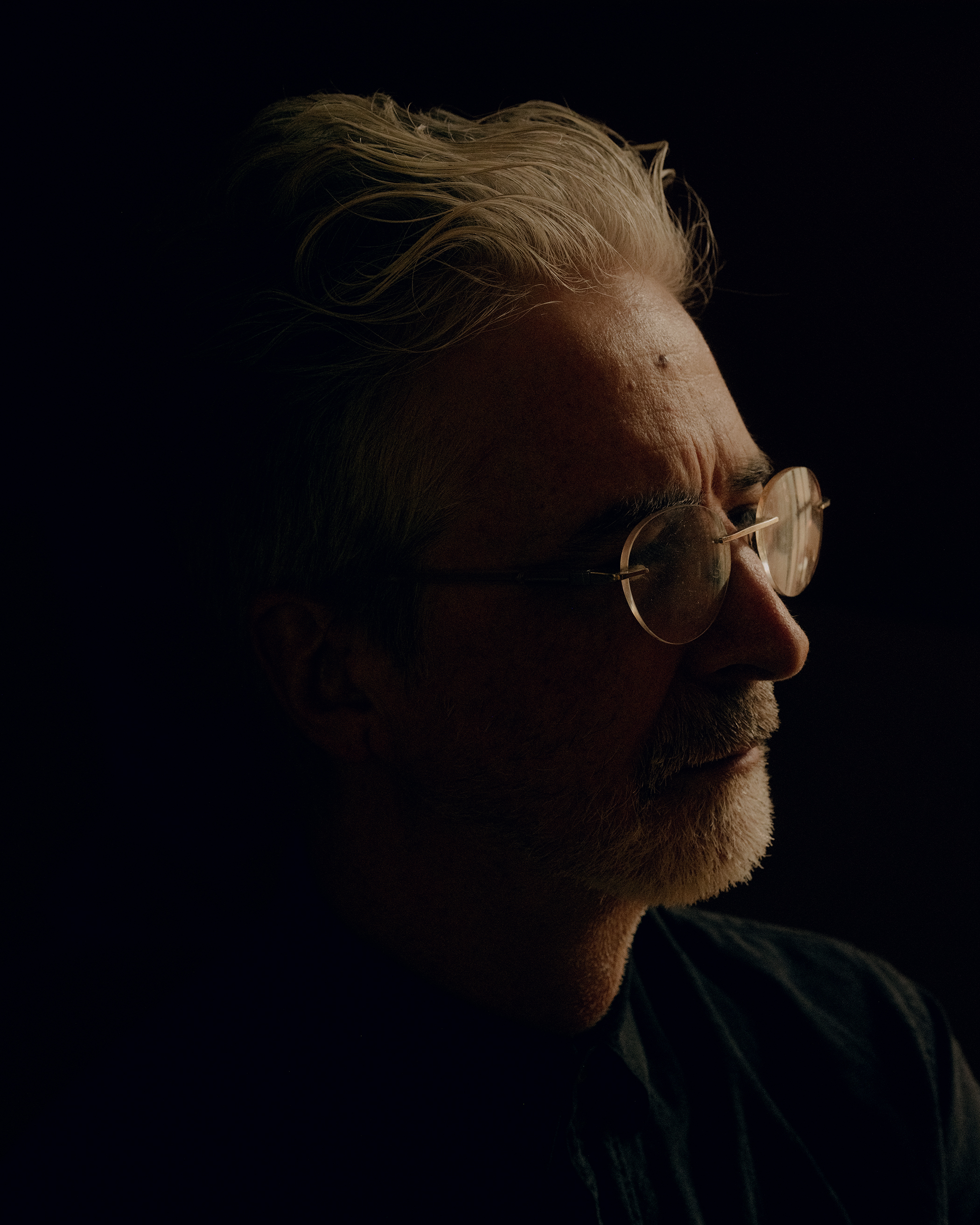
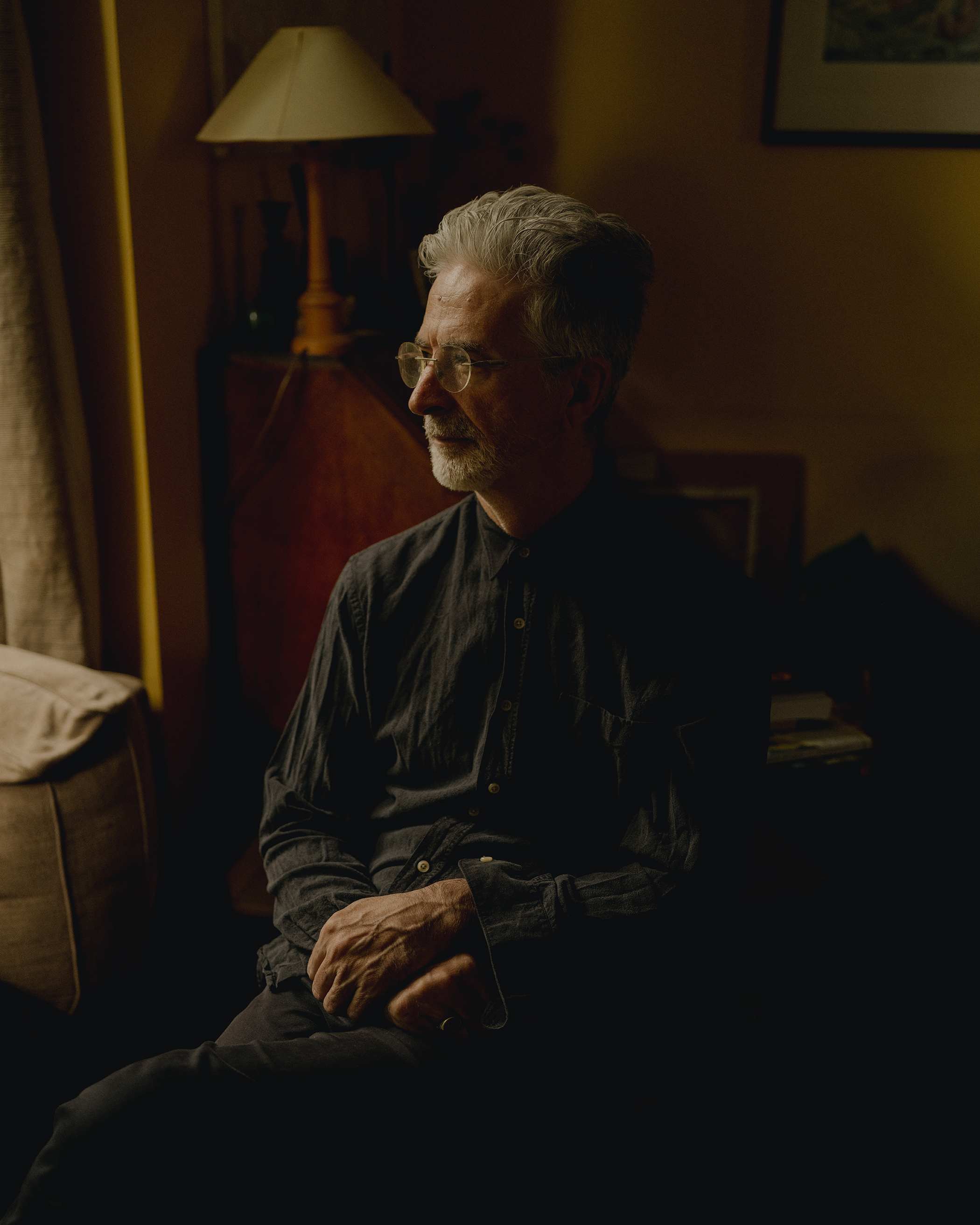
Griffiths is a refined and handsome 60-year-old, with hair the colour of snow. He is also a successful author. His first two novels were published by Penguin. Betrayal in Naples won the Authors’ Club First Novel Award; Saving Caravaggio was shortlisted for the Costa Book Awards. He has since written a third critically acclaimed novel, set up a publishing house and established a literary prize for small presses. And now, he’s written a memoir, The Wrong Son, a story of what it means for a man to be raised without love.
When we meet, at his home in south London, it is two weeks from the publication of the memoir and Griffiths is fretful. “Each day I think about cancelling the book, at the same time as I email people to try to promote it,” he says. Final copies lie in an unopened box in the hallway. “I would like The Wrong Son to have a modest amount of success, which means I don’t have to manufacture the energy to write something else. I often feel depressed and lost, because I don’t have the energy. That energy was survival, and I have less interest in surviving now. I’m putting quite a lot of responsibility on the book.”
Mike, Griffiths’s father, was a policeman who was 6ft 3in and obsessed with cricket. He kept ducks and moved house in order to accommodate them. For a time, he led the British Waterfowl Association. Maggie, Griffiths’s mother, grew up in London during the Blitz. A trip to the Italian coast as a teenager gave her hope that she might go on to live a life of glamour. But she lived a life of frustrated dreams. It only took shape when she met Mike, and found purpose in her worship of him.
I was silent and angry. My mood was the governing principle in the house. It was devastating
I was silent and angry. My mood was the governing principle in the house. It was devastating
This suited Mike, who felt he was owed something by the world. He never talked about the accident, but every year he fell ill for a week around its anniversary. Maggie was one of many women who fell for his charisma. At one point, Mike had a stalker. Someone else was rumoured to have died by suicide after being spurned by him. Within three months, Maggie left her husband to be with him. She asked if she could bring her daughter with her. “You can,” he said. “But I’d prefer it if you didn’t.” So Maggie didn’t. Michael, the dead son, and Toni, the abandoned daughter, were ghosts.
Neil Griffiths entered this haunted house on a summer afternoon. He was not told what happened before he was born, but it affected him all the same. “My mother made it clear,” Griffiths says, “that survival in this family was to introject my father’s needs.” Unspoken rules controlled how he acted inside the house. Do not eat in the lounge. Do not disturb your father when he is watching television. Never embarrass him. Infractions were punished. One day, Griffiths left work early to study for an exam, only for his father to find out. He hit his son repeatedly around the side of his head. His mother was unsympathetic. “You bring these things on yourself,” she told him.
Maggie and Mike had another child, who goes unnamed in the memoir. She flew under the radar, because she was a girl. “My sister was of no account to my mother compared to me,” Griffiths says. “And she was kind of inconsequential to my father.” Griffiths was always the one to blame. He was not interested in ducks and barely interested in cricket. He was no substitute for a dead son. During an argument between his father and mother, he heard his father pick up a shotgun and say to his mother: “One barrel for you, one for him.” He once found his father’s diary. Under Tuesday, it read: “I hate my son.”
When Griffiths was 13, after a poor school report, he asked his mother why his father was the way he was. But really he wanted to know why he was the way he was: timid and obedient at home but disruptive among his friends. His mother told him about the accident, and Griffiths was unmoored. “It’s like you’ve been brought up with these co-ordinates,” he says. “Then someone replaces them with this story you never knew about.”
After this, Griffiths developed a new identity. He became flamboyant and argumentative. He read Proust and Dostoevsky. He grew his hair long and joined a band. He had periods of grandiosity in which he was obsessed with getting famous. “I thought I had to do everything to attract attention,” Griffiths says. “At one point my father said to me: ‘The thing about you is you just have no humility.’ And I was like: ‘Yeah, well, if I don’t fucking shout, if I don’t make claims for myself, I’m going to disappear.’ That was my fear. I had essentially been robbed of my selfhood.”
Newsletters
Choose the newsletters you want to receive
View more
For information about how The Observer protects your data, read our Privacy Policy
Griffiths was not the only person who struggled with this. When his father was away, the home turned into a “psychic free-for-all”. Griffiths would punch his sister on the arm to scare her into silence. At one point, he strangled her and his mother didn’t intervene. Another time, his mother was on the floor, screaming, and wet herself. Griffiths and his sister turned away. Their mother, Griffiths says, was unable to manage their father’s absence. “She once told me and my sister that she’d save our father, rather than us, in a fire.”
I collapsed. I had a literal sense of the props and beams inside me not being there any more
I collapsed. I had a literal sense of the props and beams inside me not being there any more
One Christmas, when Griffiths was 12, his father contracted shingles. Maggie’s best friend and her husband came to stay. The best friend, Anne, a devout Catholic, sat by Mike’s bedside and prayed for him. They embarked on an affair. Eventually, Mike and Maggie split up. While Maggie had left her daughter to be with him, Anne went one better: she was excommunicated from the Church.
Griffiths moved into a small house with his mother and sister. His father moved 20 miles away with Anne and her child, into a place large enough for his ducks. Griffiths was told his father had threatened to burn down their house if his mother tried to take her full share from the divorce. In his new life, his father wiped his hands of the past. “He told all these new people that Anne and her child were his first family,” Griffiths says. “My sister, my mother, the dead family and I were erased.” Once, at his house, he and his sister were introduced to neighbours as “friends”.
Maggie shifted her devotion on to her son, says Griffiths. Her sense of self, no longer protected by her marriage, was now held together by the fiction that he was perfect; that it had been worth abandoning her daughter for her second life. Griffiths says that he became “a way to get back at my dad”. Not long after the separation, his mother chased after his father’s car, screaming about her son: “He’s a genius. He’ll show you. You’ll see.”
There was not much proof of this genius. Griffiths drifted for many years. He worked in a hairdresser’s, looking in the mirrors in a way that was “almost pathological”. He spent time in New York, where he nearly ran over the composer Philip Glass. He met his wife and had twins, a boy and a girl. But he could not shake off his past. For a while, he became a hulk, like his father. “I was silent and angry,” Griffiths says. “My mood was the governing principle in the house. That was fucking devastating.”
After decades of depression and listlessness, Griffiths, now 52, was roiled by his father’s death. In his eulogy, he only said nice things. “I basically erased myself,” he says. “At one point I referred to myself in the third person.” The emotions did not come immediately. But when he met up with Anne, Mike’s third wife, the dam broke.
“She came up and she said: ‘Oh, hello. How are you? Is everything OK?’ I didn’t have it in me to play-act at that moment, so I just went: ‘I’ve got nothing left. I’m desolate. I spend most of my time wishing I was dead.’ That took her aback slightly. We sat down and I said: ‘Dad was mean to me.’ And she looked at me and said: ‘He was a weak man.’” Griffiths was astonished.
Anne’s kindness exacted a cost. Griffiths could no longer pretend his upbringing was anything other than what it was. Here was a woman who had been in thrall to his father – and even she was acknowledging how he had behaved.
“What she said confirmed that I hadn’t been loved,” Griffiths says. He thought that he had forged his own identity, but in truth he had defined himself against his father. His father held him together, first as a figure to be emulated, then as a figure to be opposed. Now he was gone. “I collapsed,” Griffiths says. “I had a literal sense of props and beams inside me not being there any more.”
Not long after he saw Anne, Griffiths was walking along the Thames towards Tate Modern for a literary event. Out of nowhere, something inside him shifted. “I felt a swerve up into the air,” he says. “It was like the soul left the body and disappeared into the ether. I was really scared. And then there was a plummeting down into the abyss.” Griffiths went to various doctors and psychiatrists. “I was literally saying: ‘I don’t exist. I just don’t exist.’”
He has had more breakdowns since then. “It’s like when people say they’re beside themselves,” he says. “There’s me and I’m beside me, and it’s not clear which one is me.” His worst happened last year and required psychiatric intervention. “I was barely present to myself for months. Just drifting around.” While he used to be scared of becoming his father, today he worries about walking in the shadow of his mother, who spent her final decades in misery. After she received a terminal diagnosis, Griffiths says he looked at her and said to himself: “The thought you’re having now, at the end of your life, is that it wasn’t supposed to be like this.” She was still waiting for the life she thought she deserved. “That was terrifying, and it’s terrifying now, because I’m worried that’s what is going to happen to me.”
Books about trauma tend to lead their readers to the bottom with the unstated assumption that they will bring them back up again. Griffiths does not allow this to happen. His memoir ends with a shrug at the grave of his father. Might the book be a redemptive object, a monument to Griffiths being here and being heard? “I’m depositing a bit of myself out into the world,” he says. “In a way I want the book to be there, because then I do exist… It’s asking quite a lot of a piece of work.”
What would his parents have thought of the memoir? “I don’t give a flying fuck what they think. Maybe that’s the most honest way of answering you,” he says.
We have been talking for four hours, so it is time to go. “My family and I eat together in the evening,” Griffiths says. “I often cook, but I’m always on edge. At the end of the meal, I have to leave the room and I tend to come and watch the news. I can hear a family having fun. They laugh and joke. And I can’t be part of it because I don’t recognise it.”
At least he cooks, I think. It is one thing to build the life you want. The life you can have. But to build a life that will never be yours? One that lets others laugh and joke and love all the same? There is something selfless about that.
As he walks me to his front door, Griffiths slices open the cardboard box. He hands me a final copy of The Wrong Son, so for a moment I am holding two. The new version, for publication, is more defined. The colours on the cover are deeper. The image of Griffiths as a young man, sitting at Proust’s grave, is sharper. “The ending,” he says, “is a little different, too.” We say goodbye. He walks away to have dinner, and I step out into an air as brittle as glass. I turn back to get a final look at the author, but the rain has smeared the window and all I can see is an outline.
The Wrong Son by Neil Griffiths (Weatherglass Books, £12.99). Save 10% at observershop.co.uk