
The terminally ill adults (end of life) bill in England and Wales recently met its assisted death at the hands of the House of Lords. The last parliamentary session ended and the bill fell, buried beneath more than 1,200 peer-tabled amendments that left insufficient time for the legislation to pass. But the political majority in the elected Commons still exists and MPs plan to reintroduce the measure now that parliament has returned. The underlying end-of-life question will not go away. There continues to be strong argument on both sides. But, for now, we remain a nation divided and unresolved.
These divisions are deeper and more ancient than they first appear. One way to understand the assisted dying debate is to see it as a split between our classical and our Christian inheritances. And nowhere is this better illustrated than in King Lear.
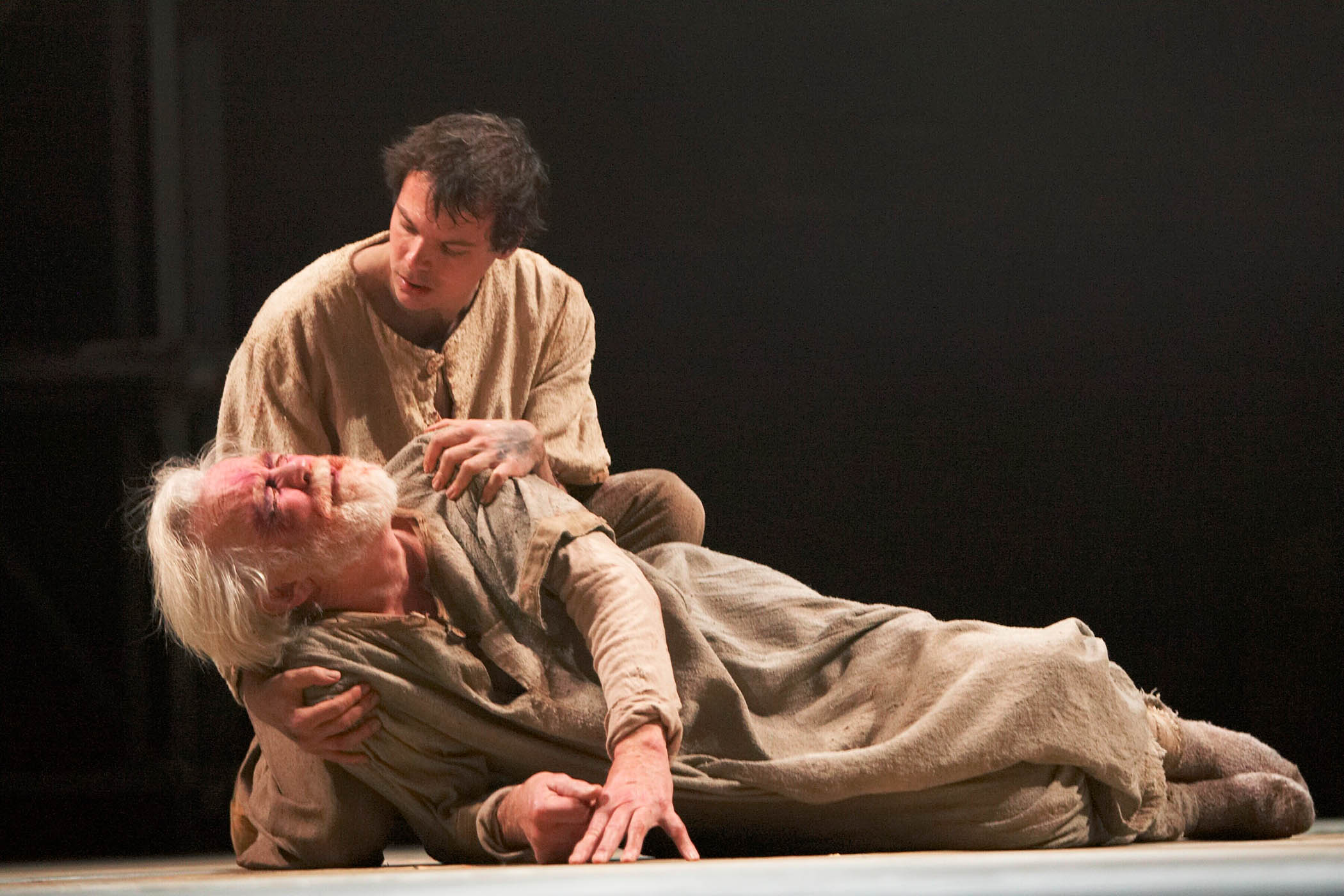
You will recall the Earl of Gloucester, Lear’s unfortunate courtier. Famously, he has his eyes prised out on stage, and so comes before us in great suffering – blinded and bleeding – to stand on the cliffs of Dover; from which heights he intends to leap. And so kill himself. Assisted by his son.
It’s worth slowing things down a moment to consider what is going on at this moment in the play. The realm is in chaos. Overthrow is everywhere. The old are losing their minds. Their children are furious, treacherous, exiled or ignored. Nothing works. Nobody accepts responsibility. What vision there ever was of a future has dissolved into mud, idiocy, recrimination and self-inflicted trauma. Against this all-too-familiar backdrop, Gloucester and his son Edgar (disguised as Poor Tom, a beggar), have been wandering the blasted heaths in the foul and rancid weather that we all recognise too well.
Newsletters
Choose the newsletters you want to receive
View more
For information about how The Observer protects your data, read our Privacy Policy
And they are surely the most desperate and ruined father and son in all of English literature. The father’s eye sockets have been weeping blood – brutally punished as he has been for being the traitor he is not. The son is covered in filth and babbling about demons; he has been sleeping in ditches and eating rats and cow dung. He, too, has been wrongly punished; banished by this very father on the false accusation of his treacherous half-brother for having plotted patricide. Thus the benighted old and the disinherited young are estranged and divided against one another. Yet still their fates are bound together. And the earl is in no doubt as to their destination: the cliff edge.
“Dost thou know Dover?” Gloucester asks of his guide-stranger-son. “There is a cliff …”
He needs assistance. And, yes, Poor Tom knows the way. And why does Gloucester want to go to Dover? Suicide. Determined and resolute suicide. To escape his life.
They duly arrive at what Gloucester thinks is the top of the cliff:
GLOUCESTER
Let go my hand.
Here, friend, ’s another purse; in it a jewel
Well worth a poor man’s taking. Fairies and gods
Prosper it with thee. Go thou further off,
Bid me farewell, and let me hear thee going.
EDGAR
Now fare you well, good sir.
GLOUCESTER
With all my heart.
EDGAR
Why I do trifle thus with his despair,
Is done to cure it.
______________________________
There are many and complex things happening here. Not least among them that Edgar (albeit in disguise) has aided Gloucester in his desire to die; he is humouring his father – indulging him, if such an act can be called indulgence. But for what reason? He says “to cure” him of despair. The dramatic point at this moment – usually made visual on the stage – is that the son has not led the father to the clifftop at all but, instead, only to some low rocky edge a foot or two above Dover beach. So does Edgar mean to cure him in the sense of to jolt him from suicidal thoughts by allowing him to jump and not die? Or does he mean to punish his father for banishing him? To torture his father further? Or does he mean to cure him in the older, 16th-century clerical sense of taking spiritual care of his soul – like a curate. Is this cruelty, absurdity, tragedy or kindness? And how (we may wonder in passing) does Shakespeare manage to bring all this contending humanity to bear in a single moment?
The torment of the scene continues. Blind Gloucester does not know that this is not the top of a cliff, of course. And he is determined to die regardless. “If I could bear it longer,” he says of his suffering, and accept whatever the punishing gods dish out, then maybe I would endure the spluttering decrepitude that is so often the human lot at the end of life. But he is a noble man who cannot help but dispute the will of the gods:
______________________________
GLOUCESTER
[Kneeling] O you mighty gods!
This world I do renounce, and in your sights
Shake patiently my great affliction off:
If I could bear it longer, and not fall
To quarrel with your great opposeless wills,
My snuff and loathed part of nature should
Burn itself out. If Edgar live, O, bless him!
Now, fellow, fare thee well.
[He falls forward]
______________________________
Except, as we know, he doesn’t die. Because he has fallen only a few feet.
In the hands of any less a writer, the situation might slide into farce. But the agony of the human wish for death was never more vehemently staged in the English language; and so we are unable to slip the scene, slide away or slough it off, but must instead reconfront that which is unbearable. On we must go. Father and son alone at the nation’s end.
Edgar comes round the rocks and hails his father – no longer Poor Tom – but still he does not reveal his true identity. And now the language swoops upon its deepest subjects: suffering and suicide versus sacredness and life.
______________________________
EDGAR
Alive, or dead?
Ho you, sir! Friend, hear you, sir, speak.
Thus might he pass indeed: yet he revives.
What are you, sir?
GLOUCESTER
Away, and let me die.
Let me die, he says. Allow me to end my own life.
EDGAR
Hadst thou been aught but gossamer, feathers, air,
So many fathom down precipitating,
Thou’dst shiver’d like an egg: but thou dost breathe;
Hast heavy substance; bleed’st not; speak’st; art sound.
Ten masts at each make not the altitude
Which thou hast perpendicularly fell:
Thy life’s a miracle. Speak yet again
Your life’s a miracle. Carry on.
GLOUCESTER
But have I fall’n, or no?
EDGAR
From the dread summit of this chalky bourn.
Look up a-height; the shrill-gorged lark so far
Cannot be seen or heard: do but look up.
GLOUCESTER
Alack, I have no eyes.
Is wretchedness deprived that benefit,
To end itself by death? ’Twas yet some comfort,
When misery could beguile the tyrant’s rage,
And frustrate his proud will.
______________________________
Misery upon misery for Gloucester. The question is here directly expressed: are the wretched not allowed to end their own lives? After all, this is a pagan kingdom (and an ostensibly pagan play) and – as in ancient Rome or Greece – we are in a time long before the vertical imposition of the Christian commandments. Likewise, in ancient Britain, Shakespeare reminds us that there was “some comfort” that a despairing elderly man could cheat the tyranny of Death by choosing his own time before Death chose him. This was his right. But – as Edgar says – despair is a sin and comes from the devil whereas life is a miracle … and miracles are sacred and come from God. Do but look up.
Here we are then. Edgar is articulating the Christian message. But Gloucester is surely adopting the classical stoic’s defence of suicide. Shakespeare knew “little Greek” but he knew the Romans: did he here have Seneca in mind? Seneca who argued that power over oneself is the “greatest empire” before the Christian god took persecuting hold on British thought?
The scene starts to circle tighter and tighter around the twin poles of Gloucester’s sanity and suffering. How unforgiving is the clarity of his consciousness that he must live with such excruciating knowledge of his own anguish. Would it not be better to be delirious and thus disconnected from the torment of perception? Would it not be easier for Gloucester to lose himself in delusion and fantasy?
______________________________
GLOUCESTER
The king is mad. How stiff is my vile sense,
That I stand up and have ingenious feeling
Of my huge sorrows? Better I were distract.
So should my thoughts be severed from my griefs,
And woes by wrong imaginations lose
The knowledge of themselves.
______________________________
In other words, King Lear – in his madness – is the lucky one. Edgar persuades his father on, though, and for a moment the debate seems settled in favour of Christian fortitude with these lines, which most actors deliver in the tones of a vow.
______________________________
GLOUCESTER
You ever gentle gods, take my breath from me.
Let not my worser spirit tempt me again
To die before you please.
______________________________
And yet, a mere sonnet’s worth of verses later, when the oleaginous servant Oswald enters the scene, Gloucester will describe Oswald’s sword hand as “friendly” when he is threatened by it. His vow is already swept aside; here’s another chance for death. For, no question – death is again what the earl most desires; “Put strength to ’t,” he urges Oswald.
But Edgar steps between them and saves his father’s life. Again. And thus the danse macabre continues. On they must go. Pro- and anti-, classical and Christian, profoundly human, profoundly mortal, tormented by life, tormented by death.
The last exchange between this father and his son is famously unsatisfactory in its ending.
______________________________
EDGAR
Away, old man; give me thy hand; away.
King Lear hath lost, he and his daughter ta’en:
Give me thy hand; Come on.
GLOUCESTER
No further, sir, a man may rot even here.
______________________________
No further. A man may die where he pleases. And interesting to note how Shakespeare has the physical drama play out in the taking and letting go of hands between father and son, which, unusually, he has written into the actual lines, as if to require his habitually free-reined actors to perform the actions upon which, this once, he insists.
______________________________
EDGAR
What, in ill thoughts again? Men must endure
Their going hence, even as their coming hither;
Ripeness is all: come on.
GLOUCESTER
And that’s true too.
______________________________
So much has been made of these last lines that it’s hard to hear them afresh. First, Gloucester slumps back into asserting his pagan right to die; then Edgar presses the Christian view and hauls him up. His lines “Men must endure …” are usually played to carry all the weight – “ripeness is all”.
Then come Gloucester’s last words in the play – “And that’s true too” – which seem underpowered, too casual, almost throwaway by comparison. Unless…
Unless we hear them with the context established above in mind. Unless Gloucester is not talking to his son but to himself because, even now, so late in the play, he is undecided. Unless we understand that this whole strand of the play has been grappling with the permissibility or otherwise of suicide and, in this way, dramatising the split between the classical and the Christian – between the “horizontal” Senecan quest for truth and the “vertical” God-given commandments of Christianity. Both, Gloucester says, are “true”.
I found this moment so compelling when I last saw the play that it became the basis for a novel. And when, in the course of researching that book, I spoke to people considering assisted dying, I found that this was exactly their state; confusion, anguish, uncertainty. The same with relatives who had been through the difficult journey to Dignitas.
But most striking of all was that everyone also talked a lot about love. As if the formal adult consideration of death had unexpectedly given birth to a new and greatly magnified consideration of love. As if the rich and resonant beauty of the lifelong love within their family had only been articulated – revivified – when they had the courage to look upon death together. To look upon what it means to be the child of the parent. What it means to be the parent of the child. What it means to say: “Let go my hand.” What it means to do so.
Photograph by Manuel Harlan