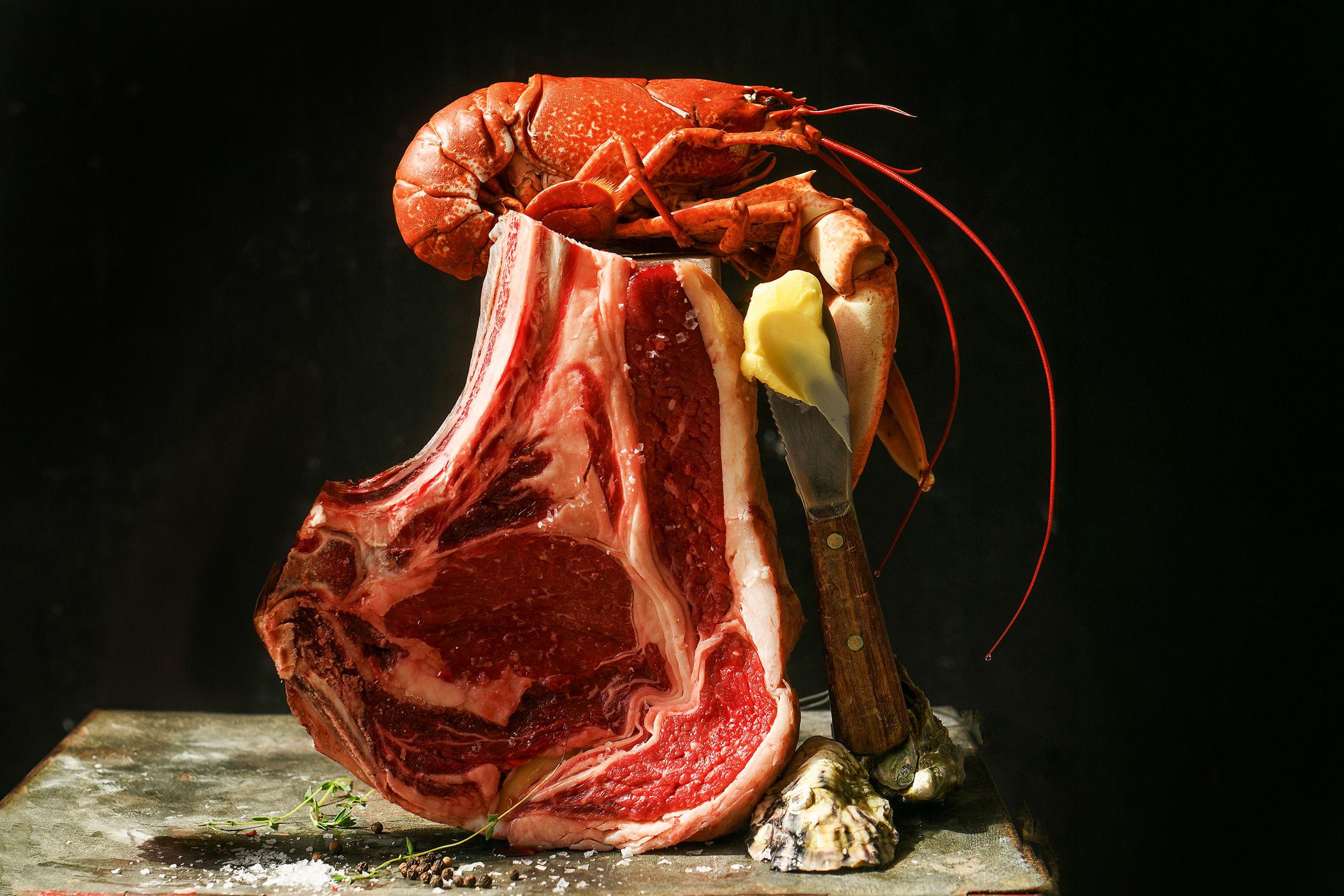


The idea of surf ’n’ turf as luxury has deep roots. In 18th-century Georgian Britain, aristocrats feasted on elaborate displays of roast beef, woodcocks, leverets, cod’s heads and fried soles. All at once. While US-style steakhouse surf ’n’ turf platters were never really a British thing, some chefs grew up barbecuing steak beside shell-on prawns or lobster at family gatherings – beef charring alongside buttery, sweet crustaceans. Chef Henry Harris, meanwhile, remembers veal with crayfish sauce in the haute cuisine of the 1970s and 80s.
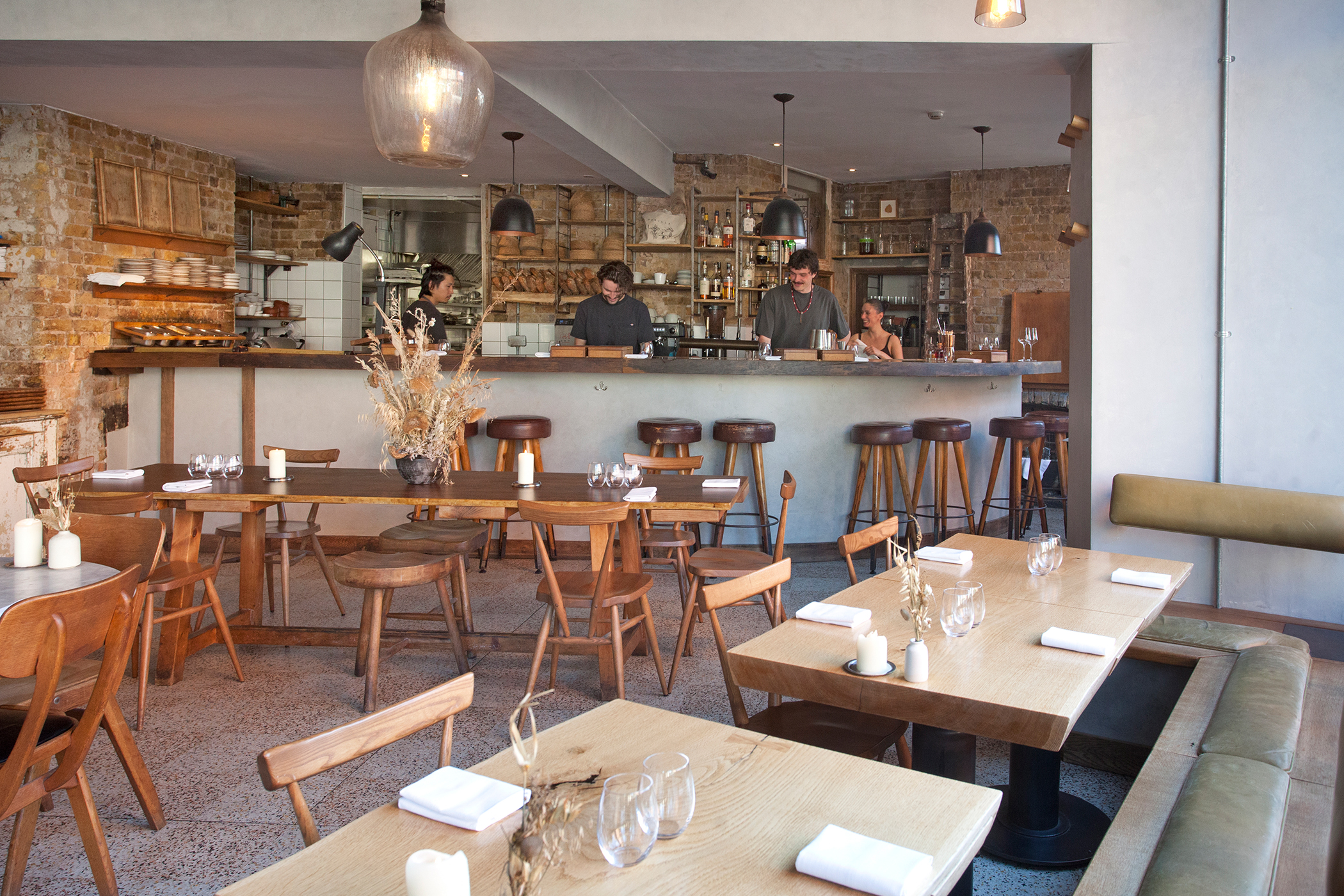
Now, in the current food landscape, meat and seafood pairing has entered another dimension. “The magic is when you use one element, one food group, as a seasoning to another,” Harris says. At his Lyonnais restaurant Bouchon Racine in Farringdon, the chef combines both duck and lamb with cockles, mussels or clams, which have a “gorgeous iodine-like richness” that can temper fatty meats. Harris identifies seafood as flavour boosters; anchovy is “always a remarkable seasoning” he says.
Across the country, restaurants are leaning into land-meets-sea intensity. At Legado, Nieves Barragán’s restaurant in east London, the surf ’n’ turf swap roles – pork (in this case, jamón) is a dashi seasoning to have with salt-cod meatballs. In her native Spain, mixing pasture and tide is ancestrally rooted – particularly in Catalonia, Galicia and the Basque Country, where mountains press against sea. If you’ve seen mussels with chorizo in a British pub, it stems from here. Growing up in Bilbao, Barragán ate morcilla with cockles and rabbit with cuttlefish rice. “Mar y montaña has always been in Spanish cuisine,” she says. “For us, it’s so natural.”
‘The magic is when you use one element, one food group, as a seasoning to another’
‘The magic is when you use one element, one food group, as a seasoning to another’
Chef Henry Harris
That’s the case, too, in Cantonese cuisine, according to chef Andrew Wong. “Western chefs are always looking for something new – a technique or an ingredient – and the Chinese kitchen is one place where there’s all this untapped information,” he says. “Combining meat with seafood is one of the things Chinese cuisine does better than most cuisines around the world.” Think pork and seafood dumplings or – on the menu at his Michelin-starred restaurant A Wong – scallop with char siu. Some of Harris’s most memorable surf ’n’ turf combinations were in Chinatown as a young chef. An oyster and pork belly hot pot at landmark restaurant Poons sticks in his mind: “I can almost taste it now.”
Memories like these feed into a generation of chefs reaching for deeper flavour. Roberta Hall McCarron, chef-owner of the Little Chartroom in Edinburgh, recalls revamping a dish to use pork alongside the original squid in the broth base. She says that adding a porcine element like ham hock or pancetta to seafood, like clams adds “another layer, another level, but also texture… enriching it, making it more decadent”.
Jeremy Chan, of Ikoyi in London, takes decadence seriously. Surf ’n’ turf is a fundamental building block of his food – inspired both by Escoffier-era luxuriousness and childhood memories of watching medieval feasts in films. “That whole aesthetic – the feeling of excess, of bounty – that’s what inspires Ikoyi,” he says. The result is dishes like grilled smoked sweetbread, surmounted with slices of chestnut-fed pigeon breast, finished with red prawns warmed in a bisque of their own heads and sea buckthorn juice. “The spirit of that memory is in that pigeon dish,” Chan explains. “It’s represented in a really modern, sharp way, but it’s super decadent.” It was a next-level dish, he says, but too costly to keep on the menu. Now, he often thinks of ingredients like cockles as part of his “flavour artillery” – not the star of a dish, but instead amplifying the meat’s essence.
But for some chefs, pairing two proteins as equals is the whole point. At Ynyshir in north Wales, Gareth Ward pairs wagyu and bluefin to compound fat on fat, and umami on umami. “They come together and really enhance each other,” he says. At Dorian in West London, Max Coen’s contemporary take on steak-and-lobster places fallow deer, red prawn and ceps on the same plate. Coen does note that not all fish can be paired with meat. Red mullet and mackerel are too aggressive, whereas squid, skate and monkfish are all good options. “There’s always a lot of thought behind pairing the surf and the turf,” he says. “It’s not just that it’s fun and different.”
Still, not so long ago, these combinations would have been too adventurous for the average palate. That’s not to say surf ’n’ turf was ever purely elitist. Carpetbag steak – ribeye stuffed with oysters – is a working-class dish from Mumbles, a fishing village near Swansea, dating to the late 19th century, though it has since fallen into near obscurity. The new wave of surf ’n’ turf reflects how Britain now eats: across cuisines, across borders and with fewer assumptions about what belongs together.
Diners increasingly want intensity, and are more than willing to let chefs surprise them. It’s maximalist cooking for a moment when diners want more. As Chan puts it, when done right, “It’s like an orgy of flavour.”
Newsletters
Choose the newsletters you want to receive
View more
For information about how The Observer protects your data, read our Privacy Policy