


Don’t even think about it. According to the old rule, until the soil is warm enough to sit on bare-bottomed, it is too early to sow. Even for streakers, cruisers and old-fashioned garden nudists, it’s a temptation best resisted for another month or so. Have you looked outside? Is that hail on your eyelash? Come back indoors, put on a murder and defrost.
But there’s something in the air – perhaps literally. Once we’ve heaved ourselves through January and managed to survive February, those of us who have been bitten by the desire to grow things begin to perk up. Whether we're sensing is the delectable scent of damp leaf mould and the sexy signalling of pollen, an increase in birdsong from our native birds (mine are pigeons, parakeets and foxes) or a vestigial memory of warmth, our gardening muscles begin to lengthen. We find ourselves rechecking our seed collections, our optimistic packets of Lebanese cucumbers and rare Sicilian aubergines, and wondering which unrealistic hot-weather crop to fail with this year.
Resist. It’s still sleeting. You can’t garden with frostbite: bits fall off. Even the microplastics slumber. Stay in the kitchen. There’s plenty of indoor gardening still to do.
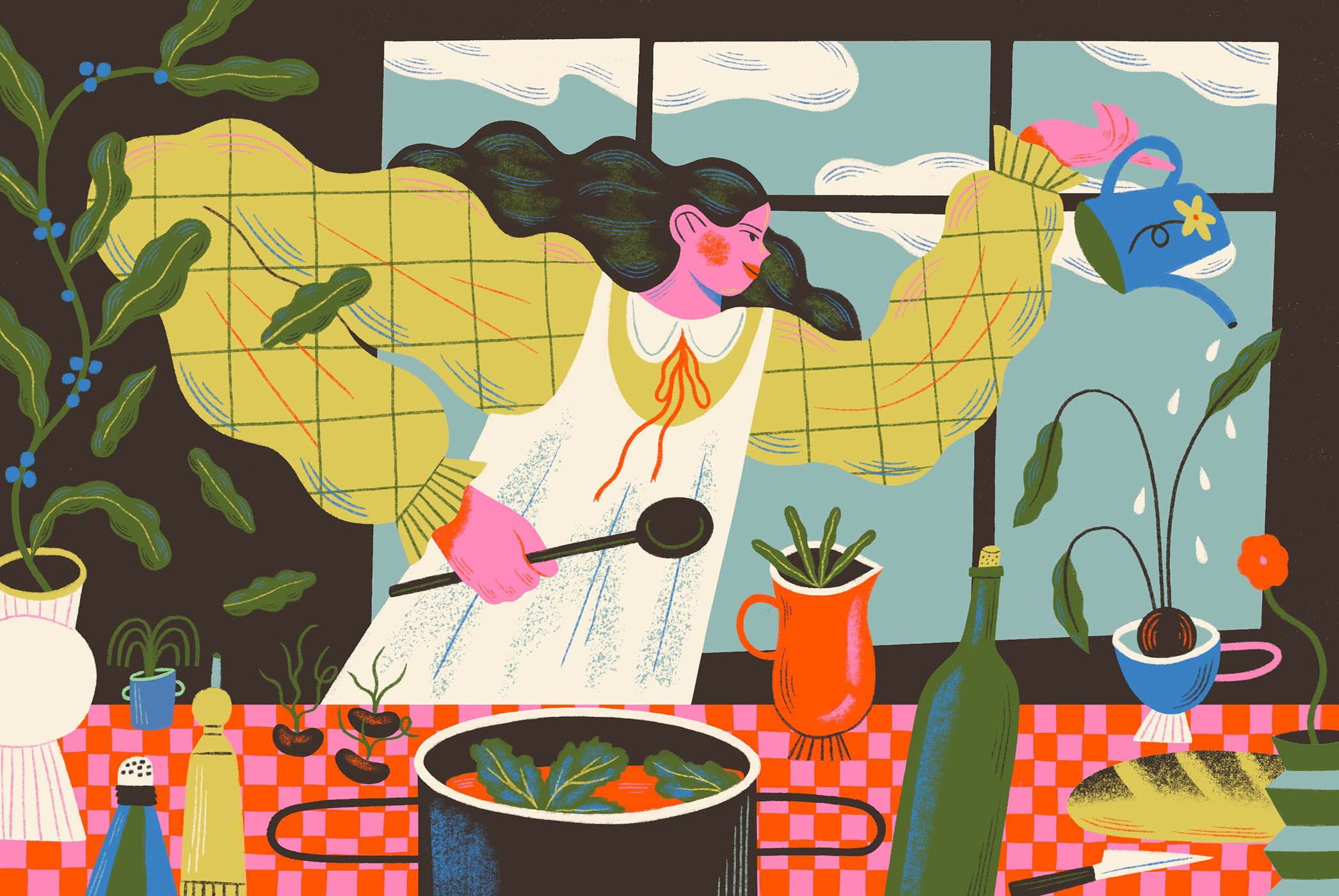
This is not a euphemism. As I have discovered, at great personal cost, one can grow so much in even the most modest kitchen, provided that one has a window, an enthusiastic but easily distracted nature and no common sense whatsoever. Your options include:
1. Microgreens. “Top chefs”, allegedly, love these. Who wouldn’t? Minuscule sproutlets of basil, beetroot, Chinese amaranth, stringily pea-scented pea shoots and baby kale: I can hardly wait. Ah, but I must. Like my grandparents before me, I live in a flat, with a galley kitchen, although mine is blessed with natural light from a glass door on to the roof terrace. This means that the only well-lit growing space is the counter top by the draining rack – 30cm by 15cm on a good day. What with the drying pressure cooker, broken secateurs, compostable eggboxes and ailing supermarket basil, with which this area is already crammed, where am I meant to put the shallow, compost-filled growing trays, let alone the guttering (seriously), which the gardening websites recommend?
2. Bean sprouts. Despite their depressing reputation, these have merit. Unless, that is, you try unpalatably peppery radish seeds. Or chickpeas, which grow mouldy. Or you go for alfalfa, stalwart of American deli sandwiches, tasting of swamps and despair. I prefer mung beans: quickly sprouted, perfectly pleasant and easy to store in the fridge until you lose interest and throw them away.
Impale your avocado pits on a cocktail-stick tripod above a jar of water until... nothing happens
Impale your avocado pits on a cocktail-stick tripod above a jar of water until... nothing happens
3. Avocado pits. We all know how to handle these: impaled on a cocktail-stick tripod above a jar of water until... absolutely nothing whatsoever happens. Easy-peasy. Much better is the method accidentally discovered by my sister when she left avocado seeds, for this very purpose, at work during lockdown and returned several months later to find actual living plants under her desk. It works, even in a post-Covid world. Wrap the cleanish seed in damp kitchen towel; place – or even put – in a plastic bag; shove in a dark cupboard; and, other than occasionally besprinkling it with water, that’s it. For months. Once it has begun to sprout, transplant into compost and keep moist. Soon you’ll have your own extremely spindly, non-fruit-producing, easily startled and leaf-shedding avocado sapling. Thrills.
4. Bread. Yes, yes, sourdough. Like puberty and owning hamsters, we’ve all been there. But few of us can bake sourdough our families will eat; mine never passed the sour cowpat stage, and I even invested in a banneton. Better use yeast, or buy bread from a real baker, or stick to one of the greatest inventions of the modern age: Nairn’s oatcakes, preferably rough
5. Vermouth. Not technically, or even remotely, growing-adjacent, but it feels like it. Midway through my life, when I found myself in a dark wood (specifically a rented kitchen with no natural light whatsoever, painted a damaging shade of pus), I flirted with making vermouth. Don’t ask. Explaining to Chinese herbalists that I needed gentian root and wormwood was one of the more bearable uses of my time. It was only when I realised that each herb required steeping in its own private bottle of alcohol that I stood down.
6. Kimchi. Now we’re talking. My kimchi is not something any Korean would recognise; it lacks that infernal heat, the shrimp-paste fuzziness, which signals proper fermentation. But it is delicious, healthy and, best of all, wildly impressive, as if I’ve harvested my own maple syrup (which, inevitably, is on the list). I simply chop, by hand, a billion vegetables (beetroot and red cabbage obligatory) and immerse them in brine, according to the recipe of the God of Fizz, Sandor Ellix Katz. Next day I mix it with more ginger and garlic than the world has seen before, messily pour it into jars, and let it purple up. The kitchen chaos, the chilli flakes in my eye and the violently drainy reek are worth it. What were you expecting? It’s messy and dangerous. It’s gardening.
Newsletters
Choose the newsletters you want to receive
View more
For information about how The Observer protects your data, read our Privacy Policy