

Photographs by Jonathan Lovekin
There is a mulberry tree not far away from where I live, and the pavement beneath its canopy is speckled pink with squashed fruits. The stone terrace outside the kitchen is awash with splattered figs that were too high to reach and now lie like roadkill – a sweet feast for the wasps.
This week saw the first of the summer’s jam days, and I am now the proud owner of a row of polished and labelled jars, their contents the colour of wine gums. They won’t keep me through the winter, but at least until the first weeks of autumn, their contents spooned on to toast or swooshed into rice pudding.
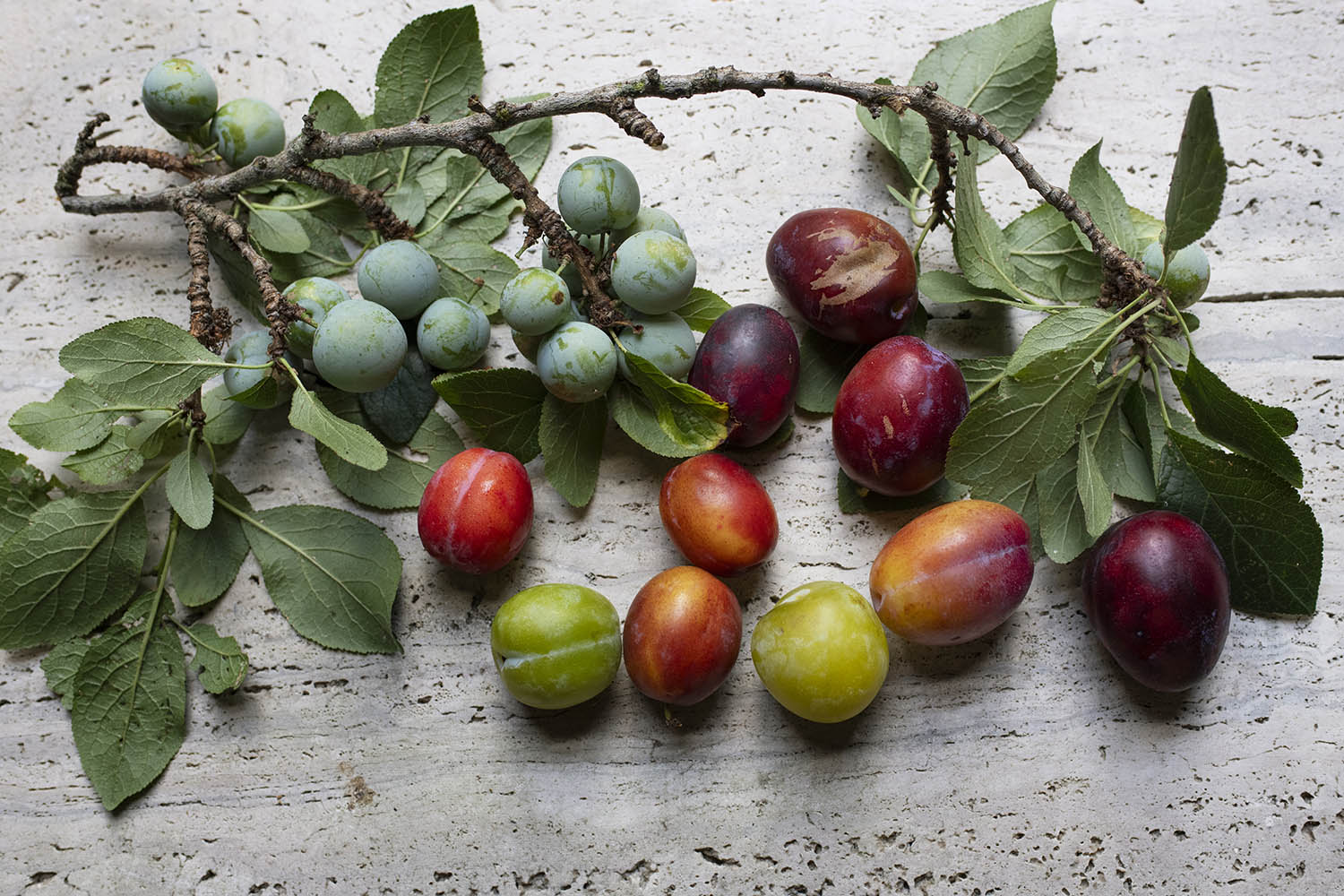
I halved and stoned the plums, sunset-hued Victoria and a smaller variety called Opal, the colour of a glass of pinot noir. There were greengages too, the most seductive of the plum family when ripe and almost translucent, but as a jam they are also superb, less sweet than the Victoria plums and a glistening chartreuse in colour.
Plum jam is made early in the season, when the fruit is less ripe and contains a little more pectin. Not that I want the jam to set firmly – I prefer it soft enough to weep a little on the spoon, the occasional slow drip from my toast. The sort of soft-set jam that is as much syrup as fruit, and which I spoon over thick, snowy yoghurt in a delicate glass. A dessert to be eaten with a teaspoon and perhaps a few chopped pistachios.
Related articles:
Jam-making is a branch of cooking I have come to late in life. I guess it is something that comes with age. There are, though, a few jars almost permanently in the fridge, used mostly as something to spoon over yoghurt to bring a happy ending to dinner. I can never resist bubbling up a jar or two of plum and fig, apricot and damson. I would make blackcurrant too, if they weren’t so expensive for those of us who don’t grow their own. I am not a fan of strawberry jam, the fruit lacking the acidity necessity to balance the sugar. Better, I think, are the more tart fruits: loganberry, apricot and blackcurrant.
I clear away the remaining fruit and load the dishwasher with jam saucepans, spoons and the little white saucers I use to test the jam’s progress. Everything I touch is sticky. The sugar is carried with the steam no doubt, spraying the finest sweet mist over the kitchen counter, floor and, probably, the cook.
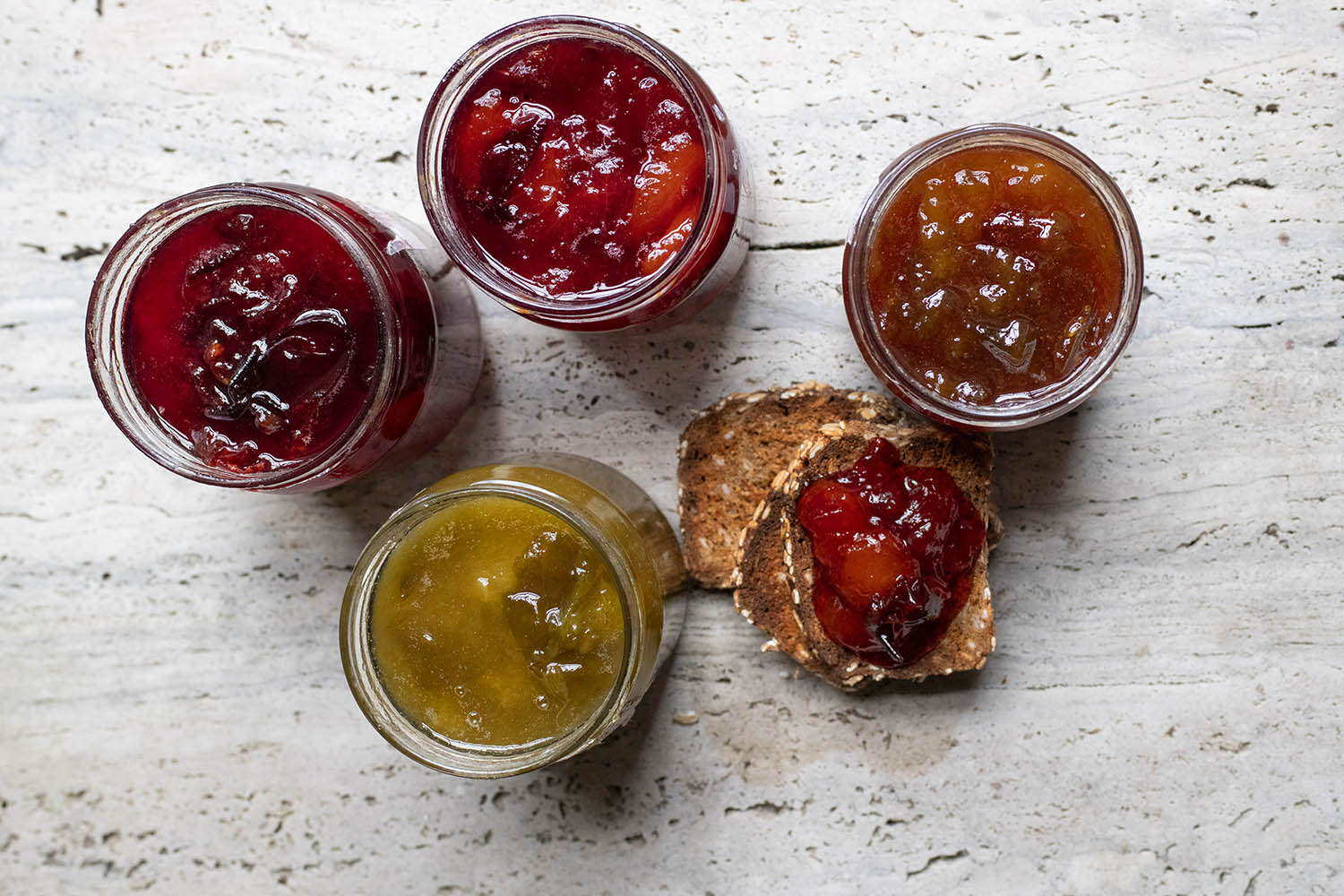
Soft-set plum jam
Letting the stoned fruit rest overnight with its blanket of sugar is a trick worth following. It is not essential, but it does help to soften the fruit and reduces the cooking time, which is convenient, and I find that it also leads to a better flavour. Some cooks leave a stone or two in the jam, for the vague almond flavour they are said to impart, but I remain unconvinced. Chill a couple of saucers in the fridge before you start and follow the instructions below.
Makes 3 x 450ml jars
plums (firm, almost ripe) 1.2kg
lemon 1, large
granulated sugar 1kg
Wipe the plums and check them carefully for imperfections. Remove any stems, then cut the plums in half and remove their stones.
Put the fruit in a large mixing bowl, halve the lemon, squeeze the juice over the fruit, then sprinkle the granulated sugar over, tossing fruit, juice and sugar together so the fruit is coated.
Cover the bowl and set aside overnight in a cool place.
The next day, place a large, heavy-based saucepan over a low to moderate heat. Tip in the fruit and any juices from the bowl. Add the fruit and sugar and bring to the boil.
Using a spoon or kitchen paper, remove the froth that rises to the surface. Immediately lower the heat and leave to bubble gently for about 20 minutes. The jam is ready when it reaches 105C on a sugar thermometer.
To test if the jam is ready without a thermometer, put a couple of saucers in the fridge to chill. As the jam starts to thicken and the fruit becomes tender, put 1 tsp of jam on one of the cold saucers. Put it back in the fridge for 2 minutes and, if a skin has formed and the jam moves very slowly when the saucer is tipped, the jam is ready.
While the jam is simmering, sterilise the jam jars, either by filling them with boiling water from the kettle or by baking in a hot oven for 10 minutes. Dry them carefully with a clean tea cloth or let them dry naturally.
Keep testing, alternating the saucers, if using that method, until you judge the jam to be ready. Ladle the jam into the sterilised jars and seal tightly.
Plum and rosewater jam
Once the jam is ready, ladle into the sterilised jam jars and stir 1 tsp of rosewater into each jar.
Greengage jam
Use the above recipe but using apple juice – the sharper the better – in place of the lemon juice.
• This is a softly set jam, which means it’s slightly less firm and will not keep as long as a stiffly set jam. It is best stored in the fridge.
• Put your sugar thermometer in the jam from the start, as it may shatter if you put it straight into the boiling jam.
• Keep an eye on the jam: you cannot judge it by the clock. If you overcook the jam, it will develop a caramel note and will set too firmly.
• It is worth making sure there are no imperfections in the fruit, as this will affect the keeping quality.
• This is a good jam to stir into the roasting juices of a roast duck, pork or pheasant. I like to serve it with cold roast pork, in place of the usual redcurrant jelly or apple sauce. It is nice served with a grilled pork chop, too.