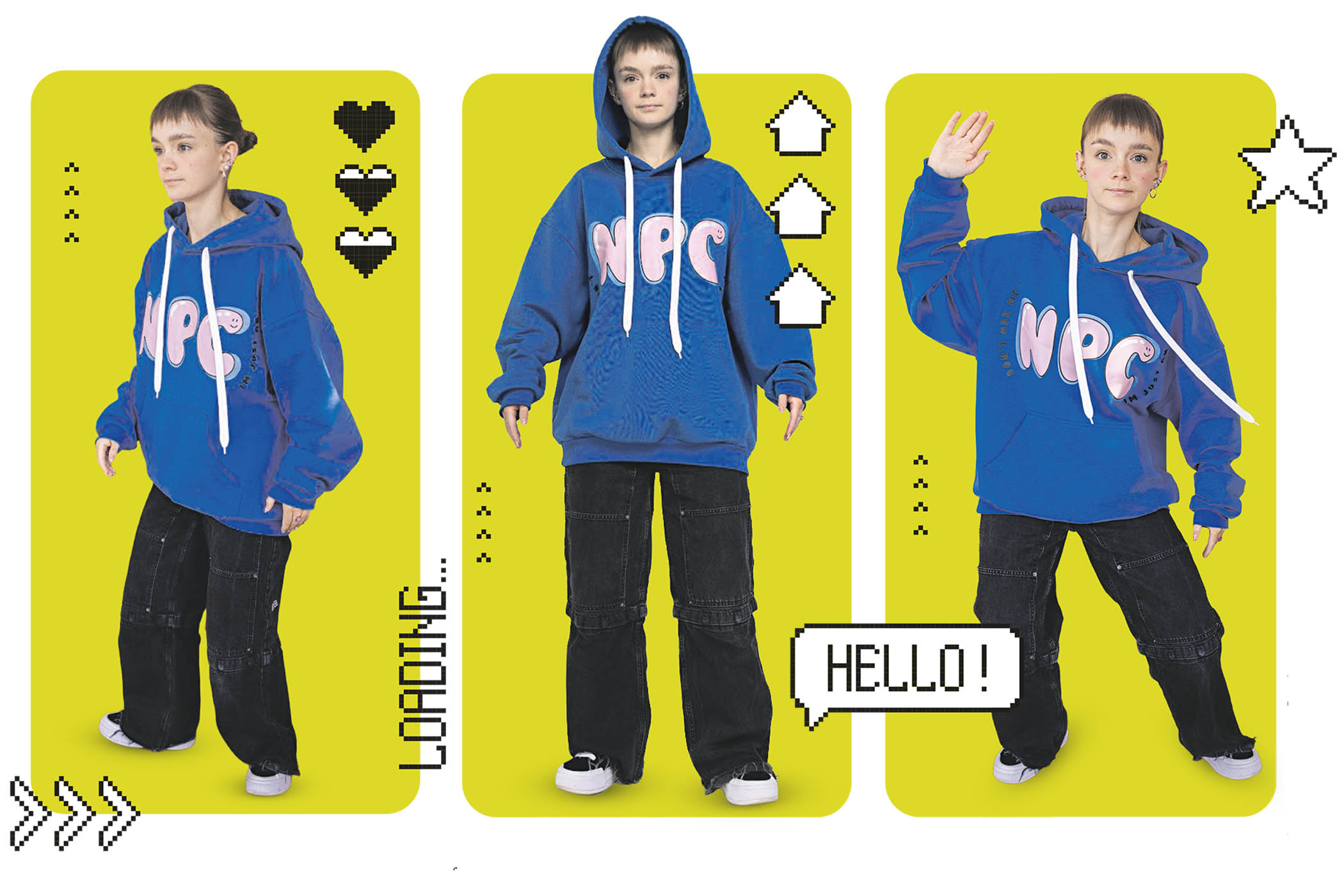

For $9.99, you can learn “How to move like an NPC.” The abbreviation stands for non-playable character, video gaming parlance for the kind of computer-controlled drones that you encounter while exploring the kingdom of Hyrule in The Legend of Zelda, say, or plundering a village in Minecraft. NPCs have no free will. Their behaviour is dictated by their programming, and interactions with them only go so far.
They typically perform only a few limited, pre-scripted functions: drop clues about your quest (“There’s a secret in the tip of the nose”) or, if killable, die unceremoniously, perhaps rewarding you with experience points and any items that they leave behind. They are, by design, disposable non-people: automatons to be used when necessary and then tossed aside when they no longer serve a purpose. So why would anyone want to be like one?
The Polish dance duo Loczniki, who are offering the online course, pitch it at the customer who already feels like “a stiff, uncoordinated player in the game of life”. According to the blurb on their website, they’ll teach you “how to walk in a perfectly straight line, stop abruptly or turn on a dime”; you’ll master “control over your posture and face, as well as basic moves, never acknowledging the player character or any other NPCs around you”.
It’s a weird proposition; an inversion, perhaps, of the prevalent, more narcissistic online fantasy of having “main character energy”. To accept your status as an NPC is to deny your own agency, surrendering the world to “player characters” who are presumably more alive, present and important than you are.
It amounts, in essence, to an admission of being not quite human. “Enrol in ‘How to move like an NPC’ by Loczniki today and become the ultimate background character!” the dancers promise, as though self-abnegation were in itself appealing.
Loczniki have more than 3.1 million TikTok followers and at least 1.9 million YouTube subscribers. Their videos, such as 2023’s cheerful yet oddly spooky “First date with an NPC”, have clocked up tens of millions of views. In that short clip, the duo’s female dancer, Nicki, wanders around a Polish city mime-eating ice cream, blankly following the cameraman (who offers the player’s perspective) and clumsily interacting with her real-world surroundings.
There are no special effects here. The gamelike feel of the video is created solely by Nicki’s keenly observed performance. She walks with a subtly unnatural gait, mimicking the slight lag of typical in-game NPCs as they adjust to players’ movements. At one point, she observes: “What a [sic] beautiful weather isn’t it?” and then, a second later, repeats: “What a beautiful weather isn’t it?” – apparently the extent of her character’s programmed remarks in this particular setting.
The term “uncanny valley” refers to a psychological phenomenon in which people are unsettled, rather than reassured, by approximations of humanity via technology, whether it’s a humanoid robot or an AI chatbot. This clip leaves you feeling something similar. What’s most perturbing about all this, however, is the possibility that some of the video’s viewers actually identify with Loczniki’s NPC; that they see themselves in this approximation of a mindless digital drone.
Last summer, a YouGov survey found that 10% of men and 12% of women in the US believed that others viewed them as NPCs. Across both sexes, 16% of millennials felt they were perceived in such a way, compared with 8% of baby-boomers.
Younger generations spend more time gaming, so their stronger identification with the type of automatons that you would engage with in open-world role-playing games such as The Elder Scrolls or Final Fantasy may seem natural. Yet, in those interactive adventures, the player almost invariably controls the story’s chosen one: the hero who is able, through wit, skill and sheer button-tapping butt-whooping, to save civilisations or even entire worlds. Those fully artificial side characters – powerless to alter their circumstances, trapped within their assigned role – aren’t the ones you’re supposed to relate to.
Newsletters
Choose the newsletters you want to receive
View more
For information about how The Observer protects your data, read our Privacy Policy
Then again, this may not be such a leap for generations who feel increasingly impotent as economic dysfunction steals their futures and 20th-century democratic norms are jettisoned. A 2021 study published in the Lancet found that more than 50% of young people felt “helpless” as a result of governments’ failure to adequately address the climate crisis. If we can’t change any of this, maybe we’re not the protagonists of our story, after all. Maybe we’re just NPCs.
Such hopelessness, though understandable, helps no one but those responsible for what the tech critic Cory Doctorow termed the “enshittification” that we’re now being forced to endure. The idea that the physical, non-digital world contains NPCs draws not only from gaming culture but also from the Swedish philosopher Nick Bostrom’s Matrix-like “simulation hypothesis”, which posits that what we experience as reality could, in fact, be a mere computer-generated rendering (an idea endorsed by Elon Musk, who once suggested that there was only “a one in billions chance” that we didn’t live in a video game-style simulation).
Yet the phrase’s prevalence in online discourse today is largely the result of its weaponisation by Maga online trolls over the past decade. In the run-up to the 2016 US election, an anonymous user on the internet forum 4chan posted a paranoid theory suggesting that most people in the world were soulless “walking flesh piles” that sought “to appear convincingly human” by parroting mainstream arguments and following social trends. These conformists, the poster argued, were NPCs – not really sentient, not really real. The term soon caught on and became a staple of 4chan’s politics threads, used as a catchy shorthand for brainwashed, MSNBC-watching, pronoun-declaring Democrats calling for Donald Trump’s impeachment.
In the summer of 2018, 4chan and Reddit users adapted the meme character Wojak – a crude cartoon of a bald man – by replacing his already simplified features with two dots for eyes and straight lines for a nose and mouth. This became the stock avatar of the NPC.
Pushed into the mainstream by an article in the New York Times bemoaning the phenomenon, it proliferated on social media and was further adapted to dehumanise Jewish people, African Americans and Asians. In October 2018, Twitter suspended about 1,500 fake accounts that were set up by Trump supporters to lampoon liberals as zombie NPCs, after they also began circulating false information about the US midterm elections.
Dehumanisation is nothing new. Casting doubt on the subjectivity of others has long been a strategy of those seeking to justify actions or positions that even they must know to be immoral. Whether it’s Trump calling migrants illegally entering the US “animals” – as he did in April 2024 – or social media edgelords posting AI-generated rants about leftwing “NPC hordes”, the objective is the same. It’s The Third Man’s Harry Lime on that Vienna ferris wheel all over again, staring down at the people below and asking: “Would you really feel any pity if one of those dots stopped moving for ever?”
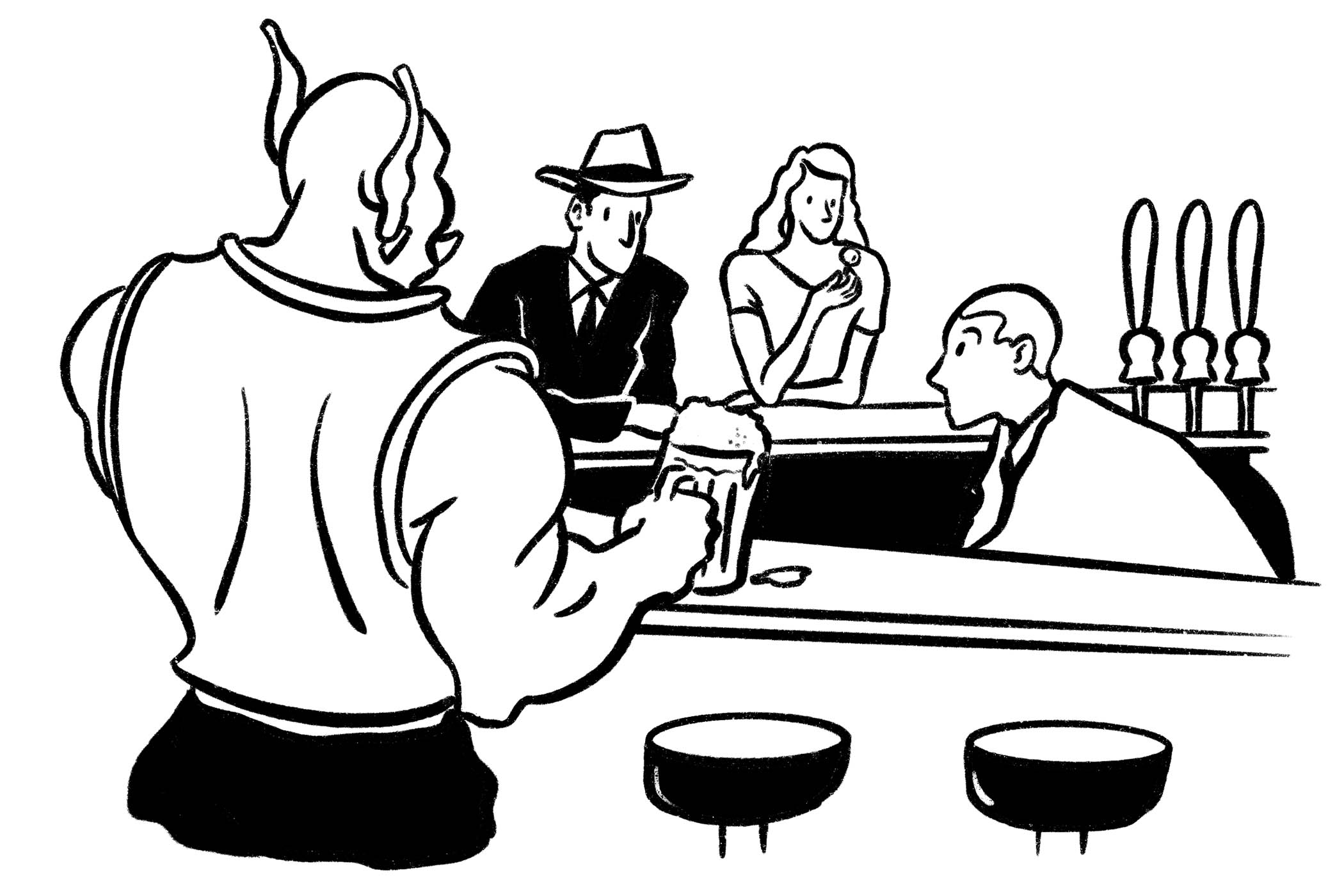
Behind me sits my eight-year-old son, Kurt, who’s playing Minecraft. All good gamers know that the most efficient way to harvest useful loot and experience points in the game is to build structures known as “mob farms” – in essence, concentration camps consisting of an area where NPCs (“mobs”) are spawned and then funnelled into a “grinder”, which kills them instantly.
When I first saw this happening on screen, I was appalled: why would Minecraft’s creator, Mojang Studios, make such a practice possible, let alone so clearly the most logical way for players to progress? Then I remembered how I’d spend hours as a teenager slashing my way through monsters on the Super Nintendo game Dragon Quest V for no reason other than to level up and increase my character’s lethality. This, I suppose, is simply the fate of many NPCs.
The onscreen farm keeps grinding, its victims dropping bones, arrows and string. “Those mobs – they’re not real,” says Kurt, and he’s right. They’re just mindless digital drones: made to be exploited, mere fodder, the ultimate background characters.
Now, who wants to learn how to move like one?
Photographs Krzysztof Budych/Loczniki/Budych Studio