“It’s like jumping off a cliff,” Frank Gehry once told me of his work and life. “If you know what you’re going to do before you’re going to do it, don’t do it.”
He treated architecture, the most deliberated and static of art forms, like improvisation in music. He would, whether designing an artist’s studio, concert hall or skyscraper, play freely with its shapes and materials.
Gehry, who died on Friday at the age of 96, was up for working with anything, from basic materials like plywood and chain-link fencing to shining titanium and sculpted stone. The furniture he designed out of corrugated cardboard in the late 1960s and early 1970s can now sell for thousands. He would use screwed-up balls of paper as the basis for designing projects worth hundreds of millions of pounds. He found inspiration in happenstance.
His career, contrary to F Scott Fitzgerald’s saying about American lives, had several acts. First, after working for the shopping mall specialist Victor Gruen, he built a successful practice designing good-but-not-extraordinary commercial projects, while making quietly radical studios and homes for his many artist friends in his home city of Los Angeles.
He also designed a dwelling for himself in Santa Monica, completed in 1978 and modified afterwards. It was like nothing seen before, with the shell of an ordinary suburban house made into a three-dimensional explosion of angular shapes, overlapping spaces and old and new building materials, seemingly paused somewhere between demolition and reconstruction. As a cubist painter would work with pieces of newspaper and the everyday objects on a cafe table, so Gehry made poetry out of exposing the wooden frames and corrugated sheets of a building site.
Around the age of 50 he started over, shrinking his office to concentrate on the commissions that gave him the freedom to invent in the ways he had on his house – private houses, a library, a law school. These won him critical acclaim but not great financial reward.
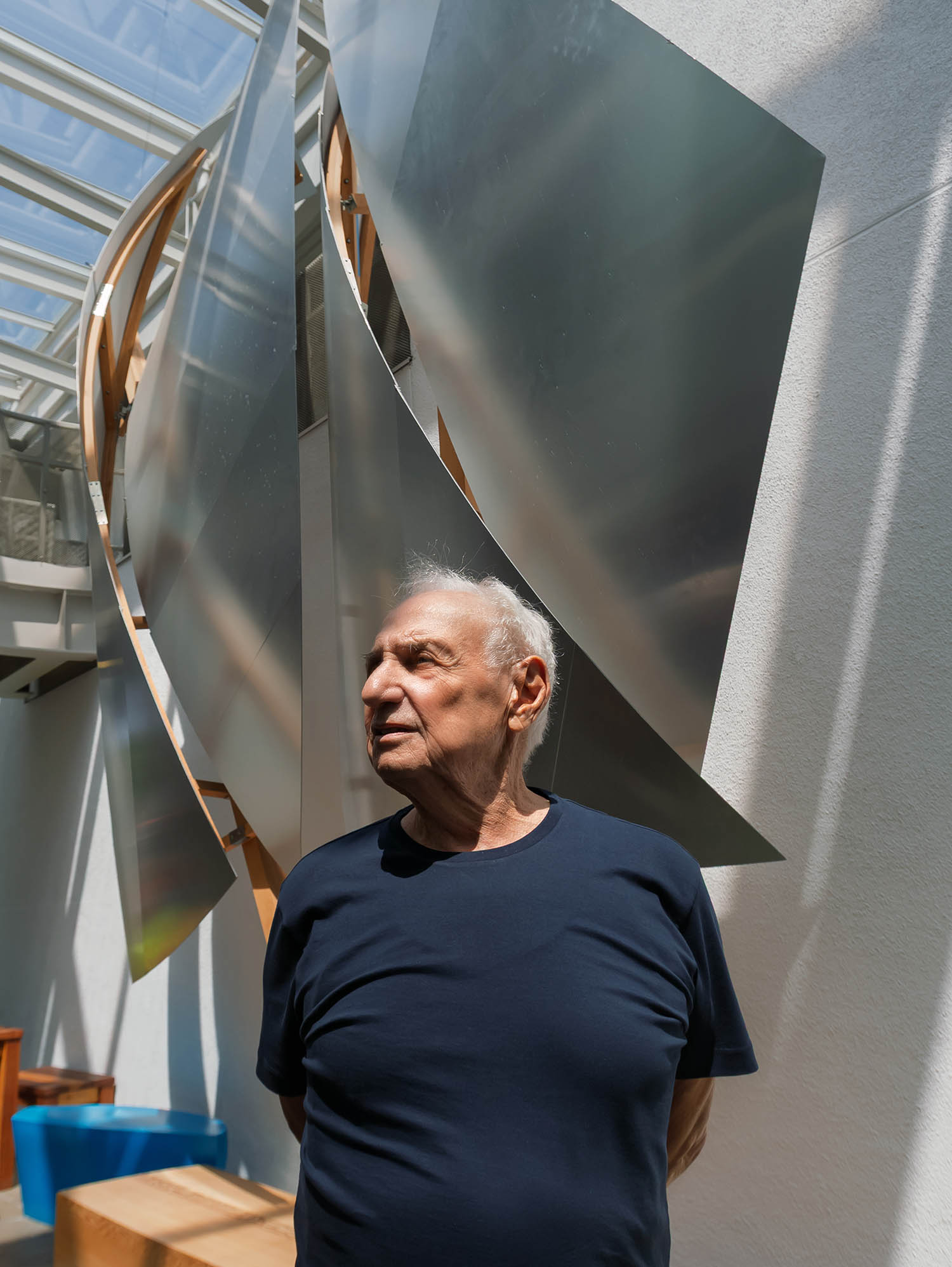
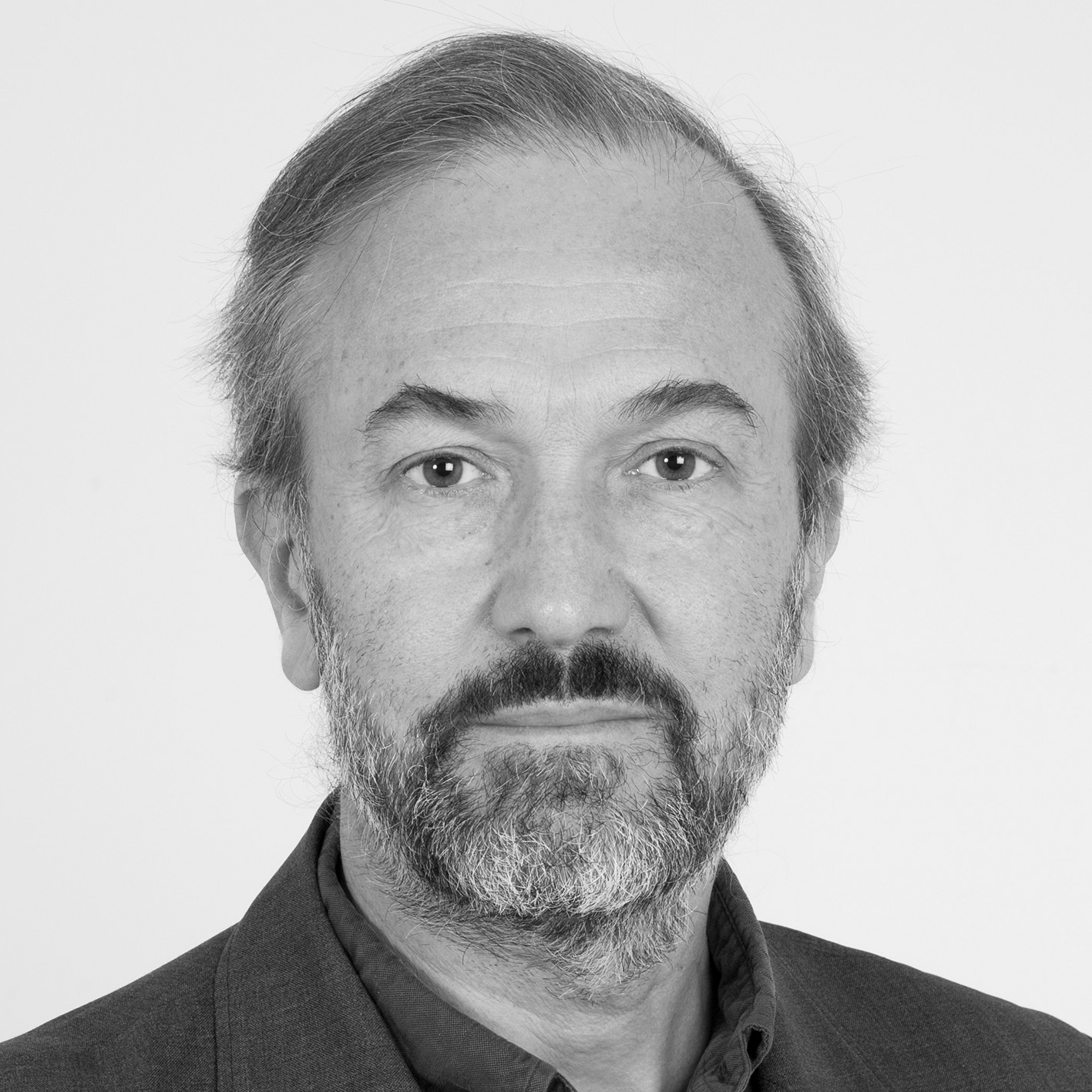
Gehry in his Los Angeles offices, July 2017
Then he designed the Guggenheim Museum in the former industrial Basque city of Bilbao, which when it opened in 1997 won worldwide fame for its extravagant shapes in stone and metal, much imitated but rarely equalled for the magic whereby extraordinary-looking buildings were thought to regenerate cities, often called “the Bilbao effect”.
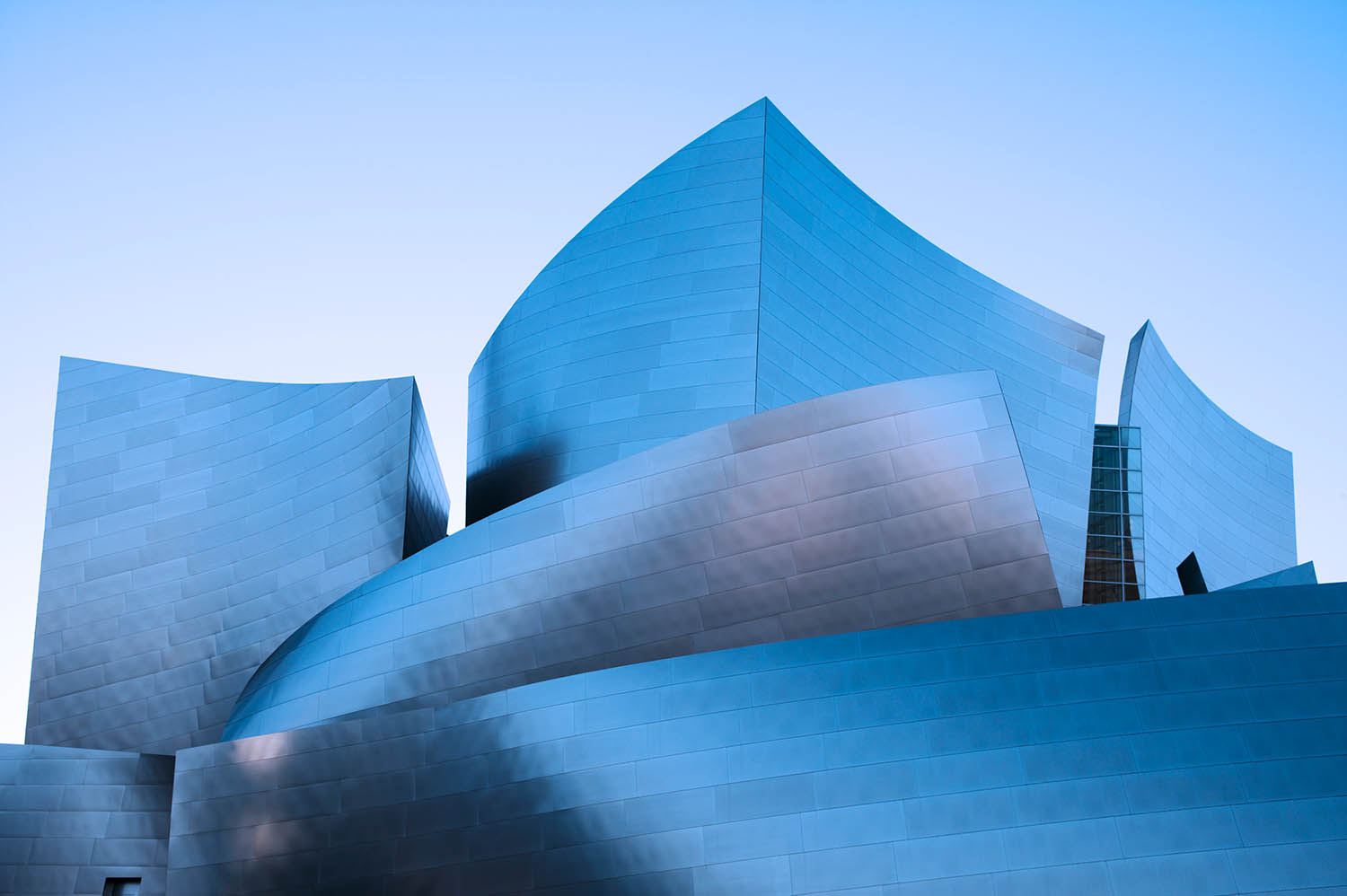
From then on, Gehry’s status was assured. He designed the Walt Disney Concert Hall in Los Angeles (which opened in 2003), a skyscraper in downtown Manhattan (2011) and a home for the Louis Vuitton art collection in Paris (2014).
He was in demand in France, Spain, Germany, Panama, Israel, Abu Dhabi, Australia, Canada, Denmark, Switzerland, the Czech Republic and Hong Kong. Britain was less hospitable than many, but here he realised a Maggie’s cancer centre in Dundee and some apartment buildings (very much not his best work) around Battersea Power Station in London.
‘I love that we do what we do and bring it in under budget, which no one believes but it’s true’
‘I love that we do what we do and bring it in under budget, which no one believes but it’s true’
Frank Gehry
He became, not entirely to his comfort, an icon of iconic architecture, the ultimate “starchitect”, to use a term popular in the 00s, but one which he hated. Certainly, he was happy to create high-profile spectaculars but this characterisation overlooked the thought that went into his best buildings, their responsiveness to their surroundings and his close involvement with the ways they are built. “I love working things out,” he said, “I love that we do what we do and bring it in under budget, which nobody believes – but it’s true.”
Newsletters
Choose the newsletters you want to receive
View more
For information about how The Observer protects your data, read our Privacy Policy
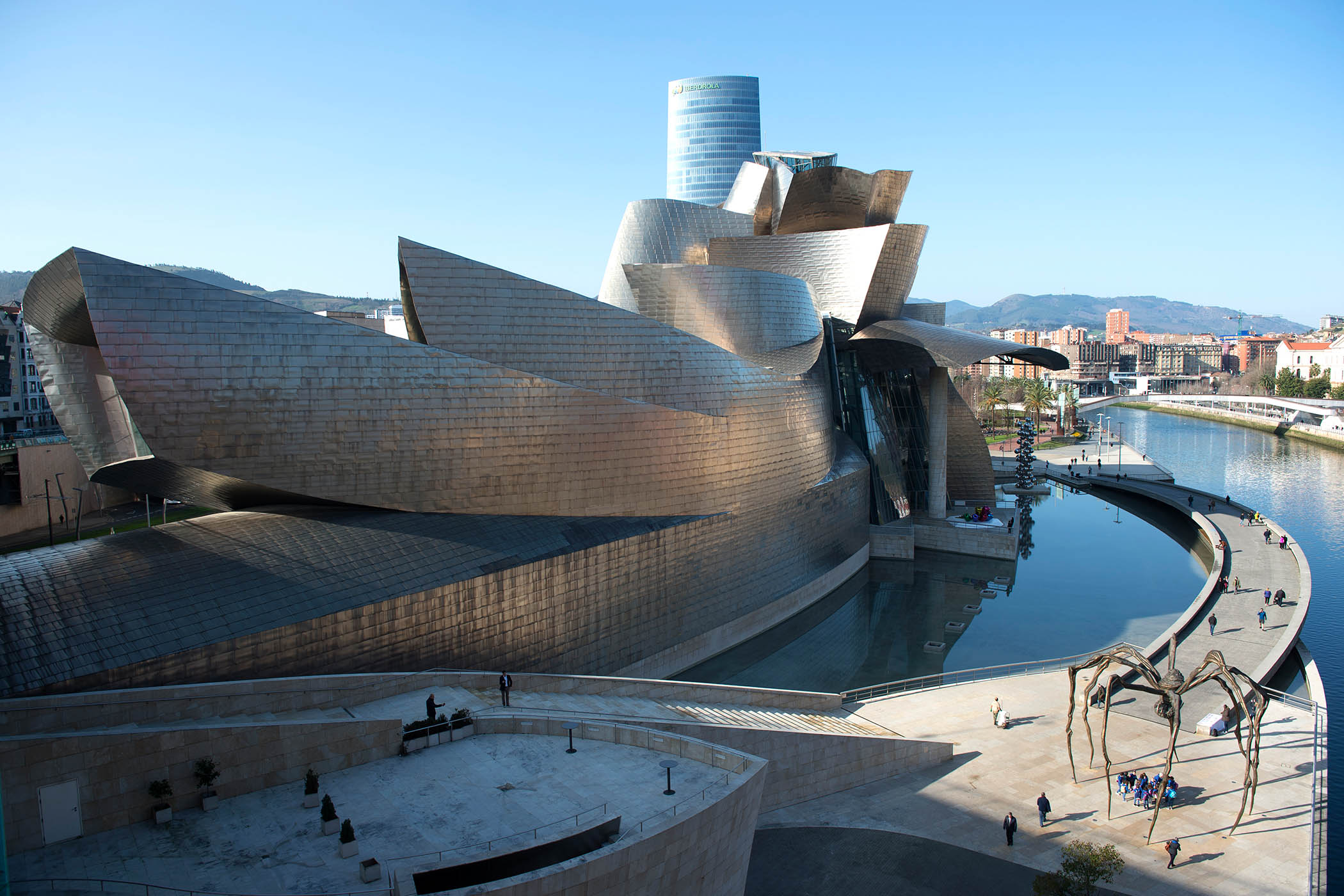
Gehry’s design for the Guggenheim Bilbao Museum transformed the post-industrial Basque city into an international destination for art and architecture buffs
There was another side to his work that included the conversion of a bank into an unflashy centre for the Los Angeles Youth Orchestra in the not-ritzy suburb of Inglewood. He also cherished the Pierre Boulez Saal, the venue he designed in Berlin for the musical academy, inspired by the hopes of the Jewish musician Daniel Barenboim and the Palestinian writer Edward Said that conflicts could be overcome with the help of music. Gehry was Jewish, born Frank Goldberg in Toronto, and experienced vicious antisemitism. But he “saw things happening in Israel that I couldn’t feel good about”, and petitioned against illegal settlements in Palestine.
Away from architecture, his metaphorical cliff-jumping led him to play ice hockey until the age of 72 and to sail – into his 90s – a 23m yacht of his own beautiful design on the Pacific.
He loved art and music. He was competitive and sometimes arrogant, but he had heart. He was good company and endlessly interested in the world around him. He kept his emotions near the surface, to a degree rare in the controlled world of architecture.
He was fascinated by people, including but not only the famous and powerful he met through his work and his own celebrity status. His friends and collaborators included Herbie Hancock, Brad Pitt, Pierre Boulez and Claes Oldenburg. He knew Harrison Ford from the days when the future Han Solo was working as a carpenter. He met President Recep Tayyip Erdoğan of Turkey (“a monster”), President Nicolás Maduro of Venezuela (“scary”) and Boris Johnson (“an asshole”), and he enraged Donald Trump by refusing to design for him the tallest building in New York.
Gehry received his share of criticism. Justin Shubow, president of the National Civic Art Society in Washington DC, called Gehry’s designs for the Dwight D Eisenhower Memorial “injurious to public morals”.
Many fellow architects saw his work as self-indulgent and gratuitous. But at his core was a passion for making and building, and a belief that architecture could and should be one of the greatest of art forms.
Photographs by Zumapress.com/Avalon, Ander Gillenea/AFP via Getty Images