

Shimmering palaces have filled my Instagram feed this week, their multifaceted domes set with mirrors like the inside of a kaleidoscope. They would be a welcome distraction from images of war – were they not also a testament of loss.
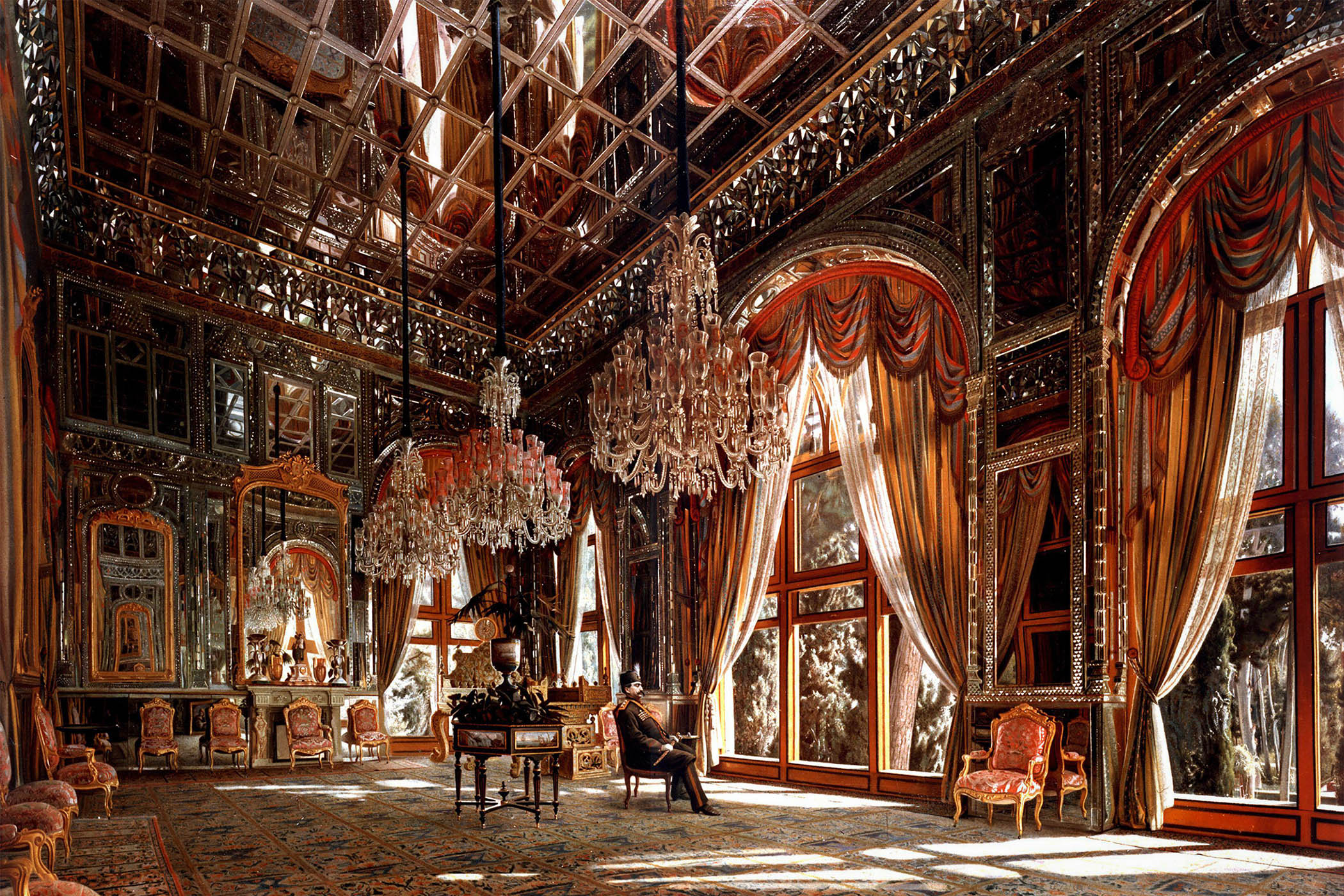
On 2 March, an Israeli airstrike on Tehran’s historic Arag Square sent shockwaves through nearby Golestan Palace, the home of shahs for more than four centuries. Damage was particularly severe to one part of the Unesco World Heritage Site known as the Talar-e-Ayaneh, or Hall of Mirrors, perhaps the best surviving example of Iranian mirror work, or “ayaneh-kari”.
The damage comes amid an escalating war between Israel, Iran and the US. While Israel says it is targeting military infrastructure, strikes in dense urban areas have also damaged historic neighbourhoods and cultural landmarks.

A view of the historic Golestan Palace, which is on the UNESCO World Heritage List, damaged by Israeli missile strikes
Ayaneh-kari first emerged in the 16th century, in the early days of the Safavid dynasty. Mirrors imported from Venice would sometimes arrive at the royal citadel in pieces. Rather than discard them, craftsmen carved their fragments into geometric shapes, words or flowers. Assembled into mosaics, they make palace and shrine interiors feel like diamond caverns. It’s no coincidence Golestan is sometimes referred to as “the Versailles of Persia”, though Jules Hardouin-Mansart, the Sun King’s architect, never produced anything quite so luminous.
The Talar-e-Ayaneh was completed around 1882, when mirror work was at its height. The statesman and later Viceroy of India George Curzon was one of the first Brits to see it.
“The exhaustless profusion of its splendid materials reflected not merely their own golden or crystal lights but all the variegated colours of the garden,” he wrote in his book Persia and the Persian Question, “so that the whole surface seemed formed of polished silver and mother of pearl, set with precious stones.”
Ayaneh-kari turned an accident into a thing of beauty. Over the centuries, mirror work became a symbol of hope, a testament to the divine light of the human soul. In its reflective facets, it is believed we might see – or aspire to – a better version of ourselves.
Along with those photographs on Instagram, there were videos. Footage showed the Talar-e-Ayaneh with large patches of bare wall, its floor littered with mirror shards. Here too the symbolism is impossible to ignore. Broken mirrors are a bad omen in Persian culture, as they are in much of the West. They rupture the soul’s connection to the unseen world – a kind of spiritual death.
Over the centuries, mirror work became a symbol of hope, a testament to the divine light of the human soul
Over the centuries, mirror work became a symbol of hope, a testament to the divine light of the human soul
In a statement about the strike, Unesco pointed out that targeting cultural heritage is a crime under international law, though Israel and the US are unlikely to care. The war itself is probably illegal. The past 12 days have fractured the international order almost beyond repair, and for many Americans like myself, shattered the illusion that the US military is anything but an agent of global chaos.
Heritage across Iran remains at risk. Baharestan Palace, the historic seat of Iran’s parliament, has been completely destroyed. The Chehel Sotoon Palace Museum in Isfahan, another Safavid-era Unesco World Heritage Site, sustained significant damage from an Israeli airstrike. Shrines with delicate ayaneh-kari in Shiraz and Qom are also threatened by the onslaught.
Newsletters
Choose the newsletters you want to receive
View more
For information about how The Observer protects your data, read our Privacy Policy
Many in the US tend to think of Iran’s history – when they think of it at all – as if it began in 1979. Persia’s ancient influence simply doesn’t register.
Long before the sanctions, the country was one of the world’s most cosmopolitan centres of trade. That its 16th century decorative arts relied on materials from Venice is remarkable in itself. Nowhere else has matched the splendor of ayaneh-kari, but Iranian influence on Islamic architecture is profound. Muqarnas, the honeycomb-like structures found in mosque domes around the world, first emerged in Iran in the 11th century. Most historic madrasas take their form from Persian models, as do Shia shrines from Lebanon to Azerbaijan. Iranian styles and techniques inspired the Taj Mahal.
Of course, no loss of a building can compare to the loss of human life. On Friday, Iran’s ambassador to the UN said that 1,332 civilians had been killed, a number which has surely climbed since then. As the skies over Tehran blacken with toxic plumes of burning oil, there can be little consolation. But the message of ayaneh-kari is like a glimmer in the darkness – a hope that when all this is over, Iranians will be able to pick up the pieces again.
Photographs by Alamy, Andalou