
As the siren sounded, Tomer and Ortal scooped up their daughters and hurried down to the shelter near their home in Tel Aviv once more.
Two hours earlier, Israel had announced the killing of Iran’s supreme leader, Ayatollah Ali Khamenei, in a strike on his compound in Tehran, and the country was bracing for a response.
The couple had begun to lose count of the number of times they’d dashed to the shelter since Israel and the US ignited a war with Iran that same morning. Now ballistic missiles were inbound again.
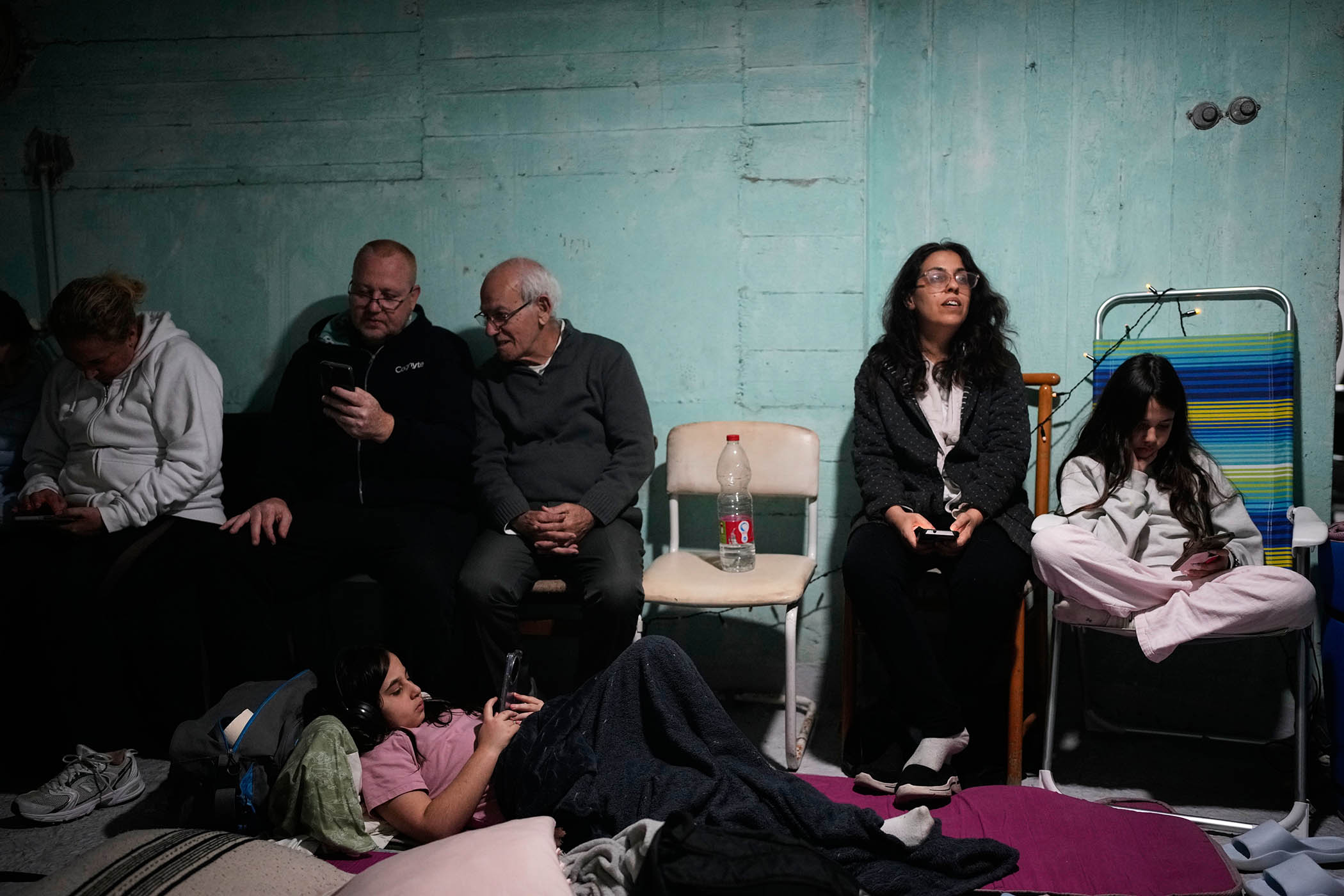
Down in the shelter, the family settled in for the night with the girls, aged two and four. A neighbour offered out shots of Campari, limoncello and gin to celebrate the death of the Iranian cleric who had made the destruction of Israel an article of faith.
“We needed to end it,” said Tomer, 40, with conviction. “It’s a cancer we need to remove.”
The decision by the US and Israel to go to war with Iran has been condemned as a reckless war of choice, with dangerous consequences for the region and beyond. In Israel, however, it has been received with enthusiastic support from politicians, including bitter rivals of Prime Minister Benjamin Netanyahu, and a public that has grown accustomed to war and huge disruption.
‘It’s more of an ego war – a way for Netanyahu to reinforce his base’
‘It’s more of an ego war – a way for Netanyahu to reinforce his base’
Yuval Ronen
Only eight months ago, Netanyahu declared “a historic victory, which will stand for generations” after Israel’s first direct confrontation with its arch nemesis, Iran. This time, many Israelis don’t want him to stop until the threat is eliminated once and for all. A poll by the Israel Democracy Institute found that 93% of Jewish Israelis support the campaign, dubbed Operation Roaring Lion. Low support among Israel’s Arab minority brought the overall figure down to 82%.
“We want a safe life here in Israel for a few decades,” said Tomer. For years Israel had become “too soft”, he said, allowing Iran’s tentacles in the region to grow. In Gaza, Hamas quietly built up the capabilities it would use to devastating effect on October 7 2023. Across the border with Lebanon, Hezbollah became stronger than the state.
The killing of the leadership of Hamas and assassination of Hezbollah leader Hassan Nasrallah curbed the threat, he said, and the first direct confrontation with Iran last year had shown that the country was less formidable a foe than had been feared. “The head of the octopus was Iran,” said Tomer. “In order to finish the whole thing, you have to cut the head.”
The US and Israel have carried out thousands of strikes across Iran over the past seven days. Israel’s army chief of staff, Eyal Zamir, said that 60% of Iran’s missile launchers had been destroyed so far. More than 1,300 Iranians have been killed in the attacks. In Israel, 11 people have been killed.
Newsletters
Choose the newsletters you want to receive
View more
For information about how The Observer protects your data, read our Privacy Policy
A week into the conflict, Tel Aviv is adjusting to the latest war. “Together we will win!” declares a huge billboard on the main road into the city featuring a roaring lion against a backdrop of US and Israeli flags. At night, sirens send weary residents scrambling to safe rooms or down to the basement to wait for the threat to pass.
Four floors beneath the city’s main shopping centre, Alex Chen was rolling up a sleeping mat after a sixth night in the underground car park. The 26-year-old had prepared his camping gear for a festival in northern Israel, but when the war began he decided to pitch the tent here with his partner, Yuval Ronen. It saves them having to go back and forth to the shelter each time the sirens sound. It is safe enough that they can switch the alerts on their phones off altogether. Others have brought inflatable mattresses and garden chairs to make themselves more comfortable, turning parking bays into bedrooms.
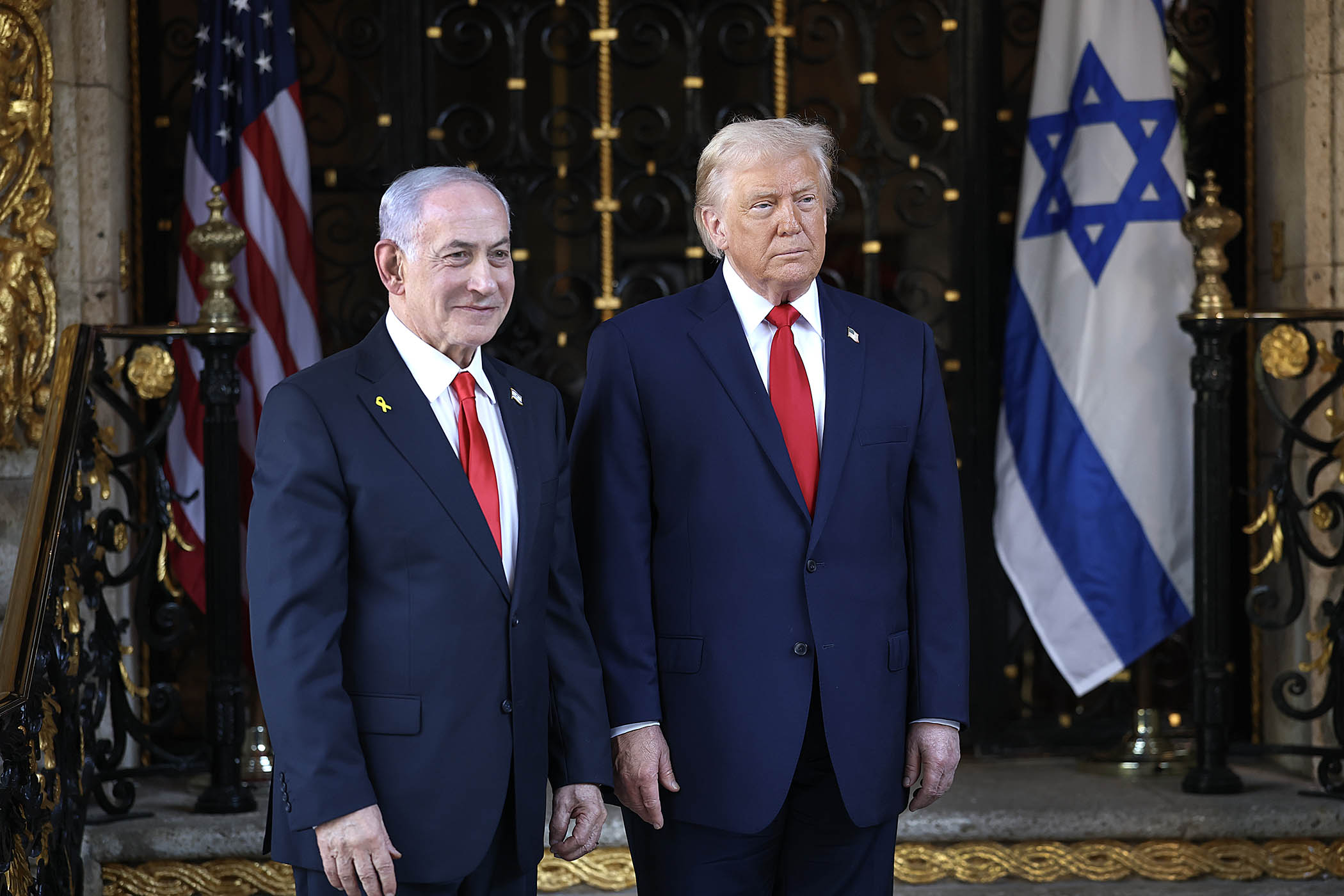
President Trump with Prime Minister Netanyahu.
During the last war with Iran, a missile blew the windows out in Chen’s apartment. He hopes that, as with lightning, a missile won’t strike in the same place twice, but he is taking no chances. Iran may pose a threat to Israel, but the real motives for going to war now are closer to home, he said. “It’s more of an ego war – a way for Netanyahu to reinforce his base,” said Ronen.
A minister from Netanyahu’s Likud party told local radio this week that elections would probably be brought forward to late June or July instead of October because many Israelis will want to go on holiday in August after the war with Iran. A fresh victory could help him come back from the failures that led to the 7 October attacks by Hamas.
The next morning, Tel Aviv residents sat in the morning sunshine drinking takeaway coffee from cafes that have now reopened. Ido Harash and his girlfriend Hila were walking their dog on the way to an exercise class. “We are a peaceful people; we don’t seek war,” said the 32-year-old, wearing sunglasses to dull the glare. By Israeli standards, Harash considers himself on the left politically, though he says his views would be rightwing anywhere else in the world. “We experience our neighbours differently,” he said. “Our enemies are led by fanatic zeal.”
As with many Israelis, 7 October was a watershed for Harash. Until then he had believed that the threat posed by Hamas could be neutralised through economic incentives and the promise of a better life for Gazans. “We were much more naive,” he said.
The jarring pitch of an alert interrupted him mid-speech. Elliot began barking as people emptied out of the square with their dogs in tow. Harash and Hila calmly followed the flow towards the nearest bomb shelter. Down two flights of stairs, they squeezed into a room where a woman was struggling to control a pitbull straining at its leash. An argument flared when a man complained that he had paid to stay at the hotel in order to use the shelter, unlike the others. Others shut him down: “Our power is when we are united,” one person interjected.
A TV screen on the wall was showing footage from another shelter. A news banner said Israeli air defences were intercepting missiles. The conversation with Harash continued. It was the apparent involvement of civilians in Hamas’s attacks on 7 October that led him to conclude that a tougher approach was needed. For Israel to coexist safely with Gaza, the population will have to undergo the kind of transformation that took place in Japan after the second world war, he said: “A whole society taking a long look at itself – some kind of demilitarisation of the mind.”
Phones pinged with a fresh notification that the danger had passed, and the shelter began to empty. Harash and Hila hurried off, hoping to make it in time for their exercise class. After the past two years, he said, one thing is clear: “The only way to survive is to be the most powerful of them all.”
Photographs by Ohad Zwigenberg/AP Photo, Joe Raedle/Getty Images,