I was raised by a single mother and I spent my early childhood with my maternal grandmother – a matriarch in a deeply patriarchal neighbourhood in Ankara, Türkiye. Our landlords lived upstairs and many evenings we would hear shouting, screaming, swearing, the sound of things breaking. The landlords’ son would often beat his wife, and even though everyone knew this, many in the community did nothing about it, calling the ongoing abuse a “family matter”. The question stayed with me: how can people look at the bruises on a woman’s face and pretend not to have seen them? This month I read a remarkable book that refuses to do that. A book that sees, speaks up and breaks the silence.
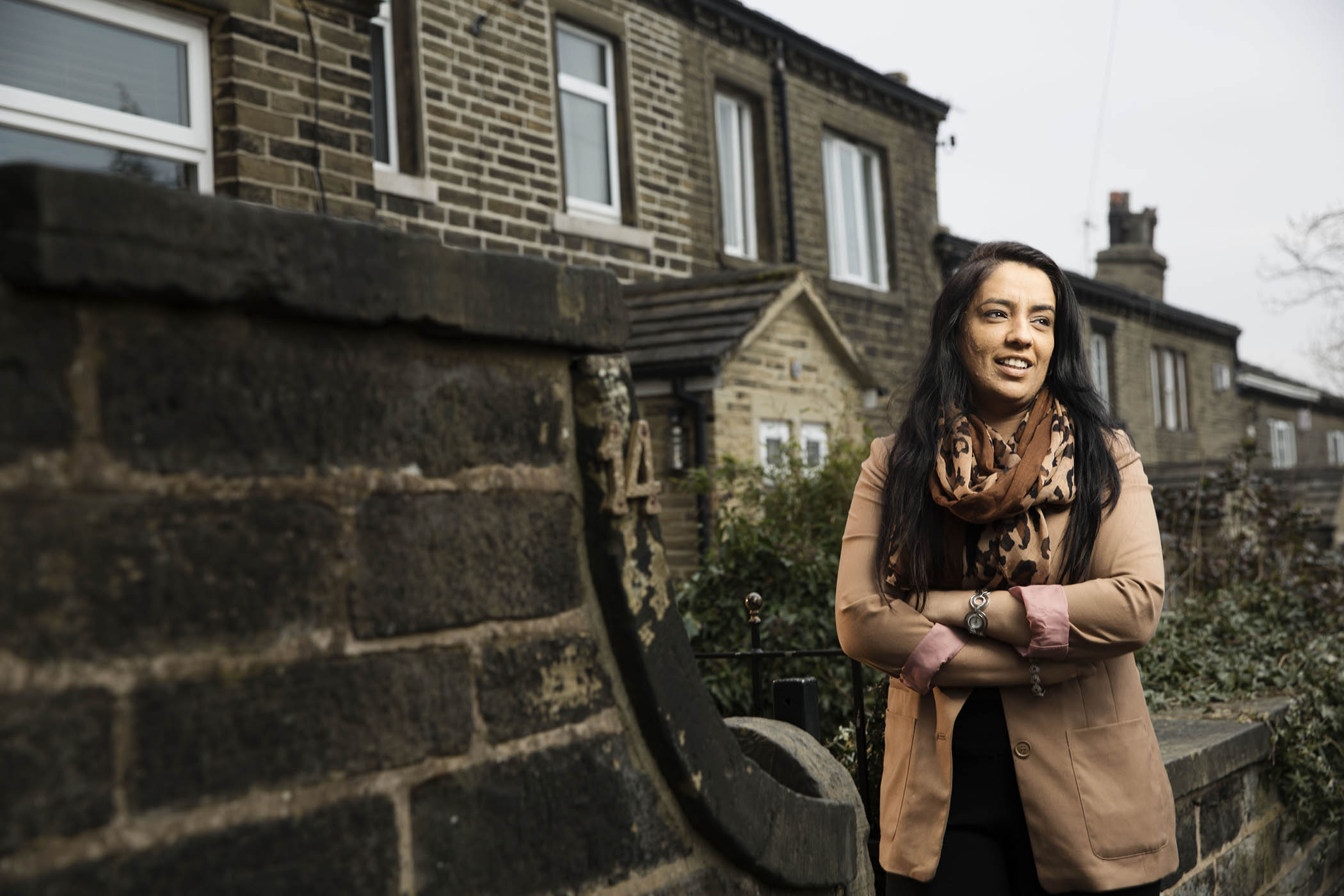
Honoured by Naz Shah is a profoundly moving account of the journey of one woman and her family. The title itself is striking. It is a brave and bold choice to take a hackneyed concept – honour – that has often been used to confine and condemn women, and then turn it upside down by completely redefining it and owning it.
Shah’s story begins in Bradford in the 1970s. Her father had come to the city as a child with his parents from north-east Pakistan, part of a wave of postwar migration; years later, Zoora followed, aged 17, to be his bride. Naz arrives in 1973: at first unhappy to have a daughter, her dad is nevertheless loving towards his firstborn.
She remembers how, when she was very little, he would sing with her and twirl her in the air. Of those rare moments of affection, a cheerful melody has stayed in her mind: “Brown girl in the ring, tra la la la la,” from the Boney M hit. But the same man almost seamlessly transforms into an abusive husband at night, beating Zoora in front of their children, sometimes dragging her on the floor by the hair, as if she were a corpse. “Dad seemed to have this insatiable need to break Mum’s spirit – and he did this with his fists.” No one comes to their aid: whatever happens in a marriage must be endured. It is a “family matter”.
One word that is crucial to understand the chain of events cited in this memoir is izzat. Of Arabic origin, it broadly translates as “honour” or “respect” but also “glory” and “might”. Shah describes it as being “one of the founding secular principles of British Pakistani life”. However, in practice, it means men have honour and women have shame – or they will if they are not careful. Women always walk a delicate tightrope and the slightest perceived wobble can invite stigma, bringing dishonour to their entire family, identity, community. “Whichever way we turned, the parameters of all our lives were defined by shame, by our diminished izzat,” says Shah. When a man commits a despicable act, it will be the women around him who are blamed. This is exactly what happens to Zoora.
Shah’s father runs away with the 16-year-old daughter of the neighbours. The scandal rocks the community, but shockingly it is Zoora who is held responsible for her husband’s behaviour. If she had been a better wife, he would not have left like that. “It was my mum’s responsibility not only to bear the shame of his abandonment, but to manage the carnage he had left in his wake.”

Naz Shah (right) with her younger sister, Foz.
The estranged father never sends money or asks about the family’s wellbeing, leaving his three children and wife without any means of support. In the face of all this, Zoora’s resilience is remarkable. She starts working multiple jobs to make sure her children are fed and clothed. Pushed into never-ending financial insecurity, they have to move from place to place, always on the edge of deprivation, and yet the mother continues not only to work hard but to strive to be a respectable member of the community.
She dreams of owning a house, a place they can all call home, and it is this most basic human aspiration and need for safety that unfortunately brings her into the orbit of the man that one day she will kill.
“Uncle Azam” is introduced into their lives as a reputable person who will of course help Zoora, this young, single, struggling mother, to realise her dreams of owning a house. Deceived by his promises, Zoora sells all her wedding jewellery to cover the down payment for a flat. Since no bank will agree to giving her a mortgage, she having no credit history, it is agreed that the place will be bought under Azam’s name and Zoora will keep paying him every month until the payment is completed, after which this “kind uncle” will return the house to its rightful owner.
As I was reading this memoir, I wished a copy of this book would be sent to every mortgage lender in this country, because it is so unfair that an honest and hardworking single mother is regarded as untrustworthy by the system while Azam – a drug dealer, a dubious businessman, a scoundrel – is seen as perfectly dependable. What follows is horrific and heartbreaking. Instead of keeping his word, Azam steals the house from Zoora. He rapes her and continues to do so over time, with threats of kicking the family out of their flat, and then pimps her to other men. Even as her life spins out of control, Zoora says nothing to anyone, always prioritising her children’s wellbeing – until one day, unable to bear the abuse any more, she puts a dose of arsenic in his dessert. She is arrested and imprisoned, but at no stage does she defend herself, nor receive a fair trial. That is until years later, when Shah and her siblings, with the help of feminist activists, appeal for the case to be reopened.
The book is a testimony to the power of sisterhood and how women can make a difference when they support each other
The book is a testimony to the power of sisterhood and how women can make a difference when they support each other
The book is unflinchingly candid about various thorny subjects: how the community refused to help this “shameful” family; how the young Shah tried to take her own life, as did her sister, Foz; how Shah was forced into marriage at the age of 15; how it took a long time for Shah to free herself from this cycle of abuse and violence. And how Shah’s two younger siblings, who for a long while did not know about the horrors that their mother had endured at the hands of Azam, found it hard to process the truth.
Shah also dissects the type of masculinity that is universally seen as the norm. But as you read about such male figures – some awfully abusive, others simply selfish, such as the relatives who never extend a helping hand – you also get to meet men who were steadfast allies. Although few in number, they played a crucial role: Shah’s dear brother Imy; the one uncle who continued to be there for the siblings when they were ostracised by the entire community; the good Samaritans they met along the way… The reader comes to respect these men all the more, for it is not easy to challenge the dominant codes of manhood in strictly inward-looking, patriarchal societies, and it is only when we encourage and amplify positive masculinity, just as we empower women and girls, that true change can come from within.
The book is also a testimony to the power of sisterhood and how women can make a huge difference when and if they support each other. Shah’s adolescence ends in a courtroom in 1993 as, having just turned 20, she watches her mother being sentenced to 20 years in prison. But out of this well of pain, Shah emerges with a sense of purpose with the help of Southall Black Sisters and Justice for Women. She realises that she must fight for her mother’s truth to be known, and this fight will be not only for Zoora, but for many other women who find themselves in a similar situation.
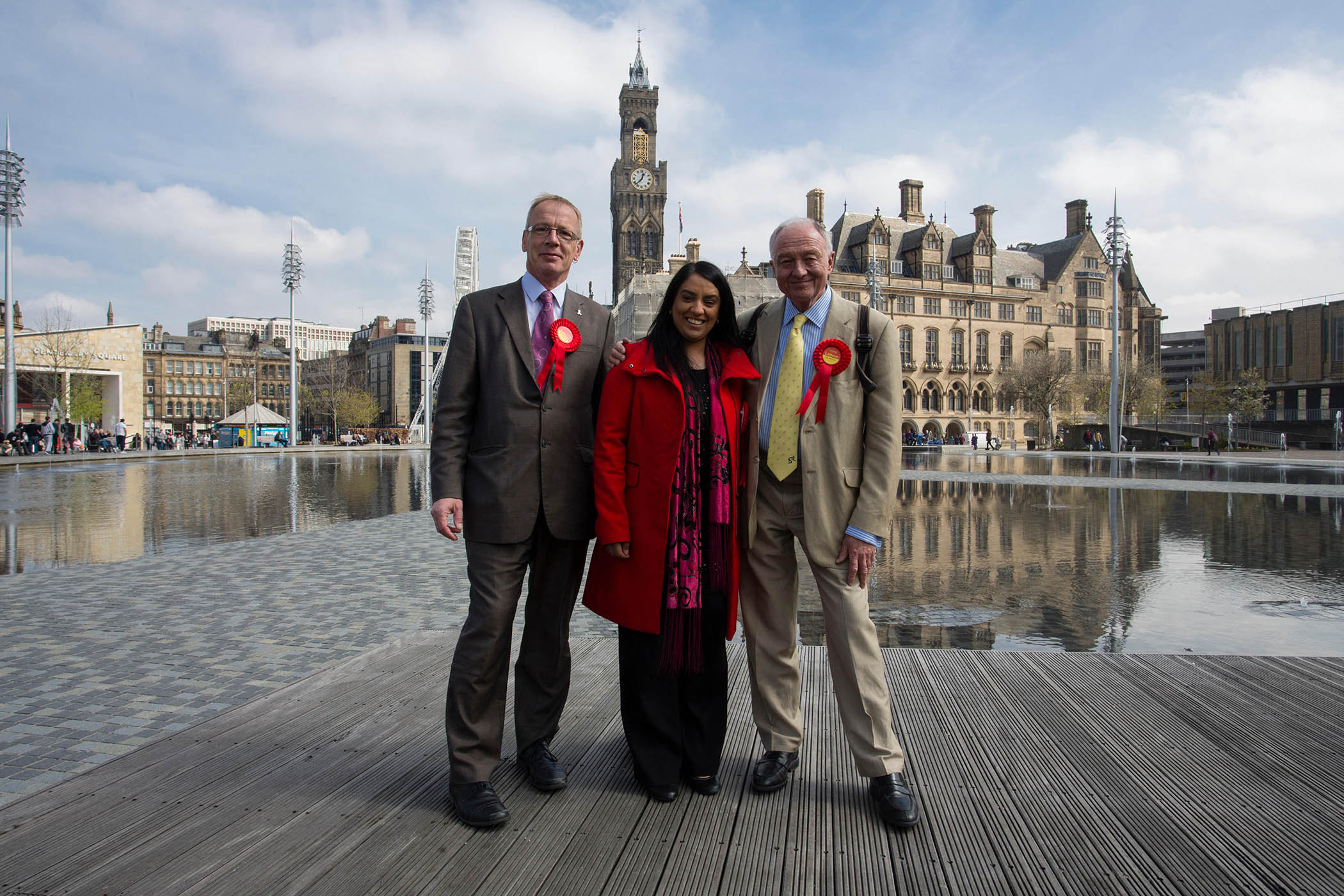
Shah with Bradford council leader Dave Green and Ken Livingstone in 2015, the year she became MP.
Today, Naz Shah is the Labour MP for Bradford West. Her love for her city is very clear. Being a woman politician in these divided times is not easy, all the more so for a woman from a minority background. And yet her success is more than just a political victory. Despite everything they have gone through and the stigma once attached to the family, the fact that the siblings have managed to stand tall and proud is extraordinary. I finished the book feeling inspired – proof of the magic of this memoir, which seems to have been written as much from the aching heart as the rational mind.
I also liked the juxtaposition of the calmness in Shah’s tone with her fierce resolve. Her Muslim faith clearly plays a big role in her life, and at times she mentions it more than is necessary. It is interesting though that, growing up, the interpretation of religion she was given was mostly devoid of spirituality, based on fear and judgment. Her own perception is based more on love.
If this were a novel, people would say that, in real life, so many calamities could not have befallen one family. But they did, and I can imagine that writing this memoir must have been distressing for Naz Shah. I am glad she did it.
This book reminds us that healing starts with memory. If we cannot remember, we cannot repair – it’s the same for individuals as for communities. Stories bring us together while silence keeps us apart. This remarkable memoir is not just one woman’s story, or that of one family’s resilience through tragedy, it is an honest mirror held to our world, our societies, in which everything and everyone is connected.
Honoured: Survival, Strength and My Path to Politics by Naz Shah is published by Weidenfeld & Nicolson (£22).Order a copy from The Observer Shop for £19.80. Delivery charges may apply
Photography by Matthew Lloyd/Getty Images; Naz Shah; West Yorkshire Images/Alamy Live News
Newsletters
Choose the newsletters you want to receive
View more
For information about how The Observer protects your data, read our Privacy Policy