

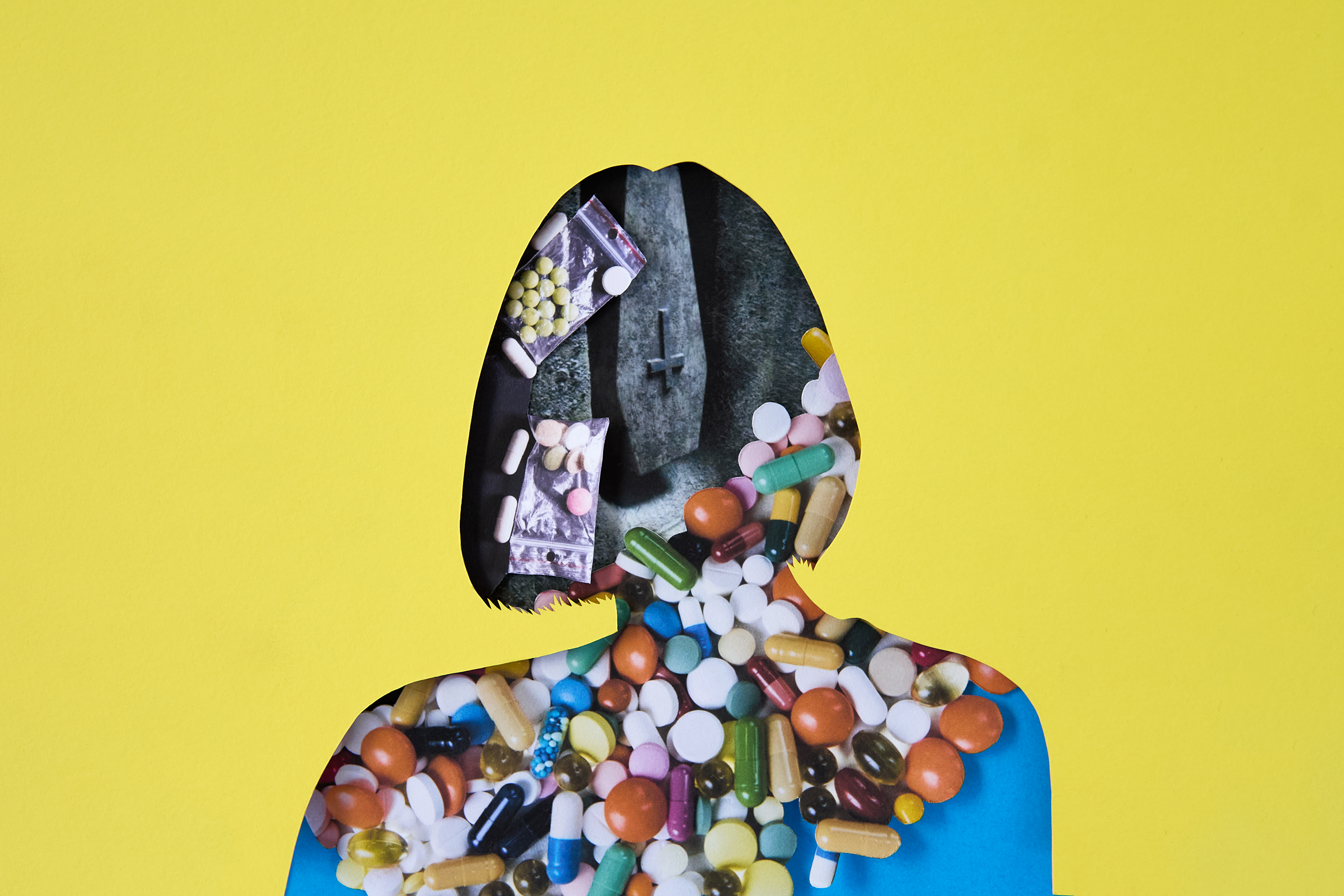

We begin on Valentine’s Day eve, three years ago. There’s a debate being held at the UnHerd Club in Westminster. The motion is: “This house is proud to be promiscuous.” In one corner, conservative influencer Louise Perry. In the other, the author Zoe Strimpel, defending the right to casual sex. Perry won. Strimpel’s new book, Good Slut: How Money, Sex and Power Set Women Free, aims to regain the ground lost on 13 February 2023.
The premise of Good Slut is simple. Women have it good right now. Women in the west have, in fact, never had it better, particularly in comparison to men. According to the book, the suicide and achievement gaps are vast between the sexes. (One example cites that women are more likely to go to university than men, and graduate with more firsts and 2:1s.) The ability to shag who we want, when we want, has been made easier and more accessible than ever thanks to the advent of technology. And yet despite the opportunity to be good, happy sluts, we aren’t making the most of it. We mope, we abstain, we chastise ourselves and others. We see ourselves not as sexual beings but as celibate victims.
Who’s to blame for that? Well, everyone really. On the right: the edgy young, newly Catholic reactionary women who style themselves as conservative feminists, arguing for marriage, motherhood and monogamy. On the left: a repitched “idea of empowerment and liberty around the sartorial modesty of the headscarf and hijab (anything to spite the “capitalist”, allegedly pro-Israel west)”. Stuck in the middle, at an impasse, the author wonders if everyone has simply gone mad.
Intended as a panacea for women’s ills – a cure based on sanity and shagging – Good Slut is not so much a watertight defence of promiscuity as a scattergun criticism of anyone deemed responsible for holding back sexually active women. The culprits are many. The #MeToo movement, for “bombarding girls with well-meaning material about how vulnerable they are and how widespread their suffering is”. Women in elite jobs, for complaining about sexual harassment when “there are quite a few women who might either shrug that stuff off while barely noticing it” or, indeed, “enjoy it as proof of being attractive”. Social media, for glamorising eating disorders and promoting underachievement in a society of “complaint and disempowerment”.
Our very culture, Strimpel argues, makes ailments the foundation of an excessive “politics of misery”. There are so many first-person stories in the papers about women who have been diagnosed with cancer that the disease is “ambient in the cultural airwaves”, leaving us haunted by “cancer babe” influencers, or accounts of women who are “crucifying themselves to get pregnant through exploitative medicine”. These “tales of woe” are not raising awareness, she argues, they’re holding us back. We need a “new frame of analysis”, a move towards a “job not done yet” mentality, which admits violence against women and cancers are prevalent, rather than our alleged “we will always be screwed” mindset. (“It’s as if to be a woman is to inevitably be a vehicle of pain and shame,” writes Strimpel. It should be noted that one in seven women in the UK will get breast cancer in their lifetime, while one in eight has experienced infertility.)
Throughout, the book draws what its author calls a “thin and complex” line between feminism and “wallowing”. This critique is not a new one – Andrea Dworkin first wrote of how feminists were accused of “inventing” struggles in 1983: “Calling attention to it, we are told, insults women by suggesting they are victims.”
Strimpel acknowledges that her argument may appear “naively positive”. She does suggest at one point that women might benefit from compulsory martial arts training, but all the same, the general theme is that we need to cheer up a bit. (Andrew Tate, whose influence on sexual politics is undeniably cancerous, appears in only two sentences in the entire book.) After all: “Misogynistic shit happens. It happens a lot.”
But Good Slut is not about that misogynistic shit. It’s about teaching women to “grab life by the ovaries” and halt the betrayal of womankind by a rogues’ gallery of foes and irritants. These appear to include the free-speech movement, “chastity belt feminists”, trad wives, “the thrusting pro-Palestine movement on the left”, momfluencers, the leftwing publication Jacobin, the conservative obsession with gender and reproduction, the cause of trans rights, the treatment of women in Yemen and Pakistan, and the Black Lives Matter movement. Everyone, sporadically, is at fault – except, weirdly, for the sex workers Bonnie Blue and Lily Phillips.
Riding the ‘cock carousel’ can induce depression about the state of men and the world
Riding the ‘cock carousel’ can induce depression about the state of men and the world
Known for their freak show-esque sexual feats where they sleep with hundreds of men in one day, Blue and Phillips are either sex work heroes or pariahs, depending on how you look at them. Strimpel sees both women as examples of what is, in fairness, a legitimate and uncontroversial idea: that sex work is work. Blue in particular – who had sex with more than 1,000 men in 12 hours in 2025, and last month announced she was pregnant after a “breeding mission” involving unprotected sex with 400 men – is described as “ruthlessly savvy” and “well endowed with self respect”. Occasionally – and not only in the chapter entitled “Why Money and Capitalism Are Good for Women” – this argument errs on the evangelical: “Private life and intimate connections have always been inseparable from money,” Strimpel argues. “Selling sex doesn’t have to mean self-hate or self-degradation, it can help some women to find liberation, self-respect, belonging and security.”
The only salvation for women, according to the book, is neoliberalism. This ideology, Strimpel notes, has had a hard time recently, reputationally speaking. Neoliberalism is outre. It is “no longer cool, or even acceptable, to embrace success”. But its critics, she says, couldn’t be more wrong. With free markets come freer women. It’s neoliberalism, not “identitarian socialism”, that can liberate us all from trudging around like sexually frustrated Eeyores. The power of the patriarchy, according to Strimpel, has been grossly overstated. “Patriarchy is a real thing, still ruining much of the world,” she admits, “though thankfully – for all its imperfections – not the west.” In fact, she expands, patriarchy “doesn’t exist any more, at least not in the ways it was enshrined in law and custom even in the west until about 1991.” Forget Gisèle Pelicot. Forget Sarah Everard. Forget all those AI models undressing little girls on the internet. Forget Ghislaine and Jeffrey, even. We can, Strimpel says, choose to “see our cup as half full or half empty. For women, today, in the west, the cup is full to overflowing – we just have to allow ourselves to see it.”
Newsletters
Choose the newsletters you want to receive
View more
For information about how The Observer protects your data, read our Privacy Policy
In its determination to prove the early 00s promise that women can have it all – that they can work, shag, marry or not marry, reproduce or not reproduce, divorce, access safe abortion, access contraception, find happiness through individualism and choice – Good Slut misses several opportunities to focus its attention on the sexual complications faced by young women – and young men – today. The book is good on the post-1960s sexual revolution, particularly the use of the pill and the current conservative backlash against it, but it fails to look seriously at the full picture of where that’s left us. As a result, its arguments are often anachronistic.
At a time when dating app fatigue is commonplace, it celebrates the usefulness of apps such as Tinder in “maximising choice” for women, while ignoring even how that landscape has changed and splintered since the introduction of “female first” apps such as Bumble or specialised platforms including Feeld, Raya and Scruff. When sex from those dating apps happens to be mediocre (often, in my experience) or occurs “out of politeness”, this is not “traumatic or exploitative”. “Sure,” Strimpel notes, “riding the ‘cock carousel’ can induce depression about the state of men and the world. But nothing else is quite like it either when it comes to combining up-close-and-personal encounters with the cute and creative potential of human interaction.”
By focusing so resolutely on self-inflicted pain and victimhood, Strimpel’s book leaves a chasm where it might have explored new ideas in more depth; not only the dating landscape but everything from incels and toxic masculinity to polyamory and pro-natalist politics. Using female sexuality as a springboard to explore societal values and ills is not a new concept, though it remains a worthwhile one. “Women and love are underpinnings,” Shulamith Firestone wrote in The Dialectic of Sex: The Case for Feminist Revolution (1970). “Examine them and you threaten the very structure of culture.”
Caught between 2010s girlboss optimism and cultural misanthropy, Good Slut never really questions the structure of our present culture enough to convince the reader that women can have it all. Instead it appears, in spite of its premise, pretty gloomy about the state of the world and the women in it. Still, the book remains firm in its credo that “the gathering storm of a rising generation’s mistaken ideas about ‘neoliberalism’ and ‘the system’ and their relationships to women’s sexual freedom, an increasingly widespread and vocal religious Islam, and a voguish upsurge in a TikTok and Instagram-friendly pro-natalist Christianity means this is the most important moment in generations to double down on women’s right to be slatternly shag-queens.”
And, it appears, not much more.
Good Slut: How Money, Sex and Power Set Women Free by Zoe Strimpel is published by Constable (£22). Order a copy from The Observer Shop for £19.80. Delivery charges may apply
Photograph by Lambert/Getty Images