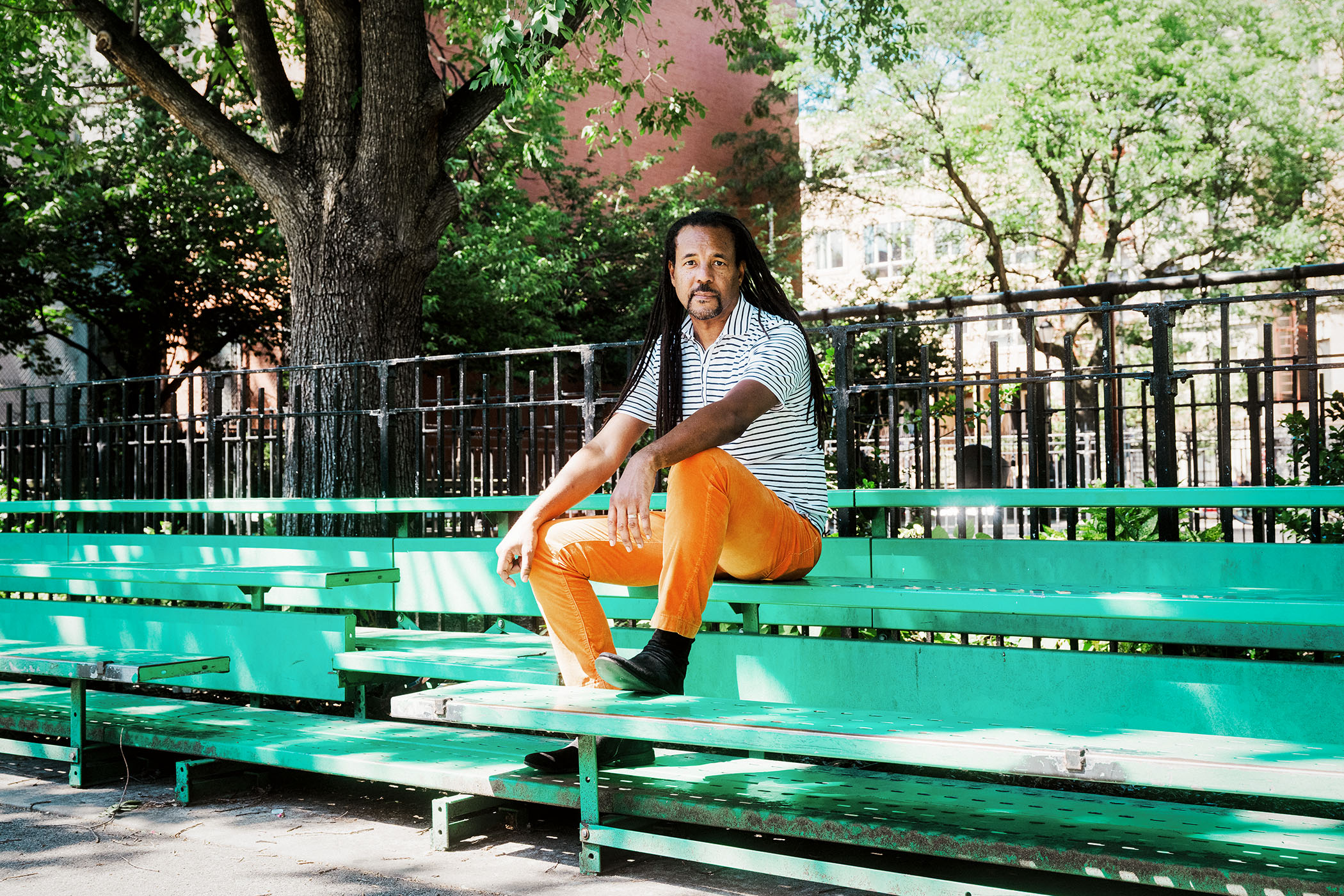



Photographs by Fumi Nagasaka For The Observer
It’s a perfect June afternoon in New York – or “Mamdanistan” as online wags have termed the city, reflecting a communal upswing in energy following the election of mayor Zohran Mamdani last November. As of today, the New York Knicks are two games ahead in an NBA championship finals series they will soon win. One headline reads: In This Dumpster Fire Of A Political Era, New York Is Having *A Moment*. Between the thunderstorms, the basketball giddiness and an increased police presence in my neighbourhood, it’s been starting to feel like one of those summers, the sort Spike Lee will set a film in not too long from now.
I’m on the Upper West Side to meet the two-time Pulitzer prize-winning novelist Colson Whitehead at a little Greek spot of his choosing. We’re talking about Cool Machine, the final instalment of his Harlem trilogy (Harlem Shuffle came in 2021, and Crook Manifesto in 2023), which in their entirety follow Ray Carney, a devoted husband and father who makes a decent living as a furniture salesman, from the late 1950s to the mid 1980s. Carney comes from a long line of criminality and, despite having opted mostly for a straight life, makes a little extra by acting as a fence, selling on stolen goods. Each of the three novels has its own satisfying trajectory in which Carney’s criminality reasserts itself in different ways: Crook Manifesto, for instance, is propelled by Carney’s need to track down Jackson 5 tickets for his daughter. Along with Whitehead’s signature precision in plotting, the reward for the reader – or this one at least – is full immersion in these teeming New York decades, moments and neighbourhoods and families.
Whitehead began initial work on the trilogy more than a decade ago, expecting to focus on it after his 2016 novel The Underground Railroad, his great breakthrough book, which won both the Pulitzer and the National Book award. The novel took the powerfully seductive notion of the Underground Railroad, an informal network by which enslaved people in the American south could acquire their freedom, and rendered it literal – actual railroads which transport people north.
Whitehead has said he likes to mix things up by writing one sober novel, followed by one that’s more playful, so he expected to get straight to work on Harlem Shuffle after he was done with The Underground Railroad. But he was, he suggests, waylaid instead by the urgency he felt after the first election of Donald Trump to consider the state of America. This led to 2019’s The Nickel Boys, another Pulitzer prize winner. It was a fictional account of a real-life tragedy and scandal – the Arthur G Dozier School for Boys in Florida, which was host to routine abuse, rape and even murder. After its closure in 2011, unmarked graves were dug up, and a Department of Jutice investigation began. It’s a stunning book. Did it involve a serious amount of on-the-ground legwork?
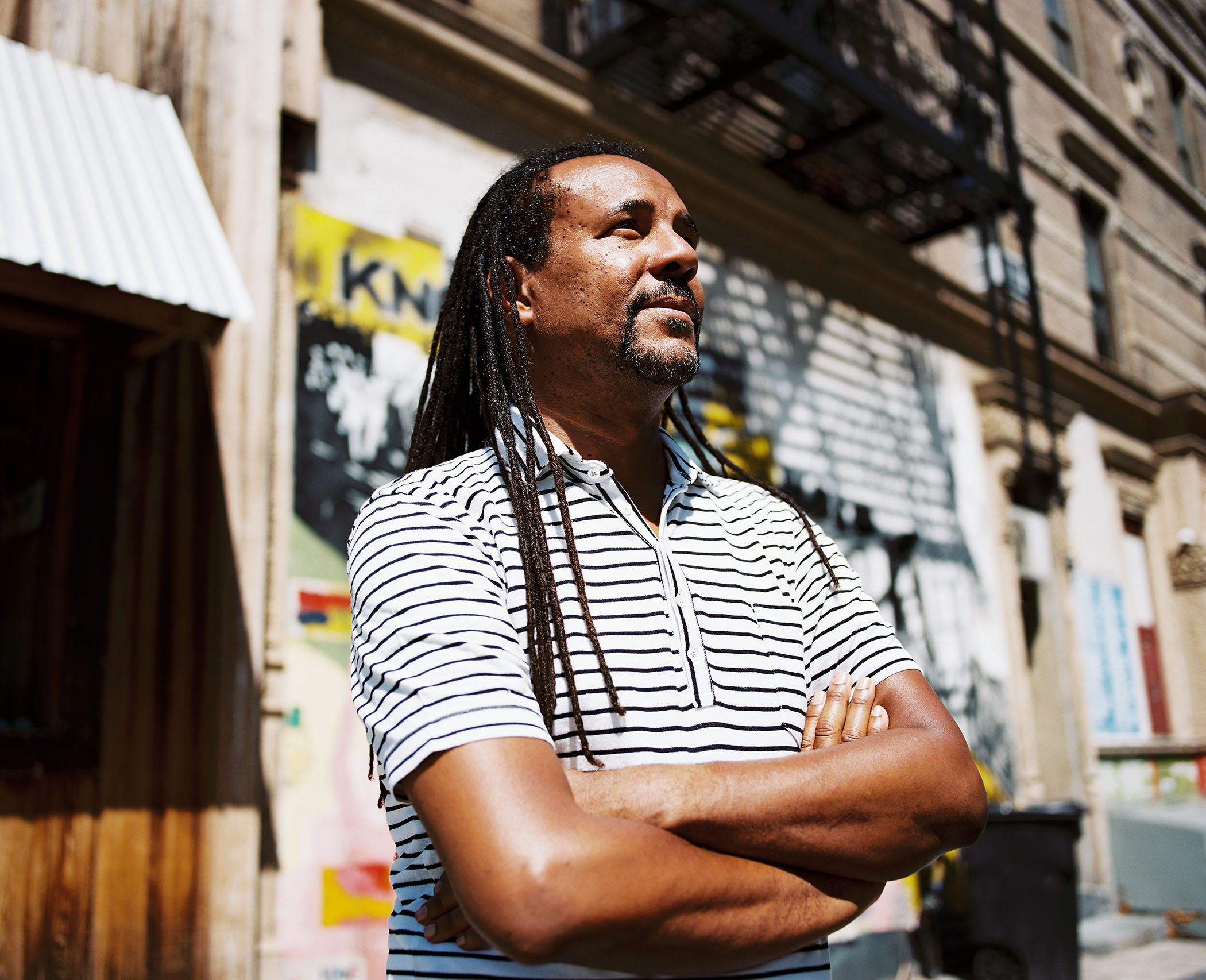
Colson Whitehead won the Pulitzer prize for The Underground Railroad and The Nickel Boys
Actually, Whitehead says, “For Nickel Boys, I would have rather been like a real boy and actually go down [to the institution], but I kept putting it off and off. And eventually I realised that I got depressed about the idea of going to this place. I never ended up going. I would get a hotel room, book my flight, and then the morning I was supposed to leave it was the feeling of, I don’t want to go to school today, I feel sick. I was having a physical reaction to the idea of being present in this place. So, instead, there were a lot of pictures over the 50 years, a lot of newspapers had been there. There was a Christmas pageant that was documented every year...”
In an interview at the time of publication, Whitehead said: “After writing two books about slavery and institutional racism, I understand that human beings are wired for cruelty. We are, simply, bad. Good sometimes, sure, but pretty bad. It doesn’t take much of a societal nudge – state-sanctioned slavery, segregation, a police badge – for our programming to kick in.”
When I remind him of this, he seems faintly perplexed by the severity of his past claim.
“Yes, people are terrible, and we treat each other terribly, but also we’re capable of a lot of kindness and beauty. Undoubtedly. I feel very comfortable accepting both sides of human nature. I have no choice.”
Whitehead is an inveterate New Yorker. He spent most of his childhood in the Upper West Side, the third of four children. His mother, Mary Ann, was a public school teacher who came from a prosperous family; his father, Arch, began a successful recruiting firm. The family had a summer house on Long Island, the setting and title of Whitehead’s most autobiographical novel, Sag Harbor, 2009. It’s not just being a born New Yorker that has earned him his status as city-whisperer, nor his novels set here, but also essays like the one he wrote for the New York Times after 9/11. “I never got a chance to say goodbye to the twin towers.” he wrote. “And they never got a chance to say goodbye to me. I think they would have liked to; I refuse to believe in their indifference. You say you know these streets pretty well? The city knows you better than any living person because it has seen you when you are alone.”
The day before we meet, an old chestnut about who gets to call themselves a New Yorker does the rounds. Jennifer Lopez appeared on the online series Subway Takes to say anyone not born in New York doesn’t count. What’s Whitehead’s verdict?
“So many people are transformed by coming here. Maybe they want to claim it as their identity, and, you know, New Yorkers should have better stuff to do than police people’s identity.”
A little later, while we discuss the book of essays, he says:
“Talking about gatekeeping, being a New Yorker, that 9/11 essay just says: ‘If you’ve been here long enough to remember what used to be here, you’re a New Yorker.’ So that’s how I feel, basically.” He breaks off to assume a pompous air and theatrically push glasses up his nose. “As I said, in my essay, in the New York Times.”
I can’t believe that so many racists and white supremacists have been able to get as much done as they have without being rebuked and rejected and blacklisted
I can’t believe that so many racists and white supremacists have been able to get as much done as they have without being rebuked and rejected and blacklisted
Having arrived here myself only two years ago, one thing I always want to know about my native New Yorker friends is what their first experiences were of not-New York. What’s it like to grow up here and subsequently get a glimpse of what is proposed to be Real America?
“I travel a lot for work now,” Whitehead says, in answer to that question, “and it sounds good to go to Texas for a day or Idaho for a day. None of these places I would actually live. I mean, I’m a real New Yorker, and between here and Long Island, that’s where I see myself ending up. I think I’m supposed to be a New York snob, but these days everywhere has a nice restaurant.”
But what about the political climate beyond New York? “I mean, what I think about America, obviously, is that we’re in a very retrograde moment where conservative, racist impulses that have guided so much of our history are now in ascendance. They’re in the White House. The dummies have taken control of all the levers of power. I have to hope that we’ll take the country back in two years, starting this [November] with [the midterm] elections. A lot of America, despite what I was saying, is pretty scary, and it’s right there beneath the surface, waiting for someone like Trump to summon all that.”
I say that I’m a little surprised that the long-feared rightwing American president isn’t in fact a religious nut; I’d assumed that such a president would be a hardcore fundamentalist.
“Trump can only fake it so far. He can’t fake much, he has no enthusiasm, but he can definitely kiss up to religious leaders. We had Pat Buchanan, David Duke, these figures have always been part of the American political landscape. They go dormant. I can’t believe that so many racists and white supremacists have been able to get as much done as they have without being rebuked and rejected and blacklisted. The fact is they appeal to a big part of the American public.”
Newsletters
Choose the newsletters you want to receive
View more
For information about how The Observer protects your data, read our Privacy Policy
Does he think the people who they don’t appeal to are not panicking enough in response?
“Well, I mean, if we panicked, we would [all] have voted in the last election, right? So, obviously, not enough people have panicked. I think from all the polls and his mental degeneracy, Trump is petering out. People get sick of you. He’s been around for a while, and when he ran in 2016 he was losing some of his edge, and now he’s half demented. The racists and nut jobs, they’re all gonna be with us. Sometimes they’re in power, sometimes they’re not. We have to do our bit to make sure that they don’t stay in power.”
Whitehead was on Mamdani’s inaugural committee – a group of 48 prominent New Yorkers tasked with welcoming the Democrat into office in January. I ask how he rates his new mayor so far? Whitehead is cautiously positive in response: “It’s only been four months,” he shrugs, with the air of someone who would not be at all surprised to be let down. “But, it’s been a good four months. It’s nice to have a mayor who loves the city, and that is evident in him.”
Whitehead’s career began at the Village Voice newspaper, where he became a TV critic. He describes the era as “one of the greatest times of my life – just being young and in the city and finding your voice as a writer”. He met his first wife at the Voice and they had one daughter, who is now 21. Whitehead met the literary agent Julie Barer in 2009 and began dating a few years later. They are now married, with a 12-year-old son. I want to ask how he combines his parenting with his extraordinarily prolific writing career, but I’m aware of sounding like I’m trying to do a smug gender-reverse gotcha question. I begin haltingly and he calls my bluff in the first two seconds.
“Oh, don’t worry – everyone does that one now,” he says drily, meaning every journalist believes they have a smart way of asking the same silly thing. He laughs. “With my oldest one, we couldn’t afford a lot of daycare, so that meant after preschool I was on duty. It is important for me to be a much more present dad than my father was. Also, it’s fun, even if it is draining. I didn’t have to learn to keep more regular hours when I became a parent, but definitely when Underground took off, and I was travelling a lot more, I learned how to write in hotels and on planes.”
Did it change the way he locked in to his writing?
“I’ve written books flush, written books broke, depressed, happy. In the end it’s just you and the page for two or three hours,” he says. “My son is at school from eight to three, so if I can’t get work done, there’s something very wrong with me.”
Carney, the hero of the Harlem trilogy, is a good man and his desires are mostly modest. What, for Whitehead, was so appealing about Carney and his life that he stuck with him for three books?
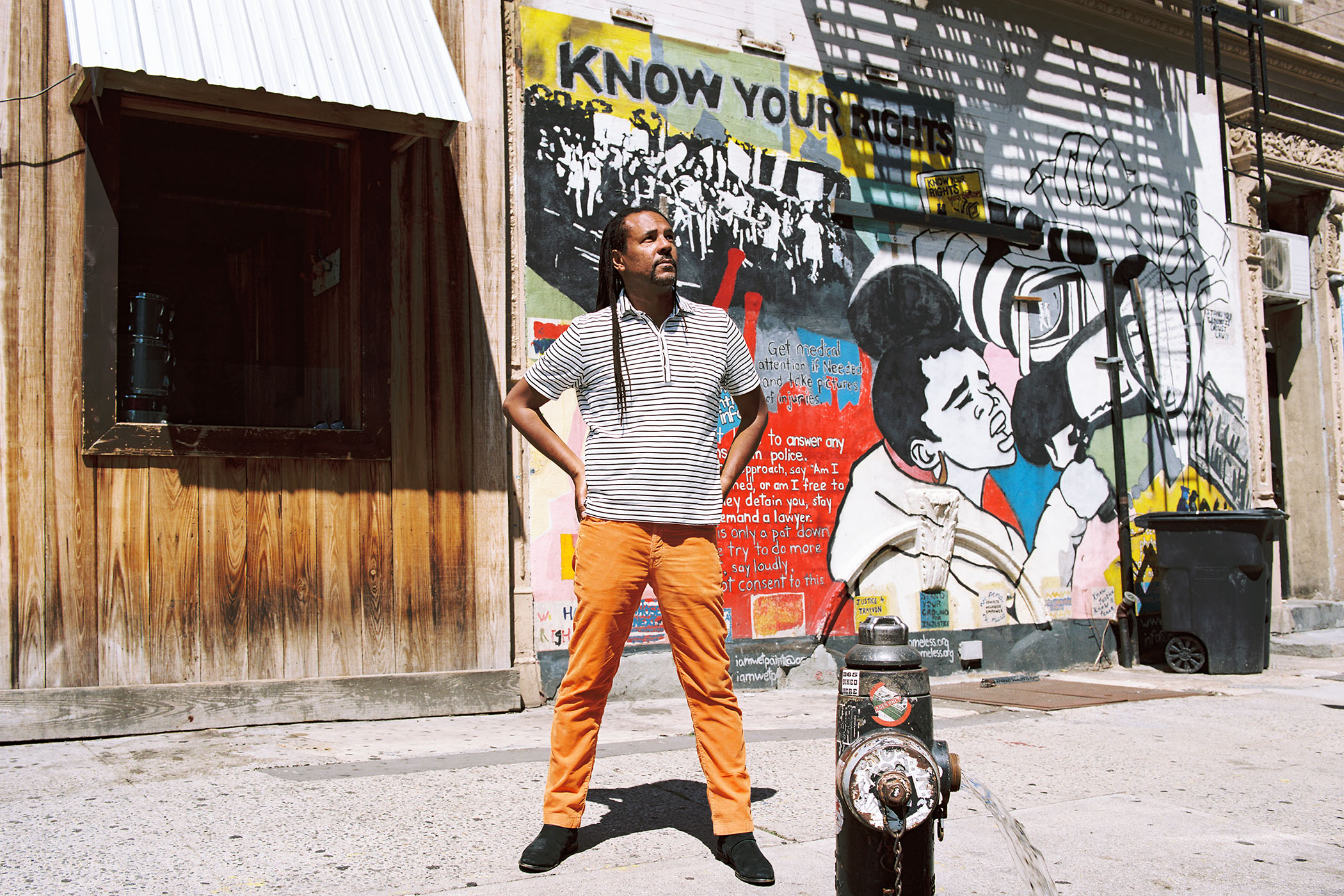
‘I like malfunctioning robots a lot more than AI’: Whitehead in Harlem
“It’s the changing city, the changing self, it’s the churn. The churn, that metaphor appears in all three books in different forms,” he says. “Writing before the pandemic, during the pandemic, afterwards, informed it too. How does the city bounce back from a crisis? How do people bounce back? Wrestling with different parts of your nature, that’s part of Carney’s character pretty early. What do you accept of your evil side, your dark side? Where do you run from? How do you integrate the two? The third volume is very much about reconciling yourself to who you are, for good or ill.”
Whitehead describes his teenage self as a “nerd, a totally socially awkward dork”, and we debrief a bit about our favourite Stephen King novels; he has written about the ritual of watching science fiction movies, both prestige and schlock, with his family. In April he wrote a comic essay for the New York Times about AI and the bizarre willingness humanity seems to have to hand over each impulse of life to it. From our discussion of AI in schools (“I don’t want to rag on my kids’ school, but teachers choose it when they’re lazy”) we learn that we have both had a recent enthusiasm for videos featuring malfunctioning robots – those clips where they are supposed to be dazzling everyone with their fun tricks and amazing sentience and then either go insane or stop functioning.
He recalls one in which a robot failed to moonwalk. “I like malfunctioning robots a lot more than AI,” he says.
Next week, Whitehead and his family and some friends will go on a trip to the beaches of Normandy at the behest of his son, a Second World War buff: “There’s like 12 of us, in a Little Miss Sunshine van going through war sites for five days.”
And how about after, once Cool Machine is out, can he take a breather?
“I’m working on something new. I wanted to take a year off and just veg out but I was so bored and depressed. I was playing Baldur’s Gate [a Dungeons & Dragons video game; the adolescent Whitehead was a role-playing gamer]. But how many times can you play Baldur’s Gate? So I’m working. I’m happier when I’m working.”
I think then of a line near the end of Cool Machine, as Ray Carney contemplates a life outside New York: “There was no place else. It was like going on the lam from yourself.”
Cool Machine by Colson Whitehead is published by Little Brown Book Group (£22). Order a copy from The Observer Shop for £19.80 (10% off RRP). Delivery charges may apply