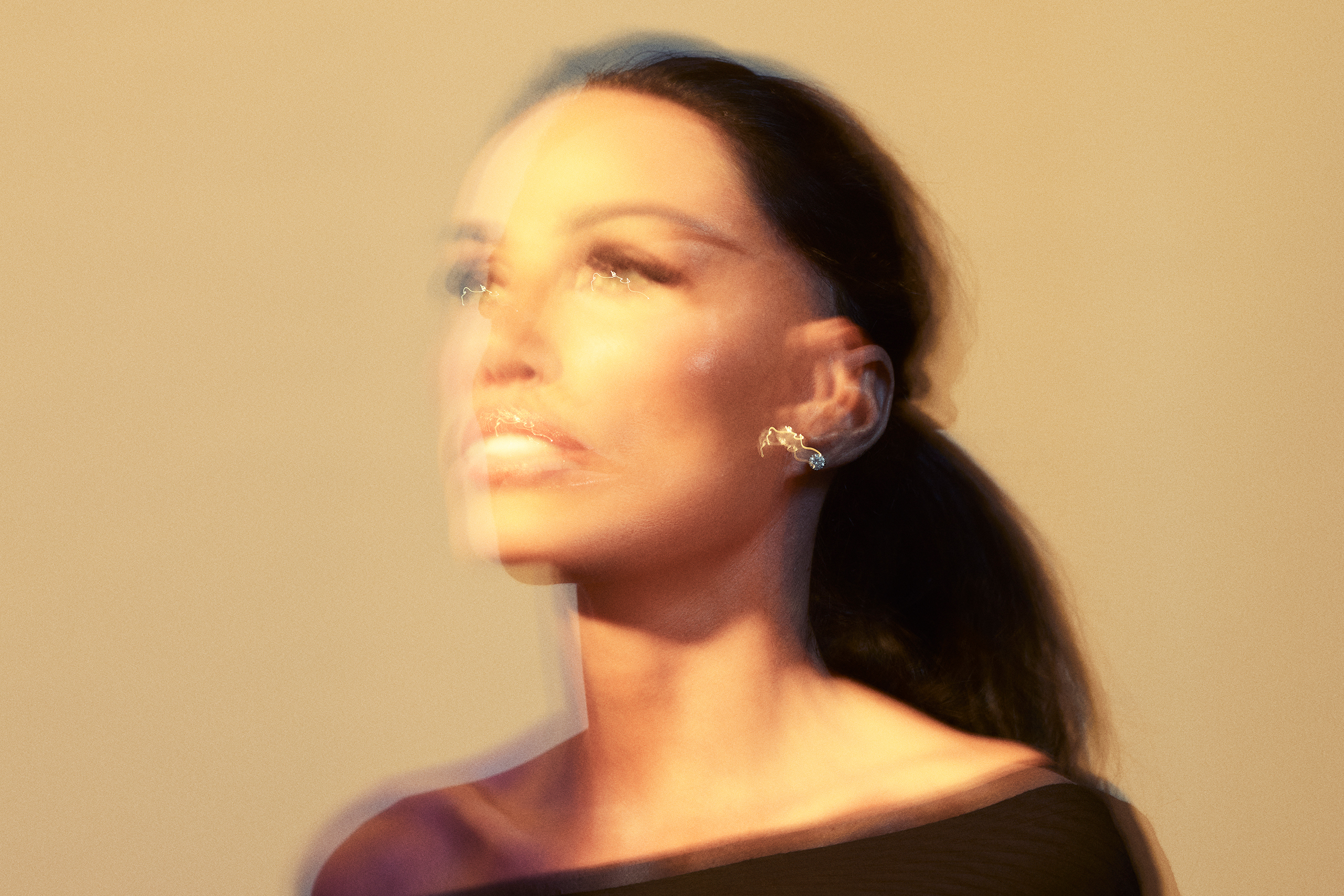
Last year, Katie Price went into a studio where she recorded 30 phrases, including “I like going horse riding” and “This week for dinner I’ve got beef burgers.” Engineers then stitched them together to create what she calls her “AI twin”, for fans to chat to. “It’s like OnlyFans, but AI,” she explains today, pulling discreetly on a pastel-coloured vape, her tracksuited legs up on a chair, hair in a tight ponytail, teeth so white they’re almost blue. Fans ask her AI twin if they can, say, see her in a black bikini, and then suddenly there she is, chatting back to them in a black bikini – she’s now the AI company OhChat’s top earner. This is the latest chapter in the transformation of Katie Price, a soap opera or epic poem or lurid western that has played since 1978. “And what this means,” says Price, grinning, “is that Jordan’s still alive.” Which is a relief actually, because for a while it all seemed a bit touch and go.
Price created Jordan in 1996 when she started her career as a glamour model, first because she thought the name sounded catchy, then because she needed an alter ego to help shoulder the crushing weight of tabloid attention. Her life until then had been loving but complicated, a mix of trauma and horses. Her father left when she was four, and at seven she was sexually assaulted by a stranger. She remembers going into some bushes in the park; she remembers the police taking her knickers for evidence. The man was never caught. Her mother and stepfather said she was obsessed by animals and shy and studious, until one day in her early teens she turned up at a birthday party in a leather catsuit and seemingly never looked back. She dropped out of school at 15 and moved in with an abusive older boyfriend, and at 18 started posing for the Sun’s Page 3. “I used to like being looked at but not touched,” she says. “So I was the one in control.”
It turned out she was incredible in front of the camera. Throughout the 1990s and early 2000s, Price was photographed every day, sometimes draped glamorously over cars, other times falling out of clubs. At 48, she still likes being looked at. “I’m an exhibitionist. Always will be. I just love being in front of the camera. I love seeing what happens. As soon as I see a camera, I just sort of go like that with my eyes.” Her eyes, clear, green, suddenly soften and sparkle, and her lips, inflated and unglossed, relax. “I can’t help it,” she shrugs merrily. For a while Price ruled Page 3. She made headlines when she ran a poll asking readers if she should get breast implants. “My boobs are in your hands,” said the poll – 80% of readers voted against, but she went for it anyway, going from 32B to 32C, then the following year 32D, then 32G. A certain villainy set in, or that’s how it was spun anyway. In the 2000s Price singlehandedly redesigned celebrity and invented reality TV, selling stories and snapshots of her life and relationships in constant, relentless updates. After a kiss-and-tell with the footballer Teddy Sheringham, “I went from Page 3 to the front page,” Price said earlier this year. “And I’ve never left.”
Just as her career was exploding – a Playboy cover, shoots in Vogue as well as all the men’s mags – she discovered she was pregnant with her first child. Harvey was born blind, with significant disabilities, including Septo-optic dysplasia, autism and Prader-Willi syndrome, conditions that require round-the-clock support. His father, the footballer Dwight Yorke, initially denied paternity, and has remained absent since. Ten days after giving birth, Price was shot topless in lace knickers, and soon after with Harvey sleeping on her breast. Her mum, Amy, who has always supported Price with eye-rolling grace, was appalled she was profiting from her newborn child, and the tabloids agreed. Multiple headlines gleefully called her the “mother from hell”. Paparazzi photos from the time see her tanned, tiny, tipsy, blinded by the flash of 50 cameras.
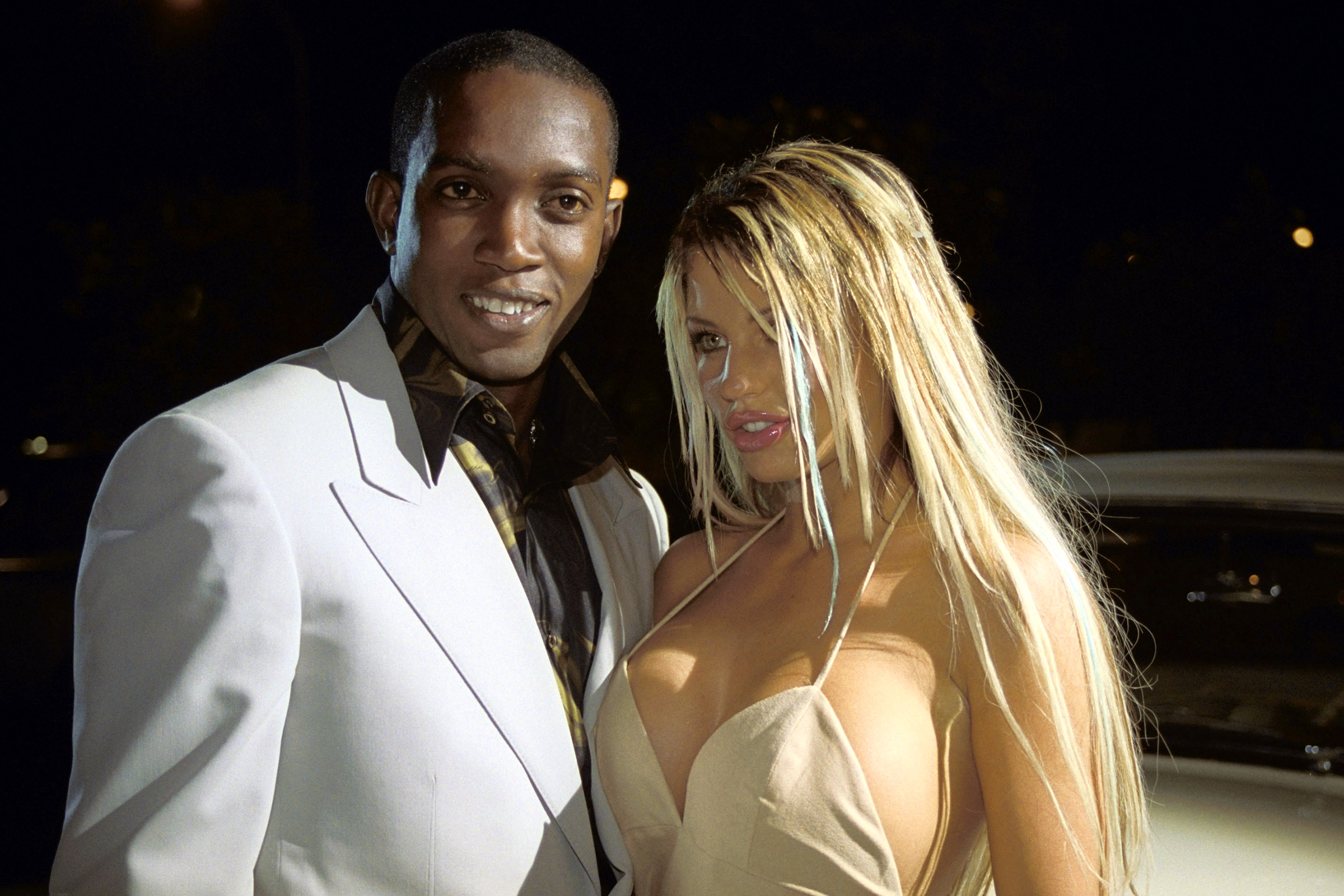
2001: In Monte Carlo with footballer Dwight Yorke, the biological father of Price’s son Harvey. Yorke denied paternity until it was confirmed by a DNA test
In 2004, she fell in love on live TV. It was the third season of I’m a Celebrity where she met Peter Andre, and their unfolding romance led to a wedding (bought by OK! magazine for £1.75m), two children, a duets album and a reality series called Katie & Peter that ran for five years. It also led to the public seeing her suddenly not just as column-fodder, but as a human being. Her fanbase shifted sharply from male to female. As well as eight autobiographies, she wrote two series of children’s books and 12 bestselling novels – her second, Crystal, outsold that year’s entire Booker Prize shortlist – and instead of Jordan, she started going by Katie again. At which point we should pause for breath. We’ll go again in a minute.
Price has been a constant in my life and the lives of my peers for 30 years. This is the most excited friends have been about an interview of mine for at least a decade. She was a sort of cultural wallpaper as we grew up, always there, but constantly updating with infinite plotlines and cliffhangers around her inflated body, her sexual charisma, the minutiae of her affairs, her tortured, tender life as single mother of a disabled child, and on and on – a Greek myth about femininity, excess, punishment, fame.
I didn’t know what to expect when I arrived at our photoshoot, where she was telling the stylist she was due to have her lip filler drained later that week, and where I followed her upstairs to the sunlight beside her younger sister, Sophie. When you interview somebody, you always hope they’ll tell you a secret. Having documented five children, three ex-husbands, 17 boob jobs, six facelifts, 25 bestselling books and two breakdowns, I wonder, as I sit down, if Price has any secrets left, and then, how vulnerable you become when you’re a person who reveals everything.
‘Having documented five children, three ex-husbands, 17 boob jobs, six facelifts, 25 bestselling books and two breakdowns, does Price have any secrets left?’
‘Having documented five children, three ex-husbands, 17 boob jobs, six facelifts, 25 bestselling books and two breakdowns, does Price have any secrets left?’
“People have strong reactions to Katie because she’s a mirror of the society we have created,” Elizabeth Day, who hosted Price on her How to Fail podcast, told me recently. “Her life tells the story of so much of the past 40 years of popular culture: celebrity and reality TV; plastic surgery and weight-loss drugs; the male gaze and the sexualisation and abuse of women; the continuing desire for external validation and love.” She said, “I also feel she probably doesn’t know how to live a life outside the attention economy any more, and that makes me sad because, deep down, she was once just a sweet girl who loved horses.”
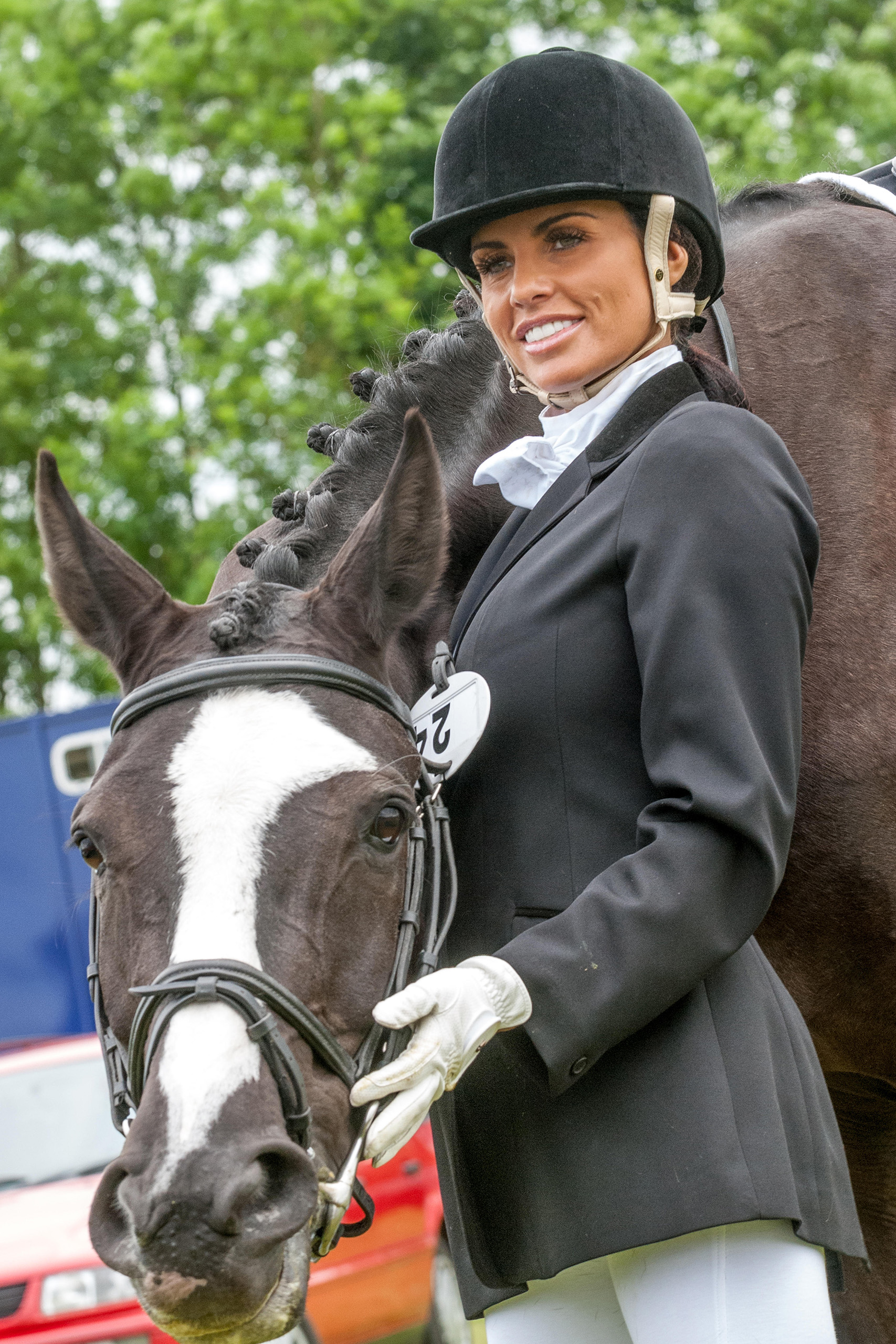
2008: Price taking part in her first dressage competition, at Hickstead, finishing sixth out of 27. She has loved horses since she was a child
Price went into the documentary telling the director, Paddy Wivell, what she tells everybody: “I’ve got nothing to hide. I’m authentic.” She adds,“Everyone’s seen my journey. I wanted them to revisit places that have been… hard.”
In 2009, her marriage to Peter Andre ended, and the couple’s former manager left Price and stuck with Andre, successfully directing public sympathy towards him. The tabloids turned on her again, and Price’s mental health spiralled. In 2013, after a brief marriage to the cage fighter Alex Reid, she met a former stripper called Kieran Hayler, and married him after a five-week relationship. She was pregnant with their second child when she discovered he’d been having multiple affairs, including with her best friend. She had her first facelift in 2017, the same year she and Hayler renewed their wedding vows for the third time. In 2018, filming in South Africa, she was raped at gunpoint during a car-jacking in front of two of her older children. Her daughter Princess told the Guardian it was “one of the worst things I’ve experienced in my life”. That year Price divorced Hayler, and in October she’ll be called as a witness as he stands trial accused of raping a 13-year-old girl at their marital home, allegations he denies. “I’m not allowed to talk about that,” Price says, solemnly. “I know what I’d love to say, but I can’t.” She gazes ahead, eyes narrowed, and her sister, Sophie, clears her throat. Clemmie Moodie, assistant editor at the Sun, told me, “She’s like a Weeble, isn’t she? You knock her down and she keeps bouncing back up. It’s just utterly admirable.”
Newsletters
Choose the newsletters you want to receive
View more
For information about how The Observer protects your data, read our Privacy Policy
Moodie has interviewed Price hundreds of times in her 20-year career, gradually becoming friends despite Moodie writing, she said, “quite horrible things about her” after her split from Andre. Then there was a period where Price was declared bankrupt, and “for about four or five years I wouldn’t touch her, so to speak. Because it was clear there were lots of dark things happening – her mental health was really at rock bottom. I just felt a responsibility not to write about her. I thought she was vulnerable. That was around the time she crashed the car.”
One night in 2021, Price drove into a tree while drunk, later saying she’d been trying to kill herself. At the scene, a police officer took a photo of her overturned car and posted it on Twitter; in rehab at the Priory she was diagnosed with ADHD and treated for PTSD. Her family swept in, smoothed the chaos and saved her life.
“When you’re in that situation,” Price says, “you just think there’s no light at the end of the tunnel. And it takes a lot of strength to get through it. It doesn’t matter how many times people are like, ‘Sort yourself out.’ You’re in denial. When really you want to say, ‘I need help,’ you’re like, ‘No, I’m fine, I’m fine, I’m fine.’ Until you’re at breaking point.” She talks about these, the most horrific moments of her life with a glassy matter-of-factness that is sometimes disconcerting. It reminds me of when somebody tries to emote but Botox stops them smiling. “Now I can reflect, look back at how I was, what I went through, and I’d never wish it on my worst enemy. It’s not a nice place to be, and it’s so easy to slip back. It’s harder to keep going. But then, I’ve got so much to lose.”
I ask what triggers she looks out for today. “Relationships, media situations… And it happens every day to people, not just me. You’d be surprised what kind of people were in the Priory, from different walks of life. Some people, you’ll be like, ‘Wow, you’re in here?’ Judges, businessmen, policemen, army people, mums, dads, students. It makes you think, ‘I’m not alone.’” In group therapy she’d hear a patient describe the experiences that had brought them to rehab and think, “Wait, you’re here just for that?”
Making the documentary was an opportunity to look back, at childhood photos, early interviews, tabloid splashes, and to reflect. “I’ve been used and abused by friends and in relationships, and it made me think, were they really my friends? Or is it because I was paying them? I was too trusting, too open to wanting to help people. I’m, what do they call it? An ‘empath’. But now I’m not open to any new relationships or friendships. I’m happy where I am.” The whole experience, both the life and the looking back at it from this precarious height, has made her feel “like I’ve been in a washing machine. I’ve come out, got the knowledge, the experience, the heartache, the trauma. And I’m starting my career again from now.” What will that look like? “I want to grow my empire again. Maybe talk about domestic abuse. It’s obvious I’ve been through all of that. More documentaries with Harvey. More public speaking. I think I’d be good at media training for people. I want to do a film about my life.” Who’d play Price? “Megan Fox.”
When the director Paddy Wivell first started researching the documentary, he told me, “I was thinking, is she incredibly strategic? And then as it went on I realised that it’s not strategic. This is just how she meets the world.” I said that a producer who’d worked with Price previously told me they were surprised at how much responsibility over her career choices she was allowed, given how extremely unstable and unguarded she appeared. “She is vulnerable, no question,” said Wivell. “Her family, everybody around her, worries about the surgery, and how thin she is, and some of her decisions with blokes. But on the other hand, when you’re with her, her spirit is absolutely intact. You don’t feel you’re with someone who’s a victim of life.”
‘People have strong reactions to Katie because she’s a mirror of the society we have created’
‘People have strong reactions to Katie because she’s a mirror of the society we have created’
I found I agreed. When we meet, Price seems sturdy and happy – present, but somehow detached. Wivell said that when he was making the series he’d been reading the Slits guitarist Viv Albertine’s memoirs, and he’d immediately seen parallels. “Albertine talks about how a lot of those original punks had suffered some kind of abuse in their early life, which made them go out in the world and meet it in a very antagonistic way. People who have transgressed early on in their life, like Kate, don’t respect rules in the same way. And I just love that quality about her. I saw her,” he smiled, “as a true punk spirit.”
The legendary journalist Lynn Barber, who interviewed Price in 2016, said she reminded her of Tracey Emin – self-driven, temperamental, a kind of artist. Wivell had a similar feeling. He found the experience of appraising her life – the wilfulness, the struggles – ultimately liberating.
When Price steps outside to take a phone call, I turn to Sophie, who immediately apologises for shutting down talk about Hayler. “I’m not trying to be a dick…” she says. Sophie manages Price around her own kids and a day job she catches up with in the evenings. “Kate is so vulnerable,” she says. “I think as a family we’re always just checking in.”
Vulnerability has come up a lot, I say – what does that mean to her? She bristles, gently. “People have taken advantage of her in the past.” What did that feel like for the family? “It’s like I’ve had to be the big sister. And obviously when Mum hasn’t been well…” She stops, embarrassed, pressing at her cheeks to pause the tears. In 2017 their mother, Amy, was diagnosed with idiopathic pulmonary fibrosis, a terminal lung disease. “It’s having to take over from Mum, too. We all try our best. And maybe a normal family would be like, ‘Oh God’, in response to the public seeing pictures of Kate with her tits out. But we’ve become desensitised, which I don’t think is a healthy thing.”
Price returns. Sophie gathers herself, wipes her glasses.
With a documentary series it’s handy to have an ending. But when Wivell was finishing the interviews he found himself slightly overwhelmed, because “There’s just so much story! It’s never-ending.” There’s Kerry Katona describing Price’s fairytale wedding as “Cinderella on coke and speed on a seven-day bender”; and Gareth Gates discussing losing his virginity to Price when she was pregnant; and her children’s earnest declarations of love, despite, and sometimes because of, the extended moments of madness. “So I’m in the edit,” Wivell told me. “And then it’s like, Oh my God, who’s Lee?”
OK, here’s what we know about “billionaire businessman” Lee Andrews, whom Price married in January after knowing him for a week. At first, fans were so suspicious of the speed of their engagement they wondered whether he was a product of AI – almost immediately Andrews’ ex-girlfriends emerged to say no, he’s real, but he’s also a “narcissist” and a “conman”. He had used AI-generated photos to fake links to Elon Musk and Kim Kardashian, however, and to fake a passport. In May, Price and Andrews were to appear on Good Morning Britain for their first joint interview to dispel rumours, but he didn’t turn up, telling Price he’d been kidnapped; she said she’d seen him “tied up” in a van over FaceTime. “It’s a black site,” he messaged her. He said he’d been arrested on suspicion of spying, but he was being detained over allegations “linked to a private civil matter”, possibly fraud. “He is very charming,” Moodie told me, “as con men tend to be.”
On WhatsApp, Moodie told Andrews that she was “rubbish with money”, and in response he suggested she invest five grand in a “zero risk”. She sighed, “I could see straight away this ChatGPT spiel, and I was like, ‘He can’t seriously be trying to con me.’” She tested him; he never paid her investment back. Recently, Moodie and Price flew out to Dubai to try to speak to him, but just before they left, Moodie sent Price a voice note. “I said, ‘Look, I need you to know that I don’t like Lee. I don’t trust him. I think he’s a sociopath and a con man. And I think he’s hurt women.’ I said, ‘I will give him a hard time. And I just need to know that you are OK and strong enough for this.’ And she was like, ‘I’ve got questions I need answering, too, and I want to know the truth.’”
Moodie said Price is incredibly resilient, but, when it comes to men and relationships, “She doesn’t so much love a red flag as a whole bloody carnival.” When he was finally released, posting a solemn statement online about his time in prison, Price was there to meet him, and one podcaster suggested he must be the first man to be forced at gunpoint into having a hair transplant.
The story has exploded, not just in the British tabloids but internationally too – on social media it has taken on the pitch and texture of Netflix true crime, each update bookended with daily ads from Price for CBD gummies that promise to help anxiety around lost husbands and lip-lift correction surgeries. Much of the interest, said Moodie, is from women who have been in coercive relationships, or victims of romance fraud. “I’ve been inundated with hundreds of messages from women who have been scammed by these kinds of men,” Moodie told me. “I’m hoping Kate can use this as a springboard to do something meaningful and impactful, helping women who have been in similar relationships.” Price says she won’t talk about Andrews (I get the impression those updates are to be monetised), but I ask if she fancies becoming an ambassador for women, as Moodie suggested. “Maybe?” she shrugs.
Price is getting distracted. Her gaze wanders to her phone and her sharp white nails tap rhythmically on the plastic of her vape. I ask how she deals with boredom. “I don’t let myself get bored,” she says, “because I always find something to do. At home, I like to make curtains.”
Curtains?
Animated again, she leans forward to explain the process. “You get your tape and fold the fabric at the top and iron it, and then you just put the cord through it, then you can open and shut it…” She opens her mouth with delight. “Oh, I could spend all day in Hobbycraft!”
Could Katie Price be getting old? I ask if she is perimenopausal. “Yes!” she says. “The foggy brain, it’s awful. I can’t even remember my cats’ names. And at night you’re not just sweating, you’re dripping. It’s horrible what us women go through. Periods slowing down…” She groans. I wonder if it’s worse for her, as a…
“As a what?” she says.
As a… sexy person?
“Well, this is the thing. On the outside I don’t look my age. I think age is just a number. It’s how you feel, how you approach life. But my body obviously inside is…” She wrinkles her tiny nose. “Ageing.” Moodie told me Price doesn’t have any mirrors up in her house – when she asked why, Price said it was because she “doesn’t like looking at herself”. Does she have body dysmorphia? “I think it’s pretty obvious,” she says now, briskly. “That won’t change. That’s just me. It doesn’t matter how many times people say you look good. I don’t care. It’s what I see. And I’m at an age where I’ll do what I want. I’m not a kid anymore.” She adds, sighing theatrically, that she doesn’t want to go into detail about the surgery she’s had. “But it’s like, if you do a drawing and you don’t like it, you rub it out and do it a different way. If I find something I don’t like, there’s a service out there. If I want to change it, I’ll change it. There’s beauty in pain, is what I say.”
‘My life isn’t normal. And to constantly have a picture taken but not control the narrative, that does have an impact on how people perceive you – and on me mentally’
‘My life isn’t normal. And to constantly have a picture taken but not control the narrative, that does have an impact on how people perceive you – and on me mentally’
As the Lee Andrews story unfolds, Price is appearing in tabloids at the same rate as she was at her most notorious peak. I wonder how that feels. “I started when I was 17,” she says. “It’s all I know. My life isn’t normal. And to constantly have a picture taken but not control the narrative, that does have an impact on how people perceive you, and it has an impact on me mentally.” As the decades pass, “it gets exhausting. It’s like, ‘Come on, guys.’ Even when they knew I was down, they would still beat me. You’ve got to be tough-skinned.”
How tough is she today? “Well, I had a breakdown, so it did get to me. But for years I was like, ‘Yeah, I’m cool with it’. Inside I wasn’t, but I didn’t know how else to react. It was just my defence mechanism, you know. I’m human, in the end.” She’s yet to see the whole documentary series, but is curious to see what happens in the final episode. Where will they land? She’s pacing a little now – there’s another photoshoot planned this afternoon, and an interview, and Harvey is waiting for her back at home, and she can’t wait to see him. “He’s a baby in a man’s body,” she says, suddenly soft, “and I love it.” If it was her editing the documentary, what story would she tell? “Well, hopefully,” she says, raising her head, gathering her phone, her dignity, her pastel vape, “it would end on a high.”
Katie Price: Nothing to Hide will be available on Sky and NOW on 8 July