
Primary school children are the best guides to contemporary art: 50
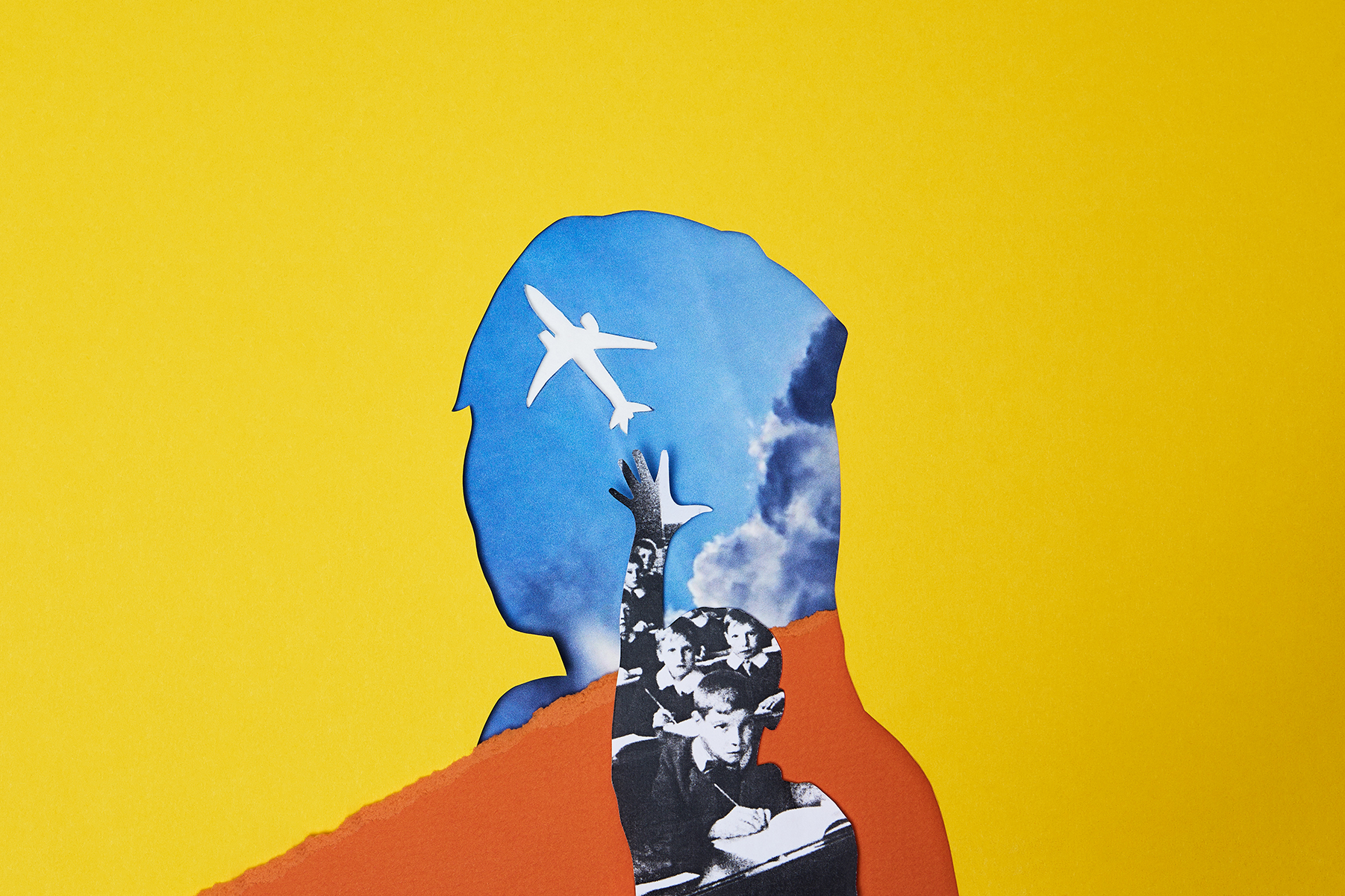
It’s impossible for them to pretend they’re not bored, and I am about to spend the next month visiting a different school each day across the UK to teach art history. It’s taking up half of my brain: 25% is going on making sure I get the lesson plan right, and the other 25% is worrying about pleasing them. After all, children are the best critics (or guides). I should know. When researching for the book, I took groups of them around Tate Britain (luring them with pencil cases and notebooks) and, while they seem convinced that every portrait I point to is of Mary Seacole (clearly a hot topic in north London), and are in stitches at the topless women, it’s the surrealists that seemed to grab their attention. Take a painting of Scylla, the mythological monster, by the Cornish artist Ithell Colquhoun. What at first looks like two caves making an arch for a speedboat-disguised Odysseus can in fact double up as what we see looking down in the bath.
The British public: 10%
This year I will be one of the judges on a new iteration of Sky Arts’s Portrait Artist of the Year. While I am gutted there is no Judges’ House round (regrettably, I’d probably be cast as a Louis Walsh rather than Cheryl), I’m extremely excited to see our brilliant British public try their hand at painting our beloved national treasures. The applications have closed for this year, but there are still some spots for wild cards. It’s going to be very fun – and probably a lot less scary than my primary school critics.
A mid-Atlantic swerve: 3%
Last month I took a flight to Costa Rica. Anticipating the winter sun, along with 100 retirees (my best friend and I might have been the only ones under 35), we were all very cheerfully chatting as we got on the flight. Two hours on the tarmac didn’t stop us (“a problem with the GPS”), and finally we were ready to go. Wicked part one was rolling, and a few too many mini G&Ts. But five hours in, just as we were approaching Bermuda (I was thinking the same), an announcement came. Eagerly checking the BA “maps” feature, I noticed the plane swerving 180 degrees. Before the pilot could even explain what had happened, stewards were running down the aisles with trays of wine. We had been flying without a working GPS the entire time. So it was back up to Gatwick, where the whole flight stayed in the airport hotel before venturing back west. Let’s just say Do You Know the Way to San Jose? was on repeat.
The coolest place I have visited lately: 2%
Other than Casa Azul, the former home of Frida Kahlo, my favourite place to visit in Mexico City is the temple her husband, Diego Rivera, designed to house his astonishingly vast pre-Columbian art collection. Fusing Mayan, Aztec and “traditional Rivera” (modernist) styles, the trapezoid-shaped Museo Anahuacalli is built with the same carved volcanic stone on which it stands. It exists on three levels: the first, dark with only a glimpse of light, is seemingly the underworld; the second, with its thinner walls and wider windows, evokes the “earthly plane”; while the third, bathed with light, represents the heavens. Construction started in 1942 and the museum opened in 1964 (Rivera having died in 1957). The whole Museo Anahuacalli project is really quite extraordinary.
What happens when we see Eve or Medusa from a female perspective? 30%
I’ve been busy studying in the London Library, where I’m reading up on artistic depictions of female archetypes from Eve to Medusa, Judith to Venus. Inspired by John Berger’s Ways of Seeing, which famously coined the phrase “men act and women appear”, I want to ask instead: what happens when “women act” (as the artists) and “women appear” – do we see these figures anew?
Burying my head in the Bible and the classics, and tracking down as many artworks of these figures in the western canon as I can, I think, yes, we actually do. One only needs to compare Caravaggio’s timid Judith beheading Holofernes with Artemisia Gentileschi’s mighty version, or Hans Baldung Grien’s oversexualised portrayals of Eve (that portray her as evil) with Anna Lea Merritt’s Eve, turned away from us in remorse, from 1887. Stories change when women portray them. It’s an angle we’ve missed for far too long.
Anticipating a royal exit: 5%
My book launches tend to coincide with royal deaths (of sorts). Halfway through the launch of the first, in September 2022, it was announced that the Queen had died. With royal supplier Hatchards as the lead bookseller, it was swiftly shut down. When the second book came out in November, it was reported that Andrew Mountbatten-Windsor’s Prince title had, finally, died a death; this time, we partied until the early hours. I have a children’s version of my first book, The Story of Art Without Men, out in March, so who knows what royal news we will be waking up to.
The Story of Art Without Men by Katy Hessel, illustrated by Ping Zhu, is published by Puffin at £20. Order one at observershop.co.uk for £18 plus p&p
Newsletters
Choose the newsletters you want to receive
View more
For information about how The Observer protects your data, read our Privacy Policy