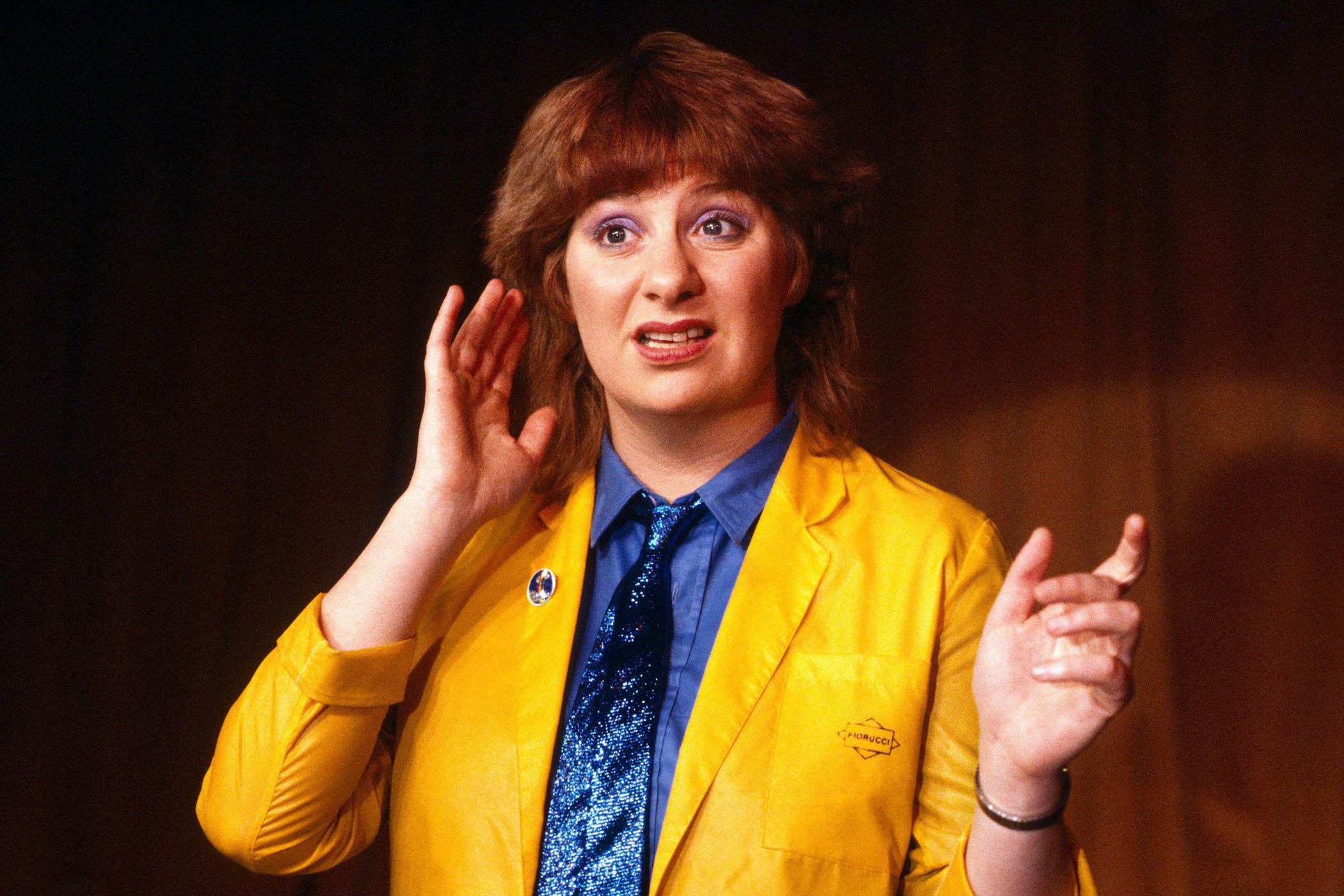



A bunch of items most popular in the 1970s, from Wagon Wheel biscuits to Woman’s Weekly magazine, are now closely associated with one person: the comedian and actress Victoria Wood. Whether we’re talking “hostess trolleys” or Lurex trousers, Wood’s favourite brand names became part of her mischievous identity. They are trademarks, rather like Sherlock Holmes’s deerstalker and pipe, suggests Tom MacRae, a writer who has just built a musical around Wood’s comic songs.
MacRae, who once worked with Wood, is best known for writing the book and lyrics of the hit musical Everybody's Talking About Jamie, now a standard in the repertoire, which tells the story of a working-class schoolboy from Sheffield who finds himself through drag.
Now, MacRae is focusing on Wood, who died 10 years ago on 20 April, at the age of 62, ending a career that had taken her to the top of British showbusiness. She commanded vast television audiences and performed sell-out shows at the Albert Hall. Next month, to honour her life, a theatre in her beloved Lake District will officially take on her name, ahead of staging the premiere of Fourteen Again, MacRae’s new musical.
I play them ‘The Ballad of Barry and Freda’ on YouTube, and Americans kind of get it
I play them ‘The Ballad of Barry and Freda’ on YouTube, and Americans kind of get it
Tom MacRae
When we speak, MacRae reminds me that up until relatively recently a British “lady” comedian was regarded as a slightly freakish thing. “Vic started at a time when there weren’t really any famous female comedians and it was generally assumed women weren’t funny,” he says. “Somehow, she became the most famous, most beloved entertainer in the country, up there with someone like Les Dawson. Yet I don't remember anyone talking about her much as a trailblazer.”
MacRae sees Wood’s comedy as “incredibly British”, but ageless too, in spite of its specific connections with the 70s and 80s.
“I grew up loving Victoria's work, so I was really excited when I did get to meet her,” MacRae recalls. “Sometimes when you’ve been around a few famous people, you lose that sense of magic. But I didn’t lose it with her. She was in no way a disappointment.” Working with Wood on his 2015 TV adaptation of Raymond Briggs’s Fungus the Bogeyman, her last screen work, MacRae became a more ardent admirer.
Part of the draw of writing for the Victoria Wood Theatre, previously known as The Old Laundry Theatre, is the couple who run it. Wood’s old friends there, Charlotte Scott and Roger Glossop, have brought together a cast including many who worked with Wood.
The musical opens at a local slimming club, where former school friends Peggy (played by Sally Ann Triplett) and Lou (Ria Jones) are reunited. They admit to feeling like shadows of their younger selves, but are unexpectedly given a chance to go back and enjoy their youth once again. If time travel is an element of the plot, that could be down to MacRae’s early work on Doctor Who scripts with his “mentor” Russell T Davies. Television is still a key part of MacRae’s life. In 2017 he moved out to LA to work with another mentor, the screenwriter and showrunner Dean Devlin, the guiding hand behind the successful Librarians franchise.
MacRae, 48, realises that the younger audiences who loved his Jamie may not be so familiar with Wood’s work. In the US, though, he has had practice at conveying her unique appeal to the uninitiated. “I have to try to encapsulate someone who's such a legend in our country, but not really known in the States. What I do is I just play them her song The Ballad of Barry and Freda on YouTube, and they kind of get it.”
Wood can also be misremembered in her own land, MacRae adds: “When you haven't connected with someone's work for a while, you also often remember a bit of a caricature. With Vic, people think of the fun, like mentioning a Boots meal deal; the whole ‘Wagon Wheels and the menopause’ thing. But there's a lot of other stuff as well.”
Newsletters
Choose the newsletters you want to receive
View more
For information about how The Observer protects your data, read our Privacy Policy
There is a melancholy at Wood’s core that comes out in her sadder songs. “She would finish the first half of a show with a sad song, because she wanted to save something for a standing ovation at the end. She understood the shape of an evening for an audience. She wrote one very sad song that I use, Litter Bin, about a news story she’d read about a young mum. It asks what kind of world this is, although it does have an optimistic end to it. For me, I think the real power of comedy is when you place it against something that’s unexpectedly sad.”
The finale, inevitably, will be her best known song, The Ballad of Barry and Freda, sometimes known as Let’s Do it. “It is the final moment of my show, where the song means something very different from what it means out of context. I don’t want to spoil it, but it makes sense when you get to it. In workshop performances, you could hear the audiences gasp with delight once they know what’s coming.”
Fourteen Again runs at The Victoria Wood Theatre, Bowness-on-Windermere, from Friday 1 May.
Photograph by Donald Cooper/Alamy
More from The Observer