


I thought the rain would never stop. A bowl of golden hollandaise sauce, shining and buttery, lifted the spirits. A whisk-up of golden egg yolks, lemon juice and butter, a piquant sauce just thick enough to coat the tips of a bundle of early vegetables. Too early for very good English asparagus of course, but there are several other tender green stems around.
Purple sprouting, broccoli, florets of young cauliflower and steamed salsify, the root vegetable, are contenders, but I settled for a whole romanesco, the variety of cauliflower that looks like a fairytale castle. A cauliflower with turrets. Perhaps the most beautiful brassica of all, with the flavour of a classic cauli but bright with green and pointed curds, giving the vegetable an otherwordly aspect.
I could have left the vegetable as it was but instead dipped its points into breadcrumbs and fine polenta. A messy task but one that produced a fine contrast for the sauce. Hollandaise is the most seductive of the classic sauces – and, frustratingly, the most capricious. Its habit of curdling is why it strikes fear into even the most experienced of cooks. The trick is never to let it get too hot, something that cannot be emphasised too much, and which is why it is best to whisk it over a pan of simmering water. I learned the hard way, when my first bowl separated into scrambled eggs five minutes before it was due on customers’ plates. Since then, I have learned to use a heatproof glass or china bowl, rather than metal, and to make sure its base sits above, rather than touching, the simmering water over which it is whisked.
At first, the butter must be added to the egg yolks and vinegar a few drops at a time and whisked constantly; then introduced in a slow stream, stopping now and again, whisking all the time. At the first hint your sauce might turn grainy, remove the bowl from the heat and beat like crazy with a big balloon whisk, adding only a few drops of hot water. Show it who’s boss. It will usually come together. If the worst happens and the sauce separates, remember it is probably rescuable by starting again with another egg yolk or two and whisking the curdled sauce in, as you would butter.
The crisp-fried cauliflower – I could have used purple sprouting, though it tends to crumble more easily – would be happy with a cold sauce, too. A labneh-based number would be ideal. I usually beat several splashes of olive oil into the strained yoghurt, then season it with a few pinches of za’atar, for its deep thyme notes, and perhaps the merest pinch of dried sumac.
At home this week there was a Sunday lunch of roast chicken with a slow-cooked bread sauce. Fat, waxy sourdough breadcrumbs stirred into milk that had been left to infuse with onion, bay, cloves, peppercorns and a piece of parmesan rind: the idea of James Thompson, of the Great Oven, who makes the best bread sauce ever. Deeply seasoned and cooked over a low heat, the aromatics are what makes the simplest and cheapest of sauces worth eating. Made without love, patience and thoughtful seasoning, you will have nothing more interesting than wallpaper paste.
There has been little baking in the kitchen this week, but I did make time for a batch of almond frangipane – it keeps for a day or two – and used it to stuff croissants, which I baked again with matchsticks of sugared rhubarb. A quick and cheaty treat, unless you are actually going to make your own croissants.
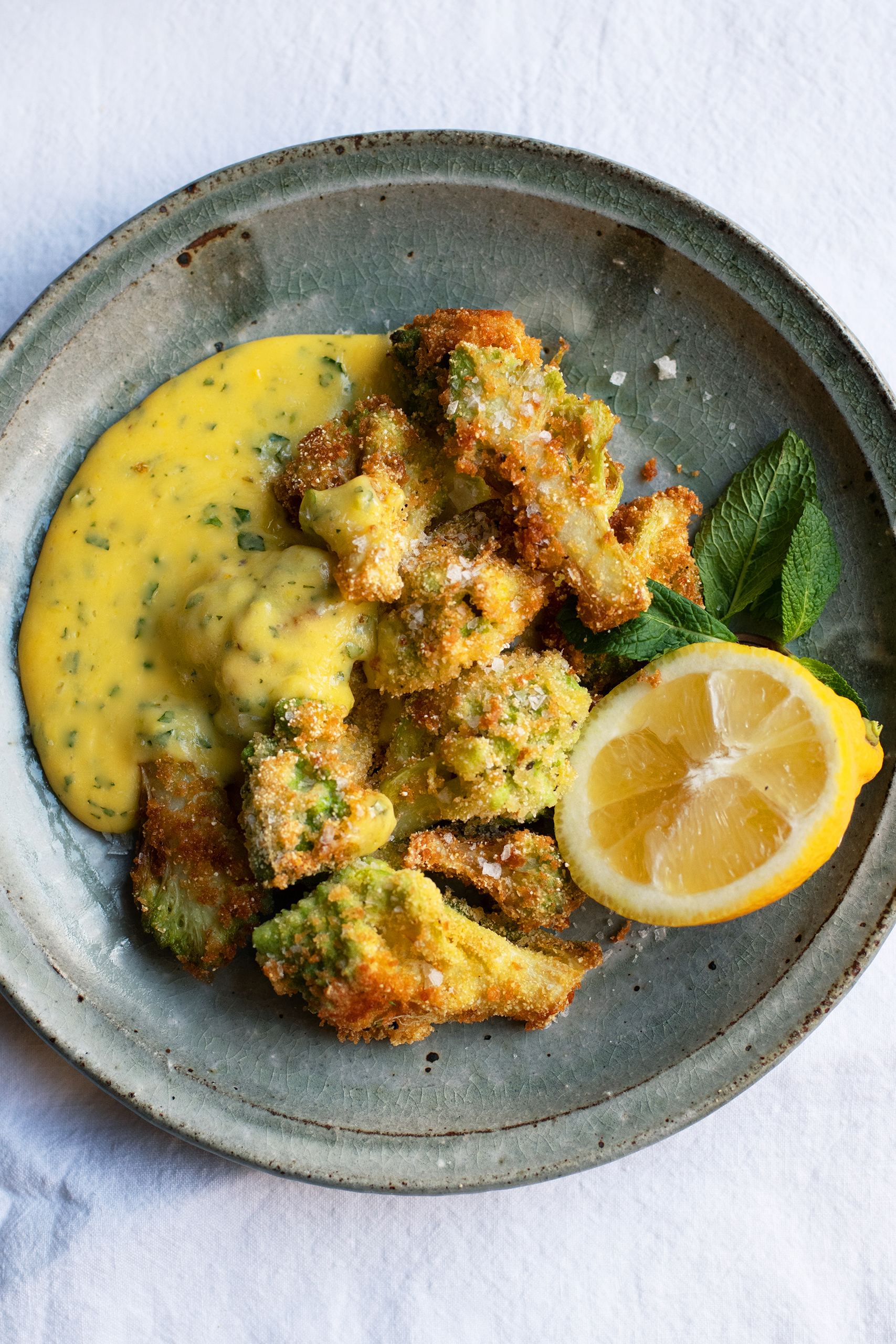
Messy task: Dip cauliflower in polenta for a crisp sauce pairing
Fried polenta cauliflower, hollandaise sauce
Serves 4. Ready in 1 hour.
romanesco or cauliflower 1 (about 1kg)
eggs large, 2
fine polenta 50g
crisp white breadcrumbs such as panko 100g
groundnut oil
For the hollandaise:
egg yolks 3
white wine vinegar 2 tsp
lemon juice of ½
melted butter 225g
mint leaves medium, 15
Bring a large, deep pan of water to the boil. Break the romanesco or cauliflower into florets, then cut each in half. If the florets are larger than a mouthful, then cut them into thick slices.
Salt the boiling water, then lower in the florets and leave to cook until just approaching tenderness (about 6 minutes. They are ready when you can pierce them effortlessly with a skewer.) Drain the romanesco or cauliflower in a colander, then tip gently on to a plate lined with kitchen roll.
To make the hollandaise, put the butter in a small pan and let it melt over a medium heat, then set aside. Put a pan of water on to boil and find a heatproof glass or china bowl that will fit neatly into it without touching the water. Drop in the egg yolks and the white wine vinegar.
Whisk in the melted butter, very slowly at first, then in a thin, intermittent stream, whisking all the time until you have a thick, creamy sauce. (If you introduce the butter too quickly, the sauce will curdle.)
Finely chop the mint leaves and stir into the sauce. Stir the lemon juice in to the sauce, tasting as you go. Stop as soon it is piquant enough for you. Remove the pan from the heat but leave the bowl over the water. Whisk from time to time to prevent it from separating until you need it.
Break the eggs into a shallow bowl and beat lightly with a fork to mix. Put the polenta and panko crumbs into a second dish and toss them together.
Warm a thin layer of the oil in a shallow pan. Dip the vegetable florets, a handful at a time, first in the beaten egg then in the crumbs. Roll them around so the crumbs adhere, then lower into the hot oil. Leave to cook for 4 or 5 minutes, turning from time to time with a draining spoon so that they colour evenly. Lift out on to kitchen paper, then repeat with a second batch. Serve with lemon halves and the mint hollandaise.
Newsletters
Choose the newsletters you want to receive
View more
For information about how The Observer protects your data, read our Privacy Policy