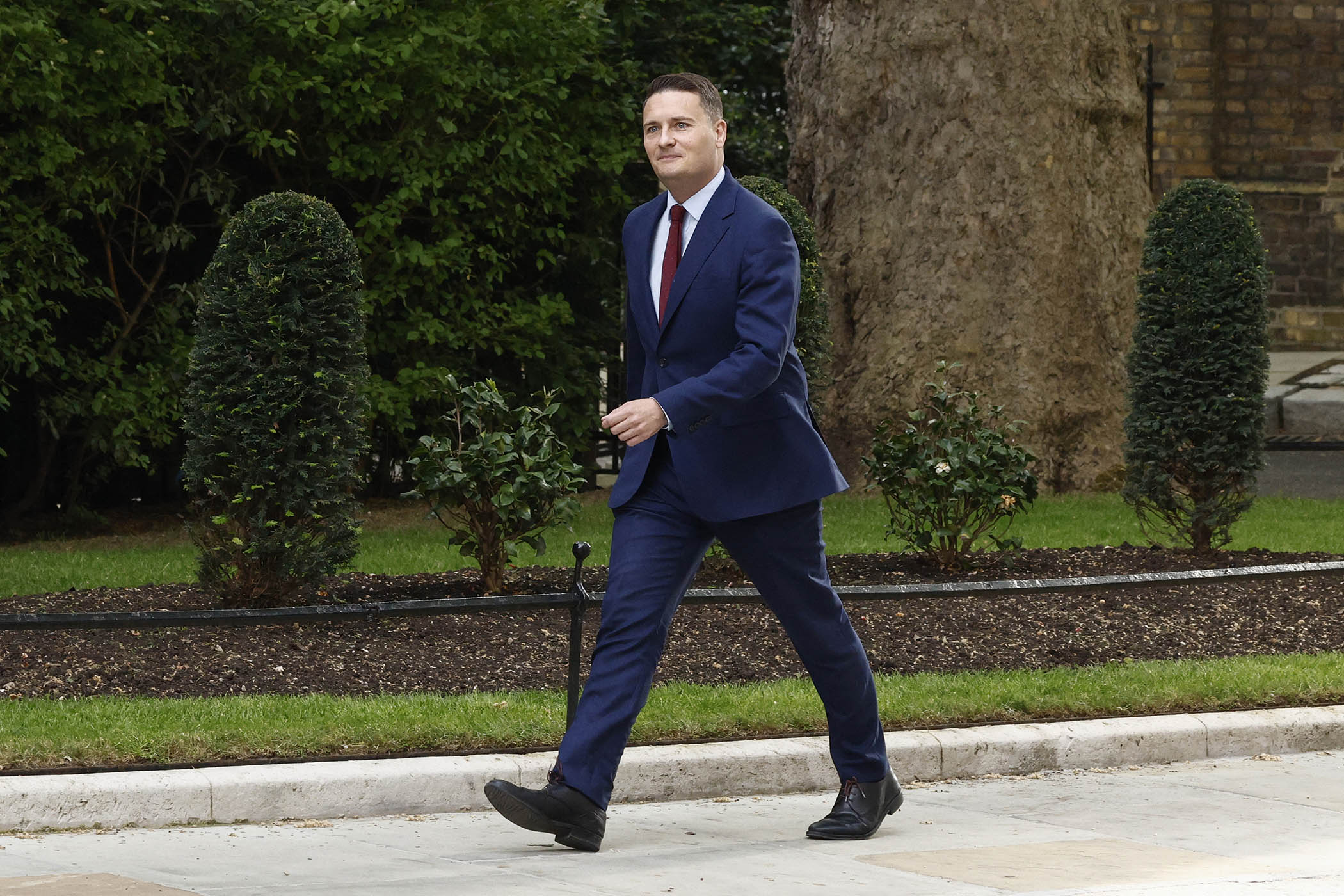

Would-be prime minister Wes Streeting’s proposal for a “wealth tax that works” is certainly smart politics, combining populist rich bashing with the pragmatic goal of ensuring that more money actually flows to the Treasury. But what he proposes is not actually what economists mean by a wealth tax. And his £12bn a year revenue goal seems a stretch.
Wealth taxes are back on the agenda as inequality rises around the world – especially the soaring number of billionaires, now being boosted by the latest round of Silicon Valley IPOs. They had become almost extinct, collected by only four countries in the OECD when France scrapped its wealth tax in 2018, down from 12 in 1990, as governments found it hard to collect much money from the financially mobile super-rich and switched their focus to attracting them, not scaring them off.
Then in 2024, Brazil used its chairmanship of the G20 to propose a 2% billionaire tax on the wealth of the world’s 3,000 or so richest. In California, a one-off 5% levy on the wealth of its billionaire citizens is being put to a referendum. New York is introducing a tax on the second homes of the super rich. And now, Streeting.
But Brazil’s global tax requires all leading economies to implement it together – not happening in the Trump era. Billionaires are fleeing California in droves. New York’s tax addresses only property, not total wealth. And what Streeting proposes is merely to raise capital gains tax-rates to the same level as income tax – repeating what that famous socialist Nigel Lawson did in 1988.
He also wants an exemption for those, such as entrepreneurs, who create wealth, rather than just live off it – a potential loophole for billionaires’ tax accountants to exploit. However desirable, taxing extreme wealth is hard.
Papal paper to place humans above AI
The theology of artificial intelligence is the topic of Leo XIV’s first papal encyclical, to be published tomorrow. Judging by the title, Magnifica Humanitas (Magnificent Humanity), the Holy Father is not yet ready to give up the cause of humanity amid this latest wave of technological innovation. Instead, he is expected to focus on how humanity should and hopefully can be the master of AI, not its slave.
Leo signed the document on 15 May, the 135th anniversary of an earlier encyclical setting out key Catholic teaching on capital and labour. That was by Leo XIII, whose legacy inspired the current Pope’s choice of name. Like it, the new encyclical is expected to stress the dignity of labour and social justice and warn of the dangers of concentrations of economic power. Leo has already said of AI that “the ability to access vast amounts of data and information should not be confused with the ability to derive meaning and value from it”.
The Catholic Church has a long, turbulent relationship with new technology. Pope Gregory XVI opposed the coming of the railway. Twentieth century innovations around both birth control and conception have not been welcomed. Galileo’s telescope proved troublesome – though less for what he saw through it than the conclusions he drew.
Perhaps the printing press will provide a model for the Church’s approach to AI: not opposing (indeed, even using) the new technology, while condemning some of the things done with it. Speaking at the launch of the encyclical will be Christopher Olah, cofounder of Anthropic, arguably the most thoughtful of the AI super-scalers. Hopefully, this will be an important step forward in an urgently needed dialogue between tech leaders and those who think deeply about the meaning of life.
Newsletters
Choose the newsletters you want to receive
View more
For information about how The Observer protects your data, read our Privacy Policy
Fierce row over Musk ‘impact investment’
Some of the first backers of Elon Musk’s companies were “impact investors” who aim to achieve a specific social or environmental goal and make money at the same time. But at Private Equity International’s Impact Investor Global Summit in London last week there was a fierce debate about whether backing Musk should be celebrated as impact investing’s greatest success or should even count as impact investment.
The positive case? Musk launched each firm with a clear purpose. Each has achieved some positive impact. Tesla accelerated the global transition to electronic vehicles. SolarCity helped the switch to renewables. Starlink connects remote populations to the internet. SpaceX, boosted by its imminent IPO, may one day reduce the existential risk to humanity of being dependent on just one habitable planet.
Yet Musk makes no effort to measure the positive impact of his businesses – something hardcore impact investors think essential. Does backing a company that generates positive externalities, as economists like to put it, qualify automatically as impact investment – or is there more to it than that? As for Musk’s personality – views and behaviour that would not pass muster at other companies – and controversial approach to labour and governance issues: incompatible with impact investing, surely?
Some of his companies also play controversial roles in politics (social media platform X) and defence (especially SpaceX). In the early days of the ethical investing movement, out of which impact investing grew, defence firms were routinely excluded from portfolios, along with tobacco and alcohol companies. Now, as one panel at the summit heard, with democracy under threat, a case can be made for impact investors to back companies that help defend it. Well, maybe. The good news is that, in this era of rampant unethical money making, some investors still think these questions are worth debating.
Photograph by Brook Mitchell / AFP via Getty Images