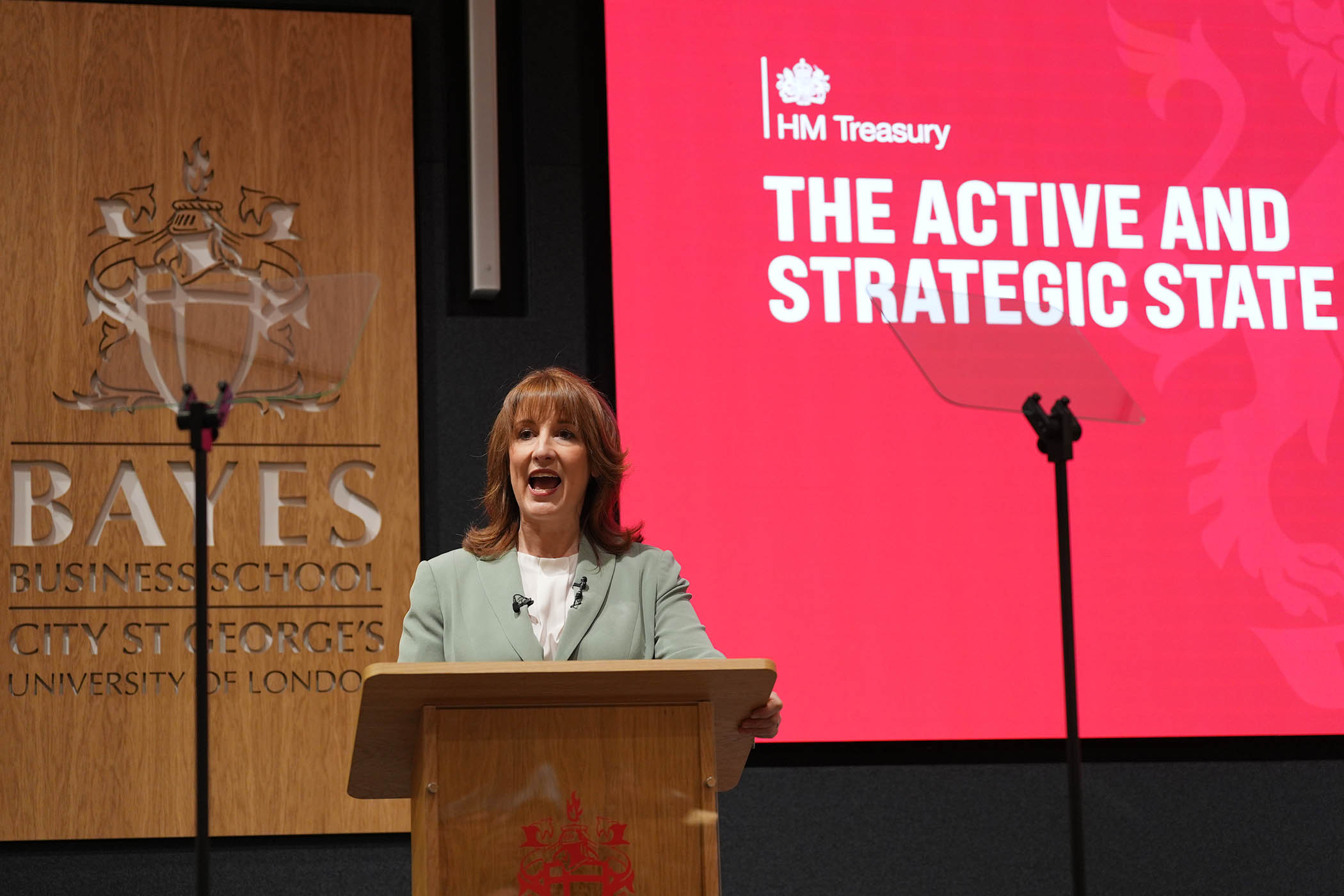



A Mais lecture by a sitting chancellor is always of interest. The most surprising part of Rachel Reeves’s substantial speech on Tuesday was her announcement that Whitehall would renounce our almost uniquely centralised tax system.
The details are not yet worked through: the chancellor said only that she has asked officials to work out how to give mayoral combined authorities (and no others) a share of tax revenues, including from income tax. Decisions will be announced in the next budget, presumably to apply in the following financial year.
HM Treasury has confirmed that this is a fiscally neutral proposal. There is no more money. What an area gains from the new system it will lose, pound for pound, via a cut in its Treasury grant. Nor will mayoral authorities be allowed to change tax rates as in Scotland. Sharing national tax revenues like this is common in Europe, but this proposal is at the mild end of fiscal devolution.
The optimistic case is made by JP Spencer, the former Treasury official now at Labour Together. He argues – rightly – that the current system whereby even large mayoral combined authorities have little financial skin in the game cannot be good for promoting growth. He wants to see mayors able to borrow against future tax revenues, to invest in infrastructure and so on. This is how many other countries do it, although local authoritieselsewhere can typically change tax rates as well. It remains to be seen whether local areas will be offered borrowing rights as part of the deal.
If borrowing is not on the table, any sensible mayor will resist these proposals. Swapping the relative stability of a Treasury grant for something that falls in bad years is a recipe for local pain and unpopularity if both higher tax rates and borrowing are ruled out by central government.
The real shame is that Labour could have done the detailed thinking in opposition
The real shame is that Labour could have done the detailed thinking in opposition
The mention of income tax is perhaps surprising. Local income taxes are rare in Europe, mainly because income tax raises such different amounts in different areas. That said, the chancellor’s leading economic adviser, Neil Amin-Smith, advocated for local income tax in 2019 when he was at the Institute for Fiscal Studies. He argued that income tax is easy to apportion, that people move less easily than purchases, and that income tax revenues are buoyant. It will be interesting to see what happens.
The biggest effect will be in London where the average taxpayer pays more than £14,000 in tax, three times as much as their South Yorkshire counterparts. In the short run, therefore, London must lose much more Treasury grant than South Yorkshire, but in the medium term a small share of London’s growing tax revenues would allow Sadiq Khan to offer higher quality services, or cut the council tax precept relatively easily. That is less plausible for north of England mayors. For sure, the Treasury could give each area a different proportion of income tax to equivalise local opportunity, but that would get very messy, very quickly. The uneven distribution of income tax receipts led the Resolution Foundation’s Sophie Hale to note that an equitable approach “will be a challenge”.
None of this is to defend the absurd centralised tax status quo. But hard politics could derail the chancellor’s plans. Given the challenge of making a new system work for different places, opposition may come from existing mayors, many of whom could seek much more fiscal devolution. Opposition might therefore lead to a U-turn this autumn, particularly given the government’s noted propensity to do just that.
The real shame is that Labour could have done the detailed thinking in opposition, could have made real decisions in advance, and could have enacted a set of thought-through plans immediately after the election. The lesson for leaders of all political parties is clear: if you seek success, do as much work as possible before you enter government.
Photograph by Yui Mok/PA
Newsletters
Choose the newsletters you want to receive
View more
For information about how The Observer protects your data, read our Privacy Policy