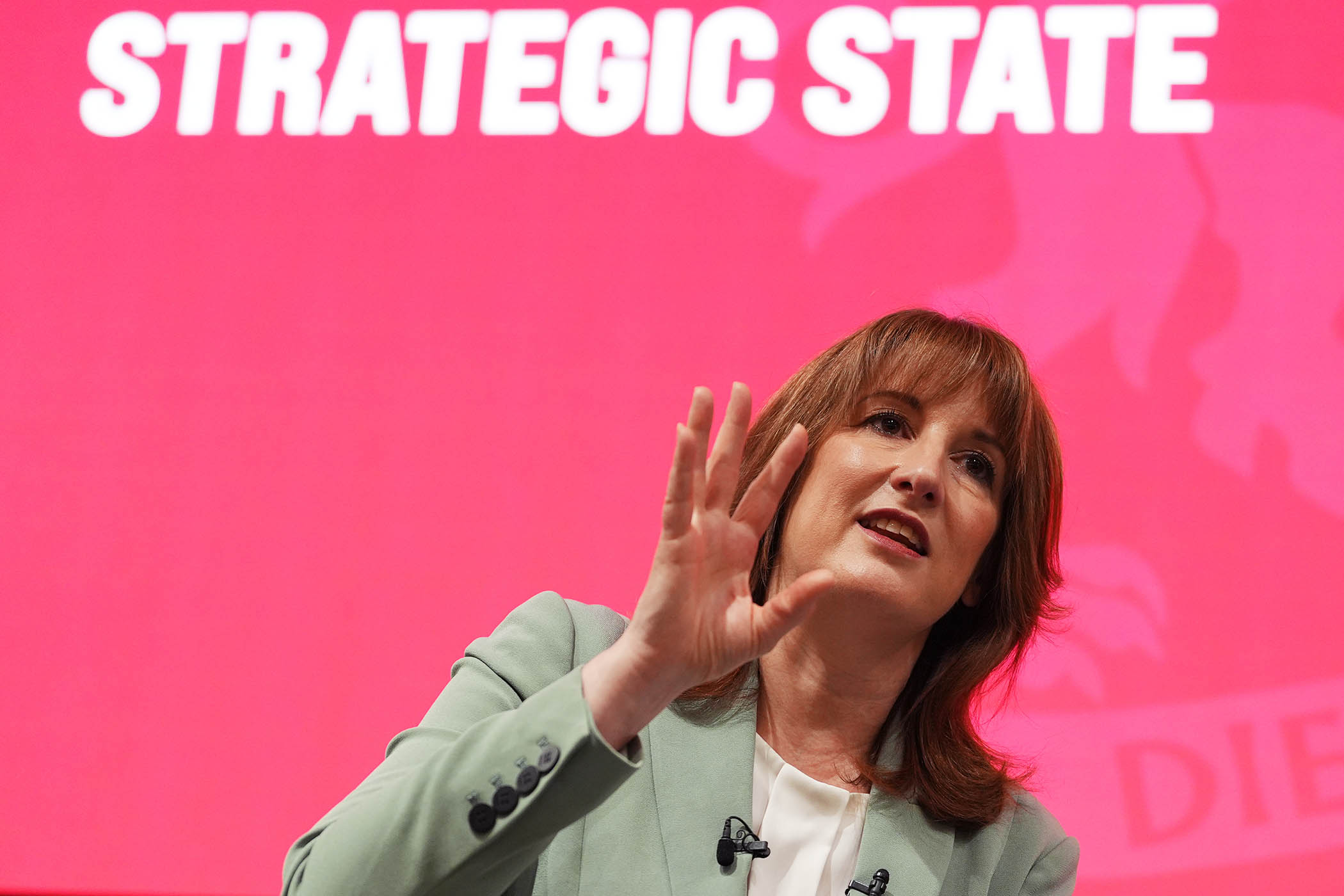

What happens to big news on a busy day? It disappears. After a disappointingly bitty budget and a deliberately do-nothing spring statement, the chancellor, Rachel Reeves, has delivered a coherent and invigorating vision for the economy. But you wouldn’t know it. Ali Larijani, Iran’s national security chief, was assassinated in Tehran. There’s a meningitis outbreak in Kent. It’s no one’s fault that people aren’t talking about her Mais lecture.
But it’s a moment, even if we mostly missed it.
Reeves has an organising idea: the active and strategic state. It’s a phrase that is itself an argument with those who misremember Margaret Thatcher and want a small state to let the markets rip. It’s accompanied by a prescription for growth: investment, public and private, to drive productivity. And it comes with three meaningful breaks with the past.
Reeves called out Brexit, unequivocally. It has, she said, cost 8% of GDP – the equivalent, although she didn’t say this, of lopping off Scotland from the UK. She made a breach with Labour’s timid politics of recent years on Europe and set out a determination to align as much as possible with the European single market; regulatory autonomy, she said, should be the exception, not the rule.
She took on the so-called “Treasury brain”. Historically, the Treasury has been enthusiastic about regional investment, as long as it keeps hold of the purse strings. Reeves has paved the way to “fiscal devolution”, ie, the regions getting their hands on income tax revenues, as well as council taxes. She is not the first to grapple with an unequal Britain: George Osborne backed the Northern Powerhouse; Boris Johnson championed levelling up. But Reeves’s lecture at Bayes Business School in London paves the way for a real shift in economic power towards regional government, not just decision-making on spending but on tax-raising too. It’s a restructuring of government spending that could close the gap in productivity between London and cities such as Manchester, Liverpool, Birmingham and Newcastle. It could put money in cities beyond London, lift GDP nationally and align the decisions being made by regional governments with the economic rewards.
And she made it clear she gets it on artificial intelligence. There’s no doubt it was Reeves-ish: enthusiastic, enabling, not enough. And it’s always a tell-tale sign when chancellors bundle together announcements and initiatives; the resources didn’t match the rhetoric. But the chancellor sees what’s coming, both economically and politically. AI is Covid-19. Johnson won an election with no inkling that Covid would define his premiership; Starmer won campaigning on public services reform and cost of living. But, come 2029, the election is not going to be about those 2024 promises. It’s going to be about AI – its adoption in health, education and defence; its disruption to work and employment and the anxiety it creates around society, identity, truth and safety.
What was missing? Business vibes. The gap is growing wider between the way politicians speak about the economy and the way people, let alone businesspeople, speak about it. Reeves and her ministers don’t have business backgrounds. While they want growth, they’re squeamish about wealth. The enthusiasm for making money is notable by its absence. It’s not hard: businesses like a deal. Reeves has yet to offer them one.
But when people ask what is Starmerism, what’s the plan for the economy, Rachel Reeves has given her snappy 7,500-word answer. In short, it’s the active and strategic state. Given what else is happening in the world, you’d be forgiven for missing it.
Photograph by Yui Mok/PA
Newsletters
Choose the newsletters you want to receive
View more
For information about how The Observer protects your data, read our Privacy Policy