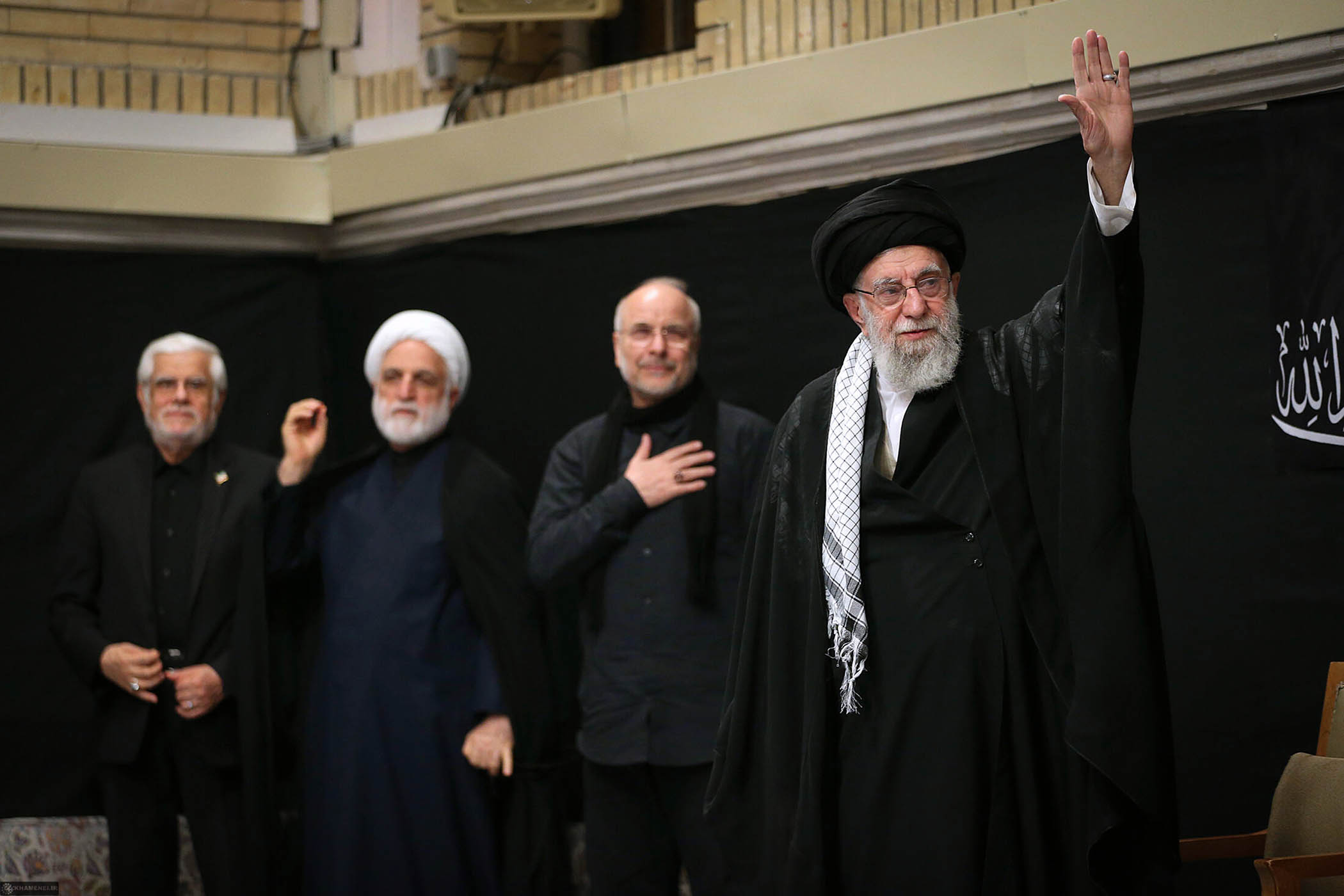
As dawn broke over the birthplace of Ayatollah Ali Khamenei in Mashhad, three weeping men clad in black ascended the Imam Reza shrine to begin marking his death. The call to prayer rang out over the rooftops and the sound of people wailing below. The men sobbed and bent forwards to kiss the exterior of the grand golden dome, one holding a black flag of mourning that was then draped over its peak. Hours earlier Khamenei's death was announced on Iranian state television, the anchor breaking into tears as he struggled to convey the news.
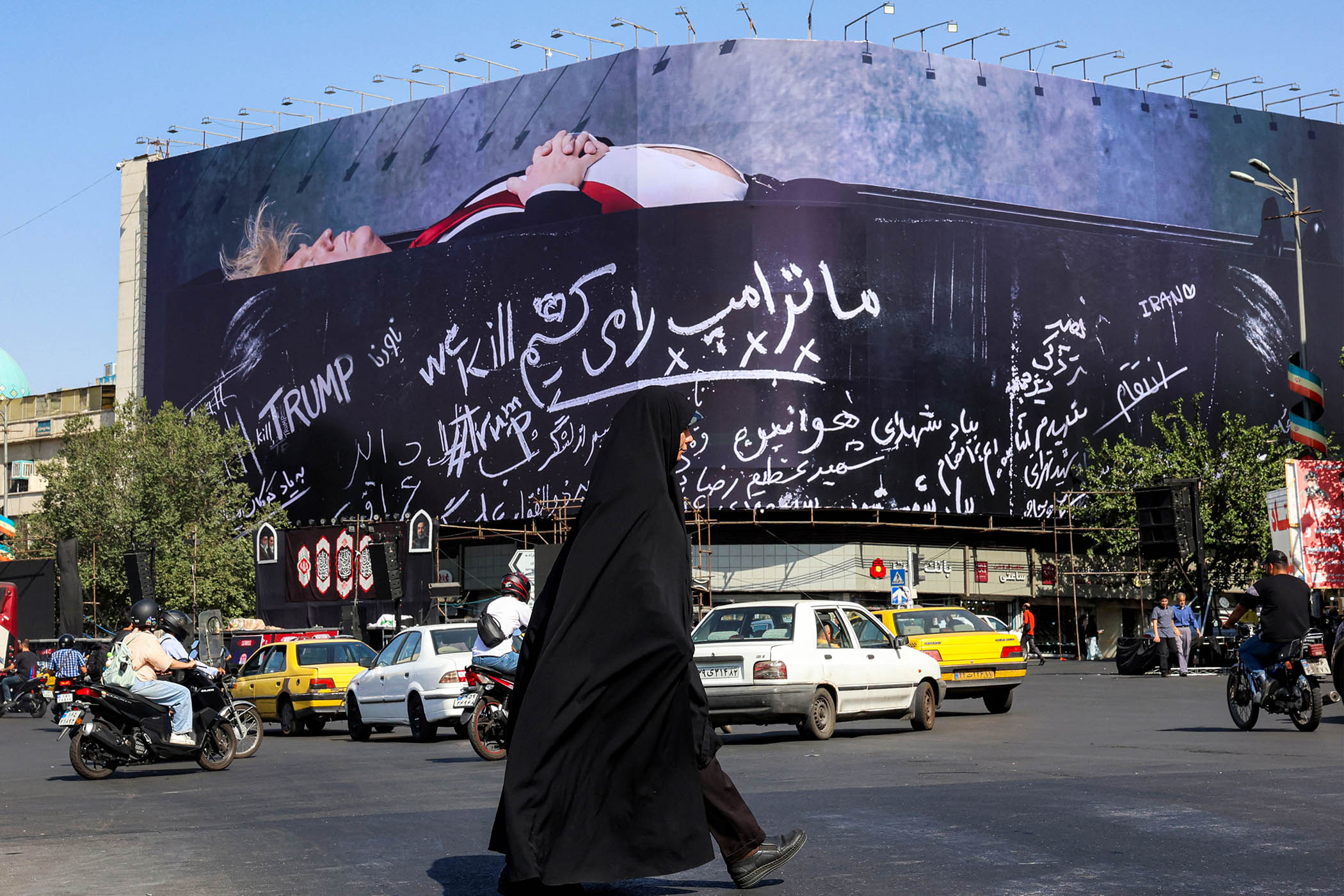
The compound housing Khamenei’s residence and office was still a smouldering crater. A barrage of Israeli airstrikes had wiped out the 86-year-old ailing supreme leader and much of the upper echelons of Iran’s security establishment in a surprise attack less than a day before. While some Iranians braved the streets to celebrate his demise, crowds of others wept openly.
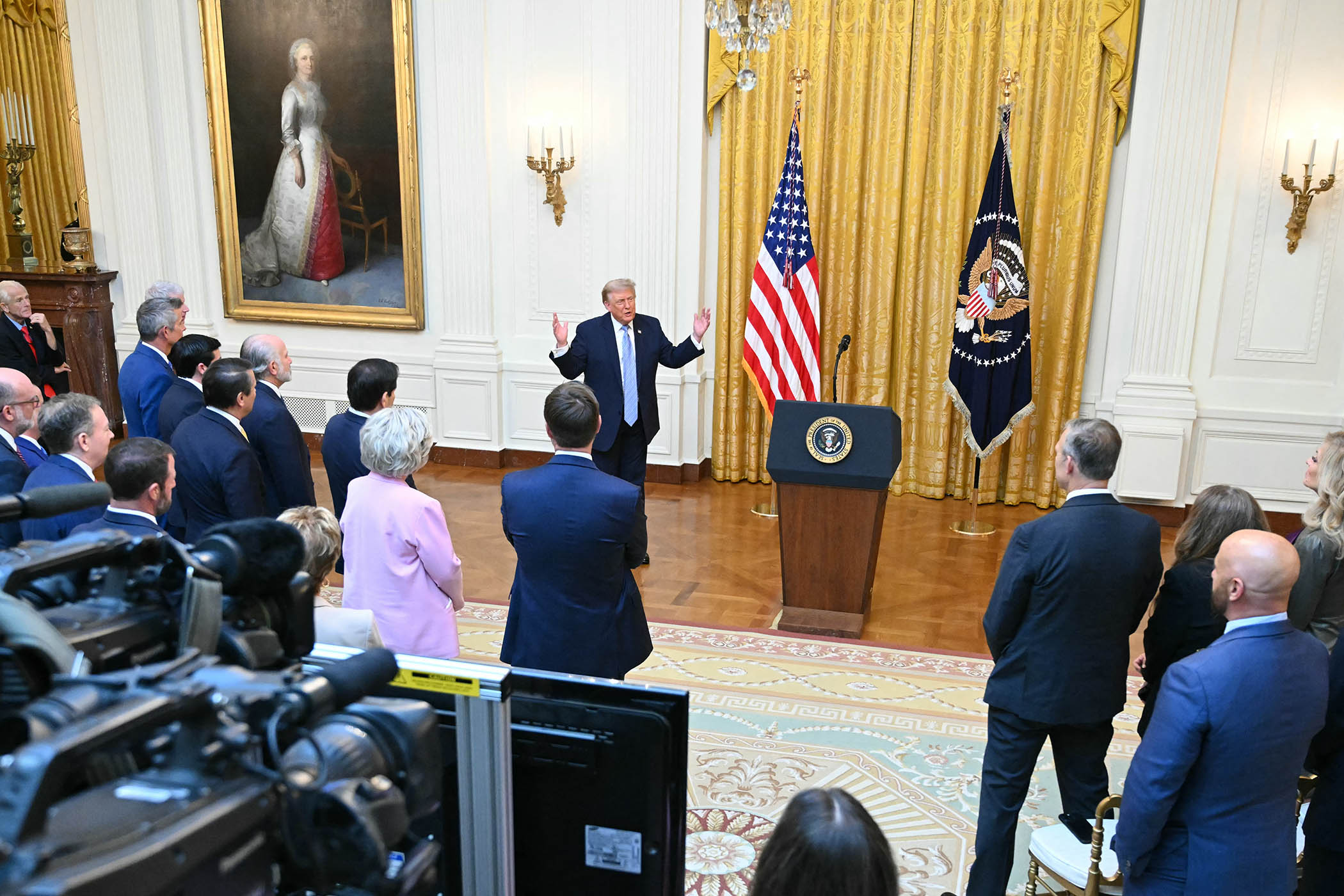
US president Donald Trump boasted about Khamenei’s assassination and threatened to strike Iran for weeks to come while speaking at the White House, even as he claimed that the initial strikes that killed dozens of Iran’s top security chiefs meant the assault was “ahead of schedule”. Khamenei, he said in a post on social media, “was unable to avoid our Intelligence and Highly Sophisticated Tracking Systems and, working closely with Israel, there was not a thing he, or the other leaders that have been killed along with him, could do”.
The Iranian regime spent years making contingency plans for Khamenei's death, and questions about who might be capable of replacing the Middle East’s longest serving leader had circulated long before his demise. Last month, Khamenei declined to mark the anniversary of Iran’s 1979 revolution by giving his annual speech to the Iranian air force for the first time in his 37 years at the helm. He opted instead to dispatch Hassan Khomeini, the grandson of Ayatollah Ruhollah Khomeini – who led the 1979 uprising that toppled the shah – in his place in an act of high symbolism that led many to speculate about whether he could finally anoint a successor. But as soon as Khamenei's death was announced on state television, the most pressing issue for Iran’s regime was ensuring its own survival; moving quickly to fill positions at the top as many in the upper echelons jostled for power, even amid waves of Israeli and American bombardments that took down dozens of high-level figures.
First to make his survival known was Ali Larijani, head of Iran’s supreme national security council, who instantly marked himself as the face of regime continuity when he appeared on Iranian state television the morning after Khamenei's death. Larijani’s political power has grown rapidly since he was brought back into the fold following the 12 days of war between Israel and Iran last year. The reason is clear, says Ali Alfoneh, a researcher examining Iran’s transformation into a military dictatorship at Arab Gulf States Institute. “After years of promoting yes men, Khamenei suddenly recognised the need for competent bureaucrats and administrators." Larijani, he said, has deftly stepped into the breach and could gain even greater power as dozens of his colleagues in the uppermost levels of Iran’s security establishment are killed in the US-Israeli bombardment.
It was Larijani who made clear that Iran’s regime would fight for its life. “You burned the hearts of the Iranian people, we will burn your hearts,” he said in a warning to Washington and the Israelis, as Iran sent volleys of missiles and drones across the Persian Gulf. Issuing a warning against “secessionists” – a barb clearly intended to dissuade dissenting Iranians from seizing control as the regime crumbled like Trump outlined – Larijani outlined the regime's path for continuity: a council composed of President Masoud Pezeshkian, Iran’s fearsome judicial chief Gholam-Hossein Mohseni-Eje’i and Ayatollah Alireza Arafi, a member of Iran's clerical Guardian Council, would fill the role of the supreme leader until the appointment of Khamenei's successor.
“The Islamic Republic is not a personalist dictatorship whose existence depends on one man,” Alfoneh said. “The regime’s collective leadership is perfectly capable of governing. Who knows, the collective leadership may even have made a deal with the Trump administration not entirely dissimilar to the deal the Venezuelan vice-president appears to have made with the US.”
Larijani moved to quash suspicions that he could put himself forward as a potential interlocutor with Iran’s attackers despite Trump claiming he had found someone willing to talk inside the regime. “We will not negotiate with the United States,” Larijani wrote on social media. Later he pointed to Iran’s ability to exact a price from the US by killing American troops, and lashed out publicly at Trump.
As the security establishment tries to reassert itself, clerics have attempted to offer spiritual relief from the loss of Khamenei and the trauma of attack. Among them: Hassan Khomeini, the grandchild of the Islamic Republic’s first supreme leader. Considered an unlikely candidate for the succession due to his perceived alliance with Iran’s reformist movement, the younger Khomeini still spoke to state media in tacit confirmation of his survival. “I consider it obligatory for the Iranian people to wear black and come to the mosques,” he said. “Mosques are our trenches.”
The survival of other potential successors was uncertain, as waves of attacks targeted any centre of political power. The home of former president Mahmoud Ahmadinejad was among those hit, and unconfirmed reports suggested that Khamenei’s son Mojtaba was killed along with the supreme leader.
Newsletters
Choose the newsletters you want to receive
View more
For information about how The Observer protects your data, read our Privacy Policy
Mojtaba, 56, was a hardliner who “operated from the shadows”, said Ali Vaez from the International Crisis Group. He wielded extensive power at his father’s office, building a lucrative financial network and cultivating ties to security bodies within the Islamic Revolutionary Guard Corps (IRGC). Despite Mojtaba’s growing power, criticisms of his candidacy have grown: former prime minister Mir Hossein Mousavi, under house arrest since 2011, published a scathing message several years ago warning of hereditary rule. “Have the 2,500-year-old monarchies been revived?” he asked. A newspaper loyal to Khamenei hit back, publishing a piece calling him a “delusional old man”.
“There is no perfect candidate, no one clear-cut obvious choice. No one is in a position right now who could hit the ground running,” Vaez said, speaking a few weeks before the attack on Khamenei. The former supreme leader had looked to cultivate a successor with governance and clerical experience who could carry on his uncompromising political legacy, such as Ebrahim Raisi – until he was killed in a helicopter crash in 2024.
Other figures increasingly stepping into the breach include Eje’i, a fearsome hardliner, former intelligence minister and now head of the judiciary, who threatened swift hangings and toured prisons full of demonstrators after Iranians demanded an end to Khamenei's regime.
Eje’i became one of the faces of the crackdown amid fears of an execution spree after Iranian security forces gunned down thousands of protestors – one former UN prosecutor told the Observer the death toll could be as high as 33,000 – amid efforts by the regime to hide the true scale of the killings. He has displayed such a visceral hatred of journalists that he once publicly bit one during a television debate. Vaez said Eje’i has been seen as a potential if flawed candidate “as he has experience in government but has spent all his life in the judiciary – he has little experience of the day-to-day running of the economy”.
While Eje’i and Arafi grow their power as they govern through the interim ruling council, Iran’s assembly of experts – a body of 88 jurists and clerics that include Arafi – is tasked with swiftly selecting a new supreme leader, despite being under fire.
Raz Zimmt, from the Institute for National Security Studies in Tel Aviv and a longtime analyst of Iran including from within the Israeli military, said a hallmark of Khamenei’s rule was the strength of Iran’s sprawling security apparatus – meaning security bodies such as the IRGC will now be looking for a weak successor who they believe they can control. “I think it would be a real surprise if they pick someone not affiliated with Khamenei’s legacy. The only question is if the next supreme leader will be given enough power to rule,” he said.
Photo by Office of the Supreme Leader of Iran via Getty Images