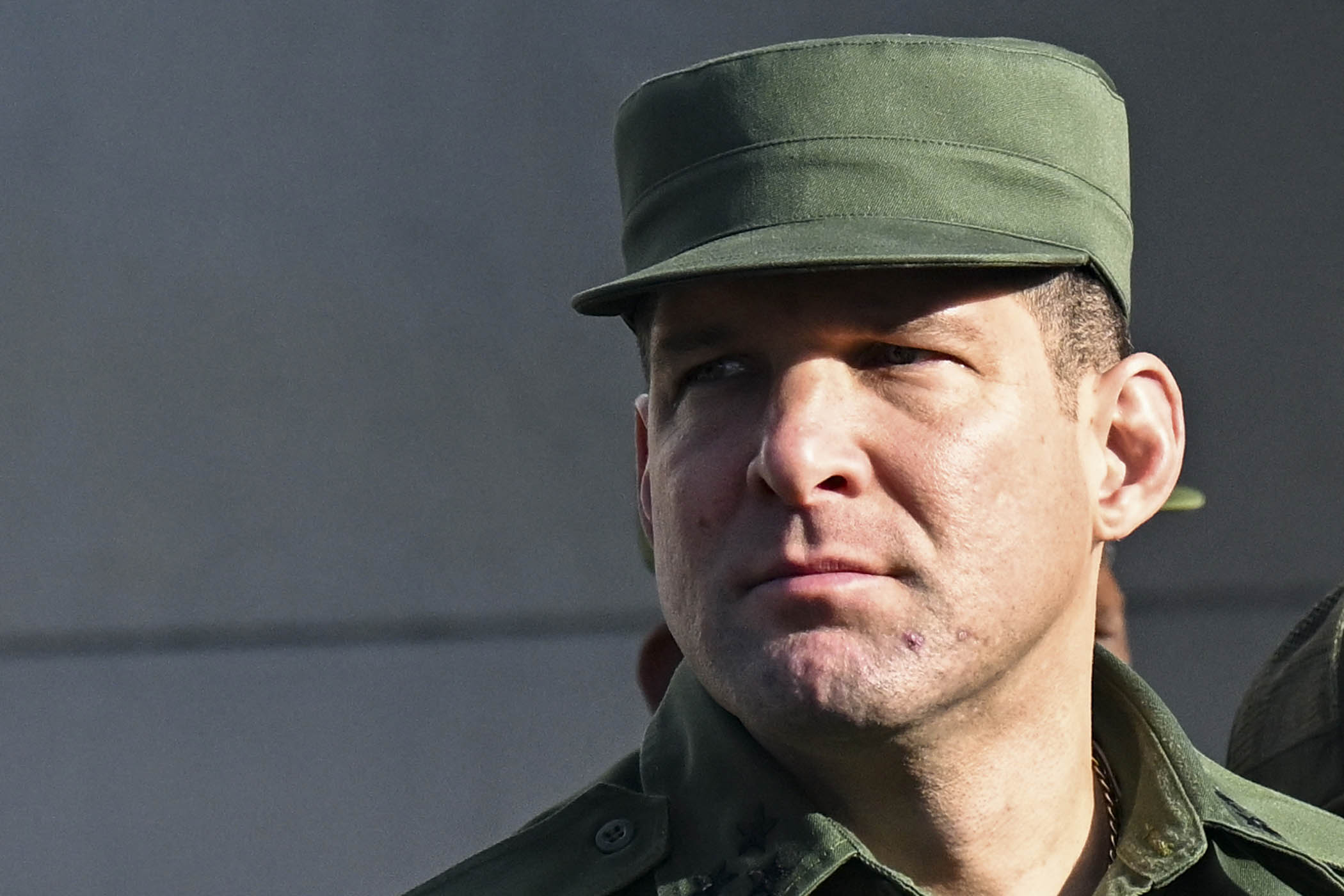
For years, Raúl Guillermo Rodríguez Castro oversaw security for the Cuban regime’s top leaders, hovering in the background with his square jaw, earpiece and buzzcut.
Then the Trump administration set its sights on the Caribbean island and the socialist regime that has defied the US since 1959, and “Raulito” stepped forward from the shadows. Last month the 41-year-old was at the centre of high-stakes talk on the future of Cuba, whose president is defying US pressure to step down.
Unlike President Miguel Díaz-Canel, Rodríguez Castro has no formal role in Cuba’s government, but he is the great-nephew of Fidel Castro and grandson of Raúl Castro, who was Cuba’s president until 2018, and even at 94 remains perhaps the most powerful person on the island.
“If proximity is power, then Raúlito is one of the most powerful people in Cuba,” said Ricardo Herrero of the Cuba Study Group in Washington.
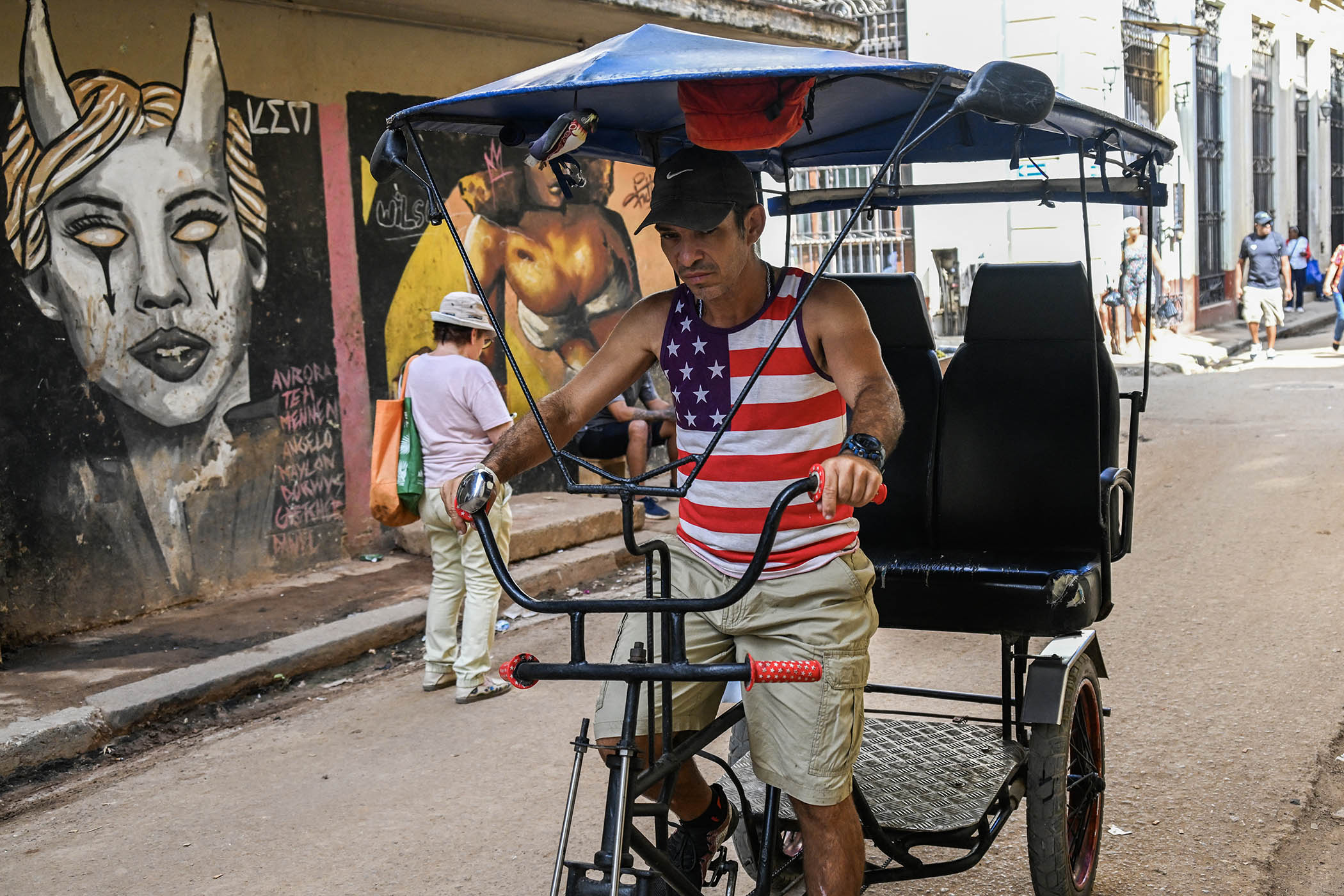
The streets of Havana this month
The Cuban economy faces collapse. It was already in bad shape after decades of US sanctions and mismanagement. Then, in January, Trump removed the Venezuelan leader Nicolás Maduro, whose government had long supplied the island with oil, before threatening tariffs against any other country that sent it.
Starved of fuel, Cuba’s rickety grid failed, leading to nationwide blackouts. Transport and industry ground to a halt. The planeloads of tourists dwindled.
At the end of March, the US allowed a Russian tanker to deliver oil to the island, providing a brief respite. Days later, Cuba announced the pardon of more than 2,000 prisoners, including at least 20 of the hundreds of political prisoners on the island.
Meanwhile, Trump has repeatedly threatened military action. Last month, the US president suggested he could “take” Cuba. Last week he spoke of the US military’s “next conquest”, after claiming victory in Iran.
Herrero said: “Their plan has been to push Cuba to the precipice. To show everyone that it has become a dependency of the U nited S tates, and to get the Cubans to make real concessions.”
‘He is important because of his familial connection to Raúl, not because of his own attributes’
‘He is important because of his familial connection to Raúl, not because of his own attributes’
Ricardo Zúñiga, ex-US official
Enter, Raúlito, who emerged as a leading figure in talks held with the Cuban American Marco Rubio on the island of St Kitts in February. It was the first time Raúlito had taken such a role. After going to military school and studying at Havana University, he did not enter government, but became a bodyguard and personal aide for his grandfather.
Newsletters
Choose the newsletters you want to receive
View more
For information about how The Observer protects your data, read our Privacy Policy
“He was always around as Raúl Castro interacted with American delegations, with the American president and so forth,” said Jeffrey DeLaurentis, chief of mission at the US embassy in Havana from 2014 to 2017. “So he was a fixture, and clearly a trusted figure.”
“He’s important because of his familial connection to Raúl Castro, not because of his own attributes,” said Ricardo Zúñiga, a former US official who was involved in talks between the two countries during the Obama administration. “But it doesn’t hurt to have a channel to Raúl Castro.”
Through his father, Raúlito is connected to another of the key powers in Cuba: the military. Luis Alberto Rodríguez López-Calleja was a general who headed Gaesa, the military conglomerate that runs a large part of Cuba’s economy, and was considered a possible future leader of the government until his death in 2022.
That said, Raúlito is not the only Castro family member who could emerge as a key interlocutor with the US. It was Oscar Pérez-Oliva Fraga, the 55-year-old deputy prime minister, and great-nephew of Fidel and Raúl Castro, who recently announced that the Cuban diaspora could now invest in the island’s economy, in a gesture towards US demands.
And Alejandro Castro Espín, a 60-year-old general and son of Raúl Castro, is also reportedly involved in talks with the US, having been involved in previous negotiations across the table from Zúñiga. “He’s very orthodox,” said Zúñiga. “Very loyal to the revolution, but it’s really important to underscore that it’s not just the family.” Zúñiga described a “consortium of leadership” that includes the military, the government and the Communist party.
What exactly the Trump administration wants from negotiations is unclear. Until recently, it seemed that it sought to replicate the Venezuela model on the island, perhaps changing the figurehead but keeping the regime in place and forcing an economic opening. Yet Rubio’s latest remarks suggest regime change is front of mind.
“Cuba’s economy needs to change, and their economy can’t change unless their system of government changes,” said Rubio at the end of March. “It’s that simple.”
Zúñiga said: “They seem to have oscillated between threats of force and suggestions that gradual change would be acceptable to the United States.”
Meanwhile, the government in Havana has, at least in public, rejected any suggestion that its political system, or the place of the president, Miguel Díaz-Canel – the apparatchik who succeeded Raúl Castro – are up for negotiation.
On Thursday, in his first interview with a US network, President Díaz-Canel said he had no intention of stepping down. “In Cuba, the people who are in leadership position are not elected by the US government,” he told NBC. “We have a free sovereign state.”
Photograph by Yamil Lage/AFP via Getty Images