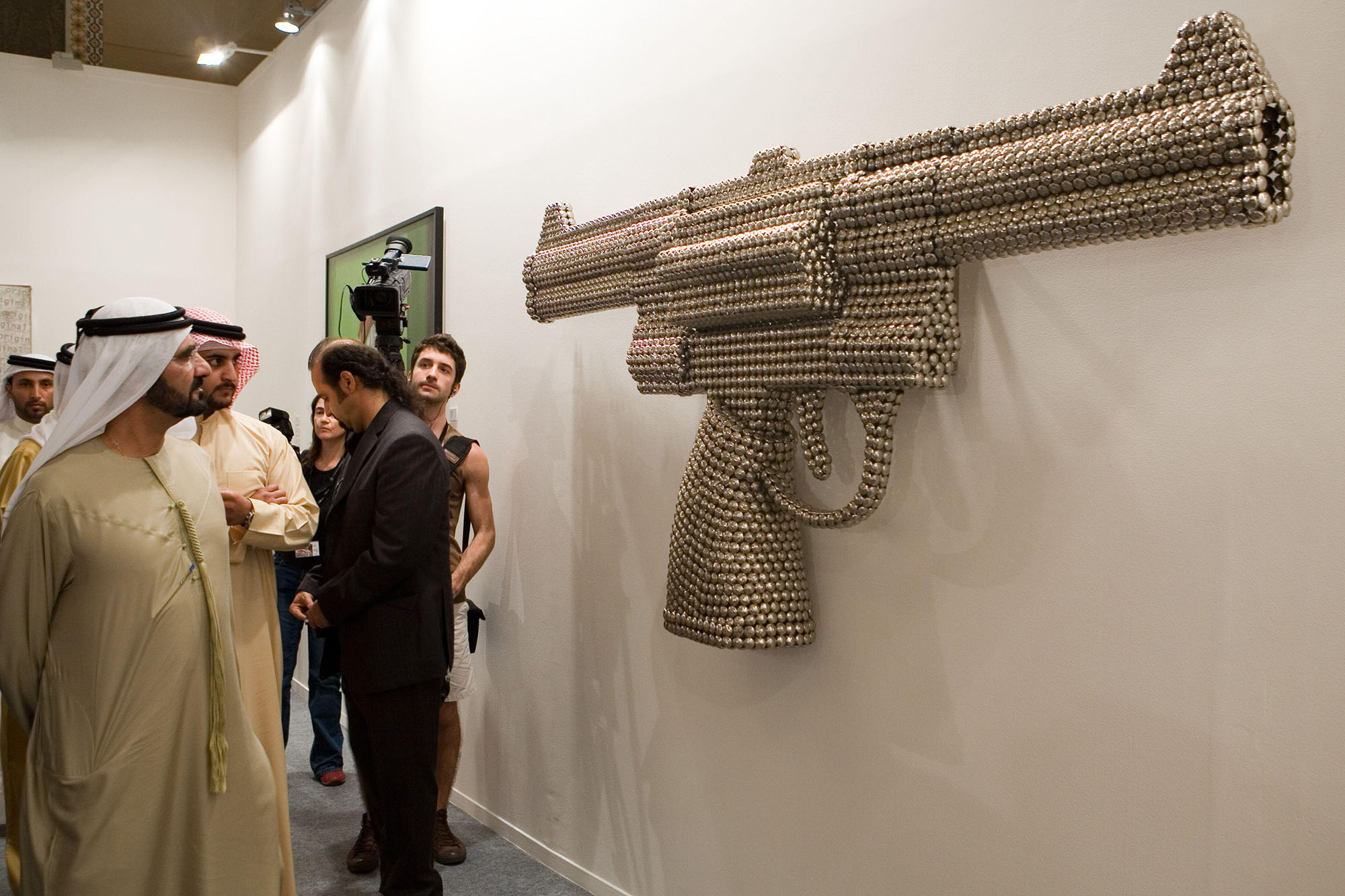
Dubai’s Madinat Jumeirah is a kitschy fantasyland: guests in the seaside luxury hotel can cruise down canals through a shopping mall designed to resemble a historic souk. Over four days each spring, it’s also a paradise for art collectors, who converge on its conference hall for Art Dubai, the largest art fair in the Middle East.
But when it opens in two weeks after a month’s delay, fewer than half of Art Dubai’s 120 participating galleries will be present. Following a barrage of Iranian drone attacks on the city last month, there are fears that international buyers will also choose to stay away.
The blockade of the Strait of Hormuz, now in its ninth week, is proving a headache for the art world – not least in the United Arab Emirates, the fastest growing market in the region. Beyond jet-set collectors worried for their safety, there are logistical concerns: before the blockade, plenty of sculptures and paintings sailed through the narrow maritime passage. It can be five to 15 times cheaper to ship artworks by boat than by plane.
Galleries that have chosen to go ahead with the fair have had to make tough choices about what art they bring to Dubai and how to get it there.
“We are dealing with many shipping uncertainties,” said Salman Matinfar, founder of London’s Ab-Anbar Gallery, who chose to proceed with his Art Dubai booth. He said the gallery had planned a “much grander installation” but that given the high cost of transport and risk of delay it will opt for a “more minimal” presentation.
“So far everything is going smoothly, but there are fears of what could happen if the war bursts out again and our work gets stuck there,” he said.
Waddington Custot, another London gallery participating in Art Dubai, will be able to take advantage of its Dubai branch, where it stores the artwork it plans to show at the fair. Yet the conflict has forced changes to its exhibition program, says Carmen Hu, the gallery’s head of Asia sales. “Originally we were planning a few solo exhibitions in Dubai this year, but that has been pushed. Right now we’re doing quite a lot of group shows with our inventory to minimize the amount of artwork coming in and out.”
Galleries are reluctant to shoulder the high cost of insuring art to travel through a conflict zone. Insurance companies charge steep “war premiums” that some smaller and mid-size businesses may not be able to afford, particularly as the global art market faces a downturn.
“The obvious thing is, don’t move art during a war,” says Robert Read, head of art and private clients at Hiscox, a syndicate of Lloyd’s that sells insurance to museums and collectors in the Gulf. “Why would you? It's not life-saving essential medical supplies.”
Still, he acknowledges that events like Art Dubai may be under pressure from governments which provide some of their funding. “There’s a lot of face-saving, sort of like the Queen not leaving London during the Blitz.” Should clients want to send art regardless of the risks, they will have to pay the high cost of a 2-3% war risk premium, in addition to existing insurance and the added expense of air freight, which has risen along with the cost of jet fuel.
Art Dubai did not respond to requests for comment.
When it comes to treasures in national museums, which are generally covered by public indemnity schemes, some governments may be as risk-averse as any private insurer. New York’s Jewish Museum opened a show by the late Swiss modernist Paul Klee last month without its centrepiece: a 1920 drawing known as Angelus Novus (New Angel), which had been promised on loan from the Israel Museum in Jerusalem. After the Israeli strike on the ayatollah, Israel’s national museum determined it would be too dangerous to ship the light-sensitive work on paper to New York, even by air.
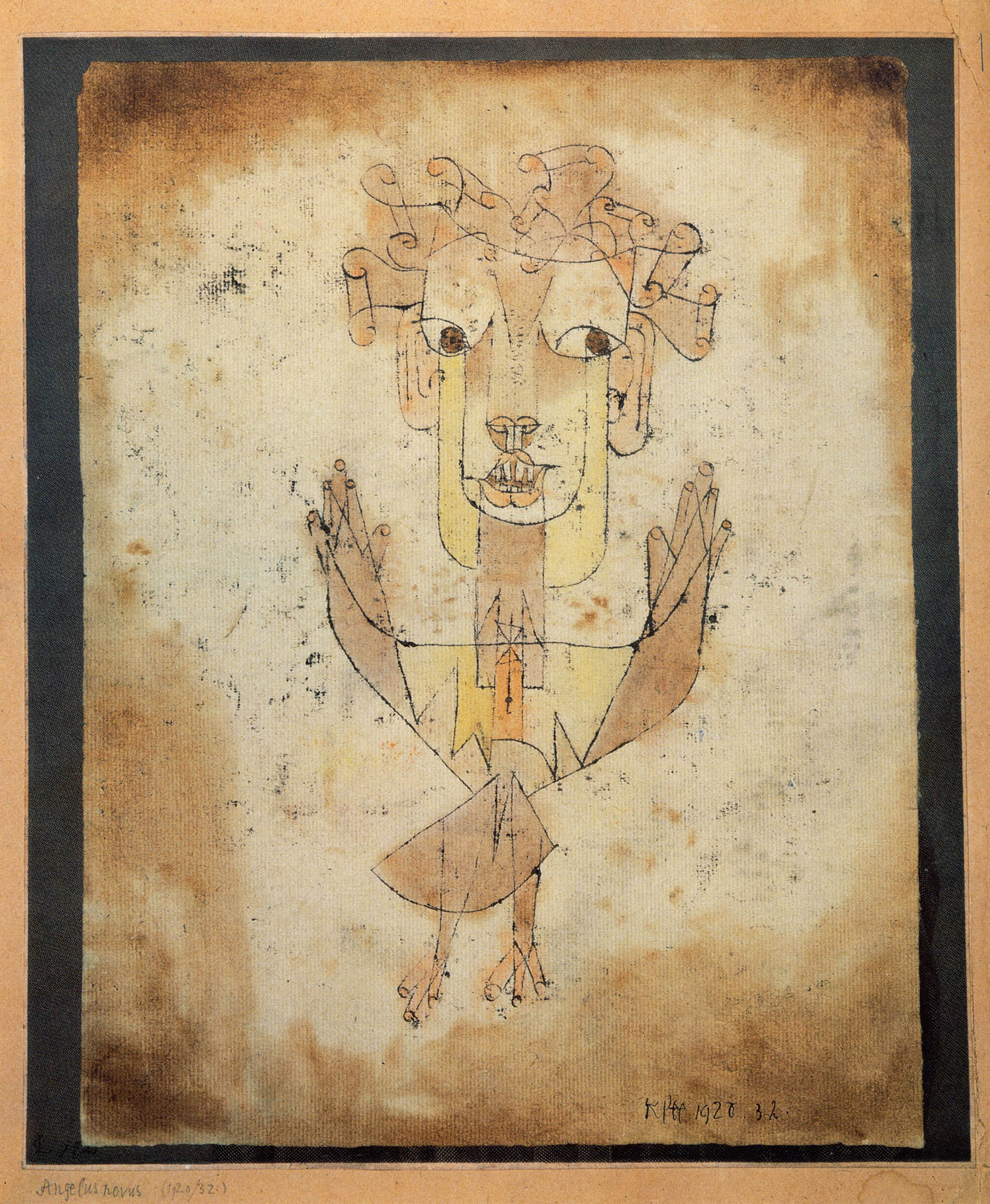
Angelus Novus, 1920 by Paul Klee (1879-1940)
“Paul Klee’s Angelus Novus is an exceptionally significant and fragile work, and the decision to delay the loan was made to ensure its safety during the height of the conflict,” a spokesperson for the Israel Museum said.
In 1940, the German Jewish philosopher Walter Benjamin memorably described Angelus Novus during the final days of his life as he evaded Nazi capture in the south of France. “[The angel’s] face is turned towards the past,” Benjamin wrote. “Where we perceive a chain of events, he sees one single catastrophe which keeps piling wreckage upon wreckage and hurls it in front of his feet.”
With the ceasefire in place, the museum said it will now be able to send the drawing to New York. The question is whether it will be able to return to Jerusalem should war break out again.
At Art Dubai, Matinfar plans to present art by the Palestinian artist Dima Srouji, but he says getting it from her home and studio in Bethlehem, in the West Bank, will be a challenge. “Our last show with her in London arrived in fruit crates,” he said. “It’s difficult, even in normal times.”
Photographs by Ludovic Marin/AFP/Getty Images, Heritage Images/Getty Images
Newsletters
Choose the newsletters you want to receive
View more
For information about how The Observer protects your data, read our Privacy Policy