





Iran’s military last night issued an evacuation warning for three major ports in the United Arab Emirates, including the busiest in the Middle East, openly threatening a neighbouring country’s non-US assets for the first time.
The regime’s threat followed an announcement from the White House that the US had struck Iran’s main oil hub, Kharg island. More than 90 military targets on the island were “obliterated”, according to Donald Trump, who said he had chosen not to target Kharg’s oil infrastructure, which handles nearly all Iranian crude exports.
Trump added he would reconsider that decision if Iran interfered with oil tankers in the Strait of Hormuz, and called on the UK, China, France and other countries to send warships to patrol the area.
Tehran said the US had used “ports, docks and hideouts” in the UAE to launch strikes on the island, without providing evidence. It urged people to evacuate areas where it said US forces were sheltering.
The tit-for-tat escalation will have global economic implications as world oil prices hover more than 30% above prewar levels.
The Iranian foreign minister, Abbas Araghchi, said that the US attacked Kharg island and Abu Musa island with low-range artillery from two locations in the UAE, Ras Al Khaimah and a place “very close to Dubai”, calling that dangerous and saying Iran “will try to be careful not to attack any populated area” there.
UK sources downplayed the prospect of British forces working alongside those from China, and said that while HMS Dragon was now heading to the eastern Mediterranean, the fast-moving situation may require a range of responses. The Ministry of Defence said it was discussing options with allies and partners.
In an interview before the strikes, Trump refused to say if he was contemplating invading Kharg – something he has been urged to do by right-wing commentators in the US. Yesterday officials said USS Tripoli, an amphibious assault ship, and 2,500 US Marines were travelling to the Persian Gulf. The Tripoli was last seen near Taiwan, more than a week’s journey away. US Central Command said the “large-scale precision strike” had targeted naval mines and missile bunkers, and released a video showing a series of missile strikes.
Iran sent further waves of missiles and drones towards Israel and the United Arab Emirates, and said UAE ports and cities were “legitimate targets”, claiming the US had used them to launch the strikes on Kharg. Debris from an intercepted drone hit an oil facility in Fujairah port.
Despite the US attacks on Kharg, oil continued to flow through the terminal yesterday with two tankers loading 2.7m barrels, according to TankerTrackers.com, which monitors satellite imagery.
Newsletters
Choose the newsletters you want to receive
View more
For information about how The Observer protects your data, read our Privacy Policy
Hormuz carries nearly double the crude traffic of the Panama and Suez canals combined
Hormuz carries nearly double the crude traffic of the Panama and Suez canals combined
Most of Iran’s $46.7bn crude exports go via Kharg to China. The island is heavily militarised and the US strikes are likely to have affected Iran’s capacity to lay mines in the Strait of Hormuz.
More than 30 countries have agreed to the largest-ever release of oil reserves to steady markets whiplashed by Iranian attacks on Gulf states and shipping in the Strait of Hormuz. The release buys the world some time, but not much. Every day that the strait is impassable, nearly 20m more barrels of oil are trapped inside the Gulf. Combined with other threats to output across the region, this could fuel inflation worldwide and encourage extreme tactics to break the logjam and force Iran to sue for peace.
Russia, meanwhile, is enjoying an estimated $10bn (£7.5bn) windfall, thanks to rising oil prices and temporary US sanctions relief.
As feared, the strait is serving as a tap that Iran can turn on and off at will. Tehran has said it will “not allow even a single litre of oil” intended for the US and its partners to pass through Hormuz, but two Indian liquified petroleum gas tankers were let through last Friday.
The US says it has “eliminated” 16 ships capable of laying mines in Hormuz. Trump, and subsequently France and Italy, suggested their militaries could accompany tankers but no such escorts are operational yet.
Accused last week of underestimating the risk of the strait being closed, a spokesperson said the White House was “prepared for any potential action” taken by Iran.
Sixty miles (97km) at its widest, the Strait of Hormuz is deep enough to carry crude tankers and is a through way for a fifth of the world’s oil supply, roughly $600bn in annual trade.
It carries nearly double the crude traffic of the Panama and Suez canals combined: around 100-130 ships a day in normal times. More than 80% of the oil and oil products that pass through the strait end up in Asia. It also carries a third of the world’s most widely used fertiliser and a fifth of all shipments of liquefied natural gas, for which there are no strategic reserves.
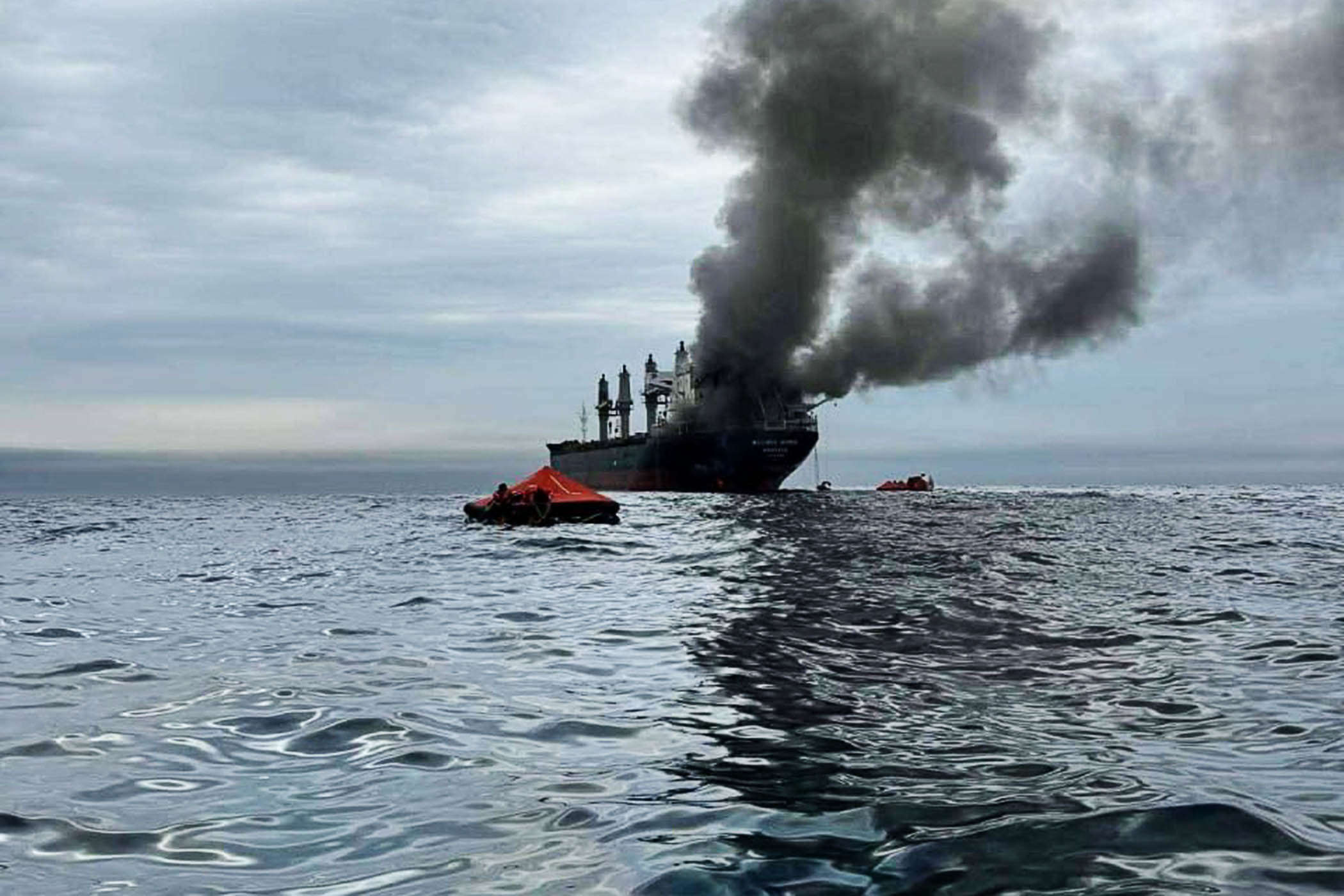
Due to the war, Hormuz is at an effective standstill. Six tankers and bulk carriers were attacked by Iran in the strait in one 48-hour period last week, and many ships aren’t willing to run the gauntlet. Iran is suspected of attacking at least 16 vessels in the Gulf since the war began. At least seven mariners have been killed.
The closure of Hormuz leads to lost oil because producers have to put crude into storage if they cannot load it onto tankers, and storage is finite. As a result, production has been cut across the region and prices are up worldwide by as much as 40%.
Countries are scrambling to mitigate the effects. China is still receiving oil that Iran has allowed to pass through the strait, but Thailand banned petroleum exports, Bangladesh put limits on fuel sales and shut universities, South Korea announced a fuel price cap for the first time in 30 years, the Philippines imposed a four-day work week to reduce car use. and Pakistan The release of 400m barrels of strategic reserves, announced last week by the International Energy Agency, is the largest of its kind in history but still only equivalent to roughly four days of global oil use, and 20 days of what normally passes through Hormuz. In total, the IEA has 1.2bn barrels in public stocks and 600m in commercial inventories, or around four months of supply from the Gulf.
Although oil prices fell briefly after the announcement, they rose again as attention refocused on a conflict that shows little sign of ending. How quickly the reserves can be drawn down and put on the market is not yet known. For Asian nations the release of mostly American oil will not provide much immediate relief: a tanker journey from the US Gulf Coast to Asia takes between 40-60 days, roughly twice as long as shipments from the Middle East.
Rising crude costs are typically stagflationary, fuelling inflation while encouraging static economic activity because people have less power to spend. The Federal Reserve and the Bank of England are now considered more likely to raise interest rates.
Photograph by EPN/Newscom / Avalon