
On 27 March, Viviane Ajiko, a 35-year-old volunteer burial worker, was called to the home of a young man who had recently died in Mongbwalu, a town in the north-east of the Democratic Republic of Congo (DRC). Blood seeped from the body’s mouth and his parents were afraid to touch him. Together with six other volunteers, Ajiko washed the body, laid it in a coffin and returned it to the family for burial.
A week later, Ajiko developed a fever. Assuming it was malaria or typhoid, she checked into a local clinic for routine treatment. She never emerged. Two weeks after that, her husband also died, leaving behind the couple’s three young children.
Doctors now believe the deaths were caused by a rare strain of Ebola, yet the virus was not officially identified in the region until 15 May. Samples had to be flown more than 1,000 miles to a laboratory in Kinshasa, the country’s distant capital, for testing. The outbreak was initially missed after screenings for the more common Zaire variant came back negative. By the time the diagnosis was confirmed, the virus – the rarer Bundibugyo strain– had already spread.
The virus is now tearing through the DRC’s conflict-ridden eastern provinces. At least 238 people have died and an estimated round 1,077 are thought to have been infected. Nine cases have been reported in neighbouring Uganda, which has attempted to seal its long, porous border with the DRC.
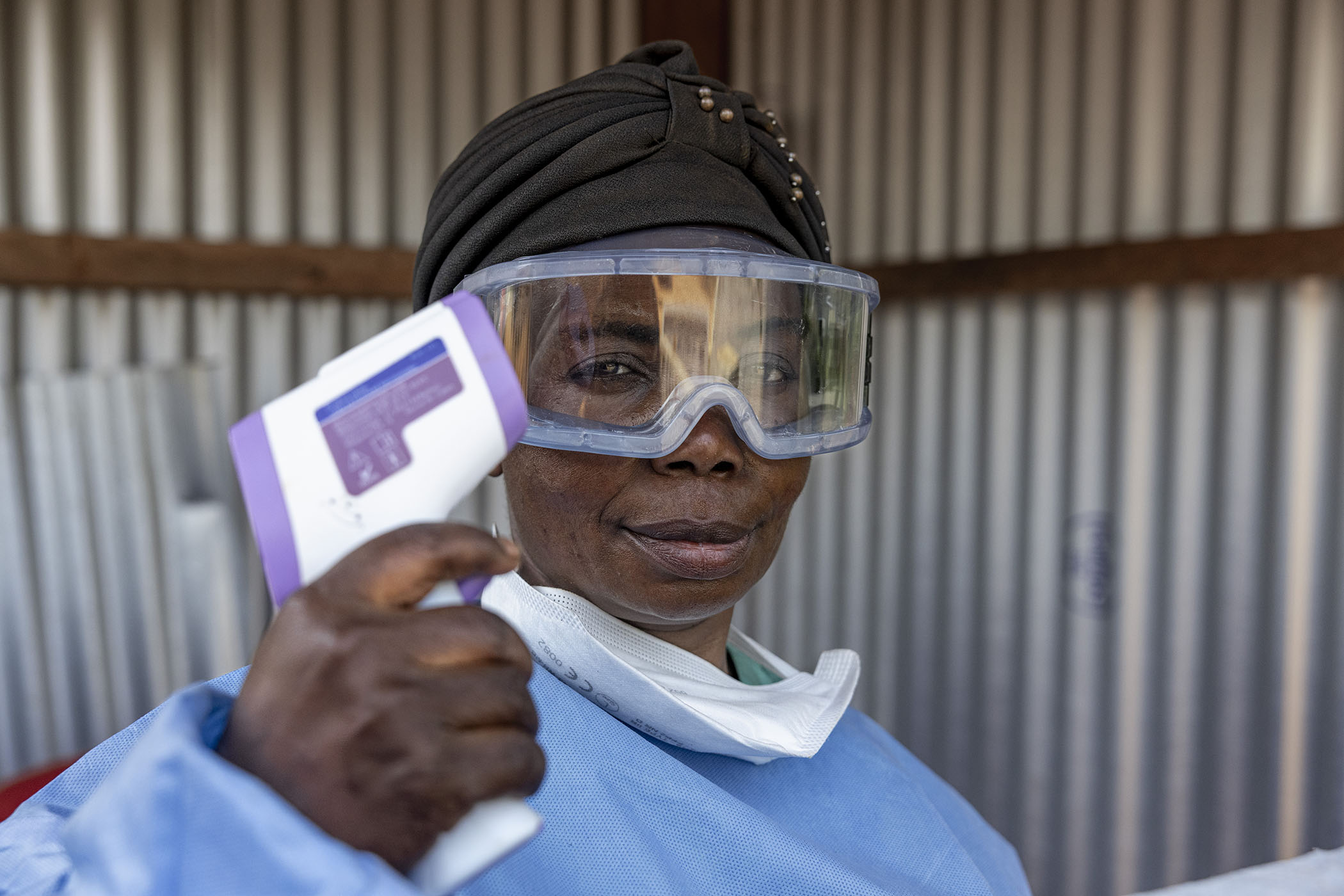
Yet on the streets of Bunia, the capital of Ituri province, there is little to suggest the region is in the grip of an Ebola outbreak. Handwashing stations and temperature checks have been erected on roads leading in and out of the city, but otherwise life carries on as normal. Women selling vegetables cluster beneath corrugated iron roofs in bustling markets. Sweaty passengers squeeze into shared taxis. Motorbikes weave through the traffic carrying three people at a time. The virus, spread through bodily fluids, is largely invisible.
One reason is that many people doubt Ebola has really reached Bunia. Years of conflict, corruption and neglect have eroded the population’s trust. In a region where police officers extort the poor and soldiers loot alongside rebels, government health warnings are met with a justifiable degree of suspicion.
Rumours that Ebola has been exaggerated – or invented to make money from donors – are common. Bunia residents are not shy to express such doubts. Near a dusty roundabout in central Bunia, 46-year-old Erick Ngadjo slouches on his motorbike waiting for customers.
“I always ask myself why it is that all the bad things in the world seem to converge on eastern Congo,” he says. “But, also, I’ve driven all over the 24 neighbourhoods that make up Bunia and haven’t seen a single Ebola case. I have my doubts it is really here.”
Twenty-three-year-old shopkeeper Rachel Mwadjuma is also suspicious. “It feels as though politics is involved,” she says. “Someone might fall ill with something as simple as a headache or malaria, go to hospital, and be told they have Ebola. As far as I’m concerned, Ebola isn’t here in Bunia.”
Yet such scepticism can prove deadly. Containing Ebola depends on tracing contacts and isolating infected patients before they pass it on. When communities refuse to cooperate, that task becomes impossible.
Newsletters
Choose the newsletters you want to receive
View more
For information about how The Observer protects your data, read our Privacy Policy
“We’re having a hard time because when you try to explain the disease to someone, they start telling you it doesn’t exist,” says Isaac Mugeni, director of the general hospital of Rwampara, a district on the edge of Bunia. “They say it’s a ploy by medical staff to get money or that the virus is manufactured in hospitals.”
His team is taking enormous risks to help the community – two doctors at the hospital have already died from Ebola. Yet many of their efforts go unrecognised. Some are even hampered by those they are trying to help.
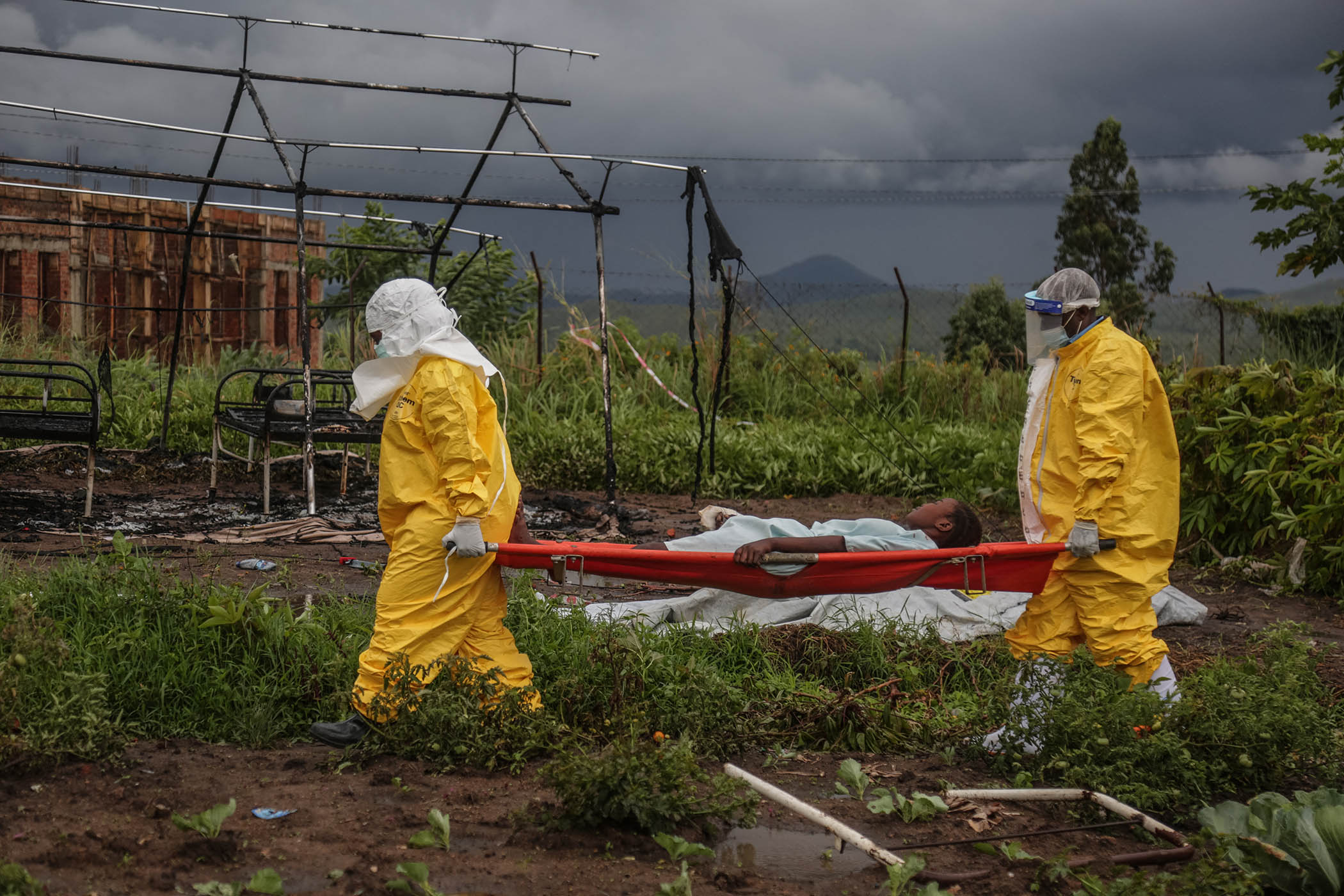
A few metres from Mugeni’s office stand the blackened remains of an Ebola treatment tent. Sheets of scorched PVC that once formed its walls lie melted on the ground alongside charred bed frames. The structure, hurriedly erected by the French NGO Alima in response to the outbreak, was burned down on 21 May when a crowd hurled petrol bombs at it. The attackers were demanding the release of the body of a young man believed to have died from Ebola. But health authorities refused: corpses can be extremely contagious, and funeral rites that involve washing the dead are a major source of transmission.
The following day, protesters set fire to another treatment tent in Mongbwalu after a similar dispute. As the structure blazed, 18 Ebola patients fled to nearby neighbourhoods. They have all since returned to the hospital. The attacks echo scenes from the DRC’s 2018 Ebola outbreak — the second largest on record — when distrustful communities attacked treatment centres and medical workers.
Overall, the Ebola response has been slow and faltering. Health workers fear the delay in detecting the outbreak could cost hundreds of lives. Part of the problem, they say, is a severe shortage of resources. USAID cuts have left the region’s already fragile health system weaker than ever. “There’s nothing, no financing. [Donald] Trump has cut everything,” says Doka Ngoyi, a government spokesman in the region.
Before the US withdrew its funding, Ngoyi says, local clinics received support largely intended to combat HIV and tuberculosis. Humanitarian organisations backed by USAID helped prop up clinics and hospitals that have now deteriorated. “They have withdrawn medicine and human resources. We need experts to help us, we need funding. Without money we cannot manage this,” says Ngoyi.
These problems are compounded by war. Eastern DRC has been ravaged by conflict for decades but the violence has intensified in recent years. The Allied Democratic Forces (ADF), a militia affiliated with Islamic State, has moved from neighbouring North Kivu into Ituri province. Its fighters forcibly recruit young men and routinely abduct schoolgirls to serve as their “wives” in forest camps. On 2 April, the group massacred at least 43 people in a village in Ituri, hacking them to death with machetes before torching their homes.
As the World Health Organization’s director general, Tedros Adhanom Ghebreyesus, put it, the region is facing a “catastrophic collision” of war and disease.
Eleven Ebola cases have already been detected in the nearby provinces of North and South Kivu. Much of this region is controlled by M23, a Rwanda-backed militia whose offensive has displaced millions. An estimated five million people now live away from their homes, many of them in sprawling tarpaulin shelters with scarce access to clean water and medicine.
Health workers must trace infections across a region fractured by conflict while persuading communities to heed government warnings. With aid in short supply and treatment centres coming under attack, the odds are daunting.
Despite everything, Mugeni and his brave team at Rwampara hospital – one of the disease’s epicentres – remain hopeful. “The public must stay calm and trust us,” he says. “We are not their enemies, we are here for them. Together we are convinced we will overcome this epidemic.”
Photograph by Seros Muyisa / AFP via Getty Images