The crack and whoosh of outgoing Hezbollah rocket fire hardly registered among the small crowd gathered at St Georges Orthodox Church. It was close, but the residents of Rachaya el-Foukhar are used to it.
The small, predominantly Christian village sits on the frontline of Israel’s war with the Lebanese Shia militant and political group, Hezbollah.
Three miles from the contested border to the south, a sweeping vista takes in the Israeli towns of Ghajar, Yuval and Kiryat Shmona. The village is also surrounded by Lebanese towns that have been coming under fire.
“People are worried about their homes, their livelihoods, about everything,” Susan Mitri told The Observer with a nervous smile. “The war is not a joke.”
The 51-year-old councillor of Rachaya el-Foukhar takes the conflict more seriously than her peers.
“But why would we leave our lands? It’s our land and our country, why would we leave it to a stranger?”
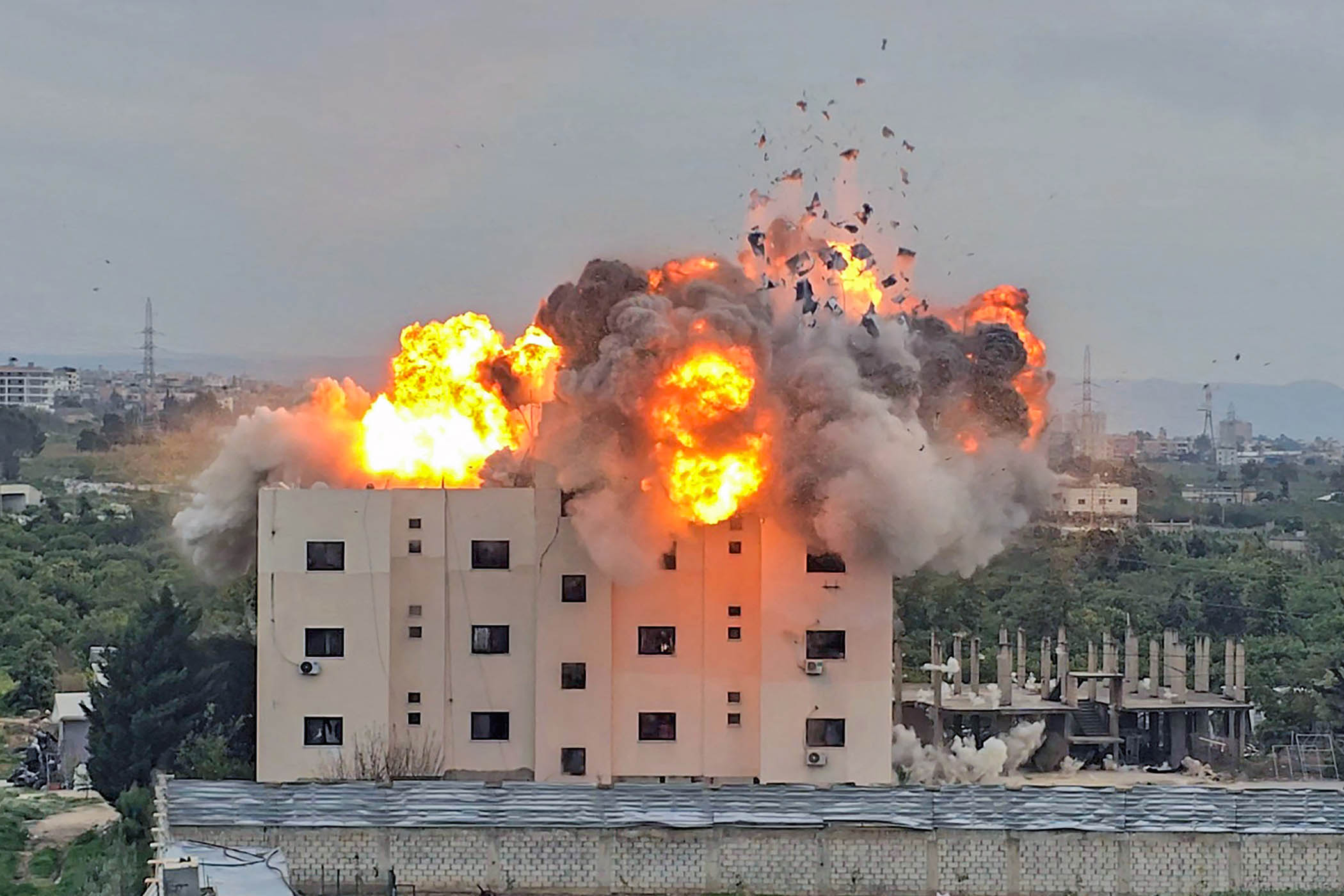
Last week, Israel began amassing hundreds of Merkava tanks at its northern border, sparking fears of a ground invasion into Lebanon.
The Israel military issued dozens of evacuation warnings, displacing hundreds of thousands of Lebanese civilians from the south of the country northward past the Litani River. Rachaya sits just outside these orders, but many believe that it will be under occupation when the tanks roll in.
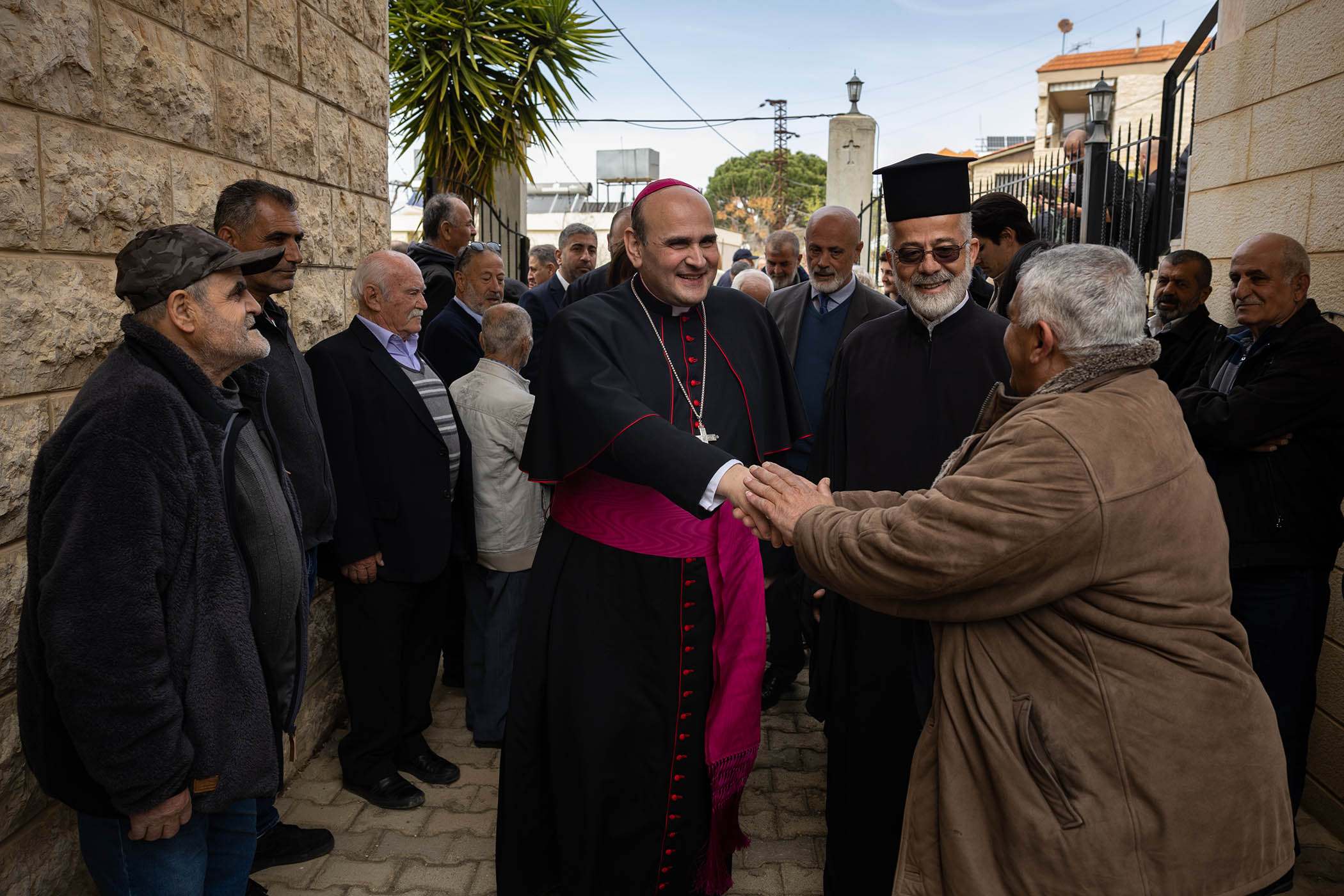
Archbishop Paolo Borgia is greeted as he arrives in Rachaya el-Foukhar
In a speech released via video on Friday, Hezbollah’s secretary general, Naim Qassem, said the group was ready for a “long confrontation” with Israel and that his group would “not allow the enemy to achieve its goal of eliminating our existence and controlling Lebanon, and we will remain an impenetrable barrier against it”.
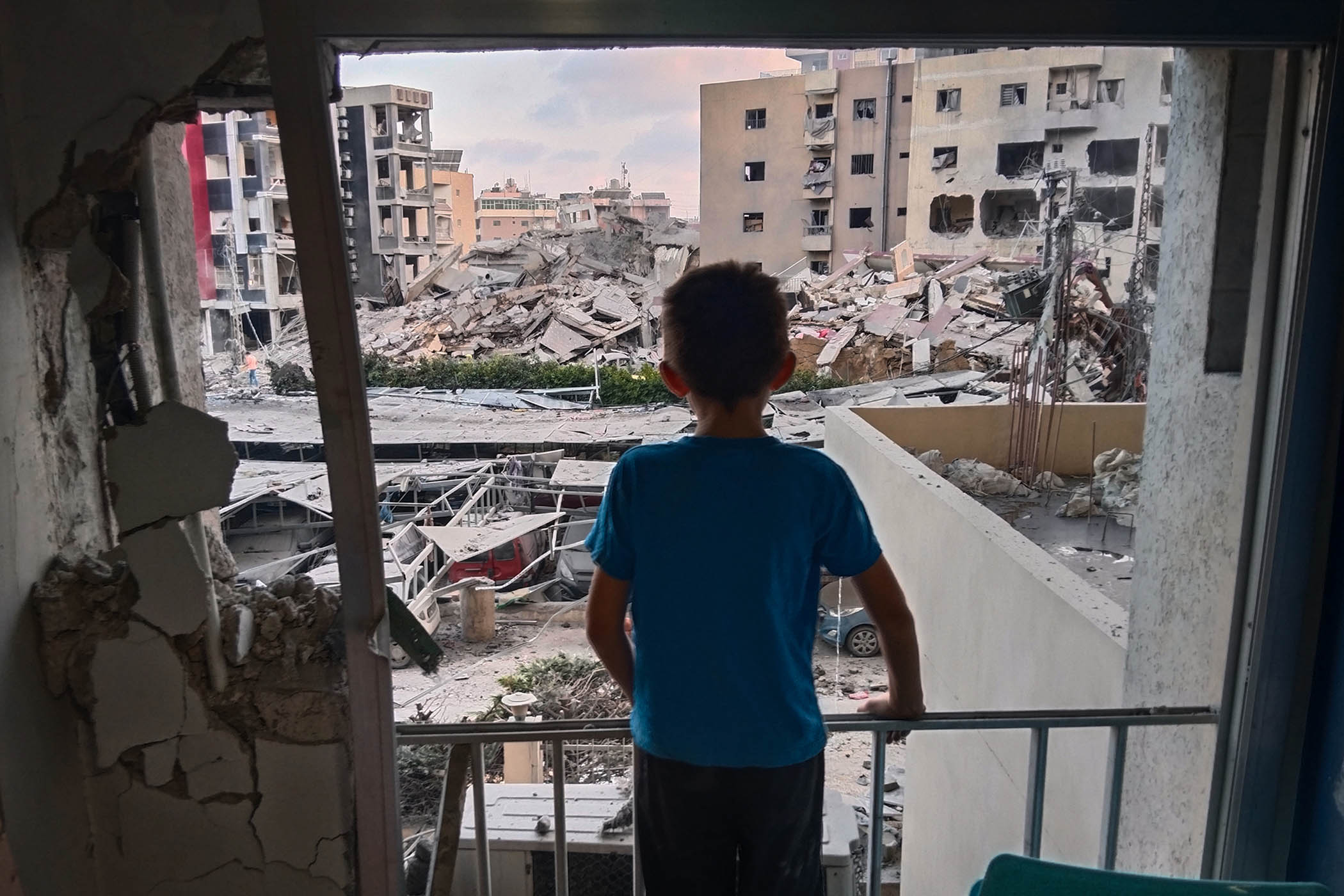
According to Lebanon’s health ministry, 826 people have been killed in Lebanon since the conflict reignited almost two weeks ago, including 103 children.
Newsletters
Choose the newsletters you want to receive
View more
For information about how The Observer protects your data, read our Privacy Policy
Israel already occupies five positions within Lebanon following a ceasefire in November 2024. In recent days its forces have advanced more than a mile deeper into Lebanese territory. Israeli military spokesperson Effie Defrin called the push a “forward defence” buffer zone. Residents of the border town of Kfar Chouba told The Observer that the Israeli military continues to enter the area and patrol the streets.
Ismail Abdul Aal is not as calm as his neighbours. The 47-year-old head of Kfar Chouba’s municipality says he and the 160 families that remain in his village are terrified.
“We shouldn’t be here. There’s no Lebanese army, no nothing. It’s only us and the Israelis. They enter between the houses and patrol. They blew up a home the other day,” he said, as Israeli jets roared overhead.
The strategy sits comfortably alongside the territorial instincts of Israel’s hard-right governing bloc. Speaking last week, Likud MP Amit Halevi argued that the Litani River – roughly six miles inside southern Lebanon – “must become the north’s new Yellow Line”, invoking the boundary to which Israel withdrew in Gaza.
Officially, Israeli military figures continue to frame the current campaign as operationally precise. Yet within political circles the conversation has already drifted further towards the notion that a deeper, more permanent buffer zone might take shape.
According to Ghassan Salamé, Lebanese minister and former adviser to the UN, Israel has destroyed at least 35 villages in southern Lebanon with the intention to never allow residents back to their homes or to rebuild.
“They are just producing a sort of scorched earth area,” he told The Observer.
We shouldn’t be here. There’s no Lebanese army, no nothing. It’s only us and the Israelis. They enter between the houses and patrol. They blew up a home the other day
We shouldn’t be here. There’s no Lebanese army, no nothing. It’s only us and the Israelis. They enter between the houses and patrol. They blew up a home the other day
Ismail Abdul Aal, Kfar Chouba municipality
Back in Rachaya el-Foukhar, the crowd had gathered at the church to welcome a delegation from the Vatican embassy in Beirut. The papal ambassador to Lebanon, Archbishop Paolo Borgia, was due to arrive at lunchtime to offer support.
His visit was arranged after an appeal from Lebanese officials to the Holy See to protect the Christian communities on the border from the conflict. However, even the imminent arrival of Christ’s representative on earth could not quell the clashes.
As the papal convoy approached the village, Israel fired back at the surrounding countryside, from where they believed the Lebanese militia had launched its rockets at Israel. The pop of artillery fire echoed off the hills. This time the congregation ran to get a better view as windows rattled across the village. Members of the Lebanese army scaled a roof for a better angle.
Across the valley, gun battles erupted in Khiam. Today the mainly Shia village is mostly rubble after intense fighting between Israel and Hezbollah in 2024. Both sides remain in the ghost town. Bursts of machine-gun fire were followed by Israeli airstrikes, as F-16s streaked overhead.
The Catholic ambassador was greeted warmly by an Orthodox priest, a Catholic priest and a sheikh of the Islamic Druze sect. After hugs and kisses, the smiling crowd shuffled into the protection of the local church.
Memories of occupation still reside in the south. For 18 years, Israel ruled southern Lebanon, from 1982 to 2000.
Driving through the olive groves surrounding Rachaya el-Foukhar, May Hardan broke down in tears as she described living under Israeli rule while rushing to buy medicine for her sick mother.
“The tanks are coming in but we are kind of used to this. We have planned for it in a way,” she said, wiping her eyes. “Can you imagine having to do that?”
Photographs by Kawnat Haju/ AFP via Getty Images, Oliver Marsden for The Observer